Comedy

Fawlty Towers – The Play is the best museum piece you’ll ever see

From our UK edition

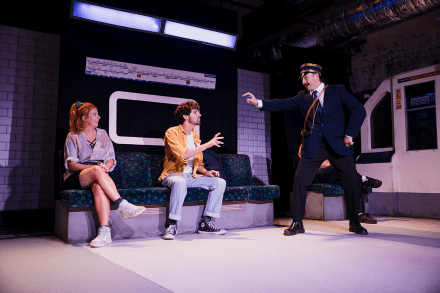
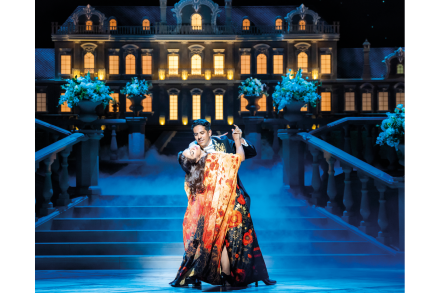
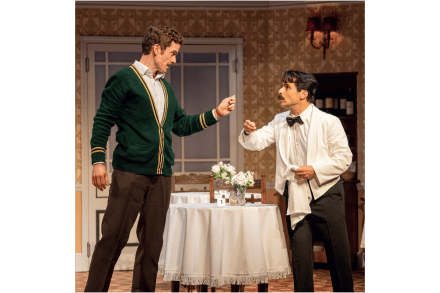
Fawlty Towers at the Apollo may be the best museum piece you’ll ever see. A full-length play has been carved out of three episodes: ‘The Hotel Inspectors’, ‘The Germans’, and ‘Communication Problems’ in which the deaf guest, Mrs Richards, made a nuisance of herself by refusing to switch on her hearing aid in case the batteries ran out. For anyone who saw the sitcom in the 1970s, this is a pleasantly weird show. It’s like returning to a seaside funfair after half a century and finding all the rides unchanged and the staff more or less as you remember them. If Beckett had written family comedies he might have created something as amusing as this Paul Nicholas makes an even better Major than the Major. And his rich, fruity voice is an unexpected treat.

Player Kings proves that Shakespeare can be funny

From our UK edition

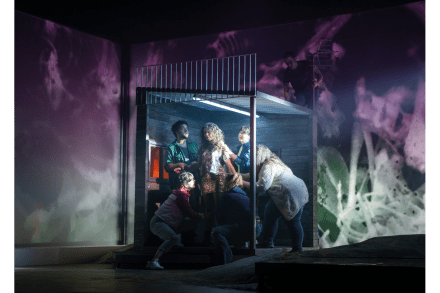
Play-goers, beware. Director Robert Icke is back in town, and that means a turgid four-hour revival of a heavyweight classic with every actor screaming, bawling, weeping, howling and generally overdoing it. But here’s a surprise. Player Kings, Icke’s new version of Henry IV, Parts 1 and 2, is a dazzling piece of entertainment and the only exaggerated performance comes from Sir Ian McKellen who plays Falstaff, quite rightly, as a noisy, swaggering dissembler. Those who imagine ‘Shakespearean comedy’ to be an oxymoron will be pleasantly surprised Small details deliver large dividends. The tavern scenes are set in an east London hipster bar with chipped wooden tables and exposed brickwork. Richard Coyle’s Henry IV has been costumed to resemble the chain-smoking George VI.

A magnificent set of dentures still leaves little to smile about

From our UK edition

John Patrick Higgins is unhappy about the state of his mouth. His teeth resemble ‘broken biscuits’, a ‘pub piano’, ‘an abandoned quarry’ and ‘Neolithic stones. It’s all I can do to keep druids from camping out on my tongue each solstice.’ So he invests in a series of expensive interventions. He has seven gnashers removed, followed by three root canals, and acquires a natty set of dentures. They feel a bit weird at first (‘it’s like having an internal beak’), but ‘I look like the actor playing me in a Hallmark movie of my life.’ In this slim, refreshingly unpretentious memoir, Higgins, a middle-aged English filmmaker living in Belfast, chronicles his emotions as he undergoes successive rounds of treatment.

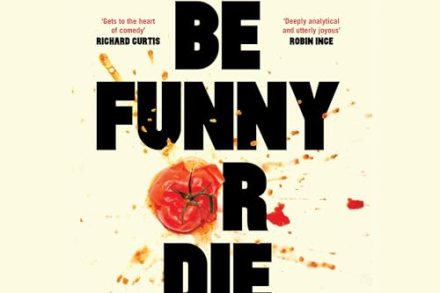
Joel Morris: Be Funny Or Die

From our UK edition

50 min listen

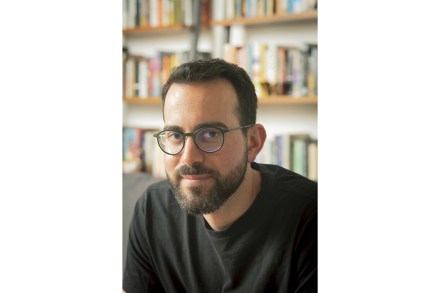
My guest in this week's Book Club is Joel Morris, an award-winning comedy writer whose credits run from co-creating Philomena Cunk to writing gags for Viz and punching up the script for Paddington 2. In his new book Be Funny Or Die, he sets out to analyse how and why comedy works. He tells me why there are only three keys on the clown keyboard, what laughter does for us in neurological terms, and why Laurel and Hardy could get away with anything.

Shane Gillis and the year cancel culture dies

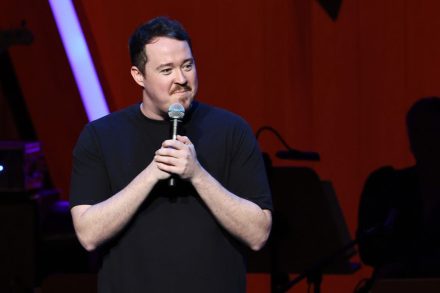
The news that comedian Shane Gillis is walking back into 30 Rock to host Saturday Night Live this month isn’t just a great moment for comedy or a testament to how much America loves a comeback story. It’s also a definitive moment in the history of cancel culture — a live representation on national television of how much the media’s power to achieve personal destruction has diminished. Gillis was by no means a famous comedian when he was chosen for the SNL cast five years ago, but the media (aided by some jealous comics) did successfully make him infamous within the space of a week. The story is familiar to everyone by now, but rather than hang his head and walk away from comedy, Gillis battled back by being really, really outrageously funny.

shane gillis

Progressives vs. bigots: How I Won a Nobel Prize, by Julius Taranto, reviewed

From our UK edition

This is the kind of comic novel I greatly admire, because it makes me feel so anxious and wrong-footed. I laughed wholeheartedly until an inner voice chided, in a contradictory fashion, ‘that’s not supposed to be funny’ and ‘can’t you see it’s a joke?’ Given that the book is about that very modern set of dilemmas, my admiration for Julius Taranto’s work is even greater. The novel’s protagonist is Helen, a graduate student, who explains her field in the opening sentence: ‘The Rubin Institute had nothing to do with high-temperature superconductors, so I cannot say I had spent much time thinking about it.’ Her supervisor has been offered a position at the prestigious university, the catch being it is known colloquially as Rape Island.

The Toad’s Morale puts Sam Tallent’s filthy genius on display

The Toad's Morale, Sam Tallent's stand-up comedy special, gives you the answer to the question: what if a genius-level writer decided to devote himself thoroughly to writing jokes on the subjects of sex, death and bodily fluids? Distributed on comedian Shane Gillis's YouTube channel — another giant phenomenon and also in the top tier of best podcast guests who could also play offensive tackles — Tallent's special showcases his capability for timing and rhythm. His jokes have a tempo that seems natural and relaxed in the moment, but is clearly intentional, effortless on the surface but disguising the skill of the construction under a thick layer of blue.  https://youtu.be/0eIUA1jfEk0?

sam tallent

Alan Partridge has had more incarnations than Barbie

From our UK edition

Alan Partridge is back, and this time he’s restoring a lighthouse. The third volume of the Norfolk microstar’s faux autobiography is a meticulous parody of the celebrity-in-search-of-a-televisable gimmick genre, blending fan-friendly, behind-the-scenes tales of his more recent public adventures (This Time, Scissored Isle, From the Oasthouse) with a classic midlife lurch for purpose, part Griff Rhys-Jones rescuing threatened buildings, part Clarkson’s Farm. Though Steve Coogan’s id-slaying monster started out as a media satire, Alan Partridge has become a vital national mirror in which middle-aged, middle English, middleweight, middlebrow man (let us call him Homo Partridgensis) can watch himself weather and crumble.

Cancel culture comes for two new victims

A couple of weeks ago my husband and I plopped on the couch for a quiet evening in and turned on the new Netflix comedy special Natural Selection by Matt Rife. We were both vaguely aware of Rife because he’s posted some videos of his crowd work that have gone viral on social media. Young women in particular seem to like him because he can be quite charming on stage and will openly flirt with female audience members (Gen Z would describe Rife’s charisma as “rizz,” I think). The set was fine but not super memorable, so I was caught by surprise when I recently saw an article on BuzzFeed explaining that Rife’s fans were furious with him over a joke he made regarding domestic violence.

No laughing matter: accusations of transphobia wrecked Graham Linehan’s life

From our UK edition

Graham Linehan is an unlikely political campaigner, but in 2018 the sit-com writer embarked on a second career in what is possibly the most contentious and vitriolic arena of our time. According to Linehan, he was fighting for women and children, but his advocacy has cost him dear. Accused by his opponents of transphobia, he has found himself out of work and out of his marriage. Jobs began falling away, and a tour to Australia to teach comedy was cancelled In Tough Crowd, he tells the story of how he ‘made and lost a career in comedy’. It’s a tough read – a man who once made so many people laugh saw his career come to a ‘screeching halt’. Love him or loathe him, he is undeniably forthright and unapologetic.

‘Comedy is much more important than I thought’: John Cleese on the press, his new talk show and the power of Fawlty Towers

From our UK edition

John Cleese enjoys tough questions. He’s currently touring America with An Evening with the Late John Cleese, and a substantial part of the show is thrown open to the audience. He tells me that when someone asks a particularly rude question – such as ‘Why can’t you stay married?’ – it simply adds to the fun. Another one of his favourites is ‘What’s the worst film you ever made?’ I ask him the same question. ‘Well, there are a lot of contenders,’ John says. Apparently his ‘sabre-toothed daughter’ Camilla might have the answer, because she often introduces him to the stage as ‘the star of The Pink Panther 2’. When I tell John that I haven’t had the pleasure of seeing it, he offers me some succinct advice: ‘Don’t.

Shane Gillis and the return of the dawgz

When the history of comedy’s resurgence in the early twenty-first century is written — when masses of people, silenced by the speech codes of the day, found solace and contrarian hope in the words of unsilenced comics — Shane Gillis will be a major turning point in that story.  It’s not just that he’s arguably the best stand-up under forty working today; it’s that his work won out over all the obstacles the world threw at him. He is now the comedy world’s embodiment of the Streisand Effect, where his attempted cancellation functioned instead as a rocket ship for his career based not on victimhood but on the stubborn nature of his skill. Gillis’s first special, Live in Austin, was a YouTube joint that has racked up 14 million views.

shane gillis

Have you missed them?

You may or may have not noticed, but there is currently a writers’ and actors’ strike happening across Hollywood. Major film productions have been shut down, as have regular television and streaming shows. No new content. Anywhere.  This also applies to all late-night talk shows. There hasn’t been a fresh new episode of Stephen Colbert’s Late Show, or The Tonight Show with Jimmy Fallon or Kimmel. All three network shows have downed tools in solidarity with the strikers. The question is: has anyone noticed, beyond their niche core audience of coastal liberals, for whom such programs have become little more than political group therapy sessions?

strike force five

What a joke

From our UK edition

The award for the funniest joke at this year’s Edinburgh Fringe was won by Lorna Rose Treen, with this: ‘I started dating a zookeeper, but it turned out he was a cheetah.’ There you go. It’s hard to know where to begin, isn’t it? Maybe with the fact that the joke doesn’t really work. Why would a zookeeper be a cheetah? Just because his work may involve looking after them? There’s no sense to it: the bloke just works in a zoo. If she’d said ‘I started dating a big cat – turned out he was a cheetah’, then that still wouldn’t be terribly funny but it would at least have semantic integrity.

‘I disliked him intensely’: Richard Lewis on first meeting Larry David

From our UK edition

Richard Lewis has died at the age of 76. Ben Lazarus interviewed him for the magazine last year: Richard Lewis first met Larry David at a summer sports camp, aged 12. ‘I disliked him intensely. He was cocky, he was arrogant,’ Lewis says. ‘When we played baseball I tried to hit him with the ball: we were arch rivals. I couldn’t wait for the camp to be over just to get away from Larry. I’m sure he felt the same way.’ Eleven years later they met again on the New York stand-up scene – but didn’t recognise each other. One evening, as they drank into the night, it dawned on them. ‘I looked at his face and I said, “There’s something about you, man, that spooks me.” Just saying that spooks everyone!’ It clicked. ‘“You’re Richard Lewis!

Trump, Diogenes, the Mitfords and Malaysian comedy: Edinburgh Fringe round-up

From our UK edition

The Mitfords is a superb one-woman show by Emma Wilkinson Wright who focuses her attention on Unity, Diana and Jessica. In the early 1930s, Unity became Hitler’s lover and she lived in a luxurious Munich apartment confiscated from a wealthy Jewish family. The Führer, whom she nicknamed ‘Wolfie’, gave her the pearl-handled revolver with which she shot herself in the head shortly after Britain’s declaration of war. To carry out this bizarre act of self-sacrifice she chose a favourite spot in Munich’s English Garden where she used to sunbathe naked. In wartime Britain, Diana was held in Holloway prison and she complained bitterly about being separated from her baby boy, Max, and about the hefty sandbags that prevented daylight from reaching her cell.

Rizal Van Geyzel races through his 60-minute set peppering the material with snatches of Chinese, Tamil and Malay

Forgettable stuff: The Crown Jewels, at the Garrick, reviewed

From our UK edition

In the 1990s, the BBC had a popular flat-share comedy, Men Behaving Badly, about a pair of giggling bachelors who were scolded and dominated by their mummy-substitute girl-friends. The author, Simon Nye, has written a historical crime caper about the theft of the crown jewels in 1671, as Charles II prepared to celebrate his tenth year on the throne. The psychological co-ordinates of the play are poorly handled. The thief, Colonel Blood, is an irritating Irish crosspatch who wants to drive the hated English from his homeland. Charles (played by Al Murray) is more attractive, a fun-loving gadabout who enjoys sex, jokes and science and who can’t bear Puritans. So the audience sides with the King and hopes that Blood’s vindictive scheme will fail.

what we do in the shadows

Why What We Do in the Shadows works

Before Taika Waititi achieved his current state of half-ironic, half-irritating ubiquity, he made small, often brilliant films. One of the most notable ones was the 2014 New Zealand comedy horror picture What We Do in the Shadows, which he co-created and co-directed with Flight of the Conchords star Jemaine Clement. Horror comedies are notoriously tricky to get right tonally, but the film — which admittedly leant far more heavily on the comedic aspects — was a modest box-office hit and became yet another step on Waititi’s stroll to Hollywood dominance.

Can topical comedy survive?

From our UK edition

Seen any good stand-up recently? It’s a loaded question, but if you have, there’s every chance you didn’t view it via terrestrial TV. You might instead have laughed at some brash American on Netflix, or a deeply un-PC comic on YouTube – or more likely still, a comedian sitting in the palm of your hand. Over the past 12 months in particular, stand-up clips have been going down a storm on platforms such as TikTok and Instagram. The kind of clips which do well online have come as a surprise to some of the industry’s traditional gatekeepers. In a shock twist, it seems audiences still find stuff about the differences between men and women pretty funny (and we’re talking behavioural differences here, rather than biological or semantic ones).

How movie execs are ruining comedies

Adam Devine, the star of the hit television series Workaholics and new Netflix movie The Out-Laws, recently gave some insight as to why comedies are hardly ever made by movie studios anymore. Devine appeared on the most recent episode of comedian Theo Von's podcast, This Past Weekend, where the pair discussed the downfall of comedy in movies. Devine, who also appeared in the Pitch Perfect series, surmised that high-budget superhero movies made comedies and other low-budget films less attractive to viewers spending money on theater tickets. He and Von also pointed out how movie executives try to force political and moral messages into their content — and that there is no longer "funny for funny's sake." "There's no hidden message," Devine said of his new movie.

adam devine movie comedies