Comedy

Lives upended: TonyInterruptor, by Nicola Barker, reviewed

From our UK edition

‘Is it any good?’ a friend asked when he saw I was reading this book. ‘Yes,’ I said, ‘but it’s full of wankers.’ By that stage I was only up to page 24, but the remaining 184 pages did nothing to fundamentally alter my view. There is nothing intrinsically wrong with this. The works of, say, Geoffrey Chaucer and Jane Austen, not to mention thousands of others, would be considerably poorer if all the tiresome people were filtered out. But it does make it hard to read TonyInterruptor for more than 30 pages at a stretch. One has to pinch the bridge of the nose and go for a little walk.

The problem with psychiatrists? They’re all depressed

From our UK edition

Edinburgh seems underpopulated this year. The whisky bars are half full and the throngs of tourists who usually crowd the roadways haven’t materialised. There’s a sharp chill in the air too. Anoraks and hats are worn all day, and anyone eating outdoors in the evening is dressed for base camp. Perhaps tourists don’t want to travel because they’re too depressed. That’s the specialism of Dr Benji Waterhouse, an NHS shrink, who writes and performs comedy about his patients. Dr Benji is an attractive presence on stage with his crumpled Oxfam clothes and his dreamy, half-shaven look. He could be the guy who tunes up U2’s guitars. His act is very funny and it contains some amazing revelations.

Edinburgh Fringe’s war on comedy

From our UK edition

Every day my inbox fills with stories of panic, madness and despair. The Edinburgh Fringe is upon us and the publicists are firing off emails begging critics to cover their shows. If the festival is a national X-ray, this year’s image is shadowed by emotional frailty and a distinct sense of humour failure. The brochure is full of performers advertising their mental disorders (ADHD, OCD, PTSD, and so on), as if they were badges of achievement. The chair and chief executive of the Fringe say that the festival means ‘giving yourself over to the (safe) hands of our performers allowing yourself to be swept away by their creativity’. The word ‘safe’, in brackets, assures nervous visitors that their mental wellbeing won’t be jeopardised.

Be warned: the new Naked Gun is actually funny

From our UK edition

As the lights went down for The Naked Gun – the ‘legacy sequel’ to the spoof cop franchise – I found myself praying: ‘Please God, let it be deliciously and relentlessly stupid or I will be heartbroken.’ I was not hopeful. I never am when it comes to a ‘legacy sequel’. What they usually mean by ‘legacy sequel’ is: a ‘reboot’. But within the first few minutes I heard a strange noise and felt a peculiar sensation and realised I was laughing. It happened quite a few times more, in fact.  I was as surprised as anybody. Even though the third act drags a bit and Liam Neeson is no Leslie Nielsen (despite their pleasingly similar names), any film that has ‘Set Dressing’ listed in the end credits followed by ‘Ranch, Vinaigrette, Blue Cheese…’ gets my vote.

The demise of South Park

From our UK edition

President Trump has a very small willy. His boyfriend is Satan. He’s a con man who will sue you for billions on the flimsiest of pretexts but will probably settle for a few hundred million. If this is your idea of cutting-edge satire then you are going to love the new season of South Park, which includes a number of scenes of Trump stripping off in his White House bedroom and trying to interest the devil in his minuscule appendage. But if I were Paramount+ and I’d just signed a $1.5 billion deal for the exclusive five-year rights to South Park, I think I’d be feeling a bit shortchanged by the première of the show’s 27th season. Sure, you could argue that South Park was always this way: the first episode (in 1997) was, after all, titled ‘Cartman Gets An Anal Probe’.

The subversive genius of Tom Lehrer

From our UK edition

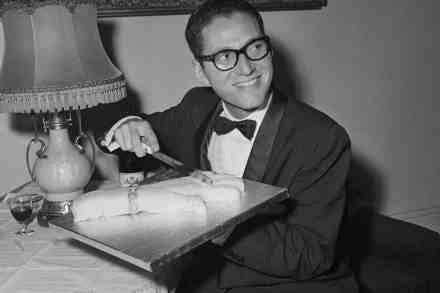
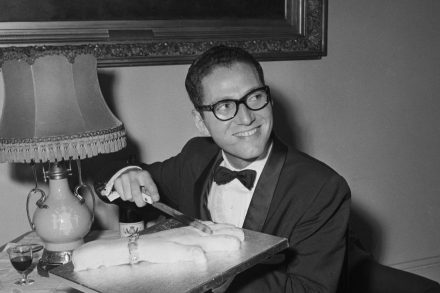
The greatest living American until this week has died at the age of 97. I refer to Tom Lehrer, the finest satirist of the 20th century. He’s the one who observed that satire became obsolete when Henry Kissinger was awarded the Nobel Peace Prize. He was the genius who put the entire periodic table of the elements to the tune of ‘I Am the Very Model of A Modern Major-General’ (Gilbert and Sullivan was his childhood obsession). He was a mathematician who could be as funny about maths and science as about poisoning pigeons in the park (yes he did) or contemporary pieties (‘National Brotherhood Week’).

RIP Tom Lehrer

The death on Saturday of the musician, humorist and mathematician Tom Lehrer at the impressive age of 97 brings a near-end to a great American tradition of edgy, sometimes almost-unsayable satire amongst a postwar generation of New York’s Jews. Only Mel Brooks and Woody Allen are still carrying the torch, and neither of them are young men. Still, for all of their impressive achievements, it is hard to equal Lehrer’s unfathomable genius at his peak. Equally stunning is the realization that this peak only spanned around a decade: he recorded two studio albums in 1953 and 1959, and three live albums between 1959 and 1965. Yet the songs that he wrote remain extraordinary, giddy delights, combining tuneful arrangements with “did-he-really-say-that?” lyrics.

Shane Gillis: MVP of the ESPYs

Okay, I’ll admit it: Shane Gillis made the ESPYs entertaining. Gillis was the only person worth talking about. If not for his name trending on social media, I would have had no clue the award ceremony was still televised in 2025. For an event once heralded for its altruism, prestige and celebrity, it’s remarkable that a former Saturday Night Live comedian is all that’s left of the withering carcass. Full disclosure: I worked for ESPN from 2014 to 2017. When I was there, colleagues clamored for a call from network brass to host sections of the event’s red carpet. As a more “serious” SportsCenter journalist, I never received the call to charge the company for an overpriced dress and fly to the Dolby Theater in Los Angeles.

Gillis

CNN can’t kill Tim Dillon

“I’ve been researching comedy,” CNN’s Elle Reeve announces grimly at the start of her hour-long interview with comedian Tim Dillon, released this week more than a month after it was recorded. What follows is an extended whine about the manner in which legacy broadcast media in America has ceded its status as the gatekeeper of the American cultural narrative to podcasters. Is it the most satisfying piece of television I've ever watched? Possibly, yes. The irony – and it’s almost too perfect to articulate – is that had Dillon not demanded, while appearing recently on the Joe Rogan Experience podcast, that CNN release the interview in full rather than packaged into a tightly edited segment to fit a specific narrative, it probably would never have seen the light of day.

Dillon

If you are of a certain age, you’ll really enjoy Tina Fey’s The Four Seasons

From our UK edition

The Four Seasons is one of those shows you notice in the ‘Top TV Programmes on Netflix’ section, see it’s some kind of glossy romantic comedy starring American actors you’ve vaguely heard of, and skip past quickly in search of something with zombies or subtitles. This would be a mistake though because, at least if you are of a certain age, you’re really going to enjoy it. I think the litmus test is whether you’re old enough to remember the 1981 Alan Alda film on which it is based, which I do, just about, vaguely. It’s that kind of movie where a bunch of old friends who have been holidaying together regularly since university – does anyone actually do this? – are discombobulated by and rebond over a traumatic event.

Those behind this fabulous new comedy are destined for big things

From our UK edition

Rhinoceros by Eugene Ionesco is a period piece from 1959. It opens with the invasion of a French village by a herd of rhinoceroses. This paranormal event is never explained. In Act Two, the villagers start to imagine that they’ve become rhinoceroses and changed species. But one plucky sceptic, who defies conformity, refuses to swap his human character for an animal alternative. That’s it. Ionesco is offering the same arguments about peer-group pressure that Arthur Miller made with far more grace, artistry and psychological penetration in The Crucible. The show can’t decide what register to aim for and the cast are dressed in a mishmash of cheap costumes. Some wear white coats like asylum orderlies and some are in Primark expendables.

Surprisingly good: Amazon Prime’s Last One Laughing reviewed

From our UK edition

‘What will it take to make Richard Ayoade laugh?’ If you find this question about as enticing as ‘Whose turn is it to deworm the cat?’ or ‘What is Keir Starmer’s favourite plant-based ready meal?’ I really don’t blame you. But still if you watch Last One Laughing (Amazon Prime), I think you might change your mind. The idea of this reality series is to confine ten comedians for six hours in a Big Brother-style enclosure and ban them, on pain of expulsion, from being amused by one another’s jokes. One misplaced smirk gets you a yellow card; the next ill-judged titter and you’re out on your ear. The winner, as per the title, is the last one laughing.

Bill Burr is going the way of the media armchair scolds

Bill Burr has built a successful stand-up comedy and film career on being the cranky scold next door – and his acts have always been tinged with the politics of the moment. He built his reputation as an expert on reading a room and knowing exactly how uncomfortable to make the people in said room while also making them laugh.Beginning some time last year, however, Burr’s act started to risk taking a backseat to his media armchair-political scolding, whether it’s Israel, Ben Shapiro or now Elon Musk. It’s one thing to work material about any of those topics into a stand-up routine, as Burr has done with Israel, when he spoke about “launching missiles at people using kids as human shields.

A biography of Lorne Michaels that strays into hagiography

The gilt fell off Saturday Night Live’s reputational gingerbread almost from the moment of its inception. Long before the arrival of Bob Woodward’s Wired: The Short Life and Fast Times of John Belushi (1984) — its antihero dead at the age of thirty-three — whatever luster the show had possessed had been well-nigh obliterated by a tide of scuttlebutt. The girls were (apparently) all bulimics and anorexics. The guys were coke fiends and egomaniacs. Misogyny (exemplified by Belushi’s dislike of sketches written by women) and back-stabbing were endemic; drug dealers sat in on the writing sessions.

Lorne

A treat for nostalgic wrinklies: Punk Off!, at the Dominion Theatre, reviewed

From our UK edition

Punk rock, packaged, parcelled, and boxed up as a treat for nostalgic wrinklies. That’s the deal with Punk Off!, a touring show that recently completed a lap of the country at the Dominion Theatre. Most of the audience were there to recall their rebellious heyday. ‘It’s about to get really, really loud,’ announced the compère, Kevin Kennedy, as the four-piece band hammered out ‘Sheena Is A Punk Rocker’ ‘and ‘If the Kids Are United’. Both hits sounded eerily unfamiliar. Why? Those raucous, pulsing rhythms can’t be turned into elevator jingles or a background drone at a shopping mall – so we rarely hear them. Just as well. Kennedy rattled through the major turning points in the movement’s history.

The comedy genius of John Shuttleworth

From our UK edition

There is a certain comic archetype that is particularly British. The likes of Pooter, Mainwaring, Hancock, Fawlty and Brent are in a tradition – going back to Falstaff, perhaps further – of hopelessly optimistic yet socially oblivious dreamers. One such character is John Shuttleworth, created and played by Graham Fellows. For the uninitiated, John Shuttleworth is a retired security guard and aspiring singer-songwriter from Sheffield who lives with his dinner lady wife and two children, Darren and Karen. He performs mainly at hospices and drop-in centres, often for no more than his travel money. His career is inexpertly managed by his next-door neighbour with whom John enjoys a generally warm, though occasionally fractious, relationship.

Why SNL 50 bombed in the ratings

On my favorite Hollywood-focused podcast The Town, host Matt Belloni and his producer and guests offer predictions all the time on television ratings, relying on the Nielsen numbers for reference for what's anticipated versus what it turns out to be. Predictions for Saturday Night Live's fiftieth anniversary had it tracking above 20 million viewers — a reasonable expectation given the year-long promotional campaign and the fact that it would be on NBC, streaming on Peacock and on E! Network at the same time. The conversation on The Town was mostly a debate about whether it would hit 25 million, putting it well above expectations for the Oscars. Instead, it came in far lower, not even getting to 15 million — below the Grammy Awards, for sake of comparison.

snl 50

The White Lotus is off to a shaky start

From our UK edition

The White Lotus, now back for a third series, could perhaps be best described as Death in Paradise for posh people. Most obviously, this is because its plots revolve around murders in an idyllic location – only with a far bigger budget, a much starrier cast and several episodes per story. But there’s also the fact that it follows the same pattern every time. So it was that season three began this week, rather like its predecessors, with some lovely scenery, a dead body and a caption reading ‘One week earlier’. After that, we duly watched a bunch of rich, good-looking Americans arriving at a luxury White Lotus resort where they were welcomed by the resolutely smiling staff and a nervous manager, before gazing round and marvelling at the beauty of it all.

Stately, sly and well-mannered: BBC1’s Miss Austen reviewed

From our UK edition

It is a truth universally acknowledged that lazy journalists begin every piece about Jane Austen with the words ‘It is a truth universally acknowledged’, so I’ll fight the temptation. In any case, the Miss Austen at the centre of BBC1’s new Sunday-night drama isn’t Jane, but her beloved sister Cassandra, best known for destroying most of Jane’s letters. Given that this has rendered our knowledge of the woman’s biography tantalisingly sketchy, Cassandra has attracted her fair share of resentment from Janeites. But rather cunningly, Miss Austen both exonerates her and takes full advantage of the sketchiness: high-mindedly questioning our entitlement to snoop into Jane’s private life, while feeling free to speculate on what that private life might have been.

How I crossed the line from devout Muslim to stand-up comedian

From our UK edition

In a small, dark room in the depths of Banshee Labyrinth, a gothic-looking venue just off Cowgate in Edinburgh, 11 people cheer and clap as I thank them profusely for spending the past hour with me. My backdrop is a red and white no-smoking sign and two coffin-shaped blackboards with drinks offers scrawled on them in chalk, and the portcullis-style door offers little soundproofing from inquisitive festivalgoers peering in and wondering aloud whether to take one of the 40 seats – but the setting is perfect for my first ever Edinburgh Fringe show.