Colonialism

Time to lighten up

From our UK edition

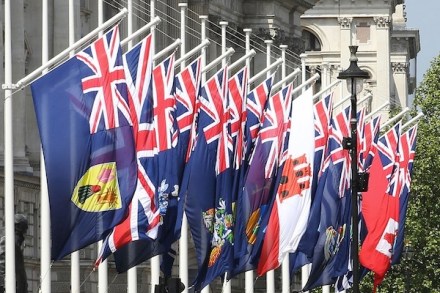
In parts of Africa and the West Indies women are so anxious to ‘whiten up’ that they use skin-lightening creams. The British writer and broadcaster Afua Hirsch sees this as a regrettable consequence of the aristocracy of skin colour as instituted by British merchant-capitalists during slavery. (Skin must first be bleached before it can be considered beautiful.) Of mixed Jewish-African parentage, the 36-year-old Hirsch is proud to call herself black. In this much-hyped book she sets out to question lingering obeisance to the idea of colonial Britain and to that ghost of the British Empire, the Commonwealth. Why does it persist so? Affection for Britain remains surprisingly strong in Commonwealth countries.

Playing it safe | 5 October 2017

From our UK edition

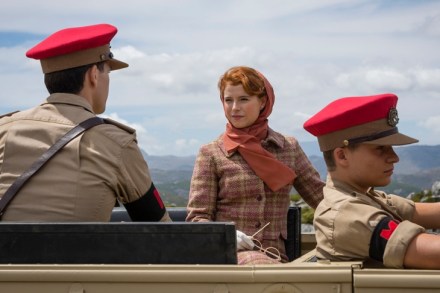
BBC1’s latest Sunday-night drama The Last Post, about a British military base in Aden in 1965, feels like a programme on a mission: that mission being to avoid getting shouted at by either the Guardian or the Daily Mail. To this (possibly doomed) end, it goes about its business very gingerly, with an almost pathological devotion to balance, and a safety-first reliance on the trusty methods of the well-made play, where each scene makes a single discrete point and the characters are as carefully differentiated as the members of a boy band. The first episode opened with the base’s new captain landing at Aden airport with his wife. ‘It must be a hundred degrees,’ she said scene-settingly as they descended from the plane.

Hit and miss | 24 August 2017

From our UK edition

Truman Capote should have been called Truman Persons. His father, Archulus, abbreviated his first name and introduced himself as Arch Persons. ‘And that,’ scoffed his son, ‘sounded like a flock of bishops.’ The young scribbler was thrilled when his divorced mother married a rich Cuban, Joseph Capote, whose zippy and eccentric name he gladly adopted. He got a job at the New Yorker and found the magazine’s celebrated wits, including Dorothy Parker and James Thurber, were embittered molluscs who hated each other. Capote’s literary life, as related by Bob Kingdom, is a parade of inspired bitchiness. He had the knack of getting to a character’s core problem. For Gore Vidal it was the knowledge that he had never written a masterpiece.

National Army Museum

From our UK edition

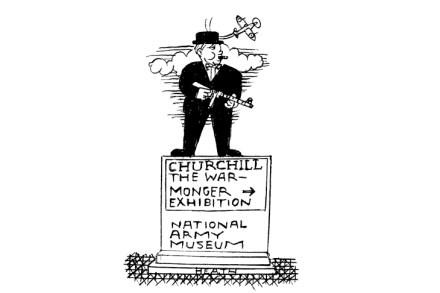
I used to love the National Army Museum in Royal Hospital Road, Chelsea, which was crammed with the memorabilia of four centuries of the British Army. I even visited it on the morning of my wedding. It taught you about the history of the British Army in a completely non-political way, allowing the objects — which were carefully factually annotated — to speak for themselves. It was housed in a hideous 1971 building, but the artefacts inside were superb.

A shameful whitewash

From our UK edition

I have been researching and writing about black British history for over 30 years but never before have I been fortunate enough to review a 600-page book on the subject, published to accompany a recent major BBC documentary. The book and the four-part series give some indication of the extent of a history which David Olusoga presents as ‘forgotten’: the subject, he argues, has been largely excluded from the mainstream narrative of British history. Why it should be forgotten, and who might have forgotten it should give us all pause for reflection, since the denial of black British history by those who should know better could be considered tantamount to racism.

Port in any storm

From our UK edition

Cometh the hour, cometh the book, and so Christmas brings us once again a tidal wave of titles relating to food and drink: cookbooks of seasonal dishes from around the world, never once to be consulted, and endless tomes of wine connoisseurship for all of us dedicated cheapskate consumers of Lidl and Aldi plonk. So the question is: are Thomas Tylston Greg’s Through a Glass Darkly and Henry Jeffreys’s Empire of Booze destined to last any longer than your turkey carcass and your festive case of supermarket Prosecco? Both books are undoubtedly charming.

In the shadow of Picasso

From our UK edition

‘My painting is an act of decolonisation,’ declared Wifredo Lam. These are the first words you read on entering the retrospective of his work at Tate Modern. But I must say that both Lam and Tate got this statement 100 per cent back to front. On the contrary, Lam’s work strikes me as entirely a product of colonialism. It’s none the worse for that, but it’s not any better either. Lam (1902–1982) was originally from Cuba. His father, Enrique Lam-Yam, had emigrated from China and his mother, Ana Serafina, was of mixed African and Spanish descent. He was, in other words, a rather typical inhabitant of the new world. And the rich fusions of that milieu have produced such cultural wonders as Afro-Cuban music and, across the Gulf of Mexico in Louisiana, jazz.

The horrors of French colonialism

From our UK edition

We can all share the anguish in the downfall of a simple soul — for movie-goers Brando’s despairing ‘I coulda’ been a contender!’ in On the Waterfront still resonates — but I have a problem with heroic thickos: Othello, so easily duped; purblind Lear… So I’m ambivalent about the leading character in the new novel by the French-Algerian writer Yasmina Khadra — his wife’s name, adopted by Mohammed Moulessehoul to evade the military censors when he was an officer in the Algerian army. The award-winning author of more than 20 novels, most notably The Swallows of Kabul, he now lives in France but retains the pseudonym.

The lost world

From our UK edition

Every now and then, with great infrequency (alas), a film comes along that is like no other and completely knocks you for six, and that is Embrace of the Serpent. The first Colombian film to be nominated for an Oscar — it lost to Son of Saul, should you set any store by such things — it was filmed in the Colombian section of the Amazon basin, with a script developed in consultation with native tribes, and tells the story of a shaman’s encounters with two white scientist explorers, which unfold in different time periods. So far, so National Geographic; a world disappeared by colonialism and all that (sorry; our bad).

Deluded continent

From our UK edition

Les Blancs had a troubled birth. In 1965 several unfinished drafts of the play were entrusted by its dying author, Lorraine Hansberry, to her ex-husband, Robert Nemiroff, who mounted a debut production in New York in 1970. Nemiroff has created a fresh version with the help of a ‘dramaturg’ (or ‘colleague’, in English) named Drew Lichtenberg who believes not only that this ramshackle script is a masterpiece but also that Hansberry belongs in the first rank of dramatists alongside Ibsen, Sophocles and Aeschylus. This does not bode well. But the result is surprisingly good. Or good-ish.

The Spectator’s notes | 26 November 2015

From our UK edition

Because, it says, of its ‘liberal values and respect for human dignity’, the Economist has put out a film about Emily, a 24-year-old Belgian woman, who wants assisted dying. She is physically healthy, and comes, the film assures us, from a happy family. She has suffered from severe depression since childhood, however. By her own account, her self-made video (two years ago), in which she says ‘I don’t want to live a lie’ and ‘It keeps feeling empty whatever I do’, made her feel empowered. It inspired her to seek death at the hands of doctors. Belgium is one of two countries in the world which permits assisted dying for psychiatric reasons.

The greatest surprise about Nigeria on its centenary is that it exists at all

From our UK edition

A giant was born in 1914, an African giant. The same year European powers set about each other in the trenches a framework was laid out for a nation that over the next century would grow into Africa’s mightiest economy, one with a population so prodigious it will soon overtake every other barring China and India. The founding on 1 January that year of the colony of Nigeria was an act of extreme imperial chutzpah. Desert emirates in the north and coastal kingdoms in the south had for years been under nominal control as British protectorates, but for London to unite such diversity was to believe a mosaic has no cracks. The story of Nigeria, first under Britain, later as an African nation independent since 1960, has largely been the story of those cracks.

These I have loved

From our UK edition

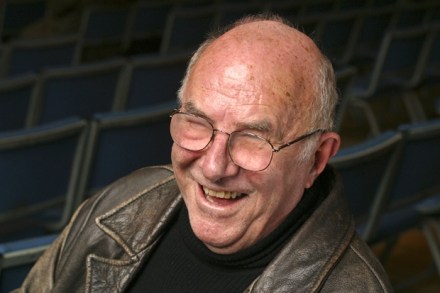
In the preface to his great collection of essays The Dyer’s Hand, W.H. Auden claimed: ‘I prefer a critic’s notebooks to his treatises.’ Auden’s criticism is like that: a passage of insights instead of a single sustained argument, and the same is true of Samuel Johnson, whose works are a pleasure to read for the feeling of the pressure of a great mind at play. Clive James belongs in this company. His new book Latest Readings is a kind of reading diary: a collection of short essays, each prompted by one book or a handful he happens to be reading. They are not in any logical order or sequence, but are given unity by two things: one biographical, the other stylistic.

The Guardian dumps British tea

From our UK edition

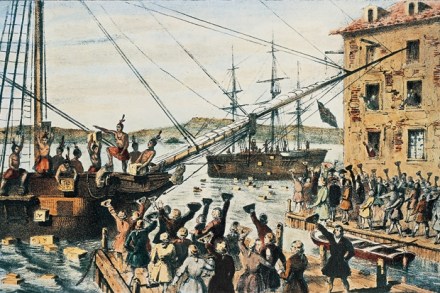
So now we know just how serious the Guardian is about breaking America: the newspaper has dumped British tea. Not content with the declaration of war on HP Sauce last year, the sandal-wearing bores have found a new enemy lurking within British society: dirty, racist tea. Joel Golby (who writes about 'general stuff for VICE and the Guardian Guide') today shines the light of progressive thought on this 'national disgrace'. Liking tea is - apparently - 'the worst possible English trait, up there with colonialism and the class system'. No, they're really going with this: 'Liking tea has its roots in colonialism, but making a big thing of enjoying it now is somehow worse.

The turbulent reign of King Cotton: the dark history of one of the world’s most important commodities

From our UK edition

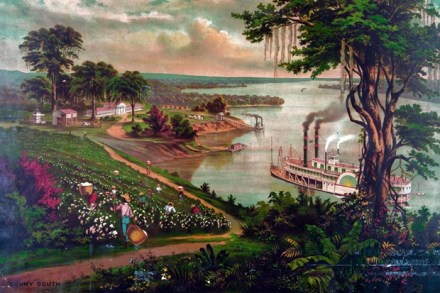
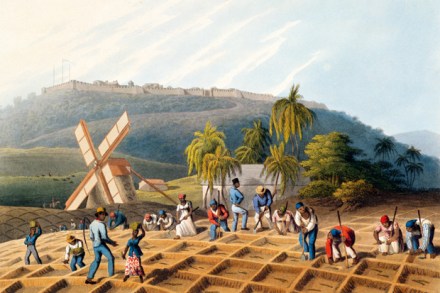
If not for cotton, we would still be wearing wool. To equal current cotton production, we would need seven billion sheep, and a field 1.6 times the area of the EU. Capitalism has spared us this itching, bleating nightmare. But capitalism, Sven Beckert writes in his hair-shirted history, Empire of Cotton, has wrought other horrors. For medieval Europeans, cotton was a luxury import. Prices fell as Europe’s maritime empires bypassed the Ottoman middleman. They fell further after the 1780s, when the East India Company increased its imports, and British inventors developed water-powered spinning machines.

Only tourists think of the Caribbean as a ‘paradise’

From our UK edition

A couple of years ago in Jamaica, I met Errol Flynn’s former wife, the screen actress Patrice Wymore. Reportedly a difficult and withdrawn woman, her life in the Caribbean (apart from the few details she cared to volunteer) could only be guessed at. The Errol Flynn estate, an expanse of ranchland outside Port Antonio, was grazed by tired-looking cattle. ‘Haven’t we met before?’ Wymore said to me as I walked into her office after knocking. ‘You remind me of someone I know.’ I took in the riding crops and spurs hanging on the wall. After eight years of marriage, in 1958 Wymore had divorced Flynn, who died the following year at the age of 50 having more or less boozed himself into the grave.

Why I won’t let my children learn French

From our UK edition

[audioplayer src="http://traffic.libsyn.com/spectator/TheViewFrom22_27_March_2014.mp3" title="Liam Mullone and Freddy Gray debate whether it's a good idea to let children learn French" startat=1467] Listen [/audioplayer]My children won’t learn French. If their school tries to force the issue, I’ll fight tooth and nail. There’ll be the mother of all Agincourts before I let it happen. It’s not that I have any problem with the language, even though it has too many vowels and you have to say 99 as ‘four-twenty-ten-nine’, making it impossible (I imagine) to sing that song about red balloons. It’s just that I want my children to be successful, and learning French makes no business sense.

The New Colonials can raise our sights beyond the Channel

From our UK edition

There’s a quiet Colonial takeover of British public life going on. An Australian, Lynton Crosby is in charge of the Tories’ political strategy. A South African, Ryan Coeztee performs this role for the Liberal Democrats and the deputy Prime Minister. While a Canadian, Mark Carney is Governor of the Bank of England and, arguably, the single most economically power figure in Britain. I argue in The Spec this week that the rise of these New Colonials tells us something important about this country, its flaws and its place in the world. Crosby, Coetzee and Carney are, in some ways, the missing meritocrats. They are filling a gap in British public life created by the return of the old, and not much improved, ruling elite.

Katie Kitamura interview

From our UK edition

Gone to the Forest is Katie Kitamura's second novel, about a family and the cost of European colonization in an unknown time and place. Tom and his father live on a farm in a country that recalls, at first and most often, J.M Coetzee's South Africa. It is on the brink of civil war. The novel opens with a broadcast by the land's natives, which Tom overhears on a radio that has been left, eerily, on the homestead's verandah. The men's strained relationship is compounded when a sly young woman, Carine, comes to live with them. Their sinister dealings with each other, the other white farmers and servants expose the fissures of a hard and unforgiving society, which threaten to engulf them all. Kitamura writes with fine tension and clipped grace. Her observations are subtle and sharp.