Colonialism

The case for MAGA imperialism

Empire has always been part of the American tradition. We are a sequel state to the greatest empire in world history. Our period of colonial tutelage under that empire taught the lessons of legitimate territorial expansion against French and Spanish rivals. Our continental aggrandizement after independence was necessary. Later overseas expansion, including periods of imperial apprenticeship in places such as Liberia, the Philippines and Panama, was further evidence of our colonial métier. Like it or not, imperialism and colonialism are congenital to the American experiment. This has been the case since 1779, when the Continental Congress branded a proposal to limit westward expansion an “intolerable despotism.

Imperialism
uju anya

College condemns professor who celebrated Queen Elizabeth’s death

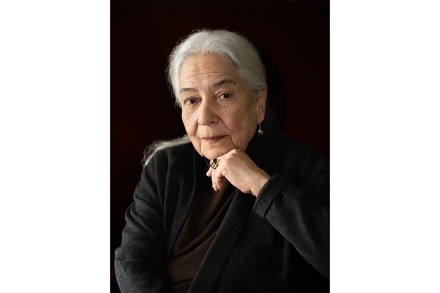
Carnegie Mellon University told The Spectator they "do not condone" tweets from one of their professors that wished Queen Elizabeth II an agonizing death. Uju Anya, who teaches in the Department of Modern Languages, referred to Queen Elizabeth as the "chief monarch of a thieving raping genocidal empire" and said she hoped her dying moments would be "excruciating". Twitter later removed the tweet for violating its terms of service. [caption id="attachment_39734" align="aligncenter" width="1024"] Uju Anya Twitter Screenshot[/caption] "I'm not wishing her dead. She's dying already," Anya said in another tweet. "I'm wishing her an agonizingly painful death like the one she caused for millions of people.

The weakening case against museum restitution

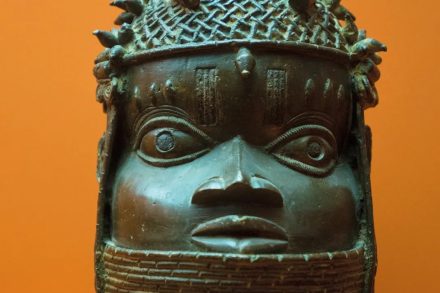
When passions are aroused, all of us are liable to overstate our case. Dan Hicks, a curator at Oxford’s extraordinary Aladdin’s Cave of anthropology, the Pitt-Rivers Museum, is perhaps a case in point. A Swedish academic, Staffan Lunden, has convincingly argued that Hicks is guilty of "distortion" when writing about the British raid on Benin in 1897, which brought several thousand objects, including finely wrought brass statuettes, to museums across the world. Hicks published his uncompromising views in 2020 in a prize-winning book, The Brutish Museums: The Benin Bronzes, Colonial Violence and Cultural Restitution.

restitution

The Roman roots of ‘colony’

The word “colony” meets with a sharp intake of breath these days, but “province” raises no eyebrows. How very odd. The ancient Greeks invented the western notion of the colony. But “colony” is the term the Romans applied to it and is of Latin derivation, from colo, “I cultivate, inhabit” and so colonia. The ancient Greek term was apoikia, literally “a home apart, away”, or perhaps a “home from home.” Greeks established these apoikiai widely around the Mediterranean, mainly from the 8th to 6th centuries BC, clustering along the coasts of Turkey, northern Greece, all around the Black Sea, southern Italy, the eastern Adriatic, Sicily, parts of southern France and Spain, and Cyrene, as Plato said, “like frogs around a pond.

colony

The ignorance of Queen Elizabeth’s ‘anti-colonialist’ critics

As Alexander Larman writes, the passage of the Queen is not a tragedy. No life lived so well, so dutifully, and with such faith in so many things now lost to us can be considered a tragedy. But it is nonetheless very sad, even for those of us in America — a nation she loved in so many ways. Her death seems like another blow to another important institution of the West, undermined in recent decades by boomer proclivities and millennial narcissism, and likely to break into a thousand pieces in the absence of the old-world values Elizabeth represented. What is more tragic, and more offensive, is the degree to which the Queen's passing has been met by historical ignorance from the anti-Western left and its attendant useful idiots on the decadence-obsessed right.

Don’t cancel John Donne’s poetry

All the way across the Atlantic, the British literary world has been seized by John Donne fever. Katherine Rundell’s biography of the metaphysical priest-poet has led to excitable chattering about his life and work. The book, Super-Infinite: The Transformations of John Donne, will be released in the US in September — a significant enough delay as to make the Declaration of Independence look like a mistake. Aside from radically different publication dates (again: would you rather have lower taxes and freedom from George III, or a brilliant Donne biography?), the specter of the far-off American continent has long since loomed large in Donne studies.

Hoping to find happiness

It is a truth universally acknowledged that a serious novel must be in want of a theme. Paris Echo soon makes it clear that it has several. It’s about the shifting nature of history and the mysterious footprints of the past in the present. It’s also concerned with the myriad and biased interpretations that we place on past events. Another preoccupation is the ambiguities of spoken and written French. Modern Paris, the novel’s main setting, allows Sebastian Faulks to explore his themes through two main viewpoints. There’s Tariq, a precociously self-aware 18-year-old Moroccan from a middle-class family in Tangier, who comes to Paris in search of himself, his mother’s French family and an obliging woman who will help him lose his virginity.

paris echo sebastian faulks