Climate change

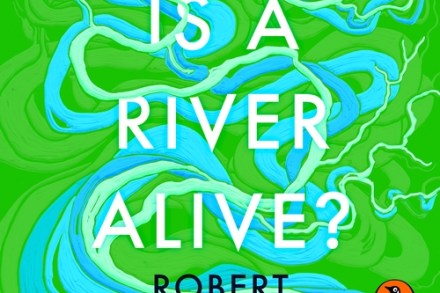
Robert Macfarlane: Is a river alive?

From our UK edition

40 min listen

Sam Leith's guest on this week’s Book Club podcast is Robert Macfarlane. In his new book Is A River Alive? he travels from the cloud forests of Ecuador to the pollution-choked rivers of Chennai and the threatened waterways of eastern Canada. He tells Sam what he learned along the journey – and why we need to reconceptualise our relationship with the natural world.

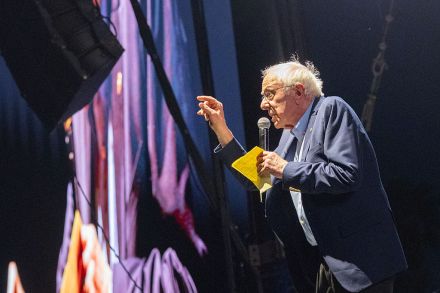
Bernie Sanders at Coachella shows time is not on the Democrats’ side

As the Church of England faces an exodus of parishioners, some of its more inventive clerics have rushed to embrace EDM as a new medium to draw young people back to their faith. “Our 90s-themed silent disco will be appropriate to and respectful of the cathedral,” curiously insisted the Very Reverend David Monteith, Dean of Canterbury Cathedral, to much derision over that sacred space’s conversion into a party zone for 3,000 revelers in 2024.

The left gives up on saving the planet

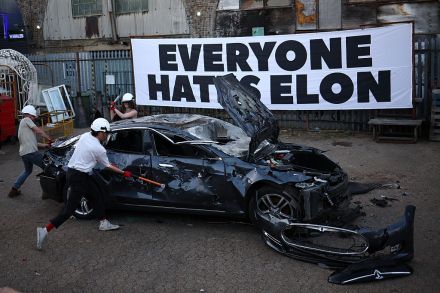
In his 2015 State of the Union speech, President Barack Obama praised American innovation and name-checked Tesla. “There are also millions of Americans who work in jobs that didn't even exist 10 or 20 years ago. Jobs at companies like Google, and eBay and Tesla,” he said.  “So no one knows for certain which industries will generate the jobs of the future. But we do know we want them here in America.”Well the future is here, ten years later, and those innovative electric vehicles are being vandalized, their drivers accosted, and there are even domestic terror attacks on dealerships, with several reports of mass arson, threats and damage at several dealerships across the country.

A meditation on the beauty of carbon

From our UK edition

There’s a scene in Evelyn Waugh’s The Loved One in which a magazine’s advice columnist ‘the Guru Brahmin’ (in fact ‘two gloomy men and a bright young secretary’) receives yet another letter from a compulsive nail-biter: ‘What did we advise her last time?’ Mr Slump, the chain-smoking drunk, asks. ‘Meditation on the Beautiful.’ ‘Well, tell her to go on meditating.’ The opening of Paul Hawken’s Carbon gives the impression that it was dictated by the gloomy Mr Slump in response to a climate activist asking what he should think about the destruction of the planet. Tell him that ‘to better understand the riddles and luminosity of life’ he must ‘go far upstream, and look at the flow of life through the lens of carbon’.

The downfall of climate change poster boy Michael Mann

From our UK edition

Even if you’ve never heard of Michael Mann, you will have felt his baleful influence on your energy bills. He is the inventor of the hockey stick chart, which shows a sharp increase in late 20th century global temperatures, like the blade of an ice hockey stick. It put rocket boosters on the climate change scare and was used as an excuse by policymakers to send green taxes, tariffs and regulations soaring. Mann was an obscure academic who had just been given his PhD at the University of Massachusetts when his graph was published in the journal Nature in 1998. Within months – fêted everywhere from the New York Times to the Intergovernmental Panel on Climate Change (IPCC) – he’d become the poster boy for the alleged global warming apocalypse.

Kemi’s stance on net zero is courageous – and correct

From our UK edition

Kemi Badenoch secured the Conservative leadership on the basis that she would confront her party and the country with uncomfortable truths. This week, in a speech to launch the Tories’ policy renewal programme, she effectively told Theresa May and Boris Johnson that they were naifs for committing to unachievable climate targets. The decarbonisation of our economy, she said, was a ruinously expensive folly. By stating baldly and unapologetically that it will be impossible for Britain to get to net zero carbon emissions by 2050 without huge economic pain she has broken a consensus and breached a taboo. It is difficult for opposition parties to attract attention for policy announcements so far out from a general election, but Badenoch’s clarity is welcome and necessary.

James Bradley: The World in the Ocean

From our UK edition

49 min listen

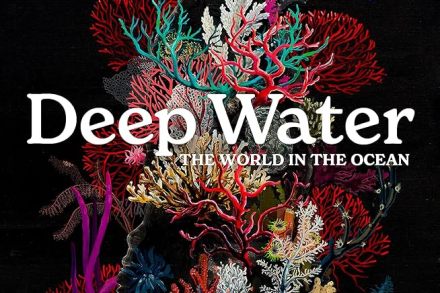
My guest in this week’s Book Club podcast is the novelist and critic James Bradley whose new book is Deep Water: The World in the Ocean. He tells me how we need to rethink our relationship with the sea and the life it contains, why fish are much more intelligent than we are used to imagining, and why – amid planetary doom – there’s still room for hope.

Red states sue New York for punitive climate change bill

In what could find itself deemed a new “war of Northern Aggression,” West Virginia and twenty-one other states are looking to defend themselves against New York for what they allege are climate-related crimes. A new lawsuit targets New York’s recently passed “Climate Change Superfund Act.” ABC27 reports the law requires polluters “to pay for environmental damage based on how many tons of fossil fuels they emitted during a specific period of time.” States could be on the hook for as much as $75 billion in fines for emissions going back years. At the time of the act’s passage, State Senator Liz Krueger, co-sponsor of the bill, said, “The Climate Change Superfund Act is now law, and New York has fired a shot that will be heard round the world.

climate change

The California fires and the reckoning on liberal governance

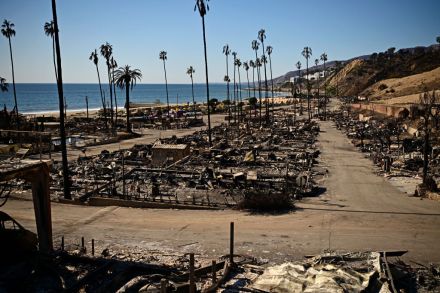
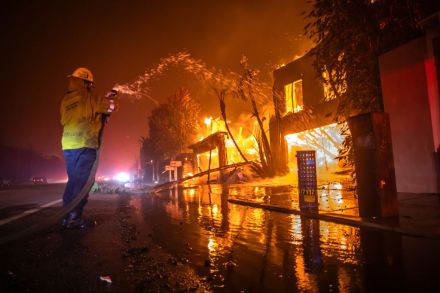
Fires in Los Angeles are raging and still barely contained as we go to press, with estimates of the rebuilding costs rising beyond $150 billion. By the time you read this, they’ll be under control and there will of course be plenty of time for finger-pointing — but The Spectator likes to be ahead of the curve, so we’re starting now. What we’re seeing in California is the complete failure of an experiment in one-party Democratic rule, a state level encapsulation of a party taken over by the fringe elements of its base. Given the pile-up of scandals, Californians might finally have had enough. But of the lot, which is the most ludicrous?

fires

Pious bilge: Kyoto, at @sohoplace, reviewed

From our UK edition

The West End’s new political show, Kyoto, can’t be classed as a drama. A drama involves a main character engaged in a transformative personal journey. This is a secretarial round-up of various environmental summits, or ‘Cop’ meetings, held during the late 1980s and 1990s. If you remove the private jets, a Cop summit is a sort of parish council seminar about the probable weather during the summer fête. The material is extremely dull and yet it’s possible to turn dross into a gripping story if you hire a dramatist. So Big Oil has been torching the planet for 66 years and yet the West End hasn’t been burned to ashes The authors, Joe Robertson and Joe Murphy, aren’t up to the job and their script is a blank list of speeches and events read out by soulless busybodies.

Letters: The dangers of the ADHD ‘industry’

From our UK edition

Nothing left Sir: Rod Liddle is right to ascribe the establishment’s desire to suppress the truth in relation to grooming gangs to its fundamentally anti-working class mindset (‘We demand a right to truth’, 11 January). But he’s characteristically wrong to attribute this to ‘liberalism’. The contemporary left’s identity-politics agenda is born from the opposite: the postmodernist-derived idea that reality can be radically reconstructed through control of what is, and is not, communicated. Its various fantasies – and the public-sector interests that depend upon them – necessarily involve suppressing our powers of rational cognition.

What does Gaza have to do with the Los Angeles fires?

The insanity displayed by the pro-Hamas crowd never ceases to amaze. But the latest salvo feels extreme even by the extremist standards that have come to define the global political climate post-October 7. According to some of the most vocal online anti-Zionists, the raging inferno now overwhelming much of Los Angeles is not the result of government neglect or poor urban planning or even climate change. No, the thousands of homes and tens of thousands of acres now destroyed across Southern California are the handiwork of Jews and Zionists and Israel.  There are many streams leading to this nonsensical conclusion — all rooted in time-worn tropes of nefarious Jewish alliances and global domination.

The case against a ‘climate emergency’

From our UK edition

January is the ideal month for gaining a sense of perspective. I’m increasingly convinced that the ‘climate emergency’ is another social mania we’ll look back on with: ‘J-eez, what was that about?’ Why? The paradigm displays the classic anthropocentrism of our era. As organised religion declines, we replace God with humanity. Arrogating to our species the power to dial global temperature up or down is typically arrogant (see: pride, goeth, fall). Claiming that something is all your fault is as vain as claiming it’s to your credit. Regarding ‘the planet’ as a frightened fluff ball that requires our protection is the ultimate hubris. ‘The planet’ can squash us like bugs. Or with bugs, which sounds especially gross.

The Ginger Rogers theory of information

From our UK edition

I had a friend whose approach to entrepreneurialism was to take two separate things that seemed stupidly popular and somehow find a way to combine them. He thought karaoke was ridiculous; his friend thought 24-hour rolling news channels were daft. The two of them created a 24-hour karaoke channel in Asia – and sold it at a sizeable profit. The idea of gynogenic climate change holds that the planet is warming up, but that it is women who are to blame Following this model, I wondered if it might be a useful thought-experiment to contrive political theories which are annoying to people on both the left and the right.

Presenting our planet and perilous situation as art

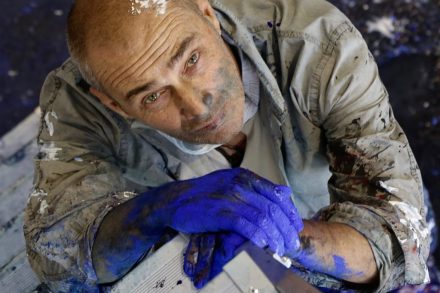
Philippe Pastor is an artist on a mission to educate, alarm and call to action. His subject: our planet and the perilous situation we find ourselves in at this moment of time.  Pastor’s latest works, installed to coincide with Climate Week in New York, are a clear indication of where he sees the state of play. The first enormous canvas, ominously titled La Fin Du Monde, seems to depict an apocalyptic clash of water, fire and ice. Heavy brush strokes are densely laid on with glue and pigment, giving a sense of the swirling waters enveloping us all. “I start the paintings with a story in my mind,” he said, speaking from his studio — a former seventeenth-century farm near Cadaqués.

panic

Panicking over the planet and population is pointless

One sign of moral panic is that when the facts change, the fears remain the same. In the 1970s, the Washington Post, TIME and Newsweek stoked fears of “a new ice age.” As soon as scientists updated their models to show a trend in the other direction, “global warming” became as threatening as global cooling. And when winters stubbornly kept happening and the direst predictions of new-age prophets like Al Gore failed to come to pass, the whole thing was rebranded as “climate change.” Whatever the label, and whatever the underlying phenomenon was thought to be, the moral implication remained the same — human beings were ruining the earth and must curtail their comforts to save the planet. Bad weather used to be God’s punishment for human sinfulness.

Dam shame: what really caused Valencia’s floods?

From our UK edition

Who is to blame for the devastating floods that hit Valencia on 29 October? The mob that surrounded King Felipe at the weekend and drove Prime Minister Pedro Sanchez out of town with a hail of mud and stones was angry at the failure to forecast the flood and warn people to get out of its way. The BBC would like us to be angry at man-made climate change for causing the storm – putting out a headline the very next day: ‘Scientists say climate change made Spanish floods worse.’ Charts of rainfall in Spain show no trend towards a higher frequency of more extreme downpours Yet Valencia had a similarly terrible flood in 1957, in which 81 people died, long before climate change became the go-to excuse for any bad weather.

Washing it all away in the Maldives

The Maldives is an unusual country. It’s Asia’s smallest country, but also the world’s most geographically dispersed. It has Asia’s second smallest population, but is one of the world’s most densely populated. It was Buddhist for a millennium and a half, which is conspicuous in most of the country’s ruling institutions, early scriptures and even language, but you wouldn’t know it from the people; it’s almost 100 percent Muslim now, demographically and culturally, and has been since the last Buddhist king of Maldives, Dhovemi, converted in 1153 (or maybe it was 1193 — depends on who you ask).

maldives

A scorched Earth: Juice, by Tim Winton, reviewed

From our UK edition

Late last year in Australia’s The Monthly, Tim Winton wrote an essay on the urgent need for writers to look the climate crisis in the eye. Quoting Amitav Ghosh’s observation about the ‘patterns of evasion’ that continue to conceal the scale of the catastrophe, he argued that writers must overcome the habits of mind that treat the natural world as an inert externality. Instead, they must find ways to recognise that we are part of nature, and our fate is inseparable from the world around us. ‘We have difficult work to do,’ he declared. ‘And we’re late to the bushfire.’ Of course, Winton is not someone who could ever be accused of treating the natural world as mere window-dressing.

The mysterious appeal of the Maldives

The world’s obsession with the Maldives has always been a mystery to me. I’ve witnessed as, one after the other, even my most beach-averse and device-addicted friends returned from these islands entranced by some ineffable quality, only able to give the vaguely cult-like response: “You have to experience it to understand.” One quietly admitted to spending more on her honeymoon there than on the wedding itself. Apparently, it had been entirely worth it. Having worked in travel for many years, I’ve been inundated with the pictures we’ve all seen a thousand times: lines of pristine over-water villas, tranquil turquoise ocean contrasting with startlingly white sand, all running together in a blur of gorgeous, but dare I say it, borderline sameness.

Maldives