Cleopatra

A century of Hollywood’s spectacular flops

From our UK edition

Gore Vidal once sighed that ‘every time a friend succeeds, I die a little’, and there is inevitably a sense that when some idiotic blockbuster makes $1 billion worldwide, our collective intelligence loses a couple of IQ points. It’s a relief, then, when the worst examples of their kind, made at enormous cost to negligible artistic impact, flop hideously: proof that audiences will not fork out for any arrant piece of trash. The most recent high-profile failure of this kind was Todd Phillips’s bewilderingly poor Joker sequel, Folie à Deux, which insulted its audience and thus precipitated its commercial failure.

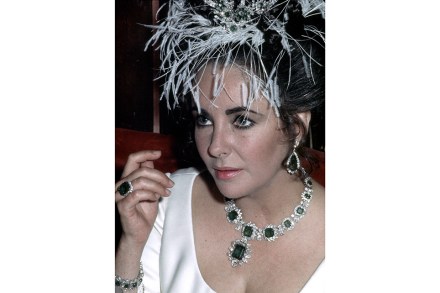
From Cleopatra to Elizabeth Taylor, women have found jewels irresistible

From our UK edition

When workmen demolished an ancient building in Cheapside in 1912 they saw something glinting out of a broken wooden box. They had stumbled on what became known as the Cheapside Hoard – a collection of jewels dating from around 1600, its star, the Cheapside Emerald, a wonderful stone holding a miniature watch. It came from Colombia, still the source of the world’s finest emeralds, probably the world’s most ancient gems. The first recorded instance of them is on an Egyptian papyrus around 2400 BC. Their beauty and rarity made them the favourite of the élite, with Cleopatra probably their most famous fan. The Rockefeller Emerald fetched $5.5 million in 2017.

A definitive biography of Liz and Dick, Hollywood’s most controversial and glamorous couple

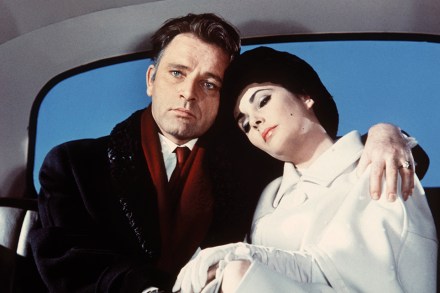
What is it about Richard Burton and Elizabeth Taylor that still hooks us in, thirty-nine years after his death and twelve years after hers? In his magnificent, definitive double biography, Roger Lewis nails down the answer. Liz Taylor was the last great Hollywood movie star, starting in the golden age in National Velvet (1944), aged twelve. As Lewis puts it, her origins were in the magazines and movies of the Forties: “the era of Bing and Bob, Big Bands, such as Glenn Miller, Bogie...Tom and Jerry, Disney.

lewis
Cleopatra

Cleopatra still dazzles sixty years later

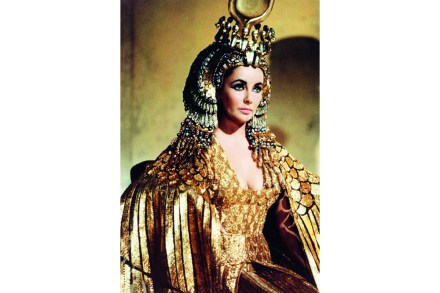
It’s a dazzlingly staged event that evokes the ancient theater, Italian operas, elaborately choreographed Busby Berkeley films and an open-air spectacle on par with WrestleMania at Caesar’s Palace. I’ve watched it knowing that as a small boy, I tugged on my mother’s blue jeans and asked a question informed purely by cinema: “Is Cleopatra the most beautifulest woman in history?” “No,” replied mother, with a cigarette stuck between her clenched teeth. “Elizabeth Taylor is.” I was, of course, picturing Elizabeth Taylor as Cleopatra. The event I’m referring to isn’t mere cinematic overindulgence; it is a monumental moment — six decades after moviegoers first saw it — which transforms a movie star into a deity.

‘We are stuck like chicken feathers to tar’: Elizabeth Taylor’s description of the fabled romance

From our UK edition

‘To begin at the beginning,’ intones Richard Burton with a voice like warm treacle at the start of the 1971 film Under Milk Wood. It’s hard to imagine an actor more obviously influenced by his own beginnings. The epigraph to this double biography is ‘The damp, dark prison of eternal love’, a line borrowed from Quentin Crisp. And if that’s an accurate assessment of Burton’s on-off-on-again relationship with the actress Elizabeth Taylor, it’s an even better summary of his childhood in Wales. Born Richard Walter Jenkins to a barmaid mother and a coal miner father (a ‘12-pints-a-day man’ who sometimes disappeared for weeks on end to drink and gamble), as a teenager he attempted a fresh start by moving in with a teacher named Philip Burton.

Shakespeare in black and white

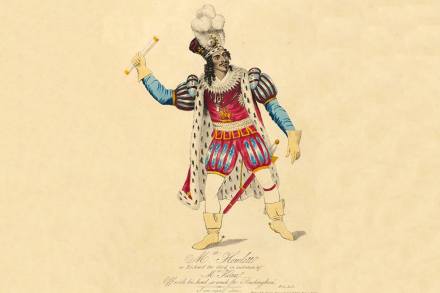
Sarah Karim-Cooper first came to public attention at the cosmetics counter. Her book on makeup in Renaissance theater, Cosmetics in Shakespearean and Renaissance Drama, was published in 2006. Its enduring popularity is not so much a testament to her scholarly insights on powdered hogs’ bones mixed with poppy oil — the old stage recipe for pale skin — or Shakespeare’s sardonic references to the kind of beauty “purchased by the weight” in The Merchant of Venice, as to Karim-Cooper’s celebrity: for more than a decade she’s been one of the leading racializers of Shakespeare’s work. Perhaps the key moment in her rise to fame was her 2018 curation of the Globe Theatre’s first “Shakespeare and Race Festival,” now held annually.

shakespeare

Watching Queen Cleopatra felt like witnessing the death of scholarship

From our UK edition

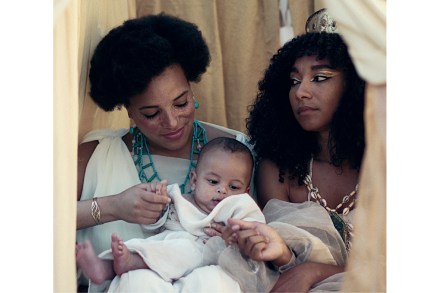
The most controversial aspect of Netflix’s new drama-documentary Queen Cleopatra – not least in Egypt – was the casting of a black actress, Adele James, in the title role. After all, one of the few things that seems certain about Cleopatra’s early life is that she was a Macedonian Greek. Luckily, though, the show had a powerful counterargument to this awkward and Eurocentric fact. As the African-American professor Shelley P. Haley put it with a QED-style flourish, back when she was girl, her beloved (if uneducated) grandmother once said to her: ‘I don’t care what they tell you in school, Cleopatra was black.

Reflections on water in the Middle East

From our UK edition

These Bodies of Water begins dramatically (as befits a book derived from Sabrina Mahfouz’s Royal Court show A History of Water in the Middle East) in a stuffy little room in Whitehall where the author is being interrogated by a man in a beige mac who is vetting her for top security clearance. It all sounds a bit James Bond, except that Mahfouz is more like an ‘Egyptian Guyanese Nancy Drew’, as a boyfriend joked – extremely unusual in the civil service fast stream as a woman, working-class and Middle Eastern (her father is Egyptian, her mother is Guyanese-British). While her peers laugh off questions like ‘Have you ever had sex with an animal?’, Mahfouz finds herself ‘existing purely in opposition’ for the first time in her life.