Cities

What’s the matter with Chicago?

From our US edition

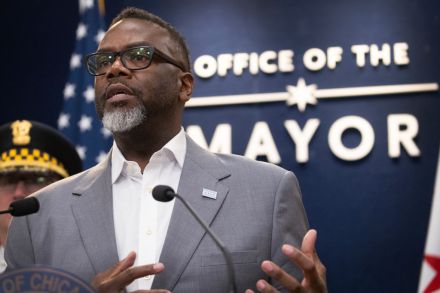
As the song goes: “Chicago, that toddlin’ town.” It was certainly toddlin’ in the 1950s and 1960s, when that song was a hit for Frank Sinatra. The city had bounced back from the Great Depression, begun building skyscrapers again and renewed its status as a vibrant financial and commercial hub. But Chicago has gone from toddlin’ to totterin’, thanks largely to incompetent governance by a succession of local officials – and far better leadership and lower taxes elsewhere in the country, in the places people are moving to. The city’s latest bungler, Mayor Brandon Johnson, was an apparatchik in the Chicago Teachers Union, the most powerful union in the state of Illinois.
Chicago

Why cities have lost their appeal

From our US edition

Over the past half century, media and academic sources repeatedly suggested that increasingly dense cities would dominate the future. Places such as London, San Francisco and Chicago would dominate an economy. Today, this assessment seems grossly dated. Even in the pages of the urbanista New York Times there are widespread fears of an “urban doom loop.” But this, too, is a stretch. Great core cities will not go the way of post-imperial Rome, but their role is being recast as the urban frontier shifts increasingly to the periphery. What we are seeing mirrors H.G. Wells’s vision. He predicted that most economic life, and most families, would shift to the suburbs and exurbs.

cities

Tokyo drift: Japan’s once-pricey capital is now cost-effective… for Americans

From our US edition

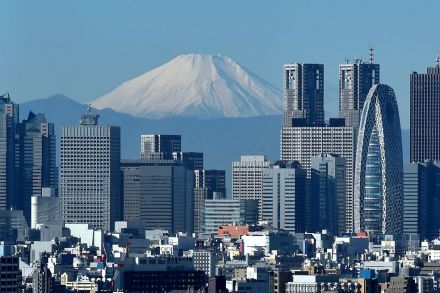
I spent my last afternoon in Tokyo stocking up on snacks and feasting on cheap and delicious conveyor belt sushi, in anticipation of characteristically criminal airport concession prices. But when I made my way past Haneda Airport’s Rodeo Drive-esque esplanade of luxury shops — does anyone really buy a $10,000 Omega watch on their way to their gate? — I was in for a surprise. Bottles of water, iced tea and other soft drinks were less than $1 in airport vending machines, just like everywhere else in the country. I wasn’t hungry, but when I realized that I could buy a plate of yakisoba with shrimp, pork and squid for the yen equivalent of $6 and six takoyaki (essentially balls of fried octopus) for $4.75, I ordered both.

Tokyo

You can never escape the suburbs

From our US edition

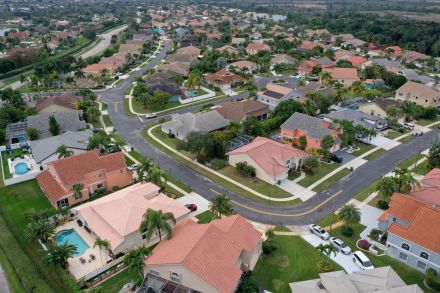
Had you told me when I quit drinking that one decade into sobriety I’d be a suburban Texas mom, I probably would have kept drinking. A friend and I were recently talking and I said, “I don’t know, a part of me feels like I’m giving up, moving to the suburbs.” She laughed and said, “That’s what the suburbs are — surrender.” The suburbs in all their sameness and picket-fenced perfection represented a life I never wanted — with their Live, Laugh, Love Etsy signs and swingers. They weren’t for eccentric artists or messed-up comedians. They were for sorority girls and women who loved game nights and crafts and the Bible and botox parties.

suburbs

Does downtown deserve a comeback?

From our US edition

The downtowns of America’s biggest cities are facing a crisis as thousands of office buildings sit vacant. They were abandoned first by occupants forbidden from gathering during the Covid pandemic — and they remain empty as many took a liking to remote work that enables them to “stay home in [their] pajamas all day,” as New York City mayor Eric Adams describes it. Building owners are no doubt panicking as the value of their real estate continues to plummet, as are those affected by all the lost tax revenue. (A recent study, “Work from Home and the Office Real Estate Apocalypse,” found a 39 percent decline in long run value of New York City offices.

downtown philadelphia

In defence of the 15-minute city

At the end of last year, the subject of the ‘15-minute city’ began to creep into neighbourhood WhatsApp groups, interrupting the usual discussion of lost cats, car crime and blocked drains. Oxfordshire County Council had proposed a traffic-zoning scheme to reduce car usage in the city – and suggested that to address unnecessary journeys, every resident should have ‘all the essentials (shops, healthcare, parks) within a 15-minute walk of their home’. But critics up and down the country hit on the proposals as an example of the ‘international conspiracy’ and ‘tyranny’ of the 15-minute city – which, they warned, is probably coming to a neighbourhood near you soon.

Can anyone save Philadelphia?

From our US edition

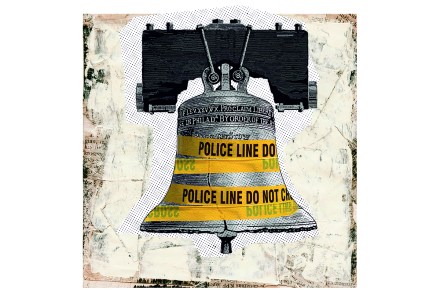
Americans may never before have felt their country was farther from its finest hour. And yet, on the Fourth of July last year, residents gathered in the heart of its birthplace for an ever-rarer expression of patriotic sentiment. It was to be a brief display. Blood spilled before the clock struck ten. Though no one saw a gunman or heard gunfire, two police officers were struck by stray bullets on the famous steps of the Philadelphia Art Museum. Word spread quickly, and suddenly no one could be sure whether they were hearing fireworks or gunshots. On the Benjamin Franklin Parkway, patriotism turned to terror, then shrieks gave way to silence.

philadelphia

Why I admire Saudi Arabia’s monstrous new city

The Kingdom of Saudi Arabia wants me to know that it is building a new city. Its adverts follow me around the internet. ‘Imagine a traditional city and consolidating its footprint, designing to protect and enhance nature.’ I’m imagining. Their city ‘will be home to nine million residents, and will be built with a footprint of just 34 square kilometres. And we are designing it to provide a healthier, more sustainable quality of life’. According to its website, this new town ‘is a civilisational resource that puts humans first’. Which all sounds vaguely nice, if also nicely vague (although as I happen to be a human myself, I do appreciate the gesture). That is, until you see what they actually mean by this.

NIMBYs to the left of me, YIMBYs to the left

From our US edition

First disclosure: I do not appear in this book. I say that only because — second disclosure — I consider myself a YIMBY, and I am familiar, at least online, with many of the characters and figures quoted or interviewed. However, I learned a lot about this loose movement and found it fascinating to read a book on a phenomenon that I would have trouble viewing with a detached, scholarly distance. Yes to the City, by the cultural sociologist and urban policy scholar Max Holleran, must have been a difficult book to write, not least because YIMBY (“Yes in my backyard”) is as much a rallying cry or a slogan as it is a movement, let alone an organization. The YIMBY nemesis, NIMBY (“Not in my backyard”), is equally amorphous.

yimby

California dreaming

From our US edition

Stepping off the plane at LAX, the protagonist in Christopher Buckley’s comic novel Thank You for Smoking breezily observes that “arriving there always made it feel like Friday, even in the middle of the week facing a full workload.” There’s just something about LA’s perfect weather, attractive people and sense of living for tomorrow that instantly lifts your spirits. Born and raised in Boston and having spent most of my adult life within the narrow mental and professional confines of the Acela corridor, I used to be the typical East Coast snob when it came to America’s second-largest city. Sure, I acknowledged, the temperature is always a sublime seventy-two degrees. But how can you endure the traffic? Yes, it’s difficult not to stare at every other person.

Los Angeles

Covid has changed London for the better

For some it was the taped-off park benches, or the sight of police officers handing out fixed penalty notices to sunbathers. For others it was the sheer numbers of deaths being reported in inner boroughs. London in the spring of 2020 was definitely not the place to be. As with other world cities, it faced what seemed an existential crisis. The streets quickly drained of people, and those who could fled to second homes in the country. The voracity with which Covid-19 spread sparked a fear of living at high densities. Pundits in Britain and America quickly proclaimed the death of cities. The belief was that remote-working had freed people from the constraint of living close to the office and they would now opt for quieter lives in smaller towns and suburbs.

The year left-wing ideas came home to roost

From our US edition

2022 is proving to be the year in which progressives’ genius ideas come home to roost. Instituting far-left policies in cities across America has resulted in disastrous outcomes. All this raises the question: which Democrats will stay loyal to the far-left “transformational” agenda and which will jump ship? Most liberal politicians have enjoyed this country’s tidal wave of wokeness up until now. Posting Instagram infographics and hash-tagging activism on Twitter plays well with younger voters. Real news has become almost indistinguishable from the Babylon Bee’s satire. In a single day, you can read about snowplow equity, M&Ms becoming more inclusive and students identifying as cats. Say what you will about the perpetually offended, they certainly are entertaining.

When progressives side with criminals

From our US edition

The father of a UCLA grad student, Brianna Kupfer, who was stabbed to death last week, is giving voice to the gut-wrenching human toll of the violent crime wave ravaging the nation — and the social and political forces enabling it. “What’s endemic in our society right now is that everyone seems oriented on giving back rights and bestowing favor on people that rob others of their rights,” said the grieving dad on Fox News. Brianna, a graduate student and design consultant, was found dead by a customer at the furniture store where she worked. On Wednesday, Los Angeles police identified her suspected killer, a 31-year-old career criminal named Shawn Laval Smith who was out on $1,000 bail for a misdemeanor.

criminals

Why local crime hurts Democrats nationally

From our US edition

Preventing crime and punishing offenders is primarily the responsibility of local authorities. They have no greater obligation to the citizens who elected them and who fund the government. It is up to local police, supervised by political leaders and subject to the law themselves, to provide a safe environment for citizens to go about their lives, pursuing their own goals in peace and security. It is up to local politicians to ensure that police are adequately funded and properly trained. It is up to local prosecutors to follow up all justified arrests and prosecute offenders when the evidence is adequate. When police overstep their limits, prosecutors should pursue them too. The goal is a safe environment, subject to the rule of law.

crime

Americans, London needs you

From our US edition

‘Nobody wants to admit it, but London was boring even before the pandemic — and it’s still boring now!’ I said. We were at a London drinks party. The guy retaliated with a smirk and that old Dr Johnson line, ‘He who is tired of London, is tired of life.’ ‘No,’ I said, ‘I’m not tired of life — I’m tired of people who always quote Dr Johnson when you make some slightly disparaging remark about London!’ I dislike that Dr Johnson quote because it assumes that you can’t be genuinely tired of London; your discontent must be due to your own boring, miserable life and not because London has become an overpriced, culturally exhausted and soulless city — which it has.

London

Lori Lightfoot’s inner Republican

From our US edition

It’s not known when Chicago mayor Lori Lightfoot experienced the first stirrings of her secret GOP gland, but knowledgeable conjecture puts it perhaps two nanoseconds after taking the oath of office in 2019. It’s then that Lightfoot, buoyant after having been swept into office with 74 percent of the vote, surely had an alarming thought: ‘OMG, I’m mayor. What do I do now?’ All Democratic politicians aspiring to executive office have a secret Republican gland, although it’s vestigial till they sit behind an executive desk. When it’s dormant they can sign up for any damn fool notion. During her mayoral campaign, Lightfoot had cheerfully endorsed both an elected school board and an elected police board.

lightfoot

The political baggage of moving house

We are currently house-hunting — please let me know if you have one going spare. We are looking for a home in the north-east of England in any constituency which was once solidly Labour and is now in the talons of a brutally right-wing Conservative MP — this is my wife’s stipulation and I find it fair enough. However, we do not want to live too near the poor people. In truth we had been casually looking across a vast swath of Northumberland, Durham and North Yorkshire for a good half-dozen or more years, but until now there had been little urgency to the business. We marvelled at the property market up there: houses, grossly overpriced, would remain on sale for quite literally years.

The resurgence of the New York Republican

From our US edition

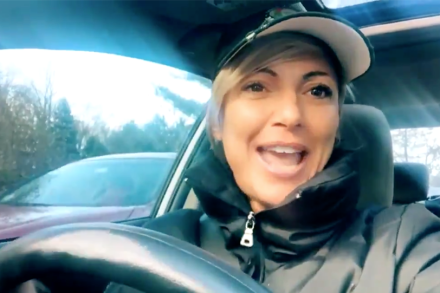
Have you met Tina? You may have seen her this month leading a charge outside Mac’s Public House on Staten Island, protesting a second wave of economic terrorism against small business owners enacted by Mayor Bill de Blasio and Gov. Andrew Cuomo.The fiery, bombastic blond with the thick New York accent and colorful vocabulary has shown up at anti-lockdown events across the city, broadcasting footage to her 206,000 Twitter followers at a time when everyday New York Republicans are having a bit of time in the spotlight. https://twitter.com/RealTina40/status/1335652275532992512 A couple of years ago, the city cheered Vickie Paladino, a mom from Queens who was driving home one day and saw de Blasio surrounded by reporters on the street.

new york republican

Skyscraper squats and a lesson from India: the future of British architecture

Not long ago, if you asked discreetly in the right Hackney pub, you would be put in touch with a character called Syd the Squatbroker. For as little as £150, he would gain access to the roof of an abandoned council tower block with a set of fireman’s keys. Then Syd (nom de guerre of a carpenter from Harlow) would abseil down to a window, gain entry and open an empty flat. Sometimes he would cut through heavy steel squat guards using oxyacetylene cutting gear. Latter-day squatbrokers aren’t yet abseiling down the Shard or Canary Wharf’s glass and steel phalluses to liberate underused office spaces and thereby help solve London’s housing crisis, but you’d think they must be tempted. Post-Covid, home working is becoming permanent.

Kim Klacik and the urban GOP effort

From our US edition

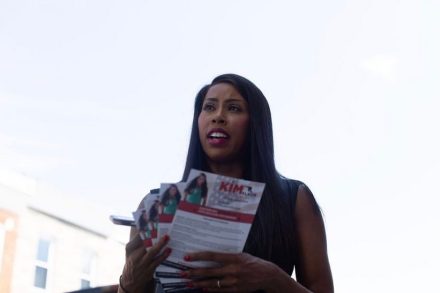
BaltimoreRepublicans are an oddity in Baltimore. Perhaps some older Americans remember Spiro Agnew, but that’s more or less it — until now.About a year ago, Kim Klacik was a local GOP leader in Baltimore County. Today, she has nearly 400,000 Twitter followers along with an endorsement from President Trump in her campaign for Maryland’s 7th district. What exactly sparked this fame? Klacik showcased the rat-infested, crime-ridden streets of Baltimore for the nation.‘Do you care about black lives?’ Klacik asked in a viral campaign video. ‘The people that run Baltimore don’t. I can prove it. Walk with me.

klacik