Cinema

If this is Aaron Sorkin’s riposte to those who criticise his portrayal of women, God help us

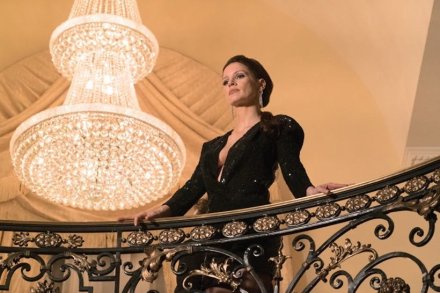
Molly’s Game marks the directorial debut of Hollywood’s most celebrated screenwriter, Aaron Sorkin, and is based on his adaptation of the memoir by Molly Bloom. Nope, me neither, but she’s the one-time Olympic skier who, at the age of 26, started a high-stakes poker game for ‘the richest, the most powerful men in the world’ and ended up with the FBI in her face. Poor Molly, we’re meant to think, when the FBI ends up in her face, but I was delighted. Bang her up! This has been posited as the antidote to all those male-driven, big money Wall Street films, with Sorkin even declaring Ms Bloom a ‘feminist icon’. Well (she says, haughtily), we will see about that.

My favourite frum film of the year – thus far: Menashe reviewed

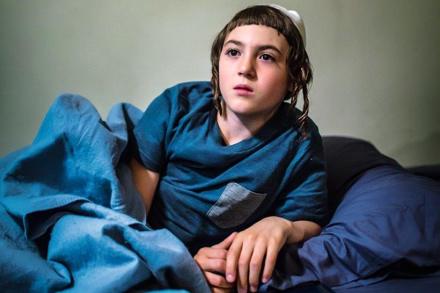
Menashe is a drama set amid Brooklyn’s ultra-orthodox Hasidic community. It is performed entirely in the Yiddish language. It is peopled exclusively by Hasidic non-actors. (Real-life grocer Menashe Lustig plays the title character.) It is small and specific, admittedly, but it also tells a universal story about a father’s struggle to hold on to the son he loves, and it tells this story tenderly, thoughtfully, beautifully. It may even be my favourite frum film of the year. Thus far. (Still a few weeks to go.) This marks the feature debut of director Joshua Z Weinstein (no relation), who made documentaries previously, and who wrote this with Alex Lipschultz and Musa Syeed.

It will amply satisfy all your comeuppance needs: Battle of the Sexes reviewed

Battle of the Sexes recreates the famed, culture-changing 1973 tennis match between 55-year-old Bobby Riggs, a self-proclaimed chauvinist, and 29-year-old Billie Jean King, the world’s top female player who was out to liberate women and herself. (She was just discovering her true sexuality at that time.) Unless you happen to identify with Bobby — ‘Don’t get me wrong. I love women in the bedroom and in the kitchen, but these days they want to be everywhere!’ — this is certainly a great comeuppance film of the kind that will amply satisfy all your comeuppance needs. No complaints, comeuppance-wise.

If Annette Bening isn’t Oscar-nominated, I’ll eat my hat and also yours

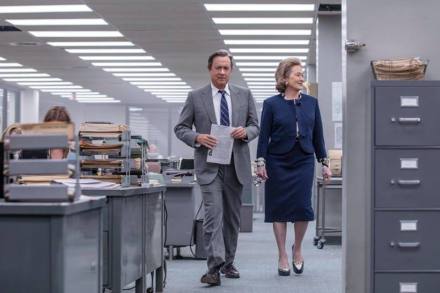
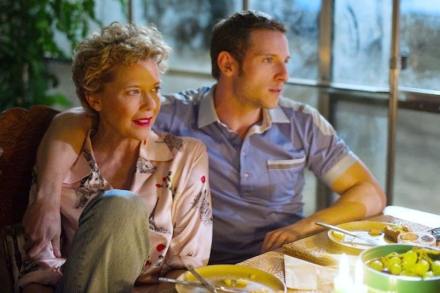
Film Stars Don’t Die in Liverpool is plainly wonderful, and stars Annette Bening, who is plainly wonderful, as Gloria Grahame, a one-time Hollywood movie star who in later life hits on hard times — ‘a big name in black and white. Not doing too well in colour,’ comments her landlady at one point — and embarks on a romance with a young English actor who is 30 years her junior. It is based on a true memoir. It is a love story, told tenderly, bravely, smartly, movingly. And believably. Older women, it seems, can be interesting, complicated, vital, attractive and sexual. Who knew? (But don’t spread the word, or they’ll all want to be like that, and won’t take the shitty bit-parts any more.

The Florida Project never sanctifies or demonises and is absorbing throughout

The Florida Project is a drama set in one of those cheap American motels occupied by poor people who would otherwise be homeless. It’s sad but not depressing, bleak but also joyful, and features one of the best and truest child performances you will ever likely see. Also, it is captivating without ever being condescending — I think. It is always so hard to know, but if you get too hung up on that, cinema will never be allowed to say that poverty exists, or deal with stories that don’t regularly get told, and that’s the end of my lecture for this week, you will be delighted to hear. The movie is written and directed by Sean Baker, whose previous film, Tangerine, about a transgender sex worker, was shot on an adapted iPhone 5 and won many awards.

The death of cosy Christie

From our UK edition

This is not Midsomer Murders. The new film adaptation of Agatha Christie’s Murder on the Orient Express is thick with violence and sexual innuendo. It elevates Hercule Poirot, the diminutive, fastidious Belgian detective, with his egg-shaped head and pot belly, to part-time action figure, a man who chases bad guys down dizzying descents in exotic snowscapes before straightening his magnificent moustache with a twinkle in his eye. This is less cosy, golden age detective fiction than a cross between Daniel Craig’s 007 and Scandi noir. Kenneth Branagh, who stars and directs, has brought his experience playing the dejected Swedish police inspector Wallander to the fore, giving the usually reserved detective unusual passion and vulnerability.

Life after death | 2 November 2017

From our UK edition

According to the accountants’ ledgers, DVDs are dying. Sales of those shiny discs, along with their shinier sibling the Blu-ray, amounted to £894 million last year, which is almost a fifth lower than in 2015 and less than half of what was achieved a decade ago. And last week we finally said goodbye to the postal DVD service Lovefilm, too. The explanation for this decline is the explanation for many modern declines: digital is taking over. Nowadays, downloads and streaming services make more money than the old physical formats. But accountants don’t know everything. From a different perspective, through the bloodshot eyes of a cinephile, DVDs are thriving — and they’re doing better in Britain than in most other countries.

Chances are you will wish you were dead: Blade Runner 2049 reviewed

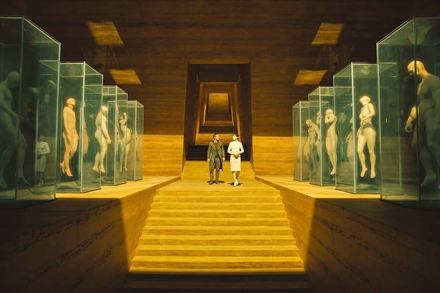
Ridley Scott’s original Blade Runner first came out in cinemas 35 years ago, which I was going to say probably makes it older than some readers, although this being The Spectator, perhaps not. It wasn’t successful in its day, but has since become a beloved classic (rightly), whereas this sequel, Blade Runner 2049, will likely do great box office today, but no one will give a fig tomorrow, once all the silly hype has died away. This is Blade Runner as a dull mainstream blockbuster populated by men who are the epitome of masculine cool and women who are needlessly sexualised fembots.

It gets us from A to B but doesn’t dazzle: Borg vs McEnroe reviewed

Borg vs McEnroe is a dramatised account of one of the greatest tennis rivalries of all time — between Bjorn Borg and John McEnroe (the clue was always in the title) — that doesn’t hit nearly as hard as it should. It does the job. It gets us from A to B. But it doesn’t dazzle. It doesn’t have the dramatic smarts to lend either surprising tension or excitement to otherwise familiar events, or shed any new light on them. It’s more the pt-pt-pt-pt of a stolid baseline rally and now, you will be thankful to hear, that’s it with the tennis puns. (I only had two anyhow.) The film stars Sverrir Gudnason as Borg and Shia LaBeouf as McEnroe and it all plays out in the lead-up to their most famous showdown.

Is Darren Aronofsky taking the piss? Mother! reviewed

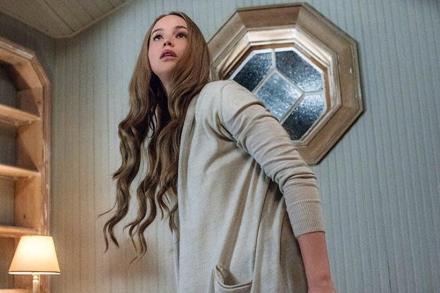
The film-maker Darren Aronofsky says he wrote Mother! in five days as if in a ‘fever dream’ and, as a general rule, what happens in a fever dream should stay in the fever dream, as the content will be plainly nuts. This is plainly nuts. This is even plainly nuts with an exclamation mark. Plainly nuts! However, it’s never plainly dull, so it does have that going for it. I think. Described as a psychological horror thriller, the set-up has a poet and his younger wife living in a magnificent, isolated house in the countryside that she is doing up. She is Mother (Jennifer Lawrence) and he is Him (Javier Bardem). She is in thrall to Him, and exists only to serve Him, while he is suffering from writer’s block and is distant.

Art of darkness | 14 September 2017

Stephen King, 69, has sold more than 350 million books, and tries not to apologise for being working-class, or imaginative, or rich. The snobbery has ebbed a little, though; in 2003 he won the National Book Foundation’s Medal for Distinguished Contribution to American Letters, and now the BFI is screening a series of adaptations of his novels, which show how versatile he is. Why can’t you write stories like Rita Hayworth and Shawshank Redemption, a woman asked him once. I did write it, he told her, but she did not believe him. King has published 59 novels, but he is a recovering addict and can’t remember writing them all. Most of Cujo (1981), a story about a rabid dog and adultery, is news to him.

Cheaply mainstream and exploitative: Wind River reviewed

The starting point for Taylor Sheridan’s crime-thriller Wind River is explicitly stated at the end when the following words come up on screen: ‘While missing person statistics are compiled for every other demographic [in the US], none exist for Native American women.’ A shocking fact that has to be worthy of a film, although whether this film is worthy of that fact, and isn’t just another genre melodrama featuring an American White Man coming to the rescue, has to be up for question. Also, it contains a brutal rape scene, just so you know. (I didn’t know. But wish I had, as I’d have likely steered clear.

Difficult and disturbing: Una reviewed

Una is a psychological drama about a woman who was abused by a man when she was 12, and who confronts him 15 years later, and it’s a hoot. I’m toying with you. Of course it isn’t. It’s disquieting. It’s disturbing. It’s difficult. It’s 90 minutes of uncomfortably shifting in your chair and wishing you were at the latest heist caper that doesn’t make sense. But it is also compelling, up to a point, and your responses will be so complicated that you won’t know where to start unpicking them. Or how. The film is based on the play Blackbird by the Scottish playwright David Harrower, which has won multiple awards and starred Jeff Daniels and Michelle Williams on Broadway.

Hollywood goes East

From our UK edition

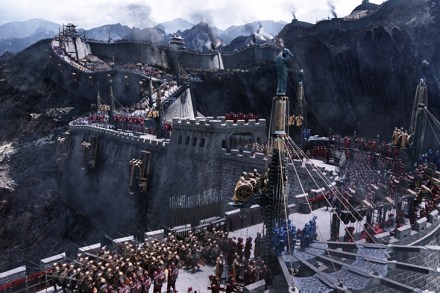
It’s kind of surreal being here.’ The general sentiment, no doubt, of most people on planet Earth right now, but the specific words of Matt Damon at the world première of his latest film earlier this year. The reason for his befuddlement? The film was The Great Wall, for which he had moved to China for half a year with his family. But the première was taking place beneath the extravagant pagoda of Grauman’s Chinese Theatre on Hollywood Boulevard. From actual China to Los Angeles’ idea of China — no wonder Damon found it weird. Yet, as so often happens in Hollywood, the weird could well become the way of things.

Books Podcast: Charlotte Rampling

From our UK edition

A few years ago, Charlotte Rampling signed a contract to write her autobiography - and then, the project not long underway, called the whole thing off. But this month she publishes something quite out of the usual run of celebrity memoirs. Who I Am, co-written with the French man of letters Christophe Bataille, is a slender, riddling approach to the actor's inner life - not a catalogue of film anecdotes but rather a hesitant return to the child she was. She joins me to talk about why she's done things this way, about the legacy of her Olympic medalist father, and about the terrible tragedy that defined her young womanhood. You can listen to our conversation here: And if you enjoyed that, please subscribe on iTunes for a new podcast every Thursday.

LA story

From our UK edition

BREAKING NEWS: ‘Enjoyable play found at Royal Court.’ Generally, the Court likes to send its customers home feeling depressed, guilty, frightened or suicidal. And, generally, it succeeds. The Kid Stays in the Picture is based on the memoirs of Hollywood super-mogul Robert Evans. Director Simon McBurney uses artful lighting and complex staging effects to disguise the fact that this is just a glorified book-reading of the kind broadcast by Radio 4 every day of the week. The performers are concealed by deep shadows or behind screens and this threatens to break a basic rule of live theatre: an actor who can’t be seen can’t be heard. But the performers are audible enough and one of them, Danny Huston, has a wonderfully gnarled and leathery voice.

Why we need to cancel the Oscars to save the Oscars

From our UK edition

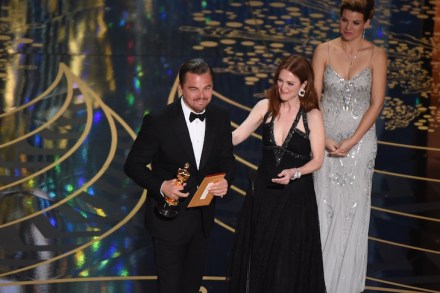
Oscar has a problem, and I say that as a fan. If I could, I’d take one of those famous statuettes by its tiny golden hand, and show it a happy life in the bars, restaurants and movie theatres of its native Hollywood. But, clearly, others don’t feel the same way. The number of people who tuned into the Academy Awards last year was the lowest it has been for eight years. Even the traditional box office boost for victorious movies isn’t necessarily worth as much as it used to be. Viewing figures and box office receipts are, however, only the visible tip of what is a deeper problem: the Oscars aren’t keeping pace with cinema itself.

Napoleon dynamite

From our UK edition

I shall never forget my first encounter with Abel Gance’s Napoleon. I saw it under the most unpromising circumstances — fragments of the great original, shown on a home projector, 25 years after its original release. Yet those fragments changed my life. I was 15, still at school in Hampstead, and already obsessed by the cinema. My parents had given me a projector for my 11th birthday. Since the only films available to me were silent films, I found myself immersed in the rarefied atmosphere of a forgotten art. As home movies were being abandoned in favour of television, I found a surprising number in London’s junk shops. Among the best were the French silent films. My admiration for them, however, was subject to the occasional shattering blow.

Net effect

From our UK edition

As a documentary-maker, Werner Herzog is a master of tone. His widely parodied voiceovers — breathy, raspy, ominous — are cunningly ambivalent. The interviews he conducts are seldom less than strange, often shocking, and the pacing and tenor of his films are subtly modulated. Never more so than here. Lo and Behold is divided into chapters. The first is a fairly conventional documentary about the beginnings of the internet. Herzog talks to the people in California who made the first computer-to-computer connection in 1969, asking them reasonable questions and generally making them seem like comfortable, all-round good guys. This is then subverted by the appearance of Ted Nelson, a cyber-pioneer who believes it has all gone horribly wrong.

The yawn supremacy

From our UK edition

The BBC has published a list of the 100 best films of the 21st century, compiled after consulting academics, cinema curators and critics — and, as you’d expect, it’s almost comically dull. The list contains numerous turgid meditations on the spiritual void at the heart of western civilisation by obscure European ‘auteurs’ and not a single Hollywood comedy. It’s as if the respondents mistook the word ‘best’ for ‘boring’. To give you an idea of just how absurd the list is, it doesn’t include any of the billion-dollar blockbusters from Marvel Studios — no, not even Guardians of the Galaxy — but does have two movies by the impenetrable Danish director Lars von Trier.