Cinema

Confessions of a Sight and Sound voter

As a film critic and historian who's written for Sight and Sound since 2011, I like to think that the greatest films of all time are always on my mind, but, in truth, they were particularly on my mind last summer. Last July, I received the official word that I was among the select group of critics picked to partake the Sight and Sound critics' poll to decide the greatest films ever made; a survey the British magazine first convened in 1952 and has repeated on a once-per-decade basis ever since. In the weeks before my deadline to vote, I meditated on what constituted a great film with unusual intensity and self-reflection.

sight and sound

Babylon is a gloriously magnificent and bloated epic

Quiet in the feature film world since the 2018 release of First Man, Damien Chazelle returns to the Hollywood-centric beat that brought him success in La La Land for Babylon, perhaps his most ambitious film yet. Opening in a raucous Hollywood party at the height of the Roaring Twenties, through a series of tracking shots, Chazelle introduces us to the three central characters of the film. Manny Torres, played by Diego Calva in his breakout role, attempts to navigate the atmosphere as an aspiring, wide-eyed Mexican immigrant who dreams of leaving his lowly assistant work to become something more. This allows Manny to serve as the surrogate for the audience.

Could Avatar 2 flop at the box office?

“Who asked for this?” asked the New York Times in November of the coming Avatar sequel, The Way of Water. Not me. I’m not the audience for this film. I did not contribute to Avatar's $2.92 billion global box office. I don’t, for example, post in the "Tree of Souls" forum, which has 2,093 members (a tiny number). Does Avatar have an army of fanatics waiting to be unleashed at the box office? I don't know anyone obsessed with Avatar, do you? Is it as meme-friendly as Minions: The Rise of Gru? No. Will it draw as many teens as an MCU movie? Probably not. Avatar does not have the built-in fanbase you need to carry a franchise. It requires a global audience — it needs mainstream buzz. It needs the press raving that it's a "visual masterpiece." But is that enough?

Happy birthday Martin Scorsese, the Don of movies

Later this week, probably the world’s greatest living film director will celebrate his eightieth birthday. However he celebrates — whether in the company of friends and family in his no doubt opulent Manhattan home, or working on his eagerly awaited new film Killers of the Flower Moon — Martin Scorsese can reach his milestone age in the confidence that his position in cinematic history is assured forever. For a man so steeped in the art and practice of filmmaking — and who has made several excellent documentaries about movies — it must be intensely gratifying for Scorsese to be aware that he is that rarest of persons, a living legend, whose contributions to film will live forever.

The real reason straight people aren’t going to see Bros

Something happened in American society between the release of Bros last weekend and 2018, when Bohemian Rhapsody, the biopic of gay, HIV-positive Queen front man Freddie Mercury, grossed $900 million at the box office. Comedian Billy Eichner’s gay romcom barely eked out a pathetic $4.8 million on opening night, around the same amount that Ellen "Elliot" Page spent on flannel shirts and Groucho Marx glasses last year. Why the disparity in box office takings? Well, American moviegoers became deeply homophobic. That’s according to Eichner himself, who wrote on Twitter following the paltry opening weekend numbers, “That’s just the world we live in, unfortunately.

bros billy eichner

William Hurt — a life in two acts

It is a depressing statement on the banality of the film industry that the death of actor William Hurt, at the age of seventy-one, was marked by at least one obituary stating, “Avengers star dies.” Hurt, who appeared in several Marvel films as the military character Thaddeus Ross in his latter-day career, did indeed appear in the mega-grossing Avengers films Infinity War and Endgame, and I very much hope that he received some tiny portion of the films’ enormous box office receipts in recognition of his appearance. But to describe Hurt’s life and work as defined by his Marvel roles reminded me of the great Alan Bennett line about his sexuality: “It’s like asking a man who has just crossed the Sahara whether he would prefer Perrier or Evian water.

william hurt

Fear thy neighbor

In an age of rancor, one thing we can all agree on is that it makes a certain amount of sense to fear the police. What other force in civil society is authorized to intrude on private life, and deny its benefits and freedoms, in quite the same way? It may be the law-abiding members of society who fear the police most palpably. While actual criminals carry knowledge of their own guilt, the innocent must live with the knowledge of how easily we could be wrongly accused, misidentified or railroaded. Alfred Hitchcock did more than any other popular artist in the last century to help form a certain image of the police in the public consciousness.

hitchcock

Publish and be damned

To understand the differing status of the arts in Britain and France, compare the publishers in Bridget Jones’s Diary and Olivier Assayas’s new film, Non-Fiction. In Bridget Jones’s Diary, Daniel Cleaver (Hugh Grant) is an underwear-obsessed cad who gets his comeuppance when he is beaten up by Colin Firth. In Non-Fiction, Alain Danielson ruminates philosophically about what the ‘digital transition’ means for civilization, and indulges in plenty of Cleaver-style trifling with the staff, but gets away with both. We are reminded that ‘intellectual’ is a compliment in France but a dirty word in Britain, and that sex is dirty in Britain but intellectual in France.

non-fiction

Christmas at the cinema with Donald Trump

Mr President, as you settle down for an extended seasonal vacation at the little seaside cottage you and your retainers call the ‘Winter White House’, may I, as your sommelier of visual entertainments, recommend a few seasonally suitable amusements for the Mar-a-Lago screening room? You being you, the sort of movie you might find admirable may not exactly square with popular feeling regarding the season of good-will to all men — and, as you recently said, ‘women too, to be politically correct’. If goodwill isn’t to your taste, perhaps the presidential palate will enjoy some ill will, with a side order of bile? Submitted for your approval, Jon Landis’s classic comedy Trading Places (1983).

donald trump cinema christmas

Hollywood loves a remake, but do we?

As the fourth version of A Star is Born packs them in, Mel Gibson is threatening to remake Sam Peckinpah’s classic 1969 Western The Wild Bunch. Film fans are rightly alarmed, but remakes are a reliable way for Hollywood to score at the box office, despite often being wholly pointless. Unfortunately, Gibson has previous convictions in this area. See, if you really insist, his unnecessary and 1999 refurbishment of John Boorman's classic Point Blank, a retread so wretched that it accidentally justified its title, Payback. Boorman’s comment on Gibson’s effort wasn’t exactly diplomatic: Lee [Marvin] finally said to me, ‘OK, I'll do this picture with you on one condition.’ ‘What?

remake

Mr Trump goes to the movies

The events of the Brett Kavanaugh hearings and the relish President Donald J. Trump displayed in his consequent pushback at the #MeToo movement elicit a Proustian response among those who’ve seen Jack Lemmon’s 1965 comedy How to Murder Your Wife.If Mr Trump was in any way a cinephile, it might indeed figure as one of his all-time favourite films. If not, the movie still possesses a particular relevance in today’s highly charged political environment.How so? Without recounting the plot in detail, the hook centres around Lemmon’s wealthy New York bachelor, cartoonist Stanley Ford.

mr trump how to murder your wife

First Reformed is Taxi Driver for the age of Trump

‘That was some weird shit,’ George W. Bush is said to have muttered after Donald Trump’s desolate inauguration speech of January 2017. ‘I couldn’t have agreed more,’ wrote Hillary Clinton in What Happened. Americans cannot agree on what has happened to their country, other than that everything has gone wrong. Is it ‘white supremacy’ and patriarchy, or the collapse of the white working class and the decay of patriotism? The symptoms too are polarized, beyond mutual comprehension. The leading cause of young black male deaths is murder, but the leading cause of young white male deaths is suicide. The weirdness of these linked statistics has a common source.

Hammer horror

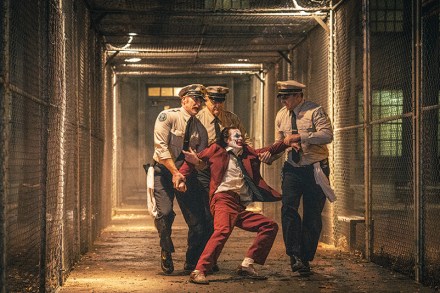
You Were Never Really Here is a fourth feature from Lynne Ramsay (Ratcatcher, Morvern Callar, We Need to Talk About Kevin) and the first thing to say is that it is exceptionally violent. I don’t say this disapprovingly but if your threshold for violence is as low as mine — I incurred a paper cut the other day and passed clean out — it will prove an 89-minute ordeal. Still, it has been described as ‘the Taxi Driver for the 21st century’, if that is of help while you’re bracing yourself for the next hammer blow. Personally, I found it of no help at all. Also, it’s untrue.The film stars a bulked-up Joaquin Phoenix as Joe, a tortured hit man, and it opens as it means to go on. That is, not prettily.

I, Tonya is not quite a gold-medal masterpiece

Films about the Winter Olympics don’t grow on conifers. Twenty-five years ago there was Cool Runnings about the Jamaican bobsleigh team. It took many years for Eddie the Eagle to reach the screen. Both were cockle-warming comedies about implausible Olympians who embody the ideal that participation is all. Only last week Elise Christie, the British speed skater who kept tumbling in Pyeongchang (and Sochi), hoped that ‘Reese Witherspoon’ would play her in the movie. In the mean time, the latest Olympiad has flushed out two more biopics on ice. I, Tonya tells of Tonya Harding’s catastrophic career. Like Monica Lewinsky, Harding is a public figure whose epitaph, thanks to a single headline, has already been carved.

I liked Shape of Water well enough but Lady Bird is where it’s at

Lady Bird is a semi-autobiographical film written and directed by Greta Gerwig with a plot synopsis that need not detain us as it is basically only this: girl has a mum. (Or: girl has a mum, and sometimes they row and sometimes they don’t.) But thus far it has won near universal critical praise, two Golden Globes and five Oscar nominations, thereby proving there is mileage in girls and their mums, and box office in girls and their mums, and that girls and their mums can be more than mere afterthoughts. In this respect, Lady Bird may, in fact, be quite the rare bird. It’s set in Sacramento, California, in 2002, and follows a year in the life of 17-year-old Christine McPherson, who calls herself ‘Lady Bird’ because she is, you know, At That Age.

Wonderfully fixating and wholly non-formulaic: Phantom Thread reviewed

Paul Thomas Anderson’s Phantom Thread is a lush psychosexual drama starring Daniel Day-Lewis as a pampered, tyrannical, pernickety 1950s couturier whose life is disrupted when he falls for a waitress who, in the most unexpected way, proves his match. It is a wonderfully fixating film in every respect, and wholly non-formulaic. And it miraculously transforms an addition to a breakfast order — ‘…and sausages’ — into one of the sexiest things ever said. Ultimately, its meaning will be open to interpretation. I saw it as the rather timely story of a man who is finally forced to cut out his misogynist heart and see women as real people, but your interpretation may differ, which is fine, even though I’m bound to be right.

Downsizing throws away its brilliant premise

Downsizing is a film with the most brilliant premise. What if, to save the planet, we were all made tiny? What if we only took up a tiny amount of space and flew in tiny planes and produced tiny amounts of rubbish? And what if we could live in the sort of mansions that would cost millions if they were regular-sized? What if, what if, what if, what if… but most crucially: what if this film had run with the premise rather than throwing it away? Could it have avoided becoming just another dumb ‘white saviour’ movie? And this, alas, is the ‘what if’ that must preoccupy us today. This is a film by Alexander Payne, otherwise known for Sideways and Nebraska and About Schmidt, so there may just be no explaining it.

You just can’t argue against Hanks and Streep: The Post reviewed

Steven Spielberg’s The Post, which dramatizes the Washington Post’s publication of the Pentagon Papers in 1971, doesn’t exactly push at the frontiers of storytelling. It’s told straight and in a familiar way. Here are the journalists furtively working through top-secret government papers in a smoke-choked room for the public good. (There were no empty pizza boxes in this instance, but there could have been, if you get my drift.) Here’s the government trying to stop them. Here’s the newspaper rolling off the press, and everyone clapping. And so on. But it does star Tom Hanks and Meryl Streep, engaged in a kind of dance as the paper’s editor and proprietor, and you just can’t argue against Tom Hanks and Meryl Streep.

Three Billboards is a hoot and a blast, which I never thought I’d say about a rape movie

Three Billboards Outside Ebbing, Missouri does, indeed, feature three billboards outside Ebbing, Missouri. They have been placed at the roadside on the outskirts of town by Mildred Hayes (Frances McDormand), a middle-aged woman whose teenage daughter had been raped and murdered seven months earlier. The billboards read: ‘Raped While Dying’; ‘And Still No Arrests’; ‘How Come, Chief Willoughby?’ Mildred is grieving, in pain and a ball of fury. But not your regular, everyday ball of fury. She is a ball of fury of the most magnificent, unstoppable kind. If only she could go after every rapist from now on. I’d certainly sleep better in my bed.

Indulgent rather than stinging satire: Brad’s Status reviewed

Brad’s Status is a midlife crisis film starring Ben Stiller as a nearly 50-year-old man whose status anxiety is through the roof, poor thing. My heart bleeds and all that. I’ll tell you what Brad’s status should be: face well and truly slapped. The film is written and directed by Mike White (Beatriz at Dinner; Enlightened) and in some quarters it has been renamed Mike’s White Privilege, which is fair — no one else gets a look in — but as it’s intended as a satire of white male privilege you can’t exactly blame it for being white, male and privileged. However, while some moments will resonate (who hasn’t ever felt envy, or does not hope for shitty lives behind the shiny Facebook updates?