Churches

Why a post-Covid world might not be so bad

No one need ask why the strict public health regime to manage Covid — masks, mandates, quarantines, and required inoculations — has begun to collapse. Between angry truckers, unfavorable polling for continued lockdowns, the perception of a Wuhan coverup, changing reports of vaccine effectiveness, and declining hospitalizations, even President Biden and blue state governors realize they have but two options: pretend to be leading a return to normalcy or face an unpredictable grassroots rebellion. The interesting question for Americans is not why the sudden prospect of a return to normalcy but what “returning to normalcy” really means.
What’s the harm in opening the church doors?

From our UK edition

The end of summer 2021, the end of the great British staycation. I sat on the grass outside the post office on Holy Island, Northumberland and watched as the tourists milled about. After a visit to the Priory, and the Pilgrims Fudge Kitchen, a fair few of them would wander up to the Catholic church, St Aidan’s. Even if you’re not the sort to ever go to church, you might pop in for a quick look on Holy Island, aka Lindisfarne. This is where the gospels were translated, and where St Aidan, in 635, founded the monastery from which he converted the pagan north. Aidan came here from Iona, at the request of nice King Oswald, and went about on foot evangelising. Not horseback, says Bede, he didn’t want to set himself above the locals. On Holy Island the tourists are polite.

Why I will miss our mighty cooling towers – and I suspect I am not alone

From our UK edition

One afternoon earlier this summer we drove through Rugeley in Staffordshire. There, looming above the A51, were the cooling towers of the power station: a pinkish red, resembling terracotta, with curving convex sides, like modernist vases on a pharaonic scale. At 385 feet high, they were a little taller than the dome of St Paul’s Cathedral. We remarked on how surprisingly good they looked as we passed them on 4 June, en route to a spot in the Staffordshire countryside where we were going to stay. On 6 June there was a distant rumble like thunder but we thought little of it. However, that evening when we glanced at the horizon there was a gap where the towers had been.

The National Trust has lost the language of architecture

From our UK edition

Press officers, breathe easy. This is not another column attacking the National Trust. Actually, I tell a lie. It is. But my complaint isn’t bullying or slavery or LGBTQ+ery or even chocolate Easter eggery. It is more single and specific: the National Trust does not speak architecture. Or if it does, it’s keeping shtum. Since the great May reopening, I’ve dragged my husband around half a dozen National Trust properties, landscapes and gardens (he hardly ever protests, always pays for tea). We’ve done Stourhead, Oxburgh, Ickworth, Lacock, Cobham Woods and Disraeli’s Hughenden Manor. In the gap between lockdowns last year, we did Sissinghurst and Knole. I cannot fault the car parks, the rhododendrons or the second-hand bookshop in the Oxburgh potting shed.

Is this the last chance to save the Church of England?

From our UK edition

I am a key limiting factor. That’s a new one for a clergyman of the Church of England. We’ve traded under parson, cleric, priest, minister, padre and even pie-and-liquor, but never before have I heard us described as ‘key limiting factors’. That this phrase was used during the announcement of a new C of E-endorsed scheme — to create 10,000 new lay-led churches in the next ten years — adds future injury to present insult. ‘Lay-led churches release the Church from key limiting factors,’ said Canon John McGinley introducing the initiative.

Should monuments to past Archbishops of Canterbury come down?

From our UK edition

This week, the Church of England issued its document ‘Contested Heritage in Cathedrals and Churches’. It is guidance for what those locally running more than 12,000 churches should do about their monuments ‘to transform unjust structures of society, to challenge violence of every kind and pursue peace and reconciliation’ and address ‘the Church’s own complicity in structural sin’ and ‘oppression or marginalisation of people on the basis of their race, gender, religion or sexual orientation’. In church monuments, this usually boils down to whether the person commemorated had links with slavery. Seen from a parish level (where the poor churchwardens, such as my dear wife, will have to do the work), here are some preliminary questions.

The Church of England’s new religion

From our UK edition

This article first appeared in the 20 March edition of The Spectator.The Church of England report that was leaked to Douglas Murray has now been published. You can read the full report here. With a heavy heart I must return once more to the subject of the Church of England. I recognise that is not a subject for everybody, and occasionally someone implies that it should not be a subject for me. But I am concerned about the fate of the national church because as the new religion heaves ever clearer into view, I realise that I prefer the old religion to the new one. I would rather attempts to influence the country’s morals were preached from a pulpit than through group stampede on Twitter.

The new religion of the Church of England

From our UK edition

With a heavy heart I must return once more to the subject of the Church of England. I recognise that is not a subject for everybody, and occasionally someone implies that it should not be a subject for me. But I am concerned about the fate of the national church because as the new religion heaves ever clearer into view, I realise that I prefer the old religion to the new one. I would rather attempts to influence the country’s morals were preached from a pulpit than through group stampede on Twitter. And though we haven’t heard much from actual pulpits for more than a year, the church hierarchy has not slumbered. It has been busying itself with the question of anti-racism.

Letters: How to repair the Church of England

From our UK edition

Save on bishops Sir: The Church of England is once again missing the point if its financial crisis will result in the closure of parish churches and redundancy of clergy (‘Holy relic’, 6 February). Radical action is required, but the focus should be elsewhere. A starting point would be to amalgamate the vast majority of dioceses. Why is East Anglia served by the C of E dioceses of Ely, Norwich, St Edmundsbury and part of Peterborough when the Roman Catholics manage more than adequately with a diocese for East Anglia? Time to unite and benefit from economies of scale. But it should go much further: halve the number of bishops, diocesan and suffragan, and axe some of the non-jobs with fancy names which seem to proliferate in and around the centre.

A defence of the Church of England

From our UK edition

If you’ve been following the media coverage of the Church of England over the course of the coronavirus pandemic, one question you might have seen is: ‘Where is the C of E?’ Let us offer an answer. We have been burying the dead, comforting the bereaved, feeding the hungry and praying for our nation. We have been doing this not as superheroes, but as human beings living through the same crisis as everyone else: grieving, home-schooling, worrying, getting sick, shielding, isolating, weeping. With that said, we fully understand — and indeed share — the anger and frustration felt by some that the government ordered public worship to be suspended during the first lockdown.

The misguided priorities of church authorities

From our UK edition

This has been a tough year for everyone. Death, mental collapse, grief, unemployment. In my church we’ve lost people to Covid — one of the earliest victims was a regular at our 9 a.m. Communion. We’ve lost people to mental health — one of the homeless men who came to our services, and who used to delight us by playing the piano, hanged himself over the summer. Money is tight, and ancient buildings need constant repairing. Our Lady Chapel roof costs £280,000 and I still have to raise £100,000, without the help of any fundraising events. Most parishes are staring at deficits of tens of thousands of pounds, so they listened intently when, in November, the new Archbishop of York unveiled ‘A vision for the Church of England in the 2020s’.

Holy relic: what will be left of the Church of England after the pandemic?

From our UK edition

A clergyman admitted to me that he’d recently burst into tears. He’d received an email from his diocese in this latest lockdown ‘strongly urging’ vicars to close their churches. He has an elderly working-class congregation in a poor area. Coming to church was ‘the one thing keeping them going’. Local vicars like him represent the best of the Church of England. They are loving, kind, and they know their flock. Before the pandemic, the C of E had seen attendance halve in a generation. Weekly religious attendance is highest among non-Christian faiths (40 per cent), followed by Roman Catholics (23 per cent) and all other Christian denominations (23 per cent).

Vicars like me are struggling in lockdown

From our UK edition

A year of living through a pandemic has taken its toll on the best of us. Vicars like me are no exception.  As a healthy and normally upbeat 52-year-old, this feeling of gloom is frighteningly new. Anecdotal stories from clergy friends tell a similar story to my own: the urge is to curl up and mask the misery with binge marathons of Netflix box sets. But this brings only short-term relief. A cursory look at social media posts show that a good number of vicars are struggling to keep it together.  The pressures on vicars come from every quarter. Some vicars have been landed with the impossible task of maintaining empty churches as elderly volunteers withdraw to shield or isolate.

Letters: The Church of England’s Covid shame

From our UK edition

Paradise lost Sir: After reading Jonathan Beswick (‘Critical mass’, 16 January) I am writing to express the shame I feel as a lifetime member of the Church of England at our Church’s attitude to this pandemic. Here was the greatest opportunity in 70 years to demonstrate care for our fellow people, to advertise our faith and love and to keep the Church in the public eye. I hoped that there would be thousands of Church members flocking to help the lonely and the isolated. But I find my local church locked. This was the chance for the Church to show commitment and sacrifice for the good of the community, to cast aside timidity and get on with normal life, as does the postman, the milkman, the parcel delivery brigade, the health service and many others.

Why I’m keeping my church open in lockdown

From our UK edition

On a beautifully sunny Maundy Thursday last year, during the first lockdown, I removed my cassock, slung my satchel over my shoulder and rode my bicycle to Lambeth Palace and back. At the halfway point I paused briefly to slip a letter under the Archbishop of Canterbury’s front door, before heading for home and the sad prospect of a solitary evening mass. In my letter I asked the Archbishop to reconsider his request that we not pray in our churches. Communal worship was still forbidden, but the government clearly considered it lawful for the clergy to continue to go into their churches to pray on behalf of their absent congregations. Surely that is what we are here for?

Will our churches ever reopen?

From our UK edition

There used to be a joke, repeated by English tourists in deserted piazzas, that the Italian for church (chiesa) and for closed (chiusa) were almost the same. Whatever the orari on the door, you were always several hours out. And so you would consult your guidebook, admire in miniature the Ghirlandaio, the Lippi, the really very special fresco — and go for a consoling ice cream. The joke was told with the smug Anglo-Saxon certainty that our churches were open to all-comers from before breakfast until after vespers. Not so now. And not during the months we weren’t in lockdown — for all the bishops are protesting about the new one. But even before the latest lockdown, it was hard to find an open church.

If anything is essential, it’s worship

From our UK edition

That the Church of England shall be free, and shall have all her whole Rights and Liberties inviolable. There are few clauses of Magna Carta that are still in force today. Most have been whittled away by the stultifying hands of generations of bureaucrats. But one clause still stands in its in 800-year-old majesty: that the Church of England shall be free. (I realise that my Roman Catholic readers might quibble about what was meant by the Church of England in 1217, but I ask you to bear with me). Freedom of religion is a cornerstone of a free people. It stands at the heart of every declaration and charter of rights. It should be dispensed with only under the gravest of circumstances and with the heaviest of hearts.

Why has Boris closed the churches?

From our UK edition

This morning, my son, who’s 17, was turned away from our local church. The designated spaces for people attending mass were full. He tried to book online at the church down the road - they were full too (and last week they turned my daughter away). It was too late to make an online booking for the lunchtime mass at the London Oratory, but the reservations system for the tea-time mass was still open, so he’s booked that, on a system that hilariously resembles the booking system for a commercial theatre, except that it concludes, which they don’t, with God Bless You.

Bring back Westminster Abbey’s bells

From our UK edition

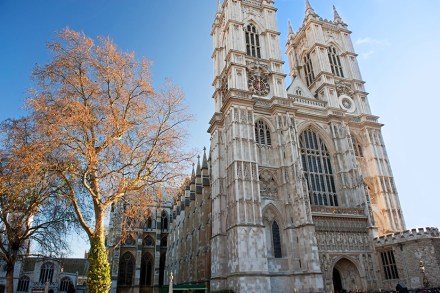
It took me several weeks, after returning to the Spectator office, to work out what was missing. It wasn’t the people — though Westminster is a zombie town these days, and even Pret A Manger, once hectic as a trading floor, is calm. I like the calm. What’s missing, I realised as I walked past Westminster Abbey, is the bells. If you’re anywhere near the Abbey when the bells start up, it’s like being caught out in a monsoon. It’s overwhelming and joyful. You can’t speak. You can’t think. There’s nothing for it but to stop and gawp up like a guppy at feeding time. The bells have been silent since March, since the Church of England abandoned its churches, and it’s strange how claustrophobic it feels without them.

Why people have sex in graveyards

From our UK edition

The oldest churchyard in Torquay is being used by people openly having sex and sunbathing nude in broad daylight. This was how it was reported in the local newspaper, of course — ‘broad daylight’ is a phrase that is only ever used by subeditors trying to make things sound more depraved. (Who sunbathes except in broad daylight?) It was not the first such report since the pandemic began: in June, a couple were witnessed coupling in Brandwood Cemetery in Kings Heath, Birmingham; police were called amid concerns over public indecency, and fears that they may not even have been from the same household. A few weeks earlier, another pairing was witnessed in the churchyard of St Mary Magdalene, Sutton-in-Ashfield.