Church of england

How the Church of England can bounce back from its Covid crisis

From our UK edition

The bishop of Manchester has warned that many Church of England churches are unlikely to survive the pandemic. The normal trickle of church closures (around 25 per year) is set to become a steady stream in the next few years. 'I suspect the pace (of closures) will increase as a result of Covid', the Right Rev David Walker has said. It will be a sad loss to the nation’s social fabric if hundreds of churches become flats, or offices, or are demolished. But there is another possibility. The pandemic has highlighted our need to invest in local communities, and this is an opportunity to do so.

The man behind Justin Welby

From our UK edition

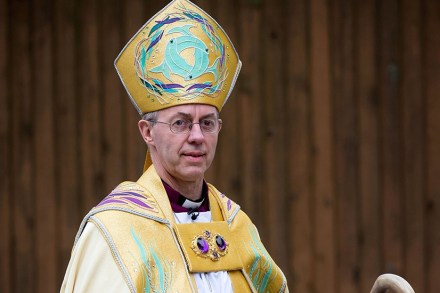
In the leafy seclusion of the Lambeth Palace grounds, Archbishop Justin Welby goes for his daily jog. He used to run along the Thames and over the bridges until Canon David Porter, his Chief of Staff, put a stop to it. David Porter grew up in Belfast in the 1960s and he knows how easy a target a lone high-profile jogger can be. As well as being Welby’s physical protector, Canon Porter has taken on the role of his bureaucratic gatekeeper. ‘No one comes to Justin except through David’ — that’s the impression I get from everyone I’ve spoken to who has tried to contact the Archbishop recently. ‘Nothing happens without David’s knowledge and permission.

Why can’t Justin Welby praise a Tory?

From our UK edition

Justin Welby is having a holiday and people are unhappy about it. He plans, in May, to take a three-month break and the general consensus is that this is not what Jesus would have done in a time of plague. Yes, Christ did frequently retreat to pray, but he only once spent more than a few days away from his flock — and it’s not much of a sabbatical if Satan’s trying to lure you over a cliff edge. It’s such a strange decision to take time off now that I’ve been Welby-watching this winter. I’ve listened to his Christmas and new year messages, followed in his online footsteps — and the conclusion I’ve come to is that he has no choice but to clock off.

Why has England banned worship?

From our UK edition

Over the weekend, more than a hundred religious figures from across the different faiths launched a legal challenge against the ban on communal worship in England. They claim the Covid restrictions are a violation of their basic human right to freedom of religious expression. Leaders from the Anglican and Catholic churches, as well as the Muslim Council of Britain, are in agreement on how unfair they view the ban. It's difficult to think of a cogent argument against their position.  For background, I am an atheist. Raised in a Catholic family, I never truly believed, even as a small child. Atheism has been something that has been with me throughout my whole life. Yet the argument that those of faith should be allowed the freedom of communal worship is compelling.

Rejoice for the return of the church choir

From our UK edition

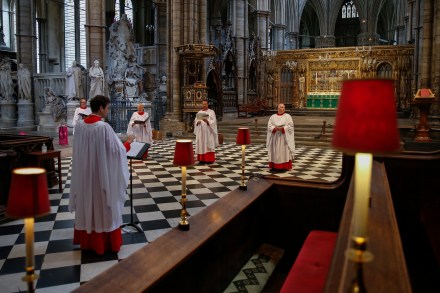
Not all coronavirus research sounds like fun, but wouldn’t you just loved to have been at the session where 25 choristers were asked to sing Happy Birthday at varying volumes to determine whether or not it would be safe for choirs to get back to business. The exercise was carried out by academics collaborating with Public Health England (while it lasted) and the Department for Culture. And you know what? It turns out that the quieter the singing, the lower the risk of transmitting droplets. The researchers found that singing did not produce much more aerosol than speaking at a similar volume, but singing or speaking loudly increased the production of droplets by a factor of between 20 and 30 compared with lower volumes.

Why is Sheffield Cathedral’s choir being disbanded for ‘inclusivity’?

From our UK edition

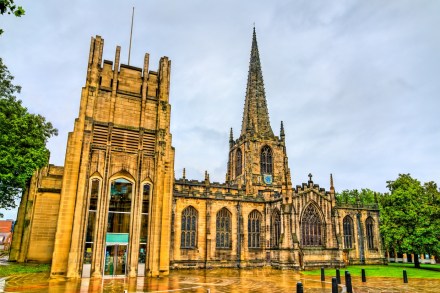
The Dean of Sheffield, the Very Revd Peter Bradley, comes across as a likeable man of sound mind and brisk sense of humour. Of his own liturgical tastes, he assures me, ‘drums and guitars are not my tradition. The London Oratory is more my world, musically speaking. I cannot say too strongly how committed I and the cathedral are to the Anglican choral tradition and evensong.’ As for his current portfolio, he says, ‘I’m Acting Precentor at the moment. I wish I’d been paid for it. God knows I’ve earned it.

My fears for the future of my church have been realised

From our UK edition

The only memorable argument I have ever heard in that tedious debate about whether Shakespeare was a Catholic came from the poet Tom Paulin. I remember him claiming in a lecture that the ‘bare ruin’d choirs’ sonnet must have been written by someone who had seen the despoiled monasteries, desecrated churches and ravaged holy places of a faith of which they were a part. Famously, such an argument only gets you so far, for by this logic Shakespeare was also a king, empress, ex-king, sailor, magician and fool, among many hundreds of others. But part of the rationale stayed with me. Which is that the bitterest truth of all is that loving a thing does not mean you can protect it, and that even the things you consider most sacred can be trampled over.

Britain’s choirs are facing oblivion

From our UK edition

Britain’s choirs are facing oblivion. Yet they’re also terrified of returning. One story explains why. Picture this innocent choral-society scene in Skagit County, Washington State, on the evening of 10 March. One-hundred-and-twenty singers, most of them elderly sopranos, gathered in the Presbyterian church to rehearse for two hours, their chairs 15cm apart. At half-time they took a break for shared snacks, and at the end the helpful ones stayed to stack the chairs. Fifty-two of those singers came down with Covid-19, supposedly through the release of aerosol droplets in the ether. Thus began the swirling of rumours across the world about the grave dangers of singing.

This could have been a great opportunity for the Church

From our UK edition

During these months of inertia, I confess to having on occasion made illicit trips to churches in the English countryside. Enjoying the frisson that surely accompanies all law-breaking, I have often gone so far as the church door, there to examine not only the locks and bolts but also the laminated notices which adorn so many buildings of the Church of England. The other week I visited a 12th-century church whose laminated instructions were an especially fine example of their kind. These signs informed the visitor that the church was closed due to the Covid crisis and that God can of course be worshipped anywhere, but (and this part was underlined) ‘not here’. A little harsh, that wording, I thought.

Will churches open their doors as lockdown eases?

From our UK edition

The grumbling of high church clergy should now lessen a bit. They were complaining, in some cases furiously, about the Chuch of England's decision to go further than the law required when it came to the lockdown, telling clergy not to open their churches at all, and not to broadcast services from them. Some were threatening to re-fight the Reformation over the issue, saying that low-church Welby would really rather preach from his own kitchen than admit that churches are a necessary site of authentic sacramental worship. The Church has now relaxed its rules, allowing vicars to pray in their churches and broadcast services from them. And the Church has started to think aloud about the really interesting question, of how churches should respond to the easing of lockdown.

The Church of England isn’t ‘obsessed’ with sex

From our UK edition

There’s been a shocked, wounded response on the part of pundits to the Church of England’s statement last week in response to the introduction of heterosexual civil partnerships. The Church observed that: 'for Christians, marriage – that is, the lifelong union between a man and a woman, contracted with the making of vows – remains the proper context for sexual activity'. Just to clarify, the statement went on: 'Sexual relationships outside heterosexual marriage are regarded as falling short of God’s purpose for human beings.' In other words, the CofE restates the Christian understanding of sex.

Why liberals turn a blind eye to the global persecution of Christians

From our UK edition

The new episode of Holy Smoke is about the persecution of Christians. That's a familiar concept, even if we don't read much about it in the media. But here's what it means in 2019: The rape, murder and dismemberment of pregnant Christian women in Nigeria by Islamist thugs. The use of face-recognition technology by the Chinese government to monitor, control and, where it deems necessary, eradicate Christian worship by demolishing thousands of churches The evisceration of ancient Christian communities in the lands of the Bible. The relentless torture of Christians in North Korea. The burning of Christian villages by Hindu nationalists in India, and vicious attacks on Christians in Sri Lanka and Burma by Buddhists, egged on by bloodthirsty monks.

For the love of dog

From our UK edition

The picture on the front of the Animal Blessing Service programme featured a dog, a cat, a rabbit, a goldfish, a cockatoo, a hamster, a snake and a ferret. In the event, the congregation was confined to people and dogs, including my two cockers. We sat in a circle in the shady courtyard of St James’s Church, Piccadilly as the Reverend Lindsay Meader, resplendent in a rainbow stole, led us in prayer. If a passing tourist wanted to understand British people and their animals, they had come to the right place. A few sightseers did wander into the square and watch for a while. St James’s is a dog-friendly church where members of the congregation regularly attend Sunday communion with their pooch at their side.

The Church of England needs mission

From our UK edition

The time has come to disestablish the Church of England. As a deeply partisan Prayer Book Anglican – a churchmanship naturally inclined to support the cause of antidisestablishmentarianism – I say that rather grudgingly. But it pains me to admit the established church and mother church of Anglicanism is no longer fit for purpose. Atheists, militant secularists and those of non-Christian faiths have long supported my newly-held position, yet they often do so for other reasons, namely declining church attendance. They might claim that the Anglican expression of Christianity has little creditability as a state church if, practically speaking, nobody goes to services on a regular basis. And they might have a point.

Kent’s new Rose

From our UK edition

East Kent is bracing itself. Its Church of England clergy are enjoying their last quiet months before Rose Hudson-Wilkin arrives as the new Bishop of Dover in the autumn, replacing Trevor Willmott. History is being made — the C of E is to have its first black woman bishop. But some members are clutching their heads in despair at what they see as Justin Welby’s predictably flashy appointment. Behind the scenes, there’s a lot of sighing going on. Rose Hudson-Wilkin is the Chaplain to the Speaker of the House of Commons. Known for her dangly earrings, she is widely loved in the Palace of Westminster and is in her element as she strolls the corridors in her red clericals, purveying hugs and prayers at moments of political crisis.

Opting for God

From our UK edition

‘It’s the same old story — pay or pray,’ said my oldest friend, sardonically, when I told him I was sending my children to a Church of England school. I could hardly blame him for being cynical. He’d known me since we were teenagers, when we were both devout and pious atheists. Yet now I was educating my kids for free, while he was forking out a small fortune to go private. No wonder he felt a bit put out. Since I started going to church again, our friendship has not been quite the same. For cash-strapped parents, the C of E system is a have-your-cake-and-eat-it solution to an age-old dilemma. Can’t afford school fees? Don’t fancy the look of your local state school?

Justin Welby has shown why his church is in such trouble

From our UK edition

Sorry to sound sectarian, but the Archbishop of Canterbury should really be able to articulate a preference for Anglicanism over other variants of Christianity, including Roman Catholicism. Interviewed here in this week's Spectator, he was more or less invited to do so; instead he said that he was entirely positive about Anglican priests converting to Rome. Hard to imagine the Pope saying the same thing in reverse. Ecumenical enthusiasm is all very nice, but a Church is in trouble if it can’t say why people should stay within it, or choose it over other options. So what is Anglicanism’s selling point? The answer is unfashionable but unavoidable: its socio-political liberalism. Note that I do not say simply ‘liberalism’.

Justin Welby’s reformation

From our UK edition

Justin Welby is working in Thomas Cranmer’s old study in Lambeth Palace, a room that looks as if it hasn’t changed at all since the Book of Common Prayer was written here almost six centuries ago. It feels like a mini-monastic retreat: there is a desk, a crucifix, several Bibles and not much else. The 105th Archbishop of Canterbury studies and prays here, deciding how best to lead a national church whose Sunday services are now attended (according to its own figures) by barely 1 per cent of England’s population. These are new times — and require new tactics. When he was enthroned six years ago, he was seen as just the man to provide the new tactics. He’s a convert, who was ordained in his thirties after a career as an oil company executive.

Bats in the belfry

From our UK edition

As the wordy title of this book and the name of its author suggest, this is a faux-archaic, fogeyish journey around England’s oddest vicars. The Reverend Fergus Butler-Gallie is, though, the real thing: a young curate in the Church of England. Yes, he’s given to sometimes tiresome jocularity: he describes himself as ‘a Bon Viveur first and foremost, with a soupçon of Roguishness and Prodigality’. But, still, his essential thesis is right: the Church of England has produced some real oddballs in its time, and this is an entertaining gallop through several centuries’ worth of them. For 400 years after the Reformation, the Church of England was the ideal Petri dish for nurturing eccentricity.

The Church of England is wrong to rethink confession

From our UK edition

God knows one tries, but there are times when it’s difficult to take the Church of England entirely seriously. And the news that it is considering doing away with the seal of confession, whereby clergy are absolutely prohibited from disclosing the sins penitents bring to them in confession, is just such an occasion, even if the proposal gets nowhere. In the run-up to the General Synod (you did realise it’s happening today, didn’t you?), the bishop at Lambeth, the Rt Rev Tim Thornton, reported that there were “differences of view about the retention or abolition of the Seal” among bishops.