Church of england

Letters: How to save Cambridge’s reputation

From our UK edition

Save the parish Sir: The Revd Marcus Walker eloquently describes the crisis that has taken hold in the Church of England (‘Breaking faith’, 10 July). He correctly states that the church belongs to the people of England and not to the archbishops, bishops or clergy. As he wrote, the costs of parish clergy are not a ‘key limiting factor’. They should be the church’s first priority in terms of costs. Stipendiary parish clergy play a vital role in bringing the Christian gospel and pastoral care to their communities. Without properly trained and ordained clergy, there would be no holy communion, no absolution and remission of our sins and no church weddings.

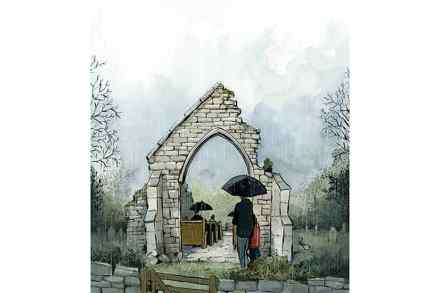
Is this the last chance to save the Church of England?

From our UK edition

I am a key limiting factor. That’s a new one for a clergyman of the Church of England. We’ve traded under parson, cleric, priest, minister, padre and even pie-and-liquor, but never before have I heard us described as ‘key limiting factors’. That this phrase was used during the announcement of a new C of E-endorsed scheme — to create 10,000 new lay-led churches in the next ten years — adds future injury to present insult. ‘Lay-led churches release the Church from key limiting factors,’ said Canon John McGinley introducing the initiative.

Letters: China has peaked

From our UK edition

China has peaked Sir: Niall Ferguson makes some good points about the nature of Xi Jinping’s imperial aspirations but misses two important parts of the picture (‘The China model’, 8 May). First, the Chinese Academy of Science predicts that China’s population will peak at 1.4 billion in 2029, drop to 1.36 billion by 2050, and shrink to as few as 1.17 billion people by 2065. They even forecast that China’s population might be reduced by about 50 per cent by the turn of the next century. And second, China’s economic rise is stalling.

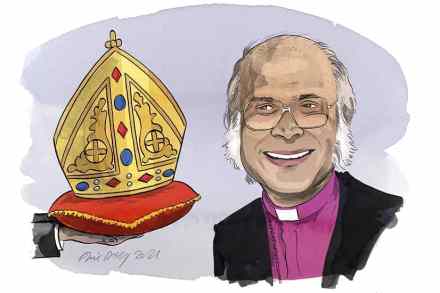
Should monuments to past Archbishops of Canterbury come down?

From our UK edition

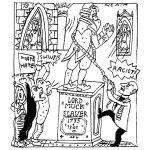
This week, the Church of England issued its document ‘Contested Heritage in Cathedrals and Churches’. It is guidance for what those locally running more than 12,000 churches should do about their monuments ‘to transform unjust structures of society, to challenge violence of every kind and pursue peace and reconciliation’ and address ‘the Church’s own complicity in structural sin’ and ‘oppression or marginalisation of people on the basis of their race, gender, religion or sexual orientation’. In church monuments, this usually boils down to whether the person commemorated had links with slavery. Seen from a parish level (where the poor churchwardens, such as my dear wife, will have to do the work), here are some preliminary questions.

The C of E’s misguided obsession with statues

From our UK edition

The Church of England has once again misunderstood the mood of the nation. Guidance published this week urges the country’s 12,500 parishes and 42 cathedrals to address, search out, assess and remove offensive artefacts of ‘contested heritage’. The framework follows the call by Justin Welby, Archbishop of Canterbury, for a review of church statues. Of course racism must be taken seriously, but I doubt I was the only cleric who, upon hearing this development, let out a loud groan. The edict is both a concession to advocates of divisive identity politics and a distraction from the more pressing issues on which the church should be focused.

Letters: The C of E’s obsession with critical race theory

From our UK edition

Christian approach Sir: Dr Michael Nazir-Ali’s criticism of our report ‘From Lament to Action’ (‘Bad faith’, 1 May) was wide of the mark in its suggestion that Marxist-inspired critical race theory was the ‘intellectual underpinning’ of our approach. Far from it. The source material for our report was three decades of reports on the issue of racial justice from the General Synod of the Church of England. Doubtless there are valid criticisms which can be made of Synod; however, being a hotbed of radical Marxism is not one of them. Our report explicitly rejects any idea that our work should be viewed as a battle in a culture war.

The C of E has fallen for anti-Christian theories of race

From our UK edition

In its new report, From Lament to Action, the Church of England has decided to focus on race. Now, there is no question that racism exists within all cultures, but the Judaeo-Christian tradition has always been opposed to it. Christianity emphasises the common origin of all humans, made in God’s image, and contemporary science corroborates this moral and spiritual insight. The Church is right to set its face against racism. Predictably, however, the C of E report urges an audit of monuments and an examination of the Church’s complicity in the slave trade. Why doesn’t it celebrate the long tradition of those Christians who devoted their lives to abolition?

The Church of England’s new religion

From our UK edition

This article first appeared in the 20 March edition of The Spectator.The Church of England report that was leaked to Douglas Murray has now been published. You can read the full report here. With a heavy heart I must return once more to the subject of the Church of England. I recognise that is not a subject for everybody, and occasionally someone implies that it should not be a subject for me. But I am concerned about the fate of the national church because as the new religion heaves ever clearer into view, I realise that I prefer the old religion to the new one. I would rather attempts to influence the country’s morals were preached from a pulpit than through group stampede on Twitter.

Letters: There’s nothing libertarian about vaccine passports

From our UK edition

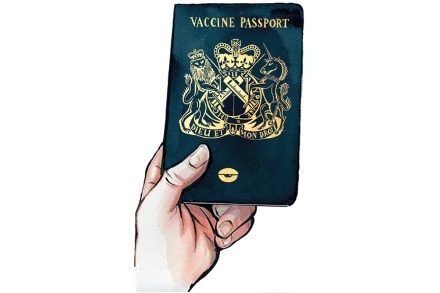
Taking liberties Sir: I feel that Matthew Parris is absolutely wrong about liberty (‘The libertarian case for vaccine passports’, 10 April). True liberty is that each individual has the possibility to live their life how they desire (within the law), taking full responsibility for any and all the risks they incur. I am not responsible for anyone else’s health. To say that we have to stay indoors, wear masks, observe social distancing or have vaccinations because we would be killing others if we did not is blackmail. If you use the logic that the individual is responsible for the health of all other people then everyone who owns a car is directly responsible for every injury on the roads.

Letters: The inconsistencies of Mormonism

From our UK edition

A leap of faith Sir: I live not far from the ‘London Temple’ of the Church of Jesus Christ of Latter-day Saints. Most summers, the local streets are trodden by American Mormon missionaries, polite teenagers who occasionally approach to ask if we know Jesus Christ. Some years ago, I read the book on which the new Netflix series Murder Among the Mormons (‘Latter-day sinners’, 3 April) appears to be based. So when I was accosted by a couple of missionaries, I was able to ask them why the practice of polygamy, so avidly promulgated by the founder of their church, Joseph Smith, had been abandoned.

The CofE’s Seder masochism

From our UK edition

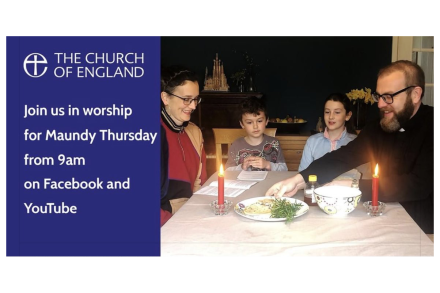
Christians are celebrating their second locked down Easter this weekend. If Mr S wasn't a model of Christian charity, he'd quite like to remind certain people of this fact, especially those irritating folk who last year insisted that locking down just before the Muslim festival of Eid was somehow an attack British Islam. Perhaps not everything is motivated by conflict between different identity groups? Oh wait, yes it is. With parishioners cooped up at home, someone in the Church of England thought it might be nice to encourage a bit of domestic ritual (yes, that antiquated idea of physical, structured worship).

Letters: Britain should hang on to its vaccines

From our UK edition

Ticket to freedom Sir: While I sympathise immensely with the spirit of last week’s lead article (‘Friends in need’, 27 March), we cannot justify asking Britons to wait any longer than necessary while their ticket out of lockdown is exported to the EU bloc, whose level of freedom is on average significantly higher than the UK’s. How can we justify exporting vaccines to Finland and Sweden, for example, where there has always been the freedom to meet family and friends in groups, while we are still enforcing draconian measures here?

The new religion of the Church of England

From our UK edition

With a heavy heart I must return once more to the subject of the Church of England. I recognise that is not a subject for everybody, and occasionally someone implies that it should not be a subject for me. But I am concerned about the fate of the national church because as the new religion heaves ever clearer into view, I realise that I prefer the old religion to the new one. I would rather attempts to influence the country’s morals were preached from a pulpit than through group stampede on Twitter. And though we haven’t heard much from actual pulpits for more than a year, the church hierarchy has not slumbered. It has been busying itself with the question of anti-racism.

Letters: The key to Scotland’s future

From our UK edition

The key to the Union Sir: ‘Love-bombing’ the Scottish electorate with supplemental spending in devolved areas (‘The break-up’, 27 February) is unlikely to prove a decisive tactic in the ongoing battle over Scottish independence. It will never be enough, and the average voter will not distinguish Westminster spend from Holyrood’s. Neither should opposition to an independence referendum be the Scottish Conservative and Unionist party’s primary policy in the upcoming Holyrood election. Falling into the SNP trap of focusing on this issue allows the party to pursue its agenda of confected grievance and division. Secession is the SNP’s preferred battleground, not least because it permits deflection of their record in government.

Letters: Immunity passports are nothing to fear

From our UK edition

Nothing to fear Sir: Many of us await the day when we can travel abroad for much-anticipated holidays — but surely there is a distinction between immunisation passports and Tony Blair-type IDs (‘Papers, please’, 13 February)? If a country requires you to be immunised to travel there in order to protect its citizens against Covid, then I would be happy to have that ‘passport’ requirement. It is quite different from carrying ID with you in your own country. Let’s face it, the danger from Covid will fade in time, and the ‘passport’ requirement along with it. After all we happily travel with a passport in our pockets to show who we are when we go abroad. Didn’t people have the same worries when passports were introduced?

Letters: Immunity passports are nothing new

From our UK edition

Too many bishops Sir: As a former Anglican clergyman, I have been following your articles about the current state of the Church of England with interest and sadness. I note that the recent article by the Archbishops of Canterbury and York is strong on modish phrases, such as a ‘mixed ecology church’, but it ignores two of the large elephants in the room (‘A Christian vision’, 13 February). The number of bishops over the past century has more or less doubled, in spite of the diminishing number of worshippers and parish clergy. Likewise, while archdeacons used commonly to run their own parishes in addition to their archdiaconal duties, they are now separately housed and paid, along with an army of administrators and advisers.

Letters: How to repair the Church of England

From our UK edition

Save on bishops Sir: The Church of England is once again missing the point if its financial crisis will result in the closure of parish churches and redundancy of clergy (‘Holy relic’, 6 February). Radical action is required, but the focus should be elsewhere. A starting point would be to amalgamate the vast majority of dioceses. Why is East Anglia served by the C of E dioceses of Ely, Norwich, St Edmundsbury and part of Peterborough when the Roman Catholics manage more than adequately with a diocese for East Anglia? Time to unite and benefit from economies of scale. But it should go much further: halve the number of bishops, diocesan and suffragan, and axe some of the non-jobs with fancy names which seem to proliferate in and around the centre.

A defence of the Church of England

From our UK edition

If you’ve been following the media coverage of the Church of England over the course of the coronavirus pandemic, one question you might have seen is: ‘Where is the C of E?’ Let us offer an answer. We have been burying the dead, comforting the bereaved, feeding the hungry and praying for our nation. We have been doing this not as superheroes, but as human beings living through the same crisis as everyone else: grieving, home-schooling, worrying, getting sick, shielding, isolating, weeping. With that said, we fully understand — and indeed share — the anger and frustration felt by some that the government ordered public worship to be suspended during the first lockdown.

Holy relic: what will be left of the Church of England after the pandemic?

From our UK edition

A clergyman admitted to me that he’d recently burst into tears. He’d received an email from his diocese in this latest lockdown ‘strongly urging’ vicars to close their churches. He has an elderly working-class congregation in a poor area. Coming to church was ‘the one thing keeping them going’. Local vicars like him represent the best of the Church of England. They are loving, kind, and they know their flock. Before the pandemic, the C of E had seen attendance halve in a generation. Weekly religious attendance is highest among non-Christian faiths (40 per cent), followed by Roman Catholics (23 per cent) and all other Christian denominations (23 per cent).

The misguided priorities of church authorities

From our UK edition

This has been a tough year for everyone. Death, mental collapse, grief, unemployment. In my church we’ve lost people to Covid — one of the earliest victims was a regular at our 9 a.m. Communion. We’ve lost people to mental health — one of the homeless men who came to our services, and who used to delight us by playing the piano, hanged himself over the summer. Money is tight, and ancient buildings need constant repairing. Our Lady Chapel roof costs £280,000 and I still have to raise £100,000, without the help of any fundraising events. Most parishes are staring at deficits of tens of thousands of pounds, so they listened intently when, in November, the new Archbishop of York unveiled ‘A vision for the Church of England in the 2020s’.