Church of england

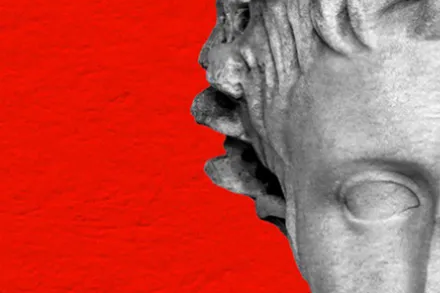
Would Sadiq Khan back a rave in a mosque?

From our UK edition

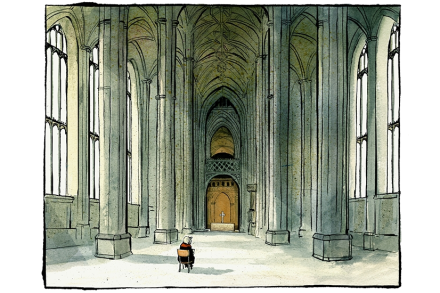
I must return, regrettably, to the subject of the Church of England. Readers with long memories may recall the year of our Lord 2024. In February of that year, the people who are meant to care for Canterbury Cathedral allowed a ‘silent disco’ to take place over two nights in the place where St Thomas à Becket was martyred. Two thousand revellers turned up to take part in what became known as ‘a rave in the nave’. Naturally the Church of England authorities denied that this constituted any sort of defilement of one of England’s holiest places. Fast forward to September of that same year and it was Peterborough Cathedral’s turn. That was when it announced an Ibiza-themed nightclub evening with DJs spinning an ‘epic’ set of ‘soul, funk and contemporary hits’.

Long live death’s dark humour

From our UK edition

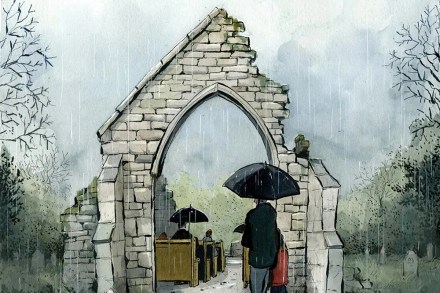
One of the things people don’t tell you about grief is the humorous side of it. Many will warn that grief can erupt at strange times and that memories of those who have died spring upon you in unusual places. But few mention the fact that loss can put you in situations where the only real solution is to laugh. My father died at the end of last month. He was much loved and is much missed. He was also a great raconteur and, as we have been sorting through photographs to display at the wake, I realise too that he was a great laugher. I’ve lost count of how many images we’ve seen of him with his head thrown back at a party, laughing. Consequently, it seems almost appropriate that there have been moments of laughter since his death.

What Zanzibar could teach the C of E about slavery

From our UK edition

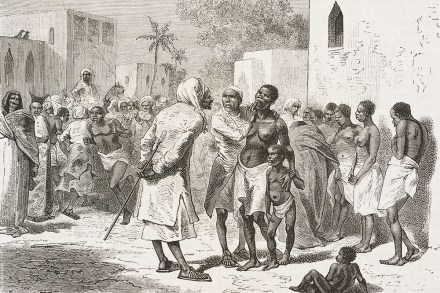
I have a suggestion for those opposed to Project Spire, the Church of England’s plan to put £100 million into an investment fund to benefit those communities ‘affected by historic slavery’. Bear in mind that none of the arguments against it has had an impact to date. Suggesting that this money would be better spent repairing roofs and stained-glass windows has left the Church Commissioners unmoved. Trying to assuage their guilt by pointing out that the Church’s financial investment in the transatlantic slave trade was negligible – and yielded a loss, not a profit – also falls on deaf ears. So why not club together and pay for a trip to Zanzibar instead?

Letters: What will I do without Gentleman’s Relish?

From our UK edition

Lessons in education Sir: I read Michael Gove’s thought-provoking piece (‘Revenge of the Blob’, 29 August) with great interest. It prompted me to reflect on my 26 years’ experience in various teaching and leadership roles in the English education system. This has convinced me that, despite changes of government, political persuasion, and evolving theories of pedagogy and school improvement, two fundamental truths remain constant. First, the quality of teaching makes the single greatest difference to young people’s achievements and, ultimately, their life chances. This is particularly true for disadvantaged pupils and those with additional needs. Second, the quality of school leadership is fundamental to the ethos, culture and expectations of a school.

Letters: The C of E is making all the wrong choices

From our UK edition

People power Sir: Quentin Letts’s article (‘Plastic parsons’, 22 August) underlines the dire state of the Church of England today. How can the Church grow when its leaders are more and more removed from its flock? The problem is in the way the Church is managed. When confronted with increasing costs and lower revenue, dioceses cut the number of vicars and force parishes to merge to form benefices of ten or more parishes, each overseen by one or two salaried priests. Instead, perhaps we lay members of parishes should push back. Every diocese has many ordained clergy among its ranks. Each diocese should be required to allocate these ordained clergy to parish churches where they can continue to perform their diocesan duties as well as being a parish vicar.

Enjoy Anglican priests while you still can

Something amazing happened as I was walking my 91-year-old mother through Ledbury: we saw a bobby on the beat. He was even in a helmet, not a baseball cap. “A real policeman!” squealed various people, reacting as they might to a steam train or an Austin-Healey, reminders of more distinctive days. The same surprise may soon be evident when we see dog collars. A new scheme, oversight ministry, adopted by some Church of England dioceses, is taking vicars off the streets. Instead of being front-line clergy they will become “oversight ministers” and “area deans,” managers of lay, unpaid “focal ministers.

anglican priests

Enjoy Anglican priests while you still can

Something amazing happened as I was walking my 91-year-old mother through Ledbury: we saw a bobby on the beat. He was even in a helmet, not a baseball cap. ‘A real policeman!’ squealed various people, reacting as they might to a steam train or an Austin-Healey, reminders of more distinctive days. The same surprise may soon be evident when we see dog collars. A new scheme, oversight ministry, adopted by some Church of England dioceses, is taking vicars off the streets. Instead of being front-line clergy they will become ‘oversight ministers’ and ‘area deans’, managers of lay, unpaid ‘focal ministers’.

Project Spire is the Church of England’s Chagos deal

From our UK edition

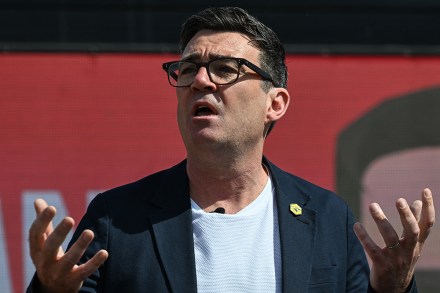
The Church of England can always be relied upon to walk into a room just as everybody else is leaving. The question of whether we have reached ‘peak woke’ – the high watermark of Americanised racial politics dictating every aspect of public life – remains open. However, those post-Black Lives Matter efforts, which saw mass demonstrations and acts of self-abasement by companies and institutions, are undeniably more muted and more disputed than they were in 2020. It seems unlikely that, for example, Andy Burnham would ‘take the knee’, as Keir Starmer did so unthinkingly.

It’s the ideology, stupid

From our UK edition

What do Nigel Farage, gender-critical feminism, masculinity, generalised homophobia and GB News have in common? All have been blamed in the past week or so for the pair of terror attacks in Berlin and Paris which left one dead and dozens wounded. Labour MPs (including the cabinet minister Chris Bryant), left-wing commentators and journalists have rushed to point the finger at a variety of bizarre targets. It must be hard being an Islamist. Imagine, you’ve gone to a great deal of planning and effort to commit an atrocity and make clear to the world that your motivations for doing so are your murderous religio-political creed.

Put on a suit and tie, Prime Minister

A brass fanfare; a wide establishing shot of five men in three-piece suits, seated in a library of leather-bound tomes – this is Harold Macmillan doing informal. The scene is from a 1959 party political broadcast, which purports to show a ‘relaxed chat’ between Macmillan and four of his ministers, all of whom he refers to by their cabinet titles. Almost everything about it is artificial (including quite possibly the claim that it took place the day after the parliamentary recess). Watching it now is a reminder of two things, perhaps contradictory. First, that prime ministers have always played a clever and not entirely authentic game when it comes to informality; second, how far we’ve fallen. Can you imagine the equivalent today?

Save us from the Gospel according to Grok

The Rt. Revd. Martyn Snow, the handsome and up-to-date Bishop of Leicester, has decided that it’s OK, even admirable, for clergy to use AI to write their sermons. Bishop Snow was on the radio the other day, proud to share with listeners that in his diocese, they’ve even had an AI expert come to give pointers to the priests. No more painful head-scratching on a Saturday afternoon for the lucky clerics of Leicester. ChatGPT will sort it. Just plug in a Bible verse and a few well-crafted prompts, and you’re off to the cricket, or to Pride, whichever way you swing. It’s one of those many times I wish Michael Wharton was still alive and writing.

gospel

Letters: many are waiting for the Tory comeback

From our UK edition

Con’s the word Sir: In his article ‘Neo con’ (6 June) Michael Simmons claims that neoliberalism powered this country into the 21st century as the fastest-growing large economy in Europe. It didn’t; it was the North Sea that fuelled the UK’s growth, the UK being the only large European economy gifted by geology with major oil and gas fields. Comparing the UK and Norway over this period is enlightening. The UK, believing in neoliberalism, sold off its national oil company BNOC and trusted in ‘the market’, while Norway, wanting a direct stake in its substantial oil and gas resource, created the state-owned company Statoil to manage it.

Is politics becoming more religious? With Tom Holland & Jonathan Sumption

From our UK edition

39 min listen

Is British politics becoming more religious? Madeline Grant certainly thinks so, arguing – in the Spectator’s cover article – that the next election could be the most religious for decades. Issues like immigration and Islam, assisted dying – and even the establishment of the Church of England are likely to play a role. The current Labour government's ‘most telling divide’, Madeline writes, is between MPs – like Shabana Mahmood and Wes Streeting – who understand religion – and 'those who don’t’. For the Edition’s Easter special, host Lara Prendergast is joined by vicar – and Madeline’s husband – The Rev’d Fergus Butler-Gallie, former Supreme Court justice Jonathan Sumption and the historian and broadcaster Tom Holland.

Prince William resets faith – as Sarah Mullally enthroned

From our UK edition

37 min listen

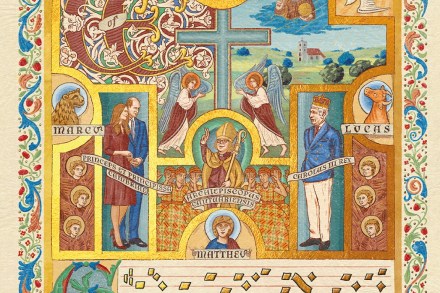
Dame Sarah Mullally has been enthroned as the Archbishop of Canterbury, the first female head of the Church of England. Prince William attended as the representative of the Monarch and – as heir to the throne – the person who will one day become Supreme Governor of the Church. His attendance came a few days after an interview appeared in The Times where Prince William seemed to be pressing 'reset' on his relationship with faith. Friend of Holy Smoke, The Daily Mail’s Robert Hardman – author of the forthcoming biography Elizabeth II. In Private. In Public.

Prince William resets faith – as Sarah Mullally enthroned

What would Kenneth Williams make of our age?

From our UK edition

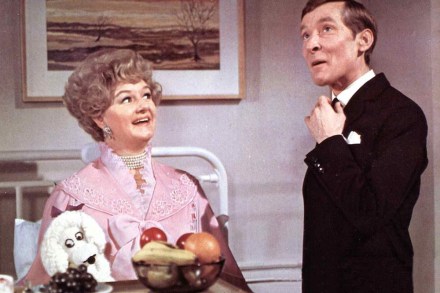
Sunday marks what would have been the 100th birthday of Kenneth Williams. It’s tempting to try to imagine what he would have been like had he lived longer, though the absurdity of our age might have been beyond even his acid observation. That’s perhaps the most interesting aspect of Williams: he can’t be imagined in the present day at all. As recent as his lifetime was, it was one so utterly bound by the 20th century as to feel distant. How so? Well, his critics would point to the Carry On films. A young and serious acting talent, coached in Shakespeare by Olivier no less, was wasted, so the argument goes, on trivial smut, consigning him to perma-residence in the world of Ted Heath and the Wombles novelty record.

The stakeholder class needs blowing up

From our UK edition

In February 1974, a frustrated Ted Heath, unable to achieve anything in government against constant opposition by the mighty trade unions, called an election. One basic question was front and centre of the campaign: ‘Who governs Britain?’ Soon the answer came back: ‘Not you, mate.’ In fact, it would take Margaret Thatcher’s victory to clip the power of the unions – but only after enormous political and economic risks were taken. With the collapse of public infrastructure, a lingering sense of decline, and Britain looking embarrassed (and embarrassing) on the world stage, comparisons to the 1970s abound today. Another similarity is the presence of an all-powerful caste.

I decluttered a 1990s time capsule – and this is what I learnt

From our UK edition

After my grandmother died a few years ago, we couldn’t bring ourselves to get rid of most of her possessions. What had started as a storage room at my parents’ house quickly morphed into a living, breathing pile. It gradually invaded the spare bedroom and was making encroachments into my mother’s study. Answering the call of nature at night became fraught with terror, lest the pile had become sentient and would drag me into its clutches in the small hours of the morning. It was like living in a cross between Storage Wars and a Stephen King novel. There was a whole box devoted to Diana and Charles plates and Andrew and Fergie engagement mugs I’ve never been one for minimalism.

‘Pray your boilers don’t fail’: the Church of England is in the grip of eco-zealots

From our UK edition

It came to pass in 2020 that a decree went out from the General Synod that all the Church of England must be carbon net-zero by 2030. And this ruling was first made when Justin Welby was Archbishop of Canterbury. And all went to have a good hard look at their church heating systems, every one into his own vestry cupboard… How easy it is to issue a decree from on high; and how hard it is for the people on the ground to have to deal with its consequences.

At 53, I’m training to be a priest

From our UK edition

I have recently begun training for holy orders in the Church of England. I know, they’re getting desperate. My motivation for wanting to be a priest is selfish. I want more joy in my life. You might feel that joy is to be found in extreme sports, or pop concerts, or snorting coke from the midriffs of hookers. But I think you mean pleasure. Joy is deeper, linked to a sense of the goodness of existence. It seems to me that joy is to be found in doing cultural things. I don’t mean going to plays or art galleries; I mean cultural things that are very participatory and democratic. Things like this: getting to know people who are different from me, through putting on a little play, making stuff for a festival and seeing some local children enjoying it, singing a rousing song.

Letters: Britain’s energy policy is unsustainable

From our UK edition

Unsustainable energy Sir: Sir Richard Dearlove (‘Net cost’, 22 November) succinctly sums up the views of many of us who cannot understand the whole lemming-like net-zero policy. This leap into the abyss was precipitated by Boris Johnson and the torch is now carried by Ed Miliband, who seems to have carte blanche to make matters worse. The destruction of our automobile and energy industries in terms of GDP and Treasury receipts is mindless – more so in a country producing less than 1 per cent of the world’s CO2 emissions. Interestingly, Matt Ridley’s article in the same issue (‘Star power’) gives longer-term hope regarding fusion energy generation, but it will be years before this becomes reality.