Christmas

A sign of the Times

From our UK edition

Yesterday, The Times produced its first Christmas Day edition for more than a century - since, that is, newsagents started taking that day off. The jewel in that edition was a wonderfully spirited piece from my Spectator colleague Matthew Parris about the importance of paywalls. I fervently believe in them, and regard them as the only hope for this sharply contracting industry. But over to Matthew: “‘Sorry, I can't read you anymore, but I refuse on principle to subscribe now that there's a paywall,’ these muppets whine. ‘On principle?’ I reply. ‘What principle?’ As they fumble for an argument, I interrupt: ‘Look, maybe the money is a bit tight at present: I quite understand that.

From the archives: Mark Steyn’s Christmas film selection

From our UK edition

To help that Christmas lunch go down, here's a sprinkling of Christmas films selected by the incomparable Mark Steyn in 2004. To see more of his writing for The Spectator click here. Otherwise, just read on...  Christmas Classics, Mark Steyn, The Spectator, 18 December 2004 ’Twas the night before Christmas and all through the house/ Not a creature was stirring, not even a mouse. At which point, Sylvester the cat looks up from his long fruitless vigil outside the mouse hole in the baseboard and sighs with feeling to the narrator, ‘You’re not jutht whithlin’ Dickthie, brother.

From the archives: What do you mean ‘Happy Christmas’?

From our UK edition

A more scientific view of proceedings, courtesy of a Yale professor writing for The Spectator's Christmas issue in 1994:What do you mean ‘Happy Christmas’?, Robert Buck, The Spectator, 17 December 1994 It is the time of year when the pursuit of happiness is at its most frantic. People believe they should be happy in the holiday period because they are surrounded by tradition, mercantile enthusiasm and a desire to return to childhood, where, for the most part, it did not require an effort to be happy. Is the experience of happiness only psychological? We know that the reductionist trends of science must be leading towards a molecular theory of practically everything. Will Christmas get scrunched down to a molecular evil?

From the archives: Jeffrey Bernard does Christmas

From our UK edition

By way of a Christmas aperitif for CoffeeHousers, here's Jeffrey Bernard enduring the festive season for his Low Life column in 1988: Eastern Promise, Jeffrey Bernard, The Spectator, 17 December 1988 Speaking as a man with little faith I find this whole business of Christmas one hell of an inconvenience. It must be even worse for a turkey. One of the things that annoys me is the fact that I can hardly find a table in any of the restaurants I use because of the number of wretches who only seem to eat and drink once a year. Where the hell are they in, say, August? I spent one Christmas in St Stephen’s Hospital years ago and it passed almost unnoticed. The fact that I was not allowed to eat anything at the time was a blessing in disguise.

Snowgoating Christmas

From our UK edition

Snowgoat: [noun] Inclement weather blamed, expediently, for the failure to be at all organised. Especially in the matter of sending Christmas cards, purchasing proper presents, etc. [verb, trans], Make a snowgoat of. Derivatives: snowgoater, snowgoating, snowgoatism. eg, Florence was unimpressed by her uncle's attempt to use a snowgoat this Christmas.

Happy Christmas | 23 December 2009

From our UK edition

Barring major political catastrophe, Coffee House will be falling silent over the next few days as we all celebrate Christmas.  Many thanks to CoffeeHousers for your contributions over the past year.  We hope you enjoy a happy holiday. If you're looking to fill your time, then Paul Johnson's and Lloyd Evans' pieces from the Christmas issue of the magazine are well worth a read.  We'll be uploading more magazine content over the next week.

The Spectator’s Notes | 18 December 2010

From our UK edition

Last year, we stopped sending Christmas cards. We are not sending them this year either. I still feel guilty about it: friends take the trouble to send such nice ones. Part of the problem — as well as laziness — is technology. Emails make one extremely conscious of the number of separate operations required by ‘snail mail’. You need the card (whose choice is also a complicated matter), the envelope, the addresses, the stamp, the pen, the post box, and the energy to write your name hundreds of times. This all seemed worthwhile when one had confidence in the postal system.

Christmas Short Story: Carcassonne

From our UK edition

In the summer of 1839, a man puts a telescope to his eye and inspects the Brazilian coastal town of Laguna. He is a foreign guerrilla leader whose recent success has brought the surrender of the imperial fleet. The liberator is on board its captured flagship, a seven-gun topsail schooner called the Itaparica, now at anchor in the lagoon from which the town gets its name. The telescope offers a view of a hilly quarter known as the Barra, containing a few simple but picturesque buildings. Outside one of them sits a woman. At the sight of her, the man, as he later put it, ‘forthwith gave orders for the boat to be got out, as I wished to go ashore’.

Memories of wartime

From our UK edition

I was born in London in 1935. By the summer of 1939, it was considered wise to get children out of the city before the war started. I wasn’t separated from my sobbing mother at Victoria station and put on a train holding a gas mask. Instead, my mother and I went down to Devon to stay with my grandmother, who had rented a house in the village of Torcross. In London, the war did not stop for Christmas. Toy shops before the war had sold small forts modelled on the Maginot and Siegfried lines. Now boys in the city wanted toy planes like the ones they saw flying overhead. But in Devon in 1940 things were still peaceful and we had a big Christmas lunch with all the trimmings. We were joined by an uncle whose job it was to pull bodies out of bombed buildings in London.

O come all ye faithless

From our UK edition

The Spectator understands the work pressure on vicars at this time of year. We know it is tempting simply to read out the diocesan Christmastide message. So here, for all clerks in holy orders, we offer this cut-out-and-preach sermon for use at carol services: May I speak in the Name of the Father, Son and Holy Ghost — though for many of you it might as well be in the name of the heathen god Thor. Interesting chap, Thor. Red-headed. Liked to hurl bolts of lightning and cause mayhem. A Norse Simon Heffer. I come not in peace. I will not wring my hands and speak to you in the voice of a primary school teacher. I am not going to employ some drippy parable while smiling at you like a flatulent goat. The Britain of Jeremy Paxman demands something ruder.

Prison Notebook

From our UK edition

Christmas Day is quiet in the prison. There’s a tree in the chapel, and a few bits of tinsel on the wings, but the air is not celebratory — it’s subdued. The men eat their processed turkey alone, or in pairs, in their cells, while images of happier Christmases flicker tauntingly from their TVs. There are countless people in the outside world who spend a lonely Christmas, too, of course; but on Christmas Day in the prison in which I work as a chaplain, there will be 700 lonely men under one roof. On the first Sunday of Advent, I give a sermon on the significance of the Advent candles: the purple ones for penitence, the pink one for Gaudete Sunday, and the white one in the middle for Christmas Day.

Festive cheer

From our UK edition

Well, Nick Clegg's reponse to the Labour chief whip's Christmas card made me smile: "Both myself and Nick Brown have good reason to be embarrassed. I posed for pictures in ridiculous fancy dress 20 years ago - and he is an MP for the Labour Party.

The Spectator’s Christmas interview with George Osborne

From our UK edition

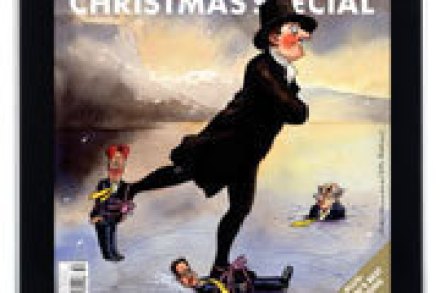
The Christmas Special of The Spectator is out today, and George Osborne kindly agreed to an interview. We have printed 1,500 words in the magazine, but James and I thought CoffeeHousers may like a fuller version, where he has more space to speak for himself.  We have gone into way more detail on tax policy here than in the magazine, for example, as Osborne is seldom pressed on this point and his thoughts are very interesting. We have divided it up by subject headings, so CoffeeHousers can skip the chunks they’re not interested in.   Liberty, paternity and Treasury It is an exciting day for Liberty Osborne, the Chancellor’s daughter, to join him at work.

Any Christmas reading suggestions?

From our UK edition

Christmas is coming, and the bookshelf is getting thin - so, any suggestions for Christmas reading? We are putting our Christmas Special to bed today, so your baristas at Coffee House would be grateful for any tips. I don't need to say that we're not after politics books. Coffee House is not simply a home for political wonks, and the brilliant suggestions last time I asked pointed me to all manner of treasures, old and new. So all suggestions welcome.

Perfectly inconsequential

From our UK edition

At this stressful time of year, it is important to note the distinction between Christmas ‘funny’ books and Christmas ‘quirky’ books. Funnies we know only too well, mainly from the sinking feeling most of us experience when unwrapping one on Christmas morning. Quirkies are a more recent development, trading less on jokes and merriment than on oddness, silly facts, curious stories and generalised eccentricity. ‘That’s not writing, that’s typing,’ said Truman Capote of Jack Kerouac. Many of these books are just downloading. But a few are worth your while. The latest from the all-conquering QI franchise is The Second Book of General Ignorance by John Lloyd and John Mitchinson (Faber, £12.99).

Christmas cheer, Spectator style

From our UK edition

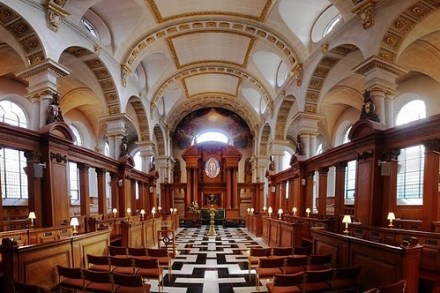
It was the Spectator’s Carol Concert last night, in the Fleet St church of St Bride’s – and one of my favourite nights of the year. The choir is amazing: if you’re a sucker for John Rutter-style choral arrangements (which I very much am), then it was heaven. The choir’s first piece was Harold Darke’s stunning arrangement of In The Bleak Midwinter, perhaps my second-favourite piece of Christmas music.* I was up for the first reading, Isaiah Ch9, predicting the birth of Christ. It was weirdly short, so I looked up the Good Book to see if I could beef it up a little – and it was one of those moments when you’re reminded just how brutal the Old Testament can be.

Slightly surprising stat of the day

From our UK edition

According to a YouGov poll in tomorrow's People (reported by the paper's political editor, Nigel Nelson, on Twitter): "1% more people would rather have G.Brown than D.Cameron round for Christmas dinner." There's better news elsewhere in the poll for the Tories: the gap between them and Labour is back in double digits.  It's the Tories on 40 percent, Labour on 28, and the Lib Dems on 18.

Children’s books for Christmas | 13 December 2008

From our UK edition

In these hard times it is gratifying to find one Christmas present which has remained virtually unchanged in price for the last seven or eight years — the children’s book. Most of the illustrated books for the very young and the increasingly elaborate pop-ups and stories incorporating various pockets, inserts and DVDs are produced in the Far East. They are well made and extremely good value. Christmas represents the last stand for the hardback, with the opportunity for children to enjoy a book as an object, not just for its contents. There are two new titles in Sarah Garland’s series for pre-school children, Going Shopping and Doing Christmas, both £6.99 from Frances Lincoln.