Christmas

Happy Christmas | 25 December 2012

From our UK edition

A merry Christmas to all of you; the sane and the troubled, the humorous and the witless, the rural and the urban, the autodidacts and the monomaniacal, the easy-going and the psychotic, the borderline fascists and the Stalinist libtard bien pensants. And all the others, the many I’ve missed. I wish you all a lovely Christmas and a new year which brings forth things which make you sort of, you know, happy. And so this morning, d’you know what? I really did this. Thing is, it’s all there was available that hadn’t been earmarked for family lunches or suppers or snacks for the bloody kids. So I did it. I breakfasted on coffee and apples. It comes to all of us, in the end. Happy Christmas.

Guns and tinsel: Christmas 1940

From our UK edition

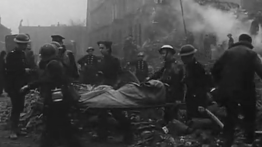
White Christmas, a wartime Christmas no1, sold an distinctly American vision of yuletide bliss. The below video shows what Britain was going through a the same time: short Christmas trees being sold, because tall ones could not fit into the air raid shelters. Toy shops still open, selling Spitfires while dust gathers on the models of the Maginot Line forts, which proves so useless against German attack. Church bells were silent that year; if any rang, it would have been a signal that the invader had come. Watching this video each Christmas has become a tradition chez Nelson. My in-laws grew up in war-torn Czechoslovakia where life was even worse and the defeat of Hitler just meant a new form of oppression - as Anne Applebaum describes so vividly in her brilliant new book, 'Iron Curtain'.

From the archives: Mr Dickens’ ghost story

From our UK edition

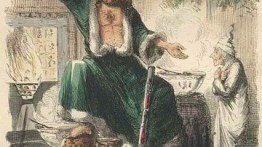
It is the bicentenary of Charles Dickens' birth in February, and Christmas Day today; so a sterling occasion to reproduce The Spectator's original review of A Christmas Carol from the archives. It was written for our issue dated 23 December 1843, and differs from most modern reviews in quoting extremely liberally from the text, to the extent that there is more Dickens than Spectator in what follows. But, on this morning of all mornings, I thought few would complain about that: ‘The object of this seasonable and well-intentioned little book is to promote the social festivities and charities of Christmas, by showing the beneficial influence of these celebrations of the season on the bestowers as well as the recipients of this sort of hospitality.

Merry Christmas | 25 December 2011

From our UK edition

May you and yours enjoy the day and have a rare and swell old time. Once you've done the quiz you can enjoy what is still the best damn (non-religious) Christmas song of all...

The great books Spectator writers and others hate

From our UK edition

Find out which books PD James, Sam Leith, Susan Hill, Mark Amory, Barry Humphries and many more hate, then tell us about yours in the comments section. Craig Brown Which classic work do you think this comes from? ‘Her teeth were white in her brown face and her skin and her eyes were the same golden tawny brown. She had high cheek-bones, merry eyes and a straight mouth with full lips. Her hair was the golden brown of a grain field that has been burned dark in the sun but it was cut short all over her head so that it was but little longer than the fur on a beaver pelt.’ Jeffrey Archer? Jackie Collins? Lee Child? I’ll give you one more clue.

What do CoffeeHousers want for Christmas?

From our UK edition

Quentin Letts certainly wants a lot from good ol’ Father Christmas. In the festive double issue of The Spectator he pens a wish-list that contains no less than 56 items. Here are some of the highlights: A referendum on Britain’s future in Europe... Or, a Linguaphone course to brush up my German. A protest march through Islington by striking taxpayers. An announcement from David Cameron that he is scrapping the Ministerial and Other Pensions and Salaries Act 1991, which granted pay-offs to Cabinet ministers. (The Act was also responsible for setting the Commons Speaker’s indecently generous pension. Double bingo!) Less windbaggery from Speaker Bercow.

‘Turboparalysis’ Revisited

From our UK edition

The word ‘turboparalysis’, coined by Michael Lind (who has a brilliant piece on the subject in the Spectator Christmas double issue), is paradoxical, even illogical. And yet it is clear, perfect for our times. Lind defines his term as: ‘a prolonged condition of furious motion without movement in any particular direction, a situation in which the engine roars and the wheels spin but the vehicle refuses to move.’ Turboparalysis is a new word; but its sense is familiar. We are often warned that we ‘risk repeating the mistakes of the 1930s’. Comparison between eras is always awkward.

Children’s books for Christmas

From our UK edition

If you're still struggling to find a present for the inscrutable toddlers and children in your life, fear not for behold we bring you good tidings of great joy: Juliet Townsend's annual selection of the best children's books on the market, published in the Spectator a few weeks back.  My 20-month-old granddaughter totters into the room. Her eyes are shining with the fervour of St Bernadette. She has caught a glimpse of the divine. Two small stuffed pigs are clasped in her arms. Clearly she has been in heaven. Actually she has just returned from a visit to Peppa Pig World, the most exciting experience of her short life. Anyone who has contact with very small children today will be all too familiar with Peppa, the toddlers’ Harry Potter in her universal appeal.

An assassination at Christmas

From our UK edition

In the upper outer corridor of the Summer Palace, with its views of the palm fringed courtyard below, the young man was waiting with his gun. It was a no frills 7.65 Ruby automatic pistol, one of thousands a Spanish small arms manufacturer had supplied the French Army during the First World. Some of the offices along the narrow corridor were already deserted for the holiday. Nonetheless he had been assured that, however long his Christmas Eve lunch, the admiral would be back because he would want to read his latest telegrams. At about 3.30pm he heard footsteps, the murmur of voices then, rather surprisingly perhaps, laughter.

Marcus Berkmann’s choice of stocking fillers

From our UK edition

If you're short on ideas for minor Christmas presents, then you can't do better for expert guidance than read Marcus Berkmann's choice of stocking fillers from last week's issue of the Spectator magazine. There can be few phrases in the language more debased than ‘Christmas gift book’. (Well, ‘friendly fire’, maybe, or ‘light entertainment’.) Needless to say, every writer worth his overdraft wants to do one, having already spent in his head all the lovely money he is going to earn from it. But you are essentially writing something for people to buy for other people who would rather have been given something else. Having produced one or two of the things myself, I suspect that most Christmas books aren’t even opened, let alone read.

The importance of truth

From our UK edition

The words ‘Saville’ and ‘Inquiry’ have taken on a somewhat different meaning in recent weeks. But this is just to tell interested readers that my book on the original Saville Inquiry, Bloody Sunday: Truths, Lies and the Saville Inquiry is out now in paperback. If you can still find a bookshop then you might find it there. Otherwise it is of course available on Amazon etc. Priced at £12.99, it includes updated material on the recently-announced police investigation. The book has been described by the Spectator magazine, no less, as ‘a real-life whodunit’, by the New Statesman as ‘compelling’, by the Literary Review as ‘indispensable’, by the Irish Independent as ‘riveting’, by Kevin Myers as ‘superb’.

The Visit – Shiva Naipaul Prize, 2007

From our UK edition

The 2007 Spectator/ Shiva Naipaul Memorial Prize was won by Clarissa Tan. The prize, named after the late Trinidadian author, is for 'the most acute and profound observation of a culture evidently alien to the writer'. The judges that year included William Boyd, Matthew d’Ancona (then editor of The Spectator) and Mark Amory (literary editor of The Spectator). Clarissa is now a staff writer at The Spectator. To find out more about the Shiva Naipaul competition, and how you can enter, click here.   The Visit Clarissa Tan I wish to write about a place of which I know everything yet nothing, where everything is familiar yet strange, a place where I feel I go too often, but never quite enough. This place is the same for everyone, only different.

From the archives: The Christmas truce

From our UK edition

Christmas is but a day away, and with it a chance to remember when British and German troops clambered out of the trenches to declare impromptu ceasefires in December 1914. CoffeeHousers are no doubt familiar with the specifics: how the Germans started by singing carols, and finished off (according to some letters from the time) by beating our soldiers 3-2 in a game of football. But I thought you still might care to see how The Spectator wrote it up a week later.

Happy Christmas | 23 December 2011

From our UK edition

A brief post to let CoffeeHousers know that the blog will be going a bit quieter over the next few days. We hope you have a very happy and peaceful Christmas. Coffee House won't fall completely silent, though. Tune in over the weekend for the occasional post and selections from The Spectator archives. And there's our ongoing Christmas competition here. We'll be back, proper, early next week.

The rising cost of Christmas dinner

From our UK edition

While we're talking Christmas, how about this release from the Office for National Statistics today? It reveals how the cost of certain ‘Christmas shopping basket’ items has risen over the past year. We've put them into a table below — but let's just say, you might want to start stocking up on carrots.

Christmas by numbers

From our UK edition

Keen-sighted Spectator readers may have noticed that there was no ‘Barometer’ column in our Christmas double issue. The weekly column, which features topical, little observations and statistics, had to be pulled because of space restrictions. But no such restrictions on the Internet, of course — so we thought CoffeeHousers might care to see some of the festive factoids we had poised to print. Among them were the poll findings shown in the chart above: only 12 per cent of people regard the religious significance of Christmas as its most important component. And here are more for you to mull over, collected from various YouGov surveys: This Christmas, 31 per cent of people will leave a stocking out on Christmas Eve.

Spectators of Christmas Past

From our UK edition

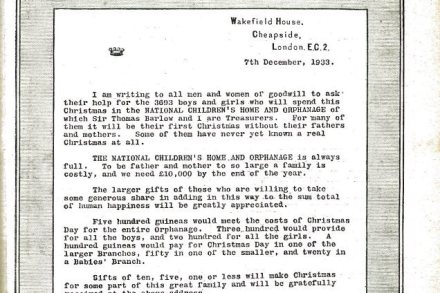
One December in the 1930s, with Britain reeling from the Depression, Lord Wakefield of Wakefield House took out a full-page announcement on the cover of The Spectator. It was an appeal to ‘all men and women of goodwill’ to help 3,693 boys and girls in the National Children’s Home and Orphanage.  ‘For many of them it will be their first Christmas without their fathers and mothers,’ wrote Lord Wakefield. ‘Five hundred guineas would meet the costs of Christmas Day for the entire orphanage.’   That was our Christmas cover of 1933, and it's just one of the Spectators of Christmas Past that we're featuring on our new Facebook page this week, which you can view here.

Oh come, all ye Speccie readers

From our UK edition

A brief post to alert CoffeeHousers to The Spectator's carol concert, which is taking place next Wednesday in the beautiful St Bride's Church on Fleet Street. It promises to be a suitably Christmassy affair. There will be carols from the choir of St Bride's; readings from Jeremy Clarke, Rod Liddle, Rory Sutherland and the Mary behind ‘Dear Mary’; as well as Winter Pimm's, mince pies and hot chestnuts served outside the church. All that remains is for you to buy one of the few remaining tickets. It would be wonderful to see you there, so please do get a-clicking.

Books of the Year | 12 November 2011

From our UK edition

A further selection of our reviewers’ favourite reading in 2011 Richard Davenport-HinesAmidst the din, slogans and panic of modern publishing, my cherished books are tender, calm and achieve a surpassing eloquence by dint of tightly controlled reticence. Anthony Thwaite’s Late Poems (Enitharmon, £10) are written by a man of 80. Each of them is word-perfect: some recall dead parents; others foreshadow Thwaite’s death; and throughout there is the clear, crisp wisdom, pensive sadness and absence of confessional self-pity that show a mastery of language and feeling. Amos Oz’s Scenes from Village Life (Chatto, £12.99) is set in an Israeli pioneer village which is being chi-chied with boutique wineries as jackals circle in the surrounding countryside.

A paean to the people

From our UK edition

There's so much junk on the box at Christmas that yesterday I tweeted a link to a seven-minute video that I thought would be much more memorable: an American's film on England in Christmas 1940. The film is above, and speaks best for itself. The great thing about Twitter is the response: positive and negative. And while many people retweeted the link (one guy said he'd forced his kids to watch it), it provoked fury from one David Walker. His words: "@frasernels - this Tory dares extol this film - a paean of praise to the state and common sacrifice. What hypocrisy.