Christmas

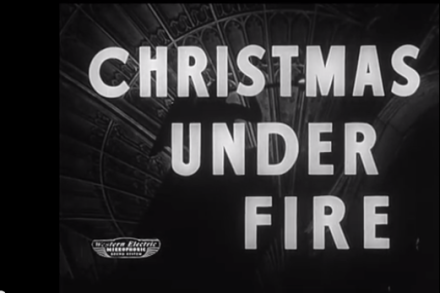
WATCH: Christmas under fire – Britain, 25 December 1940

From our UK edition

This has become a Christmas tradition for me: watching this extraordinary four-minute film about 25 December 1940. Its narrated by an American - at the behest of the British government, who wished to persuade Americans that our fight against Hitler was worth joining. The script is beautiful, almost poetic. "For the first time in history, no bells ring in England to celebrate the birth of the Saviour. No church bells are allowed to be rung in England. If they are, it will mean that the invader has come… At Christmas, England does what England has done for a thousand years - she worships the Prince of Peace." Do watch the film. It's more moving than anything you'll see on television today.

Auberon Waugh’s Christmas Sermon

From our UK edition

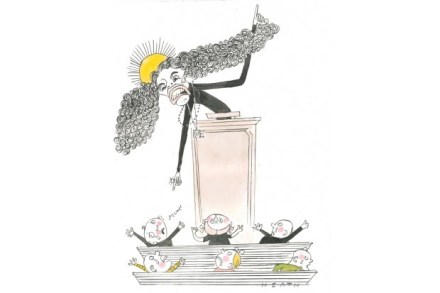
Writing in the 23 December 1966 edition of The Spectator, Auberon Waugh considers the role of Christianity, in all its forms, in an English Christmas. It's not hard to see why most grown-ups detest Christmas nowadays. It is expensive and tawdry, a time for self-deception and false sentiment. It is a children's feast, which is why we all pretend to be children and show gratitude for unwelcome presents and rot our fragile insides with poisonous green crystallised fruit. To crown all the meretricious jollity and make-believe, an enormous number of grown-up Englishmen go to church. This has become as much part of Christmas as the plum pudding, and I think it is time it stopped. Christmas as we know it has nothing whatever to do with religion.

Christmas Eve special: Susan Hill reads The Boy on the Hillside

From our UK edition

Every Christmas, The Spectator runs a short story but for the first time this year we're having it read — and by the author. We're delighted that Susan Hill, whose many books include The Woman In Black and The Mist in the Mirror, has agreed to read her new story, The Boy on the Hillside, which we are releasing as a special podcast. If you can wire up your computer or telephone to the sofa, it's the perfect way to spend some time on Christmas Eve.

Mrs Hanrahan’s sauce: a delicious way to a happy Christmas

From our UK edition

The prospects for peace on earth to men of goodwill - the original Christmas present — look a little slim right now, so by way of compensation, here's a perfectly fabulous recipe for something to go with your Christmas pudding. It's Mrs Hanrahan's Sauce from Darina Allen's A Simply Delicious Christmas. And frankly, it's so good, the pudding becomes merely a vehicle for the sauce. Here, and wishing you a happy Christmas, it is: 225g/8 oz. Barbados sugar (soft, dark, moist) 70ml/2 1/2 fl oz. port 70 ml/2 1/2 fl oz. medium sherry 1.3 litres/2 1/4 pts cream, lightly whipped 110g/4 oz. butter 1 egg Melt the butter, stir in the sugar and allow it to cool slightly. Whisk the egg and add it to the butter and sugar with the sherry and port. Refrigerate.

The perils of dressing – and undressing – for parties

From our UK edition

I recall a male friend telling me about an encounter he once had with Bindy Lambton, the eccentric estranged wife of the late Lord Lambton. They had been to the same party and it was snowing outside. ‘Would you mind coming home with me?’ she enquired. ‘I’m not propositioning you. I’m too old. It’s just that I need someone to undo the back of my dress'. On asking how she managed to undress when alone, Lambton answered breezily, 'I go out on the street , hail a taxi and ask the driver to unzip me. But it’s too cold to do that tonight.’ Oh, the perils of dressing, and undressing for parties, particularly during what is called the festive season.

Russell Brand’s Christmas sermon

From our UK edition

He is the corpulent, gluttonous apotheosis of our hegemonic hierarchical hypocrisy, peddling the shimmering mirage of materialistic cupidity to the dazzled masses while propping up the paradigm of the patriarchal power structure. The question is unavoidable. When will the people finally revolt against the tyranny of Santa Claus? We tell the poor to venerate him as some bibulous, avuncular altruist. Yet in reality this porcine Pol Pot, this crimson-clad Caligula, works just one day a year, while forcing a sweatshop of subjugated elves to toil under his whiskery yoke for the other 364. Inside each house on his snow-swaddled route he gorges on the sherry and mince pies proffered by the proletariat, leaving his reindeer to survive on paltry carrots.

Archive: Jeffrey Bernard’s Christmas Low Life

From our UK edition

In this festive Low Life column from the 19 December 1981 edition of The Spectator, Jeffrey Bernard talks us through some Christmases past. I've tried ignoring Christmas but the bastard won't go away. It's never been a good time of year for me what with being ignored by Father Christmas — yes, I'm going to have a right old moan today — and three years ago being left completely alone in a freezing cottage. Season of goodwill? You must be joking. But at least I've had an office party this year in Kentish Town. Last night I poured a vodka into my electric typewriter and it nearly blew up. There aren't any decorations here and in this day and age I reckon a man could get kicked in the balls if he was found loafing under the mistletoe.

PMQs: a triumph for David Cameron, aided by Ed ‘turkey’ Balls

From our UK edition

A Prime Minister can leave PMQs happy if he's sent his troops off for Christmas in a good mood. Today David Cameron managed that, weaving in festive jokes through a list of statistics that shot Labour down. He was helped by the fact that Ed Miliband didn't have a coherent line of attack at all, dancing from complaining that the employment figures still showed too many people were in part-time work to energy bills, to the Chancellor's missed targets on the economy and on to childcare and the the 50p rate. There was a theme here: look at how the country is struggling to get enough work and afford the bills while the PM rewards his 'Christmas card list' with a tax cut.

CofE takes aim at payday lenders. But what about the banks?

From our UK edition

Does Christmas have to start with a payday loan? No, according to the Church of England. The Church has unveiled its annual advertising campaign this morning, posing this very question to the residents of Manchester. As usual, the CofE is worried Britons are becoming ignorant about the origins of Christmas. As one of the adverts (pictured above) from Christmas starts with Christ shows, the aim is to remind Britain of the religious nature of the festive season as well as urging people not to go into debt to finance Christmas. But are the payday loan companies the only companies the Church should be worried about? In a recent Barometer column, we compared the cost of borrowing of £200 from Wonga to the high street banks.

In praise of consumerism at Christmas

From our UK edition

It’s about this time of year – the darkest days of winter – when we traditionally get those newspaper articles lamenting the amount we consume over Christmas and how it’s all grossly commercial, which is bad because some kids go hungry; followed by the Thought for the Day piece about how we should all embrace poverty, which is what the Christian message is really about, rather than stuffing our fat faces and spending loads of money we don’t have. But to me what’s special about Christmas is that my children really enjoy being given presents, including the ones from Fr Christmas, now a sort of grandfather-god of consumerism.

Toby Young: The surprising lesson of my old friends – middle age makes you nicer

From our UK edition

When I first suggested to my closest male friends that we have a boys’ Christmas lunch, it didn’t occur to me that this would turn into an annual institution. We saw each other three nights a week as it was, so this was just another excuse to go out and get drunk. But a one-off became a habit, a habit became a ritual, and that ritual now enjoys the same status as all the other little ceremonies that make up Christmas. Today, I would no more think of missing that lunch than I would of resigning from my job as ‘paper elf’ — the person whose job it is to pick up all the discarded wrapping paper on 25 December. The reason it’s become so imbued with meaning is that it’s now the only time I see these friends.

Charles Moore’s notes: Why Ireland fears Scottish independence

From our UK edition

In Dublin, where I am writing this column, people are watching the Scottish referendum campaign more closely than in London. Despite the polls, they almost expect a Yes vote, but most do not want one. People fear that Yes would weaken the UK and therefore make it a less useful ally for Ireland in the EU. They also think that an independent Scotland might overtake Ireland as a cute little place for foreign investors who like the combination of kilts, bagpipes and general Celtic carry-on with tax breaks and commercial access to the Anglosphere. Finally, they worry that Scottish independence would reopen the Irish question. At present, the Republic enjoys the fact that the settlement in the North has driven the call for a United Ireland into the background.

Norman Tebbit: My recipe for a contented Christmas dinner

From our UK edition

As the principal cook in our household, I take the view that the Christmas Day cook should not be left isolated in the kitchen slaving over the hot stove whilst everyone else is making merry in the sitting room. The true purpose of Christmas can be served at Midnight Mass the night before, and the old pagan midwinter feast can be celebrated on Christmas Day, cooks and diners all together. So to hell with the messy business of basting turkeys or draining fat off geese. Go for a casserole which can be prepared and part-cooked earlier in the day and returned to finish cooking for the last 30 minutes.

British households are still overwhelmed by debt

From our UK edition

Despite 'the age of austerity', Britain still has a debt problem. That’s the conclusion of a new report from the Centre for Social Justice. It suggests that personal debt in the UK has reached a record high of £1.4 trillion, or 90 per cent of the UK's economic output last year. That’s not happened overnight; but the debt level has increased steadily over the last decade: Breaking this down, the CSJ says that the average household debt is now £54,000 (nearly double what it was a decade ago). Thanks to the increase in borrowing, 5,000 people were made homeless last year due to mortgage and rent arrears.

Christmas lights are not the answer to expensive energy

From our UK edition

It’s tough in Scotland. Faced with the prospect of a bitingly cold winter, fuel poverty and abandoning the Union, some of its residents have taken extreme measures to survive. ITV News reports that Darrel Piper of Dumfries has decided to heat his home with Christmas decorations instead of paying to run his heating system: ‘The 40-year-old says that he puts £30 in the electricity meter every fortnight and £5 in the gas meter to use for cooking. He says that if he didn't have the lights it would cost £60 a fortnight for the gas and electricity.’ Although Mr Piper apparently doesn’t leave the lights on when he’s out, and argues the trip switch would catch any problems, it can’t be a particularly safe answer to cheaper energy.

Poinsettias are just one victim of the energy crisis. Who’ll be next?

From our UK edition

'For millions of families', the Telegraph reports today, poinsettia 'is as much a festive favourite as turkey and Christmas trees'. Which is odd given that they're tropical plants which like to be grown at a balmy 20 degrees. But we can expect fewer of them this year because the UK energy crisis means energy bills are up by almost a third for some growers this year. The plants aren't worth heating. We could see a million fewer of them grown here this Christmas than five years ago, so suppliers are having to bring in lower-quality stock from the continent to meet demand. Will Ed Miliband pledge a price freeze on poinsettias? And show that socialism can save Christmas? Stranger things have happened.

Ho ho no

From our UK edition

Parents who have taken their little angels to see Father Christmas in his grotto at Selfridges got a shock: he’s not there this year. No lists, no photos on the knee, no overpriced gift. Uproar has ensued. The store’s PR team tells Mr Steerpike: ‘Selfridges will not be having the traditional Santa's Grotto this year. We felt a different direction was needed for 2013’. Santa has been downgraded to a roaming personal shopper who ‘advises customers on the perfect, and personalised presents.’ But one source has a different view: the store's international clientele aren't bothered about Christmas so the space required to recreate Lapland is no longer economically viable. But, ye traditionalists, panic not.

Meeting the Enemy, by Richard Van Emden; 1914, by Allan Mallinson – review

From our UK edition

The Great War was an obscene and futile conflict laying waste a generation and toppling emperors. Yet here are two books that situate the horrors of trench warfare within a much larger perspective. One argues that the war had a forgotten ‘human face’. The other that it might all have had a very different outcome. Henry James described  the 1914 plunge of civilisation into blood and darkness as ‘too tragic for any words’ — and about tragedy there is always some air of inevitability, of sailing Titanic-like towards a foredoomed catastrophe. This air of unstoppable fatality has solidified over the intervening century.

Dear Mary: How can I stop my friends giving me Christmas presents?

From our UK edition

Q. Over the years my close friends locally have been giving each other birthday and Christmas presents. Now, as I reach 60, it seems ridiculous to worry about choosing and buying all these presents for Christmases ad infinitum, as well as remembering each of their birthdays. Some of them have new daughters-in-law or sons-in-law and grandchildren on the scene, and more presents to buy, so they might welcome a truce. On my part, I am overwhelmed with stuff and don’t need any more. How do I stop the present giving/receiving without hurting their feelings? — Name withheld, Hampshire A. No doubt most of your friends are also overwhelmed with stuff, and would welcome a truce on present-exchange, but none of you wants to be the killjoy who suggests it.

Washing up is therapeutic and dishwashers are socialist

From our UK edition

It's Boxing Day. Your kitchen worktops are groaning under piles of plates, roasting dishes, pans and champagne glasses. If you're struggling to persuade anyone in your house to fill the sink with hot soapy water, you should first hand them a copy of Mark Mason's piece in the Christmas issue of the Spectator, 'The tao of washing up'. Mark writes that washing up is 'therapeutic', a 'Zen-like state where troubles disappear and inspiration thrives', threatened only by 'evil' dishwashers. He also details how to get the most satisfaction from a session at the sink: Like all truly noble endeavours, washing up has time-honoured rituals. ‘Washing as you cook’ is a particular pleasure, allowing regular hits of the drug amidst your peeling and boiling.