Christianity

Is the cult of St Edward the Confessor justified?

From our UK edition

18 min listen

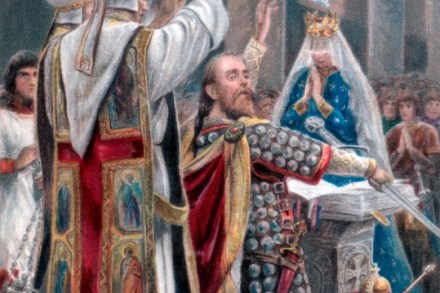
October marks the month of Edwardtide – a series of celebrations commemorating St Edward the Confessor, the King that ruled England in the 11th century for over two decades. Nowadays, he is remembered for three reasons: as one of the last Anglo-Saxon monarchs, for commissioning Westminster Abbey and for being the only English King canonised by a Pope. But does the historical record justify the cult of St Edward? Professor Tom Licence from the University of East Anglia joins Damian Thompson to discuss. Produced by Patrick Gibbons.
The perils of Catholic social media evangelism

Jesus, it could be reasonably observed, recruited a motley cast to serve as the first heralds of the gospel. An endlessly squabbling band of fishermen, with a few tax collectors and zealots thrown in, the biblical narratives have them endlessly jockeying among themselves for prominence and status before they, to a man, flee when the going gets tough and their Messiah gets arrested. In the two thousand years since, the Catholic Church has done its best to balance the inevitable imperfections of its messengers with the perfect truths they are supposed to announce. It’s not always an easy task – and as with so many other things, the internet has made it much more complicated.

Catholic

Is the Anglican Communion dead?

From our UK edition

29 min listen

In the space of a month, the Church of England has acquired its first female Archbishop of Canterbury, a majority of the world’s Anglicans have left the Anglican Communion in protest at the mother Church’s willingness to bless same-sex relationships – and the House of Bishops has suddenly backed away from introducing stand-alone gay blessings. The situation is chaotic. In this week’s Holy Smoke, theologian Andrew Graystone talks to Damian Thompson about the almost insoluble problems that will face Archbishop Mullally after she is enthroned in January.  Produced by Patrick Gibbons.

How did faith shape Thatcher?

From our UK edition

38 min listen

How did faith shape Margaret Thatcher’s politics? To mark the centenary month of Margaret Thatcher’s birth, Damian Thompson introduces a conversation between the Spectator’s Natasha Feroze, Thatcher’s biographer Lord Moore and Bishop Chartres who delivered the eulogy at her funeral. They discuss her relationship with faith, how both her family background and her training as a scientist influenced her beliefs and her understanding of the relationship between wealth and society based on Jesus’s parables. Plus – what would Thatcher have made of the much talked about ‘Christian revival’ in the West? Produced by Patrick Gibbons and Natasha Feroze.

What does it mean ‘to forgive’?

From our UK edition

34 min listen

The announcement by Erika Kirk – the widow of assassinated political activist Charlie Kirk – that she forgave her husband's killer, has led many to question the nature of Christian forgiveness. Granting forgiveness can seem hard for the smallest of crimes, let alone the murder of a close family member, so how can other people follow Erika's example? One person who sadly knows better than most is Professor Everett Worthington. Prof. Worthington is Professor Emeritus at Virginia Commonwealth University and a clinical psychologist who has studied forgiveness throughout his career. However, it isn't just through academia that he understands forgiveness; when his mother was murdered, he also made the decision to forgive his mother's killer. Prof.

What we need from our new Archbishop of Canterbury

From our UK edition

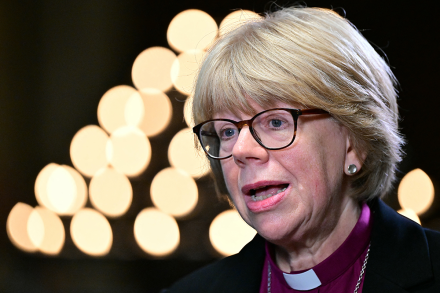
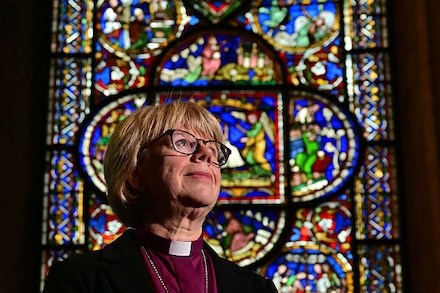
There have been 106 Archbishops of Canterbury since Gregory the Great declared Augustine his ‘Apostle to the English’ in 597. Their number has included Catholics and Protestants, progressives and traditionalists, academics, politicians, even a tank commander. But none had ever been a woman. Sarah Mullally’s appointment is a historic moment for the Church but it comes at a moment of peril for Anglicanism. The Church of England seems to be in a state of perpetual crisis. Few would argue that it serves the world’s more than 100 million Anglicans well or that it sits at the heart of public life.

Is the religious right shifting?

In 2021, for the first time in 1,400-odd years, Britain ceased to have a Christian majority. The United Kingdom, the political entity of which the island of Great Britain has been a part since 1801, has had its share of not-quite-Christian prime ministers over the years, with a handful of agnostics and quiet atheists. But in 2022, for the first time, the UK had a prime minister who practiced a non-Christian religion – and Hinduism had the distinction of claiming the first post-Christian head of state, Rishi Sunak. The West’s ethnic and religious foundations have already shifted in our great cities It may be some time before an American president is Hindu. Already, however, there are several prominent Hindus in the Trump orbit and near the top of the Republican party.

religious

What can we expect from the first female Archbishop of Canterbury?

From our UK edition

19 min listen

Dame Sarah Mullally has been announced as the new Archbishop of Canterbury. Previously the Bishop of London, she becomes the first woman to lead the Church in its almost 500 year history. She also had a 40 year career as a professional nurse, rising to be the most senior nurse in England and Wales. The Rev'd Marcus Walker, rector at St Bartholemew the Great in the City of London, joins Damian Thompson to react to the news – what can we expect from her leadership? Produced by Patrick Gibbons.

Reparations: the tyranny of imaginary guilt, with Nigel Biggar & Katie Lam

From our UK edition

19 min listen

The past few years have seen growing calls for countries in the global west to pay reparations to former colonies for their role in the transatlantic slave trade. The debate over reparations was already part of the so-called ‘culture wars’, but became louder following the Black Lives Matter movement, as many groups sought to re-examine their histories. Calls for reparations have been embraced by the Church of England which set up a £100 million fund, with the aim of raising £1 billion, to pay reparations for the role the Church played in the slave trade. But do the arguments in favour of reparations really stand up?

Was Serbia the real birthplace of the Renaissance?

From our UK edition

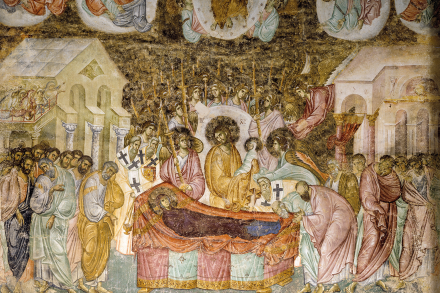
Where did the Renaissance begin? There has been an official answer to that question since 1550, the date that Giorgio Vasari’s Lives of the Artists was first published. According to this version, it all began in Florence and the first painter in the long line that ended with Leonardo, Raphael and Michelangelo was named Cimabue. But here’s another suggestion: you could just as well try looking in the rolling hills of Serbia. My wife and I went travelling there earlier this year. For a couple of nights we stayed in the town of Novi Pazar in the south-east of the country. From the religious point of view this town is a remnant of the Ottoman Empire; according to the census of 2022, nearly 80 per cent of the population is Muslim (with just 71 atheists).

Centuries of cross-currents between Christianity and Islam

From our UK edition

Among the many colourful and captivating characters who people Elizabeth Drayson’s authoritative, fascinating account of 1,300 years of shared Islamic and European history is Abbas ibn Firnas, born around 810 in what is now southern Spain but was then the Muslim-ruled emirate of Cordoba. An innovative scientist who is remembered as the father of aeronautics and optics, he attempted an Icarus-like experiment in early flight which did not go well. Luckily, he survived to conduct important work on corrective reading glasses. The there is Adelard of Bath, born around 270 years later in the south-west English city. Also a scientist, he made long journeys throughout the Middle East and the eastern Mediterranean in an effort to learn from Arab scholars.

Christian

The inadequate response of Christian leaders to Charlie Kirk’s death

It has been very heartening to see all the clips online of people saying they are going back to church for the first time in ages – or going for the first time ever – because of Charlie Kirk. They’re picking up Bibles, even leaving the left. As the Wall Street Journal reports, the Charlie phenomenon is going global. You should also know that in some of the European media, he is being described as a right-wing extremist and freak (strong implication: who had it coming). Felix Nmecha, a Christian soccer player for a leading German team, got in trouble for posting mild, apolitical support for Charlie. “Rest in peace with God. Such a sad day,” wrote Nmecha. He later changed that to: “May the Lord assist the Kirk family with special grace at this time.

churches

Two wholly different but complementary ways of looking at Christianity

In Philip Larkin’s 1954 poem “Church Going,” the narrator walks into a deserted English country church, and observes that it isn’t up to much. Larkin writes that there is “a tense, musty, unignorable silence/ Brewed God knows how long,” feels a sense of “awkward reverence” and, on the way out, “Reflect the place was not worth stopping for.” It is one of the great vignettes of church-crawling, as the practice is generally known – wandering into an empty ecclesiastical space, not being wildly impressed and strolling out again, unblessed by the visit. Yet for Larkin, that it will be “A shape less recognizable each week/ A purpose more obscure” is a tragedy, even for a non-believer.

800 years on, why is Aquinas Gen Z’s favourite philosopher? 

From our UK edition

26 min listen

This year marks 800 years since the birth of the theologian St Thomas Aquinas. Aquinas, best known for his theory of natural law and his magnum opus the Summa Theologia, argued for the existence of God through faith-based reason. The influence of the 13th Century theologian on the philosophy of religion is unquestionable, but what is curious is his resurgent popularity amongst Generation Z – particularly in America. Is this part of the recovery of the sacred seen across the global west? Fr Gregory Pine OP, professor of dogmatic and moral theology at the Dominican House of Studies, joins Damian Thompson to talk about Aquinas’s legacy, unpack some of the philosopher’s more complicated arguments and describe his own personal journey within the Order of Preachers.

The political resurrection of Christianity

From our UK edition

There is a passage in Milan Kundera’s novelisitic essay ‘Testaments Betrayed’ where he writes about the nature of history. Man walks in a fog, Kundera observes. He stumbles along a path and creates the path as he walks it. When he looks back, he can see the path, he may see the man, but he cannot see the fog. Everything looks inevitable after it has happened. So we have the ‘sleepwalkers’ explanation of how Europe stumbled into the first world war. We have the ‘inevitability’ of the slide into the second world war. It is perhaps the greatest of all idiotic modern presumptions that so many people imagine while looking back that they would have known better or acted differently. Which brings me to the present.

The concept of ‘the West’ seems to mean anything you like

From our UK edition

A hundred years ago, T.S. Eliot wrote to Geoffrey Faber, for whose publishing company he had just started work, complaining: ‘The Defence of the West… is a subject about which everyone thinks he has something to say.’ Plus ça change? Back then, people were coming to terms with a war that had shown the West to be neither as unified nor as civilised as had been assumed. A century on, American isolationism, demographic decline, mass immigration, Islamism and a slow but decisive shift in global economic gravity are giving commentators the opportunity to bloviate endlessly about the decline/suicide/end/decay/of the West. But what exactly it is that we are defending or lamenting is far from clear. Georgios Varouxakis’s The West attempts to answer that question.

Why the canonisation of the first millennial saint is a cause to celebrate

From our UK edition

37 min listen

On Sunday the Catholic Church will acquire its first millennial saint, when Pope Leo XIV canonises someone who, if he were alive today, would be young enough to be his son.  Carlo Acutis, a ‘computer geek’ from a prosperous Italian family, died aged just 15 in 2006. In this episode of Holy Smoke, Damian Thompson talks to Mgr Anthony Figueiredo and the Italian-based journalist Nicholas Farrell about the extraordinary phenomenon of St Carlo, the miracles associated with him – and the scepticism they arouse – and a mean-spirited attack on him by one of the late Pope Francis’s closest advisers.  Produced by Patrick Gibbons.

Murder of the innocents in Minneapolis

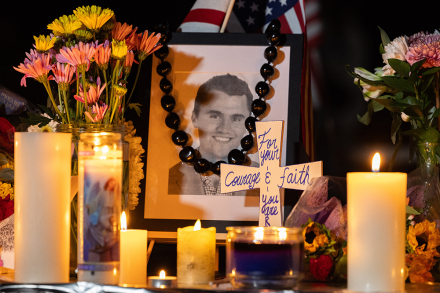
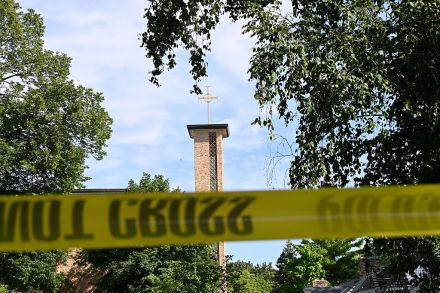
​For the second time in two years, a deranged assassin has committed a mass shooting at a Christian school in America. Like Audrey Hale, Robin Westman identified as transgender and once attended the school he attacked. In Minneapolis on Wednesday, Westman murdered two children and injured seventeen more people in a terrifying attack on the Annunciation Catholic School. Westman chose to target the children’s morning mass before turning a weapon on himself to commit suicide. ​Before his attack on the children of Annunciation Catholic School, Westman posted YouTube videos showcasing firearms, ammunition, and a manifesto. Weapons bore handwritten messages reading “Kill Donald Trump,” “Where is your God?

Minneapolis shooting

Which are the ‘Twelve Churches’ that made Christianity?

From our UK edition

40 min listen

What links the Church of the Nativity in Bethlehem and St Peter's in Rome with the 16th Street Baptist Church in Birmingham, Alabama, and Canaanland in Ota, Nigeria? These are just some of the churches that Anglican priest and writer the Revd Fergus Butler-Gallie highlights in his new book Twelve Churches: An Unlikely History of the Buildings that made Christianity. The Anglican priest and writer joins Damian Thompson on Holy Smoke to explain how each Church not only tells a story but also raises a surprising dilemma for modern believers. Fergus aims to tell the history of the Churches 'warts and all' and argues that, from Turkey to Britain, today’s Christians must be prepared to defend their religious spaces.

Denmark’s ‘spiritual rearmament’ is a lesson for the West

From our UK edition

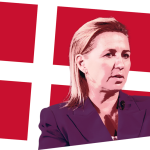
Something unusual is happening in Denmark – and other countries across Europe, including Britain, ought to pay attention. This spring, Denmark’s Prime Minister, Mette Frederiksen, stood before a group of university students and made a striking statement: ‘We will need a form of rearmament that is just as important [as the military one]. That is the spiritual one.’ Few expected such words from the leader of the Social Democrats, a party which spent much of the 20th century reducing the Church of Denmark’s influence in public life. Yet this was no passing remark. Just days earlier, Frederiksen had announced a major military build-up: increased conscription, a sharp rise in defence spending and intensified strategic readiness.