China

China will be the AI superpower

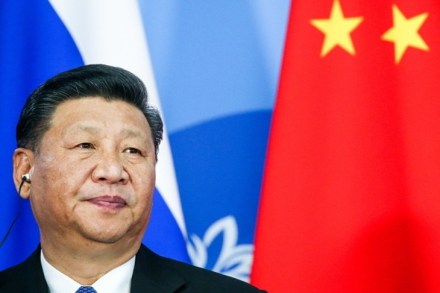
As President Trump settles in for a long trade war with China, he ignores a far more serious crisis in China relations. At stake is not just the size of a trade deficit, but the future of America’s position as a superpower. China has made clear its determination to lead the world in Artificial Intelligence by 2030 and to become the world’s sole AI superpower by 2050. To achieve these goals, China is aggressively investing tens of billions of dollars in future technology including robotics, surveillance, and data analysis. This state-controlled effort unites both the public and private sectors for a single purpose: world domination.
AI

Donald Trump’s one-front trade war

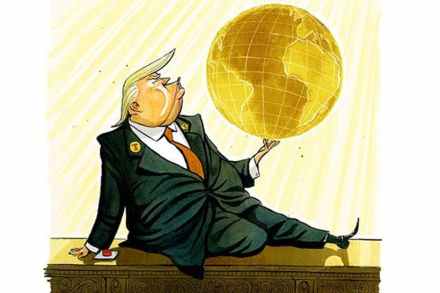
At 12:01 a.m. on Monday, President Donald Trump went a long way toward defusing a potential war – not with Iran, but Canada and Mexico, where Trump revoked tariffs he had imposed in the name of national security. Why the sudden bout of tariff reduction? The president is focusing on a one-front trade war with China. The restrictions began as two fronts of the same war. Trump imposed 25 percent tariffs on steel and 10 percent tariffs on aluminum imported from China last March. Then he extended those tariffs to the EU, Canada, and Mexico on June 1. But the president seems to have concluded that the US can no more fight a two-front war in trade than on the battlefield.

Donald Trump one-front trade war

Russia and China are watching Iran, and waiting

As US-Iran tensions rise, America’s sway over its allies is falling. Last week, Major General Christopher Ghika, the British officer second in command of anti ISIS forces in Iraq and Syria, publicly contradicted the rationale behind American troop build-ups in the region. US Central Command was quick to rebuff Ghika, but Britain’s Ministry of Defence supported him. Other NATO allies, too, are balking at confrontation with Iran. Spain has withdrawn a frigate from the American-led, Gulf-bound carrier group. Federica Mogherini, the EU’s High Representative for Foreign Affairs, has called for ‘maximum restraint’. If there is to be a third Gulf War, the US might find itself with fewer friends than in the last.

iran

The future of world trade is in the balance

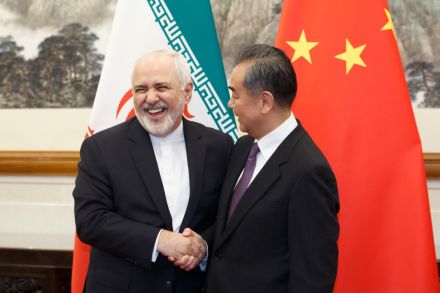
Ongoing trade talks between American and Chinese officials took an unexpected turn on Sunday: President Trump took to Twitter and announced a plan to impose tariffs on all Chinese imports by Friday. The tariff threat adds urgency to negotiations that will continue on Wednesday, when a Chinese delegation is due to arrive in Washington, DC. The move is a departure from last week when US Treasury Secretary Steven Mnuchin and Trade Representative Robert Lighthizer arrived in Beijing to initiate a fresh round of trade talks with China. Despite chronic trade tensions, both sides had sounded optimistic ahead of the meeting. State Councilor Wang Yi, China’s top diplomat, expressed hopes the two sides could ‘reach a mutually beneficial, win-win agreement’.

world trade

China’s war on Islam

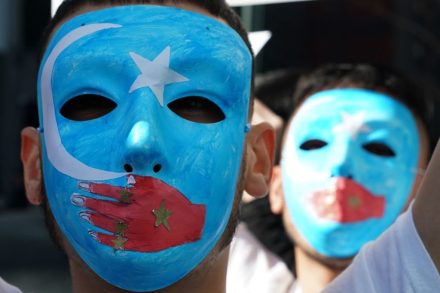
The Reuters photo could be mistaken for a shot of one of America’s ‘supermax’ prisons, the ones where the most dangerous criminals are held. An endless green security fence, topped with coils of barbed wire, punctuated by soaring octagonal guard towers with 360-degree views, all fronting what looks like a massive concrete wall or side of a building. Yet the Chinese workers walking outside the fence give away the truth. The picture is not of a US prison, but rather a Chinese ‘re-education’ center in vast Xinjiang, in the country’s far west. According to research by the Australian Strategic Policy Institute, there are 28 such massive detention camps in Xinjiang, most built within just the last several years.

uighurs

Britain’s Huawei gamble is sure to anger Donald Trump

From our UK edition

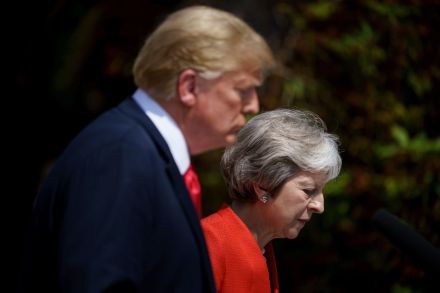
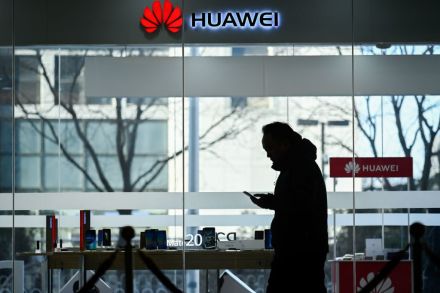
Just hours after Donald Trump's long-delayed state visit to Britain was finally confirmed, reports surfaced that Theresa May and her National Security Council have decided to let Chinese telecommunications company Huawei participate in building Britain’s 5G network. The decision is a direct slap in the face to Washington’s attempts to isolate Huawei, which itself is part of a larger campaign to aggressively counter Beijing’s pervasive and endemic cyberespionage. For a Britain weakened by the ongoing Brexit fiasco, May’s desire to allow Huawei to work on the 5G network risks not merely ruining Trump’s visit, but more importantly further straining ties with Washington. The struggle over Huawei and the West’s 5G future goes beyond Britain.

We should be watching Chinese meddling, not Russian

‘Russian influence’ is everywhere these days, especially if you’re a liberal. From the White House to Brexit, the Donbass to the Baltics, the specter of Russian expansionism is inescapable in the news. But have Western media identified the wrong zeitgeist? For a malevolent power, Russia is all too conspicuous. Real mastery of subterfuge entails a degree of subtlety. ‘Russia is very aggressive...up-in-your face,’ says Donald N. Jensen, of the Center for European Policy Analysis. ‘China seems to be a bit more discreet...even when it fails, you don’t really know it.’ Chinese meddling may go unnoticed in Europe and North America, but it is more conspicuous in Australia and New Zealand.

chinese meddling

Britain’s liberals have fallen out of love with democracy

From our UK edition

Every now and then there is a political moment, some event or comment, that reveals just how much society has changed. This week contained one of those moments. On Tuesday it was reported that nine pro-democracy activists in Hong Kong had been found guilty of causing a public nuisance by taking to the streets five years ago to demand a greater democratic say in how their society is governed. And on the same day, the exact same day, the Guardian published an article with the headline ‘Democracy is overrated’. Most voters have ‘no idea’ about what’s going on in the world, the piece argued, and therefore it would be better if they just didn’t bother voting.

The real reason Macron is desperate to woo Xi Jinping

From our UK edition

Chinese president Xi Jinping came to France and is taking home 300 Airbus jetliners, a large consignment of frozen chickens and a wind farm. A great triumph for France, declared Emmanuel Macron. And for Macron? Never mind that many of the planes will be built in China. Or that Airbus is no longer a French company but an international one, although headquartered in Toulouse. Or that the hens are unlikely to be free range. It’s hard to argue with a cheque for £30 billion. Or to stop a politician taking credit for a deal that’s been in the works for years. To cement his triumph, Macron hosts Xi today at an impromptu summit at the Elysée palace with Angela Merkel and Jean-Claude Juncker.

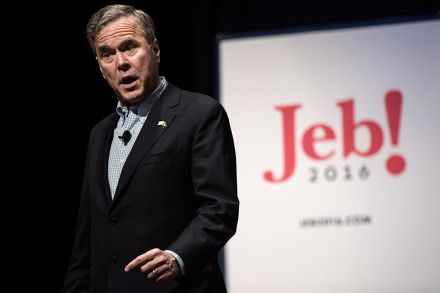
The Chinese must be furious. Imagine blowing $1.3m on Jeb!

Jeb! We hardly knew ye. The 2016 election seems soooo long ago. There was a time, for about 15 minutes, when some wise people regarded Jeb! Bush as the front-runner. He had the name. The camera liked him more than it liked George W. And he had the money. Lots and lots of money. (One of my favorite photoshopped images from the campaign altered the text of a huge billboard from ‘Donald Trump is a moron. —Jeb Bush’ to ‘Burn all our donors’ money. —Mike Murphy,’ Murphy being Jeb!’s campaign manager.) There was so much money sloshing around in Bush campaign coffers that it was hard to keep track of it all.

jeb! bush

Don’t vilify housebuilders for profiting from Help to Buy

From our UK edition

Was Help to Buy a timely market intervention with a valid social purpose or a political gimmick that unintentionally showered housebuilders with taxpayers’ cash? Or both: this isn’t a straightforward question. ‘This government supports those who dream of owning their own home,’ said a statement from Philip Hammond last week. So far the ‘equity loan scheme’ launched by George Osborne in 2013 and now extended until 2023 has underpinned 194,000 home sales, the great majority to first-time buyers in the provinces, while another 300,000 have been supported by a £3,000 savings top-up.

China’s singles market

From our UK edition

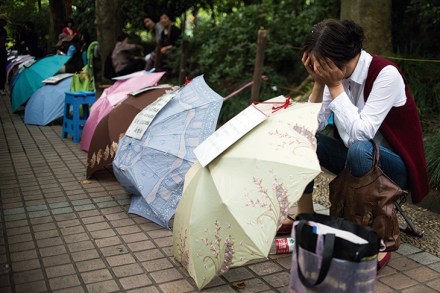
 Shanghai ‘How old are you, young lady?’ A small, curious crowd starts to surround me. ‘How tall are you? What do you work as?’ The parents camping out in Shanghai’s infamous marriage market have no time for small talk. They come here every weekend, rain or shine, seeking a partner for their grown-up son or daughter. Age, wage, height, education — everyone has a wish list, and they also condense their own child into such a list. Today’s special: me. The so-called Matchmakers’ Corner has seen tens of thousands of Chinese parents, including members of my own family, come to investigate what (or who) is out there. A great many parents worry about their child’s stubborn singledom.

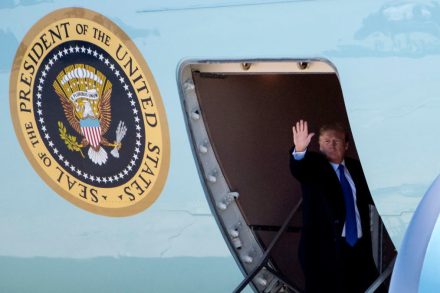
What is Trump’s big deal with China?

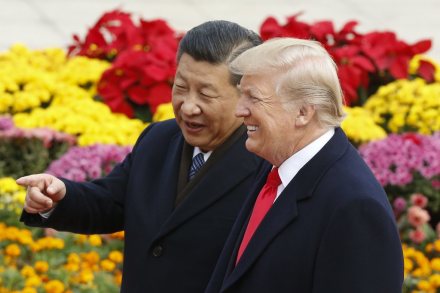
Beware the Ides of March. President Trump has indicated that he will defer his promised hike in tariffs on Chinese products to 25 percent until March 1. Stocks promptly went up. ‘If all goes well,’ Trump said on Sunday, ‘we’re going to have some very big news over the next week or two.’ What’s the big deal? Trump, who fashions himself a wheeler-dealer par excellence, is claiming that he, and he alone, can reach the great compact with Beijing that will put an end to its predatory trading practices. China, which continues to smart over the humiliations inflicted upon it by the western powers, including America, during the nineteenth century, has essentially flipped the script, at least if you listen to the hawks around Trump and in the media.

donald trump china

Portrait of the week | 21 February 2019

From our UK edition

Home Seven MPs resigned from the Labour party and sat in the Commons (next to the DUP) as the Independent Group, or Tig. They were Luciana Berger, Ann Coffey, Mike Gapes, Chris Leslie, Gavin Shuker, Angela Smith and Chuka Umunna. The next day they were joined by Joan Ryan and the following one by three Tories, Anna Soubry, Sarah Wollaston and Heidi Allen. The Labour eight said they objected to anti-Semitism in the party, the security risk should Jeremy Corbyn become prime minister and Labour’s lukewarm attitude to a second referendum. Derek Hatton, who had been the deputy leader of the Militant-controlled council which set an illegal budget in Liverpool, was readmitted to the Labour party after 34 years.

Welcome to the Year of the Pig

From our UK edition

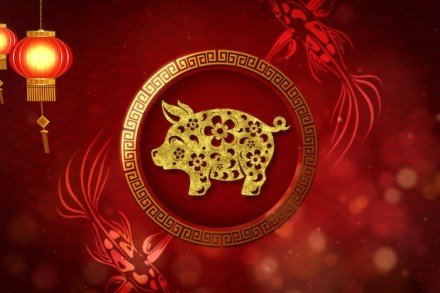
Happy Chinese New Year, or at least let’s hope so. The chubby pig of 2019 is an obvious symbol of wealth; but being both pragmatists and optimists where money is concerned, the Chinese easily find reasons to associate all 12 of their zodiac creatures, (including 2018’s dog) with rising prosperity. This year, however, the amount spent by their shoppers and tourists during the New Year festivities will be compared against last year’s figure of $190 billion for signs of a weakening economy. We already know that trade tensions with the US and other negative factors have been afflicting Chinese sales of western imports, from iPhones to Land Rovers, and that property and shares have been afflicted too, with the Shanghai stock market down by half from its 2015 peak.

The UK’s shift in attitude to the threat of China

From our UK edition

Gavin Williamson’s speech today is another demonstration of how the UK government’s attitude to China has changed. In the Cameron Osborne era, the UK was determined to be China’s best friend in the West. All the emphasis was on creating a ‘golden era’ in Anglo-Chinese relations. But now, the government strikes a more realistic—and hawkish—tone on China. In his speech today, Williamson brackets China with Russia as a threat. The headlines today have been about Williamson’s decision to send the UK’s new aircraft carrier, carrying both US and UK jets, to the Pacific in a message to Beijing. But just as telling is the emphasis that Williamson places on various alliances.

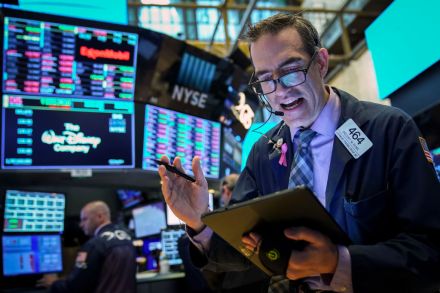
Is the Fed caving to the demands of the market?

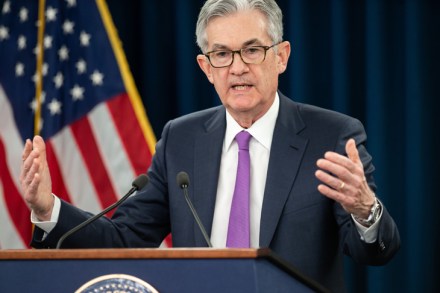
Has ‘Jay’ Powell gone wobbly, or does he know something we don’t? That was the question being asked after the US Federal Reserve, of which Powell is chairman, kept dollar interest rates on hold last week — rather than continuing to notch them upwards as it has been doing for two years — and hinted that the next move might actually be downwards. Trade tension with China, the impact of Donald Trump’s government shutdown and the risk of a no-deal Brexit were all cited as ‘cross-currents’ affecting the decision, but pundits led by Wall Street ‘bond king’ Jeffrey Gundlach declared the Fed to be ‘caving in’ to the demands of the stock market and the President.

fed jerome powell

The Fed’s U-turn on rates is a reality check, not a sop to Trump

From our UK edition

Has ‘Jay’ Powell gone wobbly, or does he know something we don’t? That was the question being asked after the US Federal Reserve, of which Powell is chairman, kept dollar interest rates on hold last week — rather than continuing to notch them upwards as it has been doing for two years — and hinted that the next move might actually be downwards. Trade tension with China, the impact of Donald Trump’s government shutdown and the risk of a no-deal Brexit were all cited as ‘cross-currents’ affecting the decision, but pundits led by Wall Street ‘bond king’ Jeffrey Gundlach declared the Fed to be ‘caving in’ to the demands of the stock market and the President.

China’s obsession with Taiwan is nothing to do with money

From our UK edition

Does President Xi's first address of the new year spell trouble for Taiwan? In a 30 minute speech on Taiwan, Xi used much fiercer language than his predecessors on Taiwan’s reunification. Journalists have reported it as 'chest-beating' and 'threatening'. Phrases like ‘the reunification of Taiwan…is the inevitable requirement of the rejuvenation of the Chinese nation’ and ‘we do not promise to renounce the use of force’ certainly don't bode well. But the speech is actually interesting for a different reason: it reveals why the Chinese are so obsessed with Taiwan. Many outside China don't understand why a country of 1.7 billion people with the world’s second largest economy is so obsessed with a tiny island of 23 million people.

Maybe it’s time to accept that Huawei is a Chinese intelligence front

Established in the southern Chinese city of Shenzhen in 1987, it didn’t take long for Huawei Technologies to become a top player in global telecommunications. Since 2012, it’s been the world’s biggest manufacturer of telecommunications equipment. Last year, Huawei displaced Apple as the world’s second-biggest smartphone maker, after South Korea’s Samsung. Active in 170 countries, Huawei matters – to China and to the global economy.Yet there have long been questions raised about the company, starting with the fact that Huawei’s founder and CEO, Ren Zhengfei, is a former senior technologist for the People’s Liberation Army.

huawei