China

The battle for zero-Covid is being fought in Shanghai

From our UK edition

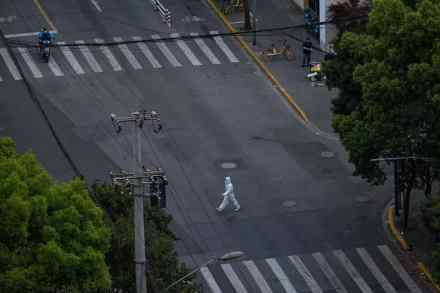
Confusion is infecting Shanghai. The authorities are dithering over a promised easing of severe lockdown rules in the face of record cases of Covid-19 and widespread anger over their cack-handed way they have handled the crisis. The city has become a test for China’s faltering zero-Covid strategy, with nervous Communist party leaders sending mixed signals – announcing a change in the rules, while insisting they will stick to what they now characterise as a ‘dynamic’ zero-Covid policy ‘without hesitation or wavering’. At the weekend, vice-mayor Zong Ming announced a reclassification of Shanghai’s districts according to the severity of the outbreak.
China: one bully to rule them all

Several years ago, I visited the War Remnants Museum in Ho Chi Minh City, Vietnam. It’s located, a bit surreally, in the former United States Information Agency building. Formerly called the "Museum of Chinese and American War Crimes," it showcases various captured US military equipment. What was particularly jarring to me was learning of the millions of Vietnamese civilians killed during the Vietnam War era. Of course, there’s a bit of irony here: a building formerly dedicated to projecting American public diplomacy and messaging in Southeast Asia now serves the different propaganda purpose of seeking to portray America as a violent aggressor guilty of war crimes.

Did China just take out an NBA player?

It sure looks like basketball player Enes Kanter Freedom has been blackballed by the NBA for his candor over the league's cozy relationship with China — concentration camps filled with ethnic Uighurs in Xinjiang and all. Freedom, who earlier this year began wearing human rights messages on his game shoes illustrated by Chinese dissident artist Badiucao, became a vocal critic of the NBA's cherrypicking of human rights issues. That included directly targeting the league’s star and arguably most recognizable athlete on the planet, LeBron James. In 2019, after Houston Rockets general manager Daryl Morey spoke out against China and in support of the pro-democracy movement in Hong Kong in a series of now-deleted tweets, China suspended all NBA broadcasts within its borders.

Don’t let Russia end the old world order

While most Americans believe that the Russian invasion of Ukraine is morally wrong, there is in some corners a pervasive sense of annoyance with the conflict. The real enemy, some say, is China, and they believe that America should not focus on the last vestiges of 20th-century conflicts at the expense of losing focus on those of the 21st. They see NATO and the rest of the Cold War infrastructure as representative of a dying world. Instead of propping up this order, they argue, America should be hard at work building a new order to take on China. The goal of a new American-led, anti-China world order is a necessary one. The currently existing old order is ill-fitted to combat China, which indeed will be America’s main 21st-century enemy.

NHS accused of exploiting forced labour

From our UK edition

There’s a mutiny underway in Westminster. After years of revelations about the conditions of Uighur Muslims in China’s Xinjiang province, momentum is building behind plans to stop the government buying health goods made in the region. On Wednesday, MPs will vote on an amendment to the health and social care bill, tabled by former Tory chief whip Lord Blencathra. It would ban NHS procurement from regions where the government believes there to be a ‘serious risk of genocide’. Ministers have already tried to buy off the rebels by proposing a review of health supply chains but ringleaders fear these don’t go far enough. And now Mr S has seen evidence which suggests that the NHS has indeed been purchasing products made in the Xinjiang province.

The ultimate human futility of sports

If it were true that civilization progresses inexorably according to the laws of some teleological principle, public — in modern times, professional and commercialized — sports would not have survived Classical Greece and the Roman Empire, thus sparing the modern world such obscene extravagances as the Super Bowl in the United States, the World Cup in Europe and the international Olympic Games. Mass man at play in his leisure hours is not a pleasant and encouraging sight in any circumstances, but gathered with his fellows in massive sports stadia one views him at his absolute worst.

sports

As Shanghai locks down, China is facing its greatest Covid crisis yet

From our UK edition

The coronavirus is spreading through Hong Kong, Shenzhen and other cities in China like a bush fire; tens of millions of Chinese have been ordered to stay at home yet again. Shanghai, a city of 26 million souls, has been split in two. Those on the eastern side of the Huangpu River will be locked down until Friday, their west bank neighbours from the start of April.   It won’t work. Like a new Mercedes, the BA.2 model of the omicron variant of the Sars-CoV-2 virus is faster, quieter and 30 per cent more prolific. There is no chance of stopping it with lockdowns, mass testing or social distancing – even in Xi Jinping’s China.

Andrew Sullivan searches for spirituality

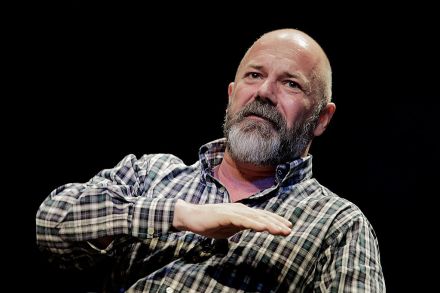
It was daunting preparing to meet Andrew Sullivan, considered one of the cleverest, most fearless journalists of his generation. There is the academic pedigree: the scholarship at Oxford — where he was also president of the union and a celebrated actor — followed by the PhD in political theory at Harvard, where he produced an iconic treatise on the work of British mid-century philosopher Michael Oakeshott, performed the entirety of Hamlet all by himself — "a whacked-out mid-1980s" version — and modeled for Gap. And there is the journalistic firepower. At twenty-eight, in 1991, Sullivan became the youngest ever editor of the New Republic, America's most august political magazine.

Is China beginning to distance itself from Russia?

From our UK edition

The read-outs from Friday’s two-hour call between Joe Biden and Xi Jinping were so different, that you have to wonder whether the two leaders were on the same line. The White House version had Biden bluntly warning China of the consequences of providing assistance to Russia, while Beijing’s take presented Xi as a peacemaker ‘The Ukraine crisis is something we don’t want to see,’ Xi reportedly said. ‘Conflict and confrontation are not in the interests of anyone.’ The American read-out focussed narrowly on Ukraine, China’s on the broader relationship between the two countries. Global Times, the usually strident Communist party tabloid, described it as a ‘constructive interaction’.

Make China pay for its quiet support of Putin’s war

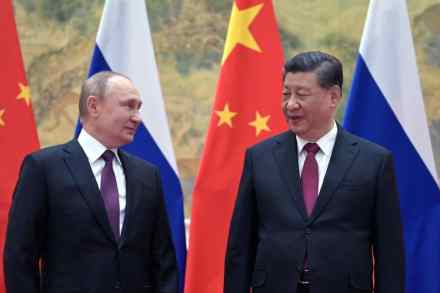
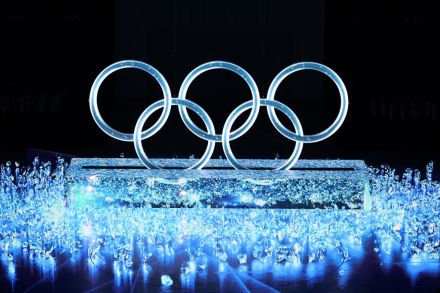
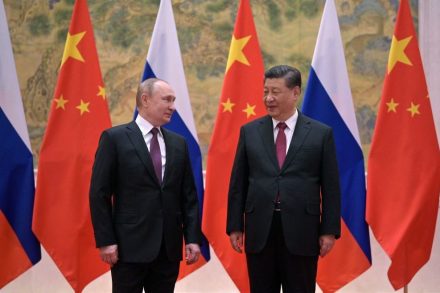
China is tacitly backing Putin’s aggression against Ukraine. The Biden administration should combat this by imposing economic costs on China through the corporate Environmental, Social and Governance disclosure requirements that are already in place. Xi Jinping and Vladimir Putin met in February at the Beijing Olympics, their thirty-eighth visit in the nine years since Xi took power. In a 5,000-word statement on February 4, Xi and Putin proclaimed their friendship with “no limits” and “no forbidden areas of cooperation.” Just weeks before the invasion, China signed agreements to buy from Russia energy and agricultural products worth over $200 billion.

support

Enough with the 1970s comparisons

The media are abuzz these days about a purported “return to the 1970s.” Generally speaking, such chatter is not intended kindly, for many today would likely agree with the sardonic assessment of the Seventies made by the editors of New West magazine as that decade wound down: “It was the worst of times, it was the worst of times.” And not just because of the popularity of bell-bottom pants, platform shoes, and disco music. In the Seventies, we had problems far more troubling — more troubling even than the pop group ABBA. For starters, we saw a quadrupling of real oil prices between 1973 and 1979. We suffered high rates of both inflation and unemployment, which hitherto varied inversely, leading to the creation of the portmanteau “stagflation.

1970s

Is China’s zero Covid game up?

From our UK edition

Omicron has broken through China’s Covid wall. On Tuesday, the country saw a record-high of more than 5,000 cases, the highest number since the original Wuhan outbreak. To Brits (and most people around the world), that might sound like a laughably small number – but, as you might expect, China’s zero Covid machine has jumped into action, leading to a disproportionate, severe response. In the most afflicted areas like Shenzhen and Changchun, public transport has been suspended, non-essential businesses closed, residential compounds locked down.

China’s zero Covid strategy is a threat to the global economy

From our UK edition

Aside from deterring a few tourists, and people filming fantasy epics, closing down New Zealand during the Covid pandemic didn’t make much difference to the global economy. Neither, come to think of it, did Mark Drakeford’s determination to keep Wales free from Covid-19, and even Australia’s dedication to closing itself down didn’t matter that much as long as the mines stayed open. For most of the last two years ‘zero Covid’ policies have mainly affected the people unfortunate enough to live under them and those trapped from returning home. But China? That is something different. And right now Beijing’s almost certainly doomed attempt to crush the virus is as much of a threat to the global economy as the war in Ukraine.

Russia’s war is a global cancer

One thing I have always found fascinating about Russia is that when they tell us they are going to do something, they usually do it. So when Moscow struck a military base near the Poland-Ukraine border that was a staging ground for arms shipments, we shouldn't have been surprised. They told us that was their next plan of action just twenty-four hours before they did it. But that’s just the beginning of what Russia likely has in store for the West, NATO, and the entire world if we aren’t careful. Russian president Vladimir Putin’s plan seems simple: chaos on a scale that will extend far beyond Ukraine. You see, Putin is starting to come to grips with the fact that he can’t win the war in Ukraine — at least on paper — unless he destroys Ukraine.

cancer

Could the Ukraine war save Taiwan?

From our UK edition

The phrase wuxin gongzuo – ‘working with your mind on Ukraine’ – has been trending on Chinese social media network Weibo. Essentially what it means is ‘distraction from work because you’re obsessed with the war’. One blog that monitors the site, What’s on Weibo, reports that shortly after Russia’s invasion of Ukraine a page with updates on the conflict had received more than two billion views. Censorship, of course, limits what Chinese social media commentators can say, but there is clearly plenty of sympathy for the dying civilians and fleeing refugees.

In Japan, being a token westerner is big business

From our UK edition

About ten years ago I was interviewed in Tokyo for a job as a fake Catholic priest, performing wedding ceremonies for Japanese couples who wanted the aesthetics of a Christian service without all the hassle of actually being Christian. In a room cluttered with tacky plastic religious paraphernalia I watched a training video of the company’s ‘top man’, an American Tom Cruise-lookalike in a cassock, ‘marrying’ a young couple. I was offered the job and it paid well but, fearing I might fluff my lines, collapse into giggles or, worst of all, come face to face with an ex-girlfriend approaching down the aisle, I turned it down.

Putin understands America’s moral decay

Last October, Vladimir Putin aired a speech to the Russian nation chiding the United States for its moral decay. He observed an America “blotting out whole pages” of its history, pursuing “reverse discrimination against the majority in the interests of minorities,” and renouncing time-honored values in an effort at “public renewal.” “It’s their right, but we are asking them to steer clear of our home,” he warned. “We have a different viewpoint.” This iteration of family values and conservative critique went barely noticed by the American press at the time.

Putin

The creeping authoritarianism of facial recognition

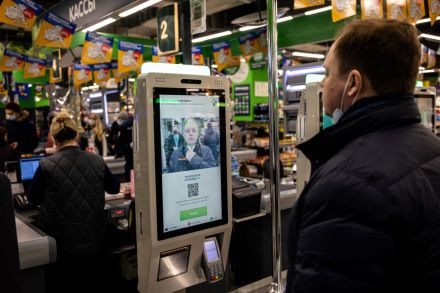
In an effort to lower crime rates, American law enforcement is pushing to combine facial recognition with expanded video surveillance. Politicians worried about their re-election chances due to a perceived crime wave see the expansion as necessary. It’s a sharp swing from 2019 and 2020, when cities like San Francisco and New Orleans were banning or at least enacting limits on facial recognition technology due to privacy concerns. Now, New Orleans plans to roll back its facial recognition prohibition. The Virginia State Senate gave law enforcement a late Valentine’s Day gift by passing a facial recognition expansion bill on February 15 — the Democrats who unanimously approved a ban on facial recognition last year suddenly changed their minds, as did five Republicans.

What does Ukraine really mean for Taiwan?

No one should think that Vladimir Putin’s invasion of Ukraine means that Xi Jinping will decide to use force against Taiwan anytime soon, if ever. China is not Russia, nor Taiwan Ukraine. Yet neither should policymakers presume that Beijing will not be influenced by what happens on the other end of Eurasia. Washington must consider whether and how Putin’s aggression has raised the stakes in defending Taiwan from the People’s Republic of China. At the least, US strategists will seriously have to assess whether a global environment in which norms of international behavior are regressing may serve to spur Beijing to military action that once seemed unlikely.

taiwan

China is tying itself in knots over Ukraine

From our UK edition

A few hours after Vladimir Putin sent his tanks into Ukraine, Beijing announced that Russian wheat, previously barred because of fungal contamination, was now disease-free and large scale imports to China would begin. It was a first tangible sign of Xi Jinping’s willingness to cushion the blow of western sanctions on the Russian economy, and in effect underwrite Putin’s Ukrainian aggression. Russia is one of the world’s biggest wheat producers, and trade is highly vulnerable to western restrictions. China’s wheat lifeline followed the signing last month of a 30-year contract for Russia to supply natural gas to China’s north east and a commitment to far greater energy cooperation.