Children

In defence of strict teachers

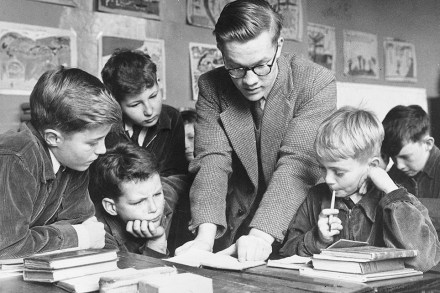
Labour have become alarmed by the strict, ‘cruel’ approach to discipline in schools and the rise in the number of pupils being excluded. Teachers will need to be more relaxed about ‘bad behaviour’. But though moving the goalposts of acceptable behaviour may reduce the exclusion figures, it is bound to increase the burden of disruptive behaviour on teachers and other pupils. My own experience of teaching tells me that the new guidelines will increase bullying and reduce special needs inclusion, undermine the most disadvantaged families and ultimately increase educational inequality. So why are they doing it?
Why children have stopped reading

It’s only when you read the old stories again, to a child maybe, that you become aware of the extent to which the characters still live inside your mind, bobbing about just below the level of consciousness. I still find myself puzzling over the stories collected by the Brothers Grimm, decades after I first read them. How could Little Red Riding Hood have avoided being eaten? (We read the original, merciless version.) What should Hansel and Gretel have done? Any good book leaves its mark, but the characters from the books you loved as a child embed themselves. They inform the way you think as an adult, which is why it’s so sad and so significant that children all over the West have stopped reading.

Who is your favourite character in children’s literature?

Rod Liddle Rabbits, always rabbits. I remember at age 13 forcing my poor parents to trudge despondently across hilly downland on the borders between Berkshire and Hampshire, with me jubilantly pointing out stuff like: ‘Look, it’s the combe where Bigwig met the fox!’ and ‘I think this could be the Efrafa warren!’ For a while, Watership Down jostled uneasily with the grown-up stuff I was just beginning to enjoy – Jack Kerouac, James Thurber, Ray Bradbury – but it still held a big claim on me and does today. Better than On the Road, isn’t it? Watership Down also took me back from the awkwardness of puberty to the safety zone of post-toddlerdom and, of course, Brer Rabbit.

Keir Starmer’s parenting lessons

Before he became Prime Minister, Keir Starmer admitted he was concerned about what life in Downing Street might be like for his children. It was, he said, the ‘single thing’ that kept him awake at night. What’s notable is that we aren’t even aware of Starmer’s children’s names. They are teenagers but that’s about all we know about them. They were not photographed when Starmer and his wife Victoria entered No. 10, nor have they been seen since. ‘We do try to protect them… we don’t use photos of them in any way,’ Starmer said. There seem to be no pictures in the public domain of Starmer with his children. A smartphone ban shouldn’t come from the government; it should come from parents I’d say that is quite an achievement.

What’s behind the risk-averse approach toward love and family?

From our US edition

Human risk assessment is not a dispassionate numbers-crunching game. Those who fear flying have to know we’re four times more likely to die in a car crash than in a fiery plunge from the skies, even if we’re boarding a Boeing. The fear of flying may be common, but only a select few will rule out the jet engine entirely. When it comes to emotional risk evaluation, there is one area where phobia prevails over reason: our increasingly sterile view of what constitutes a good bet when it comes to marriage and family life. Since the second half of the twentieth century, American society has been on a mission to eliminate risk. Seatbelt and helmet laws reduced deaths in automobile and bike accidents at the expense of comfort and self-respect.

risk
child

Waste not want not

From our US edition

Alexandria, Virginia  I sit on bathtub’s edge, back spasming, left leg numb, inner cheek bitten raw — pain that must be endured if I am to triumph over fatherly futility. #5 is only twenty months old but understands that in a household of eight people the toilet is the optimal, if not the only, place for contemplation. I am reflecting, too, on an event that occurred three years earlier, one that will be with me on my deathbed. I was in a rush for reasons I cannot recall as #4 sat lost in thought or perhaps the fiftieth reading of Yertle the Turtle. I grew frustrated. “Go pee! Go poo!” She looked up at me and said with the calm gravity befitting a statesman: “Go Mets.” Only then did she poop.

Are kids’ games under threat?

We hear a lot about the rights of the child, but the first I heard of the child’s right to play was at the Barbican’s latest exhibition. Among the games-related facts in Francis Alÿs’s new show is a quote from Article 31 of the United Nations Convention on the Rights of Children, confirming a child’s right ‘to engage in play and recreational activities’. Barbie has stood seven times for the US presidency. (As a young looking 65, she could do well) Are children’s games under threat? Alÿs thinks so. Children in Europe today, he laments, have a tenth of the freedom to roam that he enjoyed growing up in the 1960s in a Belgian countryside virtually unchanged since Bruegel.

I’m taking mental notes for my old age

I know straight away, from the look on my friend Alice’s face, whether it’s a ‘bad carer’ day. Five years ago Alice had a fall and she can’t now do stairs, so she lives just on the second floor of her maisonette in north London. When I drop round, the carer is usually in the kitchen and Alice in her bedroom/sitting room next door. If it’s a bad carer day, she’ll look towards the kitchen, do a thumbs-down sign, purse her lips and shake her head, then she’ll wriggle her shoulders – hoity toity – to indicate that she feels bossed about. Alice is entirely dependent on the care company the council employs, and appeasement is all she has I suppose infirm 88-year-olds often need to be bossed about in a way.

Why is the government making it harder to get an au pair?

You will have heard, I am sure, of the Conservatives’ recent largesse towards working parents, as their ‘free’ childcare policy has been much publicised. Fifteen hours a week for your kid, from nine months old to the grand age of four. You may not, however, have seen the new rules governing au pairs, which came into effect last month. Our dear, wise governors, while giving with one hand, have taken away with another; they have placed more obstacles in the way of those who need help with looking after their children. They’ve made it even harder to have an au pair. Children, of course, have a tendency to grow past the age of four, at which point they trundle off to school down the merry lane in the sunshine, complete with their adorable little rucksacks.

A history of the LGBTQ+ aspects of the Boy Scout movement

From our US edition

Today, gay activism may seem synonymous with incompetent nonprofit employees shutting down traffic to demand you use ze/zir pronouns because made-up pronouns, and only made-up pronouns, will fix global warming. But once upon a time, gays understood strategy better than nearly any other special-interest group in America. They were the best in the game. Sarah Schulman’s masterful AIDS history, Let the Record Show: A Political History of ACT Up New York, 1987-1993, details how the HIV activist group ACT UP took a good-cop/bad-cop approach to fighting for life-saving medication.

Scouts
fatherhood

The ins and outs of fatherhood

From our US edition

Alexandria, Virginia  It is impossible to read through the transparent eyelids of an eight-day-old just what kind of young lady she will become, but I already know Katherine Matilda is going to have impeccable comedic timing. She announced her existence a week after we donated all the maternity and infant clothes, diapers and, natch, car seats — a month after we signed off on a renovation that demolished the entire ground floor for the duration of a pregnancy. She came home on a Saturday, a week into a pinkeye epidemic in which half of her sisters proved allergic to antibiotic eyedrops. There was a time when such chaos would have sent sleep-deprived parents into crisis. That time was Monday.

Why Mummy smokes

It’s 7.02 p.m. and I’m standing outside my house by the bins smoking a fag. Upstairs, I can hear that my six-year-old is awake but I’m choosing to ignore her. How repellent, I hear you murmur. And it is repellent, in many ways. I am a smoker and a mother, hardly the Madonna and child. How can these two realities ever be reconciled? They jam against each other all day long, uncomfortably.  Smoking is bloody great. If you’re a smoker that is. Otherwise it’s just disgusting It’s OK, I tell myself, every single day. I never smoke in front of them. Instead, I smoke when they’re in bed, when the day is done, and the bedroom doors are firmly shut. Often, I smoke during the day too.

Stop worrying if your child is a picky eater

One parent in our class WhatsApp chat raised a pressing concern: her daughter was coming home every day with a full water bottle. Were other parents faced with the same unsettling discovery? There followed a lengthy discussion of how much water was left in each child’s bottle. Some children, when confronted, testified that they had drunk water during the day and then filled up the bottle at school. Anyone who expects children to enjoy cooked courgette has forgotten what it was like to be a child This was not good enough for the concerned parent. She took the matter to the teacher. ‘I am concerned my daughter is not given enough opportunity to drink water during the school day,’ read her message. She shared it with the group – and the teacher’s response.

The car seat cartel

From our US edition

I work on the back deck and must work quickly while I have the midday sun. The mixing bowl holds distilled white vinegar, quantity unknown; Dawn antibacterial dish soap, the blue one, quantity unknown; rags, four; toothpicks, innumerable; toothbrushes, medium bristle, two; a single sponge destined for the garbage by day’s end; a pipe cleaner that should return to its post next to the sink. The target is mildew. The spots are irregularly shaped. If they appeared on your skin, you would bypass the dermatologist and head straight to the oncology ward, but against the firm cotton and rough polyester, they are mesmerizing. I concentrate as I scrub. On closer inspection they are not irregular, but pointillist. I am at war with a poisonous Seurat.

car

Kids with conservative parents are happier

From our US edition

Welcome back to Culture Shock! I hope everyone had a wonderful holiday season and is gearing up for the big winter storm that is supposed to hit the east coast this weekend. The latest models in the DMV suggest we’re mostly getting sleet, which is a bit disappointing after years of mild winters and very little snow. This was my first Christmas since getting married, and it’s tough to figure out how to divide time between your family and your in-laws. We decided to spend Christmas Eve with my family and then flew to Florida on Christmas morning to see my husband’s family for a couple of days. I am very lucky in that pretty much all of my family members are conservative, so our political arguments are limited in scope.

The difference between children and tattoos

From our US edition

Mrs. McMorris and I have five daughters — and much like the WNBA nobody is watching them. Unattended children are best kept to the cozy culs-de-sac of the suburbs where the only threat to life and limb is inattentive Amazon delivery drivers, rather than the city where they could fall prey to inattentive pit-bull owners — or worse, watchful public-school teachers. Every father knows the first thing to do when moving to the suburbs is to find a cheap handyman who will respond within the hour to any text message. All the better if he is a licensed plumber, which is how Mrs. McMorris and I found Scott from All Total Service plumbing. Scott is indifferent to my career as a journalist, though he cares deeply about his Nextdoor rating.

children

‘Childhood has been rewired’: Professor Jonathan Haidt on how smartphones are damaging a generation

Something strange is happening with teenagers’ mental health. In Britain, the US, Australia and beyond, the same trend can be seen: around the middle of the last decade, the number of young people with anxiety, depression and even suicidal tendancies started to rise sharply. Jonathan Haidt, a psychology professor at New York University’s Stern School of Business, noticed a change when students who were brought up with smartphones started to arrive on campus. They were angrier. More fragile. More likely to take offence. Social media, he concluded, was shaping their view that society is in permanent conflict, which in turn led to ideas about microaggressions and competitive victimhood. All this, he found, was damaging young people’s mental health.

White feminists are finding new problems with motherhood

From our US edition

Do you ever wish that your young children would stop asking you questions, constantly touching your body and being needy for your love and attention? That’s called being “touched out,” a new-age expression for the Extremely Online mother who can’t seem to reconcile with the idea that her life is going to be different after she has children. It’s also the title of Amanda Montei’s memoir-cum-cultural criticism on how modern motherhood in America is indistinguishable from the pervasive rape culture that permeates every aspect of a woman’s life in the country, including marriage, the workplace and yes, parenthood. Montei’s revelations about motherhood came to her after #MeToo took off.

Matthew Parris, Dan Hitchens and Leah McLaren

23 min listen

Matthew Parris, just back from Australia, shares his thoughts on the upcoming referendum on the Aboriginal and Torres Strait Islander Voice (01:08). Dan Hitchens looks at church congregations and wonders why some are on the up, while others are in a spiral of decline (08:32), and Leah McLaren describes the delights of audio and tells us why young children should be heard, but not seen (17:57).

The insane craze for dog ice-cream

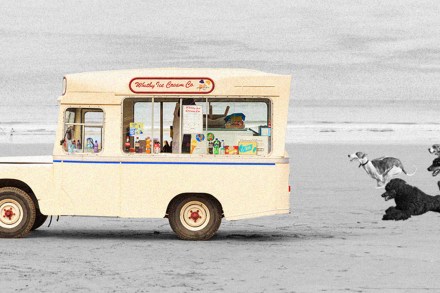
During the few hot days we had in June, I came across my first tub of dog ice-cream nestled among the Häagen-Dazs in my local supermarket. Scoop’s vanilla: ‘Tubs that get tails wagging.’ My first thought was that it was a joke, or perhaps for people who identify as dogs. So I looked it up as I stood in the queue, and it was as if a door opened onto our national psychosis. Purina ‘Frosty paws’, Wiggles and Wags ‘Freeze-Fetti’, Frozzys dog ice-cream, Pooch Creamery Vanilla, Wagg’s Sunny Daze blueberry, Higgins dog ice-cream, Dogsters ice-cream-style treats, Jude’s, Smoofl, Ben and Jerry’s… the market for dog ice-cream is limitless and it crosses the socio-economic spectrum.