Children

The ADHD-ification of squishy toys 

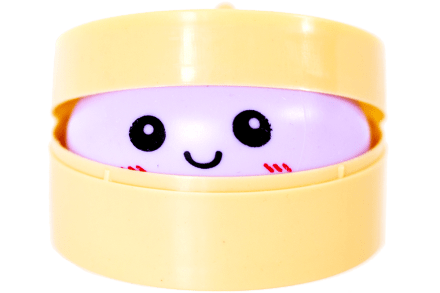
‘Feeling a bit stressed or anxious? Want to practise more mindfulness? Looking for good vibes and your best mellow and chill?’ This is not an advert for a life coach but the official sales pitch for NeeDohs, the much-coveted new children’s toys. These are not mere playthings, you see. Thanks to the ADHD-ification of childhood, they are ‘sensory fidgets’. NeeDohs are produced by American manufacturer Schylling. They are ‘the original sensory squish toy’, but others have appeared on the market, such as squishy ‘original viral dumplings’, produced by RMS International. Squishies are the latest craze – brightly coloured blobs of plastic to squash, squeeze, stretch and supposedly help children who have trouble focusing. Squishy, stretchy toys aren’t really new.

If you’re 12, you’ll love this game

Grade: B+ Why do elephants paint their balls red? So they can hide in cherry trees, of course. The principle behind this playground joke is the animating principle of the brand-new online indie game currently going viral among the under-15s. Finger on the pulse, me. Actually, I only know about this game because my 12-year-old son Jonah started begging to be allowed to download it, which made a pleasant change from begging to be allowed to download Fortnite. Basically, it’s multiplayer hide-and-seek but with paint. You know it’s one of those games kids like because the lobbies have that jittery Roblox/Gorilla Tag vibe – all migraineous colour-clashes and old-school neon gamertags.

Beware the ‘matrescence’ con

Every so often, a fashionable new concept is born. Witness the arrival of ‘matrescence’, which, for the uninitiated, is a phrase used to describe the physical, psychological, emotional and social transition a woman undergoes when becoming a mother. Or, as my mother and grandmother would have put it, and perhaps yours too: motherhood. ‘Matrescence’ first appeared in the 1970s, coined by the medical anthropologist Dana Raphael, but it seems to be reaching maturity now. Adverts splashed across the back page of the New York Times make the case for the inclusion of the word in the dictionary. A ‘global movement’ is being launched (by a social networking site for women and a company that sells baby bottles) to put matrescence on the cultural map.

Letters: arise, Sir Rod!

Keeping their promises Sir: Matt Ridley is right to assert the conservation role of gamekeepers (‘Ruffled feathers’, 30 May). They, like farmers and crofters, know wading birds are integral to Britain’s rich cultural landscapes. All ground-nesting birds benefit from culling generalist predators. I do this on my croft at my own expense because I love waders and passerines. Where costs cannot be borne by individual goodwill or taxpayer-funded grants, shooting provides a sound economic case for funding the vital combination of predator control and habitat management. A keeper’s livelihood depends on his ability to prove consistent competence in these two skills.

The rise of the child-haters

On Petersfield station, southbound side, there’s a huge billboard advertising a tropical holiday with a photo of a beautiful couple joyfully splashing each other in the water. I walked past it, stopped, walked back and stared. ‘Adults-only holiday,’ read the billboard. ‘Entirely child-free.’ But this wasn’t ‘adults only’ in the 20th-century sense: getting frisky with strangers after a pink gin and an all-you-can-eat buffet. What was being sold was a holiday guaranteed to contain not a squeak of any disgusting child, and the whole tone of the advert was one of joyful relief: At last! Just what we’ve all always wanted, but never dared to admit!

Yes, women still want to have children

Nearly one in three British women are now predicted to have no children, compared to around one in 20 in 1970. The assumption is that this is because young women have simply lost interest in becoming parents. But on the contrary, nine out of ten say they hope to become mothers one day, and the desire for a home and a family to call their own remains stubbornly persistent.  Striking new analysis by the Centre for Social Justice published this month found that more than three million women aged 16 to 45 may miss out on having the family they hoped for – 600,000 more than if fertility patterns matched their grandparents’ generation.  Make no mistake, this is one of the forgotten tragedies of our time.

Why I took my eight-year-old son wine-tasting

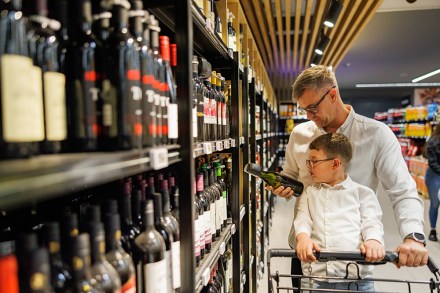
My eight-year-old son’s eyes widened when I unwrapped a Christmas present I got from my parents: a bottle of cherry brandy from the Lyme Bay winery in Axminster. ‘Can I have some?’ Humphrey asked, for he had been hitting the cherry brandy hard over the summer. Not the alcoholic kind, of course, but the cherry brandy-flavoured lollies sold by the ice-cream van that parks outside his school on a hot afternoon. How could I refuse? Ashley Dalton would be scandalised. The junior health minister said this month that the government is looking into banning the sale of non-alcoholic versions of booze to teenagers in case it ‘normalises drinking’ and becomes a ‘gateway’ to the real thing. Children will be allowed to vote at 16 under this government, but not drink a Lucky Saint.

How to solve the birth rate crisis: lower standards

There comes a moment, a few weeks after you give birth, when your baby outgrows their Lilliputian clothes and you’re obliged to replace ‘newborn’ with ‘0-3 months’. At which point, usually while still absolutely steaming with hormones, you find yourself sitting on their bedroom floor, staring at these teeny garments, trying to decide if you’re going to keep them (have another baby) or give them to the charity shop (start leaving leaflets about vasectomy around the house).  Historically, this was a major decision for you, but one which had almost no relevance to anyone else.

Should trains have child-free carriages?

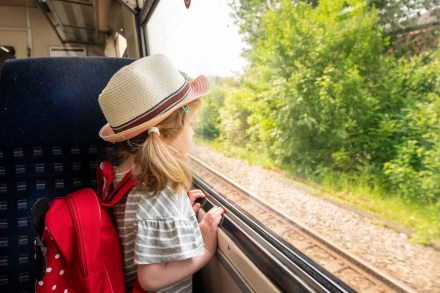
Amid the distractions of Donald Trump and Davos, France’s state-owned railway operator decided last week was the opportune time to slip out some news. Welcome to ‘Optimum’, the new and exclusive area of the train where kids are not welcome. Business people and misopedists travelling to and from Paris on the weekday high-speed TGV services will no longer have to tolerate the under-12s. The operator, SNCF, justified its ban on children by stating it would enhance the travelling experience of those who cherish ‘exclusive comfort in a fully dedicated first-class carriage, with seating arrangements designed to preserve your privacy, for a calm journey, ideal for working or relaxing’.

No, the internet is not bad for your child

The forces arranged in favour of banning social media for under-16s are powerful and wide-ranging. The unlikely alliance includes the leader of the Tory party, more than 60 Labour MPs, Big Suze from Peep Show and the patron saint of all bad ideas – His Majesty King Charles III. It seems probable that when amendment 94A of the Children’s Wellbeing and Schools Bill is voted on, it will receive support from all these quarters, as well as from Sir Keir Starmer, who has, true to form, launched a consultation on the issue. A handful of mental health charities will tell him that he must really get on with banning social media for teenagers, which he will then promptly and politely do.

Janus and the back and forth of the new year

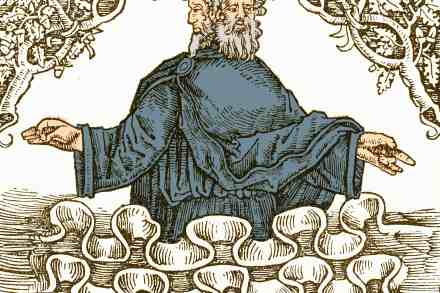
The Roman god Janus is about to play his annual trick on us. 31 December, the last day of the year, will be followed by 1 January, the first day of the year. We’ve ended up right back where we started. Frustrating, but at the same time reassuring. Janus, after whom the new month is named, was always pictured with two faces, one looking forward, the other back. He is the god of both beginnings and endings. The notion of returning to 1 January has always bothered me slightly, as though all that effort last year was for naught. Indeed the fact that each day of the year is a ‘copy’ of all the equivalent days in previous years seems troublesome too.

The march of lazy children’s books

There’s a myth that lots of us fall for/ ‘Kids’ books are so easy to write’/ And you can see why we might think so/ As so many of them are shite. Little poem by me there. As the dad of a six-year-old and a three-year-old, I have spent perhaps 100 hours reading some wonderful books, and hearing gorgeous books read to me. But parents everywhere will know what I mean when I say: Christ there’s a lot of dross out there. Why are so many children’s books so bad? Children learn through books. If they read lazy poetry, they’ll become lazy writers and lazy thinkers While looking for kids’ books to name and shame for this piece, I realised that some of the very worst offenders are now in a charity shop or the bin.

Keep children out of politics

In Citizens, his account of the French Revolution, Simon Schama wrote how the Jacobins recruited children into ‘relentless displays of public virtues’. These youth affiliates, the ‘Young Friends of the Constitution’, encouraged children to attend sessions at the group’s headquarters in Paris, while ‘throughout France, “Battalions of Hope”, consisting of boys between the ages of seven and 12, were uniformed and taught to drill, recite passages from the Declaration of the Rights of Man and of the Citizen and parade before the -citizen-parents in miniature versions of the uniform of the National Guard’.

Labour has done more damage to our country than the Luftwaffe

I still hang out with the same two lovable crackheads I sat beside on the first day of primary school. I keep all the stubs from every concert I’ve ever been to. I meet the same school dads in the same pub on the same night every single week and my point is that I’m a creature of habit. It takes a lot to change my mind, but enough is enough. I’m ending a lifetime of support for my beloved Labour party as 2025 draws to a disastrous close. This nightmarish, totalitarian rabble has done more damage to our country than Margaret Thatcher and the Luftwaffe put together.

Trick or treating is vital life experience

I first got a door slammed in my face in 1987. Looking back, I can’t help but feel that moment, at the age of eight, was my first bit of training as a journalist. I wasn’t seeking a scoop back then, of course. For eight-year-olds a scoop is something you get two of with your cornet from the ice cream van. Rather I was after a Chomp bar or a bag of Bensons crisps, and all the while hoping beyond hope that I (and my accompanying gaggle of friends) wouldn’t be palmed off with a satsuma. Such was the freewheeling Friedman-esque world of trick or treating – a custom that has dwindled into what, these days, is considered by many parents to be either rude, dangerous, immoral, paganistic or a combination of all four. The ritual clings on in diminished form.

The parents gaming special educational needs

As a foster carer and adopter, I’ve spent more mornings than I care to count coaxing my 13-year-old daughter into her uniform and then into the car. She has fetal alcohol spectrum disorder, the UK’s most underdiagnosed neuro-developmental condition, which leaves her with a brain wired for impulsivity, memory lapses and emotional storms that no local school can contain. Each day, I drive her across several counties to the only specialist placement that can meet her needs. Four hours a day, every week day. While I’m grinding through the traffic, taxpayers are footing bills that could fund whole classrooms. Councils and schools spent a record £2.26 billion on special educational needs and disabilities – ‘Send’ – transport last year.

French parents do it better

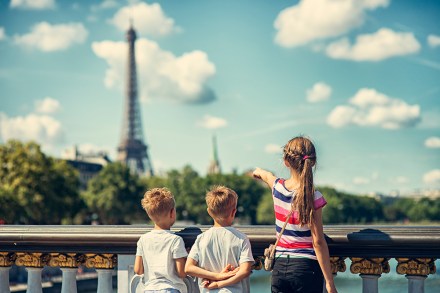
I arrived in Paris as an au pair in 2022. I was in my early twenties and armed only with GCSE French and a suitcase that could barely fit in my chambre de bonne – nine square metres of ‘characterful’ living space under the eaves, with a window just large enough to glimpse the Eiffel Tower if I leaned out at a dangerous angle. How did I end up here? After graduating, I wanted to immerse myself in a new city and polish my French. A few years on and I am still nannying, though I have returned to London. It seems I’ve become a career nanny by accident. But I’ve come to understand more about the different styles of parenting in the UK and France than I ever thought possible – and feel sure that British parents could learn a lot from our friends across the Channel.

Who will stand up for motherhood?

Scientists at the Oregon Health and Science University have created the beginnings of a baby using not human eggs, but skin cells. My reaction upon reading this news was to try to fold it up and tuck it away deep in some mental crevasse where I’d be sure never to see it again, because the implications are just too grim; the potential for suffering too much to bear. What the lab has done is devise a way to persuade human skin cells to behave like sex cells (eggs and sperm) and to divide using not only mitosis, which replicates all 46 chromosomes, but meiosis, which results in just 23. Once they’ve discarded half their chromosomes, the skin cells can then be fertilised with sperm, just as if they were human eggs.

Bring back the big family

As a species we are richer than we’ve ever been before. We live longer. We have more food to eat than is good for us. We have abundance in all things. And yet we are no happier than we were. In fact, many of us are downright unhappy. Among our woes is an epidemic of loneliness. Some 8.4 million of us are now living alone in Britain, and more than 3.8 million report being chronically lonely. We lock up more people in our prisons than ever and we can see for ourselves the signs of friction in our society, one which is clearly not entirely at peace with itself. So somewhere we have gone wrong. And I think I know where. It’s our families. They are simply too small. The average number of children born per woman in England and Wales has fallen to 1.

How to survive Florence with your family

There are many destinations which spring to mind when considering the options for a weekend away with a young family. There are beaches by the dozen, theme parks and glamping opportunities galore. But there is only one Florence. And I cannot say this strongly enough: when it comes to the kids, the Center Parcs of the Renaissance will not let you down. It begins with Tuscany itself, a place so beautiful that you can get Stendhal syndrome on the bus on the way from the airport. And even if your children are glued to their screens, eventually motion sickness will force them to look up and they may glimpse its dreamy vistas, too.