Childhood

Trans activists are effectively experimenting on children. Could there be anything more cruel?

From our UK edition

Can you think of anything more cruel than telling a five-year-old boy who likes Lady Gaga that he might have gender dysphoria? Or telling a nine-year-old tomboy who hates Barbie and loves Beckham that she might really be male - in spirit - and therefore she should think about putting off puberty and possibly transitioning to her 'correct gender'? Saying such things to kids who are only doing what kids have done for generations - messing about, discovering their identity - turns playfulness into a pathology. It convinces boys who aren't boyish and girls who aren't girly that they must have some great gender problem, a profound inner turmoil that their tiny minds must address, when in truth they're just having fun. What an awful trick to play on children.
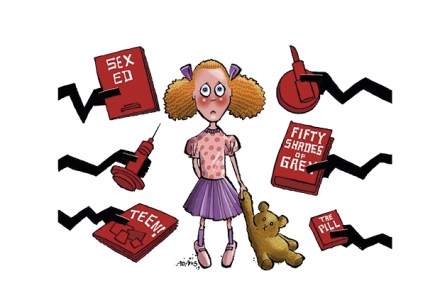
The end of childhood – what we lost when we dropped the age of consent

From our UK edition

[audioplayer src="http://rss.acast.com/viewfrom22/the-death-of-childhood/media.mp3" title="Melanie Philips and Sarah Green discuss the end of childhood" startat=37] Listen [/audioplayer]In all the sound and fury about historic sex crimes against children, one crucial factor has been generally ignored. Last week, a review of the agencies dealing with the phenomenon of ‘grooming gangs’ in England said that more than 370 young girls in Oxfordshire had fallen victim to them over the past 15 years, and called for an urgent national debate into these ‘indescribably awful’ sex crimes.

Podcast: the death of childhood and has Hillary gone too far?

From our UK edition

Have we lost the age of innocence forever? On this week’s View from 22 podcast, Melanie Phillips and Sarah Green discuss this week’s Spectator cover feature on consequences of dropping the age of consent. By teaching sex education at a younger age, are we simply encouraging children to have more sex? Is it too late to regain the age of innocence? And would compulsory sex education in all schools help or create more problems? James Forsyth and John Bew also look at why foreign matters aren’t featuring more in the election campaign. Why are the party leaders mostly ignoring Britain’s relationship with the rest of the world?

Miriam Gross’s diary: Why use Freud and Kurt Weill to promote Wagner?

From our UK edition

Last week I went to the exhilarating English National Opera production of Wagner’s The Mastersingers — five hours of wonderful music and singing whizzed by without a moment’s boredom. But there was one odd and perturbing factor, I thought. In place of a curtain, there was a huge ‘frontcloth’. It was covered with a collage of 103 faces of well-known artists. These same faces appeared again, during the finale, this time in the form of portraits held aloft by members of the cast. They included Joseph Roth, Stefan Zweig, Sigmund Freud, Kurt Weill, Billy Wilder, Richard Tauber, Oskar Kokoschka, Hannah Arendt, Simone Weil, Lotte Lenya, Max Ernst, Marlene Dietrich.

Alexander Masters’s diary: The idea that could unlock dozens of new cancer drugs

From our UK edition

Two million pounds can buy you consideration for a place on a medical trial! Every year untold numbers of potential cancer therapies are abandoned. There is simply not enough money to test all the promising drugs and interventions. To my astonishment, I’ve had an idea about how to curb this appalling waste. I am not a medic, I am a biographer and illustrator, and until two years ago I had no idea what a medical trial was; but my proposal (published in the Wellcome Trust’s new e-magazine Mosaic) has been backed by leading ethicists, doctors, researchers and medical lawyers.

Why there’s no such thing as an Etonian

From our UK edition

Finally, just in the last few years I’d say, we’ve all begun to accept the role of nature in the great nature/nurture debate. Though we’ve squirmed and baulked, we mostly now do accept that genes inform (to a greater or lesser extent) not just our height and eye-colour, but our personalities: our intelligence, our disposition. We’re more like our parents than we are like strangers — and what, after all, was so very controversial about that? So now we’re at peace with our genes, here’s another mental challenge, a curious discovery by geneticists that’s even more at odds with our intuition.

Today’s Disney princesses look like Russian mafia wives. This is their café

From our UK edition

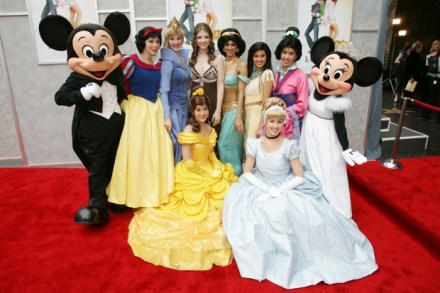
The Disney Café is a gaudy hell on the fourth floor of Harrods, Knightsbridge. It is adjacent to the Harrods Disney Store, and also the Harrods Bibbidi Bobbidi Boutique, in which females between the ages of three and 12 can, for fees ranging from £100 to £1,000, be transformed into the tiny, glittering monsters called Disney princesses. They look like the late Queen Mother, but miniaturised. They glide — or are carried, if very small — from boutique to café in hooped plastic gowns in poisonous pink; combustible cloud-dresses, made for arson. Their hair is tight with curls and hairspray, and topped with the essential tiara. They look obliviously class-obsessed and much the same as each other; and this is a wicked trick to play on children.
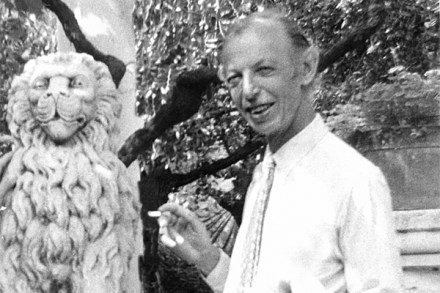
Beer and skittles and Lucian Freud and Quentin Crisp – a Hampstead misery memoir

From our UK edition

The rise of the ‘misery memoir’ describing abusive childhoods, followed by the I-was-a-teenage-druggie-alkie-gangbanger-tick-as-appropriate memoir, pushed into the shadows an older tradition, the memoir of childhood pleasure, of charm and humour. Some of the greats — Gwen Raverat’s Period Piece, Diana Holman-Hunt’s My Grandmothers and I — continue to be enjoyed; others every bit as good — Joan Wyndham’s Love Lessons trilogy — must be snapped up secondhand. Marjorie Ann Watt’s Slideshow never quite reaches these heights, but is nevertheless a welcome addition to this genre. Watts herself is a painter and illustrator, and here she uses words to depict the lost world of the prewar bohemian Hampstead upper-middle-classes.

The truth about being a politician’s child

From our UK edition

It was a Friday morning in 1992, Britain had just had an election, and I was on an ice rink. No special reason. You’re in Edinburgh, you’re a posh teenager, it’s the Christmas or Easter holidays, weekday mornings you go to the ice rink. It was a thing. Maybe it still is. I was only quite recently posh at the time, having moved schools, and I was — in both a figurative general sense and literal ice-skating sense — still finding my feet. My new boarding-school life was pretty good, though. The way you went ice-skating in the holidays was a bit weird, granted, but you could smoke Marlboro at the side and it was a chance to meet girls. Even better, they were girls’-school girls, who had nobody to compare you against. Always my favourite.

Dyslexia is meaningless. But don’t worry – so is ADHD

From our UK edition

There is a beautiful symmetry to all things, I think, and probably related somehow to the concept of karma. Only two weeks ago, a bunch of researchers at Durham University came up with a report which insisted that dyslexia is a meaningless term. You and I know that, of course, but we dare not say so in public. For decades now dyslexia has been the crutch upon which middle-class parents support themselves when they discover that their children — Oliver, eight, and Poppy, ten — are actually denser than a ton of highly enriched uranium, contrary to their expectations.

A secret from my African childhood has become a deeper mystery

From our UK edition

About 55 years ago, when I was about ten, my younger brother Roger and I discovered a slave pit in Africa. Actually it probably wasn’t a slave pit and we probably didn’t discover it, but ‘Arab’ ‘slave pits’ were what Southern Rhodesian schools offered as an explanation for the circular, room-sized, stone-lined pits sunk about five feet below ground but open to the sky. And if Roger’s and mine were not the first modern eyes to behold this antiquity, then we were able at least to persuade ourselves of the claim, as there was no path trodden into the small patch of dark, dense primary forest in whose midst we found the pit; and nobody else seemed to know about it. This felt like a discovery.

Finally, a celebrity memoir worth reading

From our UK edition

Unlike many celebrity memoirs, Anjelica Huston’s is worth reading. In her Prologue she writes that as a child she modeled herself on Morticia Addams, and where a lesser celebrity memoirist would go on to say that she eventually played Morticia in a film of The Addams Family, Huston is generous enough not to labour the point. Instead of the usual ghosted drivel, she offers — as she does in her acting — a quirky charm and a reckless honesty. Her story is an interesting one, and is generally well written, sometimes even beautifully so. Her father was the great film director John Huston.

This Boy, by Alan Johnson- review

From our UK edition

This Boy is no ordinary politician’s memoir, still less a politician’s ordinary memoir. It ends where others might begin: when the author is barely 18, newly married and only just starting work as a postman. The trade unionism that he later took up and the career in politics that led to several cabinet posts in two Labour governments are not even hinted at. Yet however thrilling, their story, when it is told, will be dull by comparison with this. Alan Johnson had a childhood quite unlike most politicians’, and he describes it with a simplicity and power that make it easy to see why he came to be the potential Labour leader most feared by many Conservatives.

What Michael Gove should know about going to school in Singapore

From our UK edition

I like to tease my friend Wei about being a tiger mother. She once told me of an incident where her daughter Shu was making an artwork for a friend as a birthday present. Shu doodled for a few minutes, then showed her mother a sketch of a funny face. ‘I told her to knuckle down, spend more time, and come back with a far better drawing,’ said Wei. ‘It just wasn’t good enough.’ I said that was a bit harsh on her eight-year-old, especially since it was not schoolwork but part of Shu’s leisure time. Wei snorted. ‘It was a gift for her best mate, yet she hadn’t put any thought into it,’ she said. ‘She needs to know that you must make an effort for the things you really care about.

Long life: Polite silence on my old prep school’s possible paedophile

From our UK edition

It is usually a mistake to return to places one has known as a child. I have only once been back to the large, white-stuccoed, early-Victorian manor house in Hertfordshire where I was born and brought up, and it was a dispiriting experience. Although the house was near to the town of Ware, less than an hour’s drive from central London, it was set in unspoiled country alongside a village in which the names of some of the inhabitants had been there in the Domesday Book. Apart from a small row of bleak pre-war council houses on the edge of the village, there was nothing there to offend the eye or to suggest proximity to a great city. My parents, finding the house too expensive to run, sold it in 1959, when I was 19 years old, and I didn’t go back for some 20 years after that.

Bookends: Prep-school passions

From our UK edition

In his introductory eulogy, Peter Parker calls In the Making: The Story of a Childhood  (Penguin, £8.99) G. F. Green’s masterpiece, which, though not popular, attracted the admiration of E.M. Forster, Christopher Isherwood, Stephen Spender, J.R. Ackerley, John Betjeman, Philip Toynbee, C.P. Snow, Pamela Hansford Johnson, Frank Tuohy and Alan Sillitoe. According to Elizabeth Bowen, he was ‘the most neglected writer of his generation’. Explaining the title to his friend Michael Redgrave, Green (pictured above) said: ‘The theme is unequivocally that of the conditioning of a homosexual and the foreshadowing of his future love pattern.