Cheese

Even vegans can’t stomach vegan cheese

From our UK edition

I’m one of those gobby vegans who will happily tell anyone why they should stop consuming animal products. But I can still admit what’s obviously true: most vegan cheese isn’t particularly good. I was once ardently devoted to cheese. In my vegetarian years, paneer, mozzarella and halloumi were less foods than companions. I loved how paneer would soak up the spice of a curry like a sponge. Mozzarella was like a spectacle of tensile, elastic theatre and halloumi provided evocative, salty squeaks. I also took delight in the standard toasted cheddar sandwich. Yes, I did get quite fat. But when I learned about what goes on at dairy farms, everything changed.

Organised crime is targeting artisanal food

From our UK edition

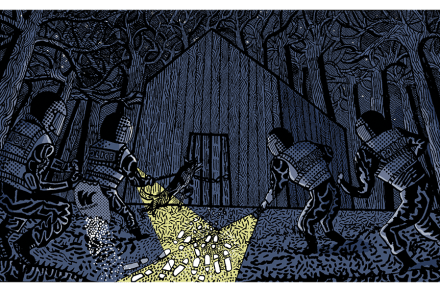
Organised crime has a new focus: high-end food production. The latest victim is Wildfarmed, a UK-based, regenerative flour business co--founded by one half of the band Groove Armada. Last month, 50 tons of its flour were stolen, disguised as a wholesale order for the French supermarket E. Leclerc. In an audacious move, the fraudsters asked for the wording on the bags to be translated into French. Wildfarmed obliged. The 1kg bags – all 50,000 of them – were loaded into containers ready for export. Then they vanished. Wildfarmed’s disco-ball neon branding makes it a surprising target. But the real question is not how anyone hides a haul of hard-to-miss flour bags, but whether this theft is a bellwether.

I finally ate Sardinia’s maggot cheese

From our UK edition

I’m driving a dirt road in the wilds of central Sardinia. And I mean what I say by ‘wilds’. This rugged region in the sunburned Supramonte mountains was called ‘Barbagia’ by Cicero – i.e. ‘land of the barbarians’ – as even the Romans never quite managed to subdue it. Centuries later it became famous for bandits, kidnaps, local mafias – and casu marzu, the infamous ‘Sardinian maggot cheese’. I turn to my resourceful local guide, driver and interpreter, Viola, as she negotiates the olive groves and goat tracks. ‘Do you really think we will find casu marzu?’ My voice is slightly falsetto with tension. Viola turns: ‘I hope so, there is a pretty good chance. And maybe we will find something even more unusual…’ But first, let’s rewind 30 years.

MAHA must harness the power of Gwyneth Paltrow

Gwyneth Paltrow may be set to pass her celebrity-everyone-loves-to-hate crown to another out-of-touch elitist. The Goop founder and queen of outrageous “wellness” hacks has announced – gasp! – that she’s begun eating like the rest of us. Paltrow has followed a Paleo diet for years – meaning she cut out virtually all culinary joy for the sake of eating like a cavewoman, though I assume she did more gathering than hunting. Yet on her Goop podcast last week, Paltrow announced, “I’m a little sick of it if I’m honest. I’m getting back into eating some sourdough bread and some cheese. There, I said it. A little pasta. After being strict with it for so long.” Paltrow’s foray into normal-people food is serendipitous; or perhaps it’s ingenious timing.

gwyneth paltrow

Save our Stilton!

From our UK edition

On 2 October 1814, a grand feast was held at the Hofburg imperial palace during the Congress of Vienna. Famed French chef Marie-Antoine Carême was charged with cooking and didn’t disappoint. But when it came to the cheese course, a lively argument broke out among the assembled statesmen, each advocating for the superiority of their national cheese: the Italian for Stracchino, the Swiss for Gruyère, the Dutchman for Limburger, and so on and so forth. The UK foreign secretary, Lord Castlereagh, championed Stilton. French foreign minister Talleyrand snapped an order (‘Send the despatches to the chancellerie’) and a large piece of Brie de Meaux was duly brought out: ‘The Brie rendered its cream to the knife. It was a feast and no one further argued the point.

The joy of cheese rolling

From our UK edition

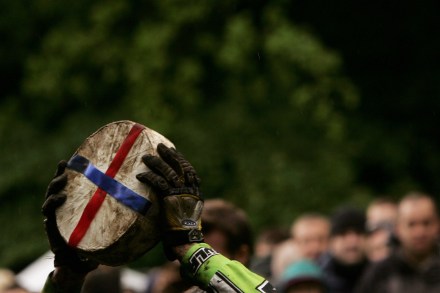
It’s unnerving being surrounded by a crowd in the woods. You can hear people but only glimpse their limbs or faces through the leaves. It triggers something primordial, similar to the feeling of being watched. Ideally, someone with a big strimmer would have given Cooper’s Hill a good going over before the cheese rolling. But cheese rollers don’t concern themselves with ideals.  My friends were shocked by the brutal pitch of the hill. Could someone really hurl themselves down that? On the last Monday of May, and for reasons lost to time, a wheel of Double Gloucester is thrown down the hill and a group of runners throw themselves after it. The first to reach the bottom gets the cheese.

What should be on your Christmas cheeseboard?

From our UK edition

No overindulgent gourmand worth his salt fails to own a stilton scoop. Mine has a bone handle and Mappin & Webb silver plate. It has an ingenious contraption to release the cylindrical pellet of cheese: a bit like those retro ice cream scoops that, with a little squeeze, crack like a whip, the metal slicing under ice as vicious as a mousetrap. My stilton scoop is gentler. One releases the mouldy blue at one’s own pace, until it falls sensuously on to the plate. It is used just once a year, at Christmas, like the cookie-cutter and the nut-cracker. Why this extended detour about a kitchen utensil? Because one cannot talk about cheese at Christmas without talking of stilton.

Making a raclette

Cheese, potatoes, sausage and bacon for dinner? Let’s just throw in bread and heavy cream for the sake of it. Sounds like a recipe for a heart attack or stroke? Why do the Swiss and French then double up — or even triple up — on these carbs and calories when cold weather comes? The answer is easy and old; the combos are delicious, divine and de rigueur, filling the body’s need for cozy food and energy to shovel snow and ski. The French and Swiss still argue about which country invented raclette.

cheese raclette

How to create the perfect cheeseboard

From our UK edition

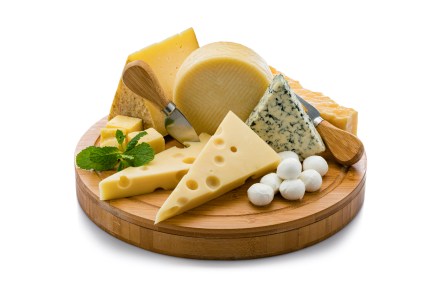
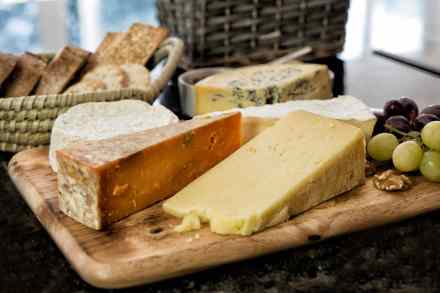
The cheeseboard is, arguably, the highlight of any dinner, but there’s an art to crafting a delectable selection. From selecting the right cheeses and serving them at their best to the ensuring a balanced pairing of sundries and sippers, the craft of the cheeseboard is a skill to learn. It’s time to do away with whipping out a Stilton wheel straight from the fridge. We asked top cheese experts, Hero Hirsh and Sam Wilkin, about the do’s and don’ts of Christmas cheese eating: How much cheese should you serve? As a rule, around 100g-150g per person should be plenty, but keep in mind that buying generously ensures your stock will last a few days over the festive period.

Burrata inamorata

Wise men say only fools rush in. But in this particular instance, I really couldn’t help falling in love on the spot. Like a zillion others, the story starts on a night out. When my party, dripping with rain, arrived at the restaurant, our table wasn’t ready, and they ushered us to wait at the bar The bar was a happening kind of place. Instead of looking up at shelves of bottles and bartenders mixing drinks, it looked down onto the kitchen area, which was built around a giant wood fire over which five or six cooks labored frenetically. The flames blazed openly, fed from the picturesque log stack that lined the back wall of the dining area.

burrata

Why you can’t trust supermarket cheese

From our UK edition

We were celebrating the end of lockdown by talking about war and deer stalking — over a business lunch, naturally. My friend David Mathew, from a distinguished legal, military and political family, told a story about Churchill’s arrival in Athens at Christmas in 1944. David’s father, Robert, then a young officer, was sent to meet the great man, who was grumpy and preoccupied, with good reason. He had come to save Greece from communism, with little guarantee of help from the Americans, let alone left-wing opinion in Britain. The sucking-up to ‘Uncle Joe’ Stalin may have been necessary to win the war. It would not be helpful for winning the peace.

Say cheese

This article is in The Spectator’s March 2020 US edition. Subscribe here. ‘What do ties matter, Jeeves, at a time like this?’ Bertie Wooster was once heard to groan. Does cheese matter in a time of coronavirus, climate panic and tariff wars? These pressures can lead anyone to succumb temporarily to Sartresque nausea. Fortunately the gentleman’s gentleman was at hand with a steadying dose of sanity: ‘There is no time, sir, at which ties do not matter.’ And there is no time at which cheese does not matter.

cheese

They may take our wine, but they’ll never take our brie-dom

I was poking at a dessicated branzino at the Union League yesterday, half-listening to a schoolmate drone on about international alternatives, when he mentioned off-hand that the United States and France are gearing up for a trade war. Bordeaux could cost a bomb; brie could break the bank. I dare say, it shook me to my coeur. Thank God it’s not Sancerre season. They’re decorating the club for Christmas, so I worried I was delirious from the smell of brass polish. I excused myself and discreetly logged on to see that, alas, the dreadful news is true. It’s bad enough that they’re banning foie gras in New York, which is as civilized as burning churches. Now the feds are getting in on the act too.

wine brie