ChatGPT

Controlling AI is the great challenge of our age

From our UK edition

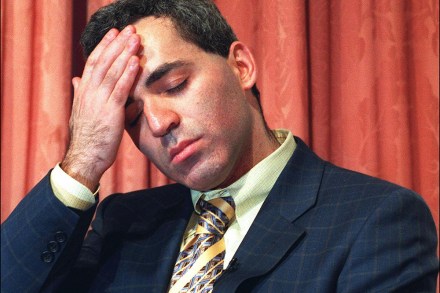
In 1997 the world chess champion Garry Kasparov was beaten by an IBM computer system called Deep Blue. It had defied all expectations, exploring some 300 million possible moves in one second. The most that skilled chess players can contemplate is about 110 moves at any given time. It was a seminal moment in the advance of artificial intelligence – even if not fully understood, writes Richard Susskind in How to Think About AI. People did not wholly grasp the impact of the exponential power of computers, nor that new ways would be found to develop systems that could achieve human expert-level performance. Fast forward to 2016 and to AlphaGo, a machine designed to play the complex game Go, which has more possible moves than atoms in the observable universe.

Doomers looks at what AI means for the future

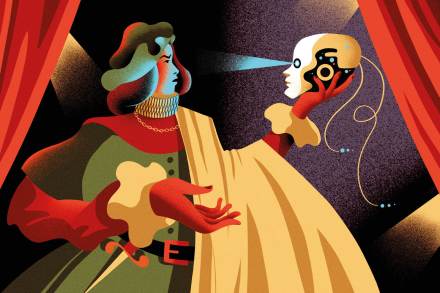
I wrote my play Doomers partly because, the night Sam Altman was fired, I was performing in a play called Zoomers. Someone — I forget who — suggested the idea of Doomers as a joke, and I thought it was a good one. My method for some, if not all, of my plays over the past few years has been to take some kind of mimetic material — downtown, Gen Z, polyamory — and to find what is surprising or human inside the meme. I try to locate a universal story in what might otherwise seem like a surface-level idea that feels niche, obnoxious or both. Sam Altman and the autistic tech world, in particular, represent opaque surfaces that I believe conceal something deeper.

Doomers

Will AI be the next arms race?

From our UK edition

48 min listen

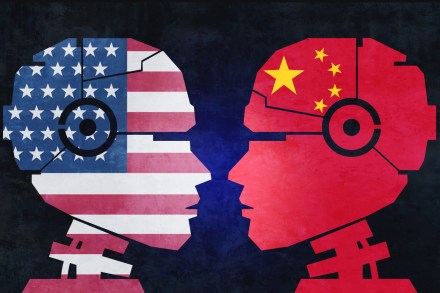
The release of ChatGPT in late 2022 brought home the sheer potential of artificial intelligence and the speed with which developments are being made. It made AI the hot topic from business to politics and, yes, journalism.  This was true in China too, despite the fact that ChatGPT has never been allowed to be used within Chinese borders. Instead, China has a rich landscape of homegrown AI products, where progress is being led by tech giants like search engine Baidu and TikTok’s owner, ByteDance. So already we are seeing a bifurcation in the AI worlds of China and the West – just like with social media and e-commerce. This episode will peek over the Great Firewall to update listeners on China’s progress on AI.

AI is both liberating and enslaving us

From our UK edition

Elaine Herzberg was pushing a bicycle laden with shopping across a busy road in Tempe, Arizona in 2018 when she was struck by a hybrid electric Volvo SUV at 40mph. At the time of the accident, the woman in the driver’s seat was watching a talent show on her phone. The SUV had been fitted with an autonomous driving system consisting of neural networks that integrated image recognisers. The reason Herzberg died was because what she was doing did not compute. The autonomous driving system recalibrated the car’s trajectory to avoid the bicycle, which it took to be travelling along the road, only to collide with Herzberg, who was walking across it. She became the first casualty of artificial intelligence.

Copyright chaos grows deeper by the minute

From our UK edition

The law doth punish man or woman That steals the goose from off the common But lets the greater felon loose Who steals the common from the goose The authors of a fascinating new look at the patchwork chaos called copyright begin their book with this epigraph from an ancient English protest song against fencing, and thereby privatising, common land. David Bellos, a comparative literature professor at Princeton University and winner of the first International Booker Prize in 2005 for his translations of Ismail Kadare, and Alexandre Montagu, a lawyer specialising in intellectual property and new media law, have written a timely history of a ‘relatively simple idea – that authors have rights in the works they create’.

The balance of power between humans and machines

From our UK edition

The twin poles of the modern imaginarium about technology and society can be represented by two masterpieces of popular culture. In James Cameron’s film The Terminator (1984) and its sequels, a global computer system called Skynet becomes sentient and proceeds to try to exterminate the human race by means of time-travelling Austrian bodybuilders. In Iain M. Banks’s ‘Culture’ novels, by contrast (beginning with Consider Phlebas, 1987), a space-faring humanlike species has created superintelligent machines, known as Minds, which automate all the labour of production, leaving people free to pursue artistic activities and extreme sports.

How I tried to buy The Spectator

From our UK edition

The Victoria and Albert Museum kindly threw me a leaving party after eight years as chair, plus a particularly apt present: a specially commissioned illuminated V&A logo made from powder-coated steel by the designer Toby Albrow. The logo is a reference to my megalomaniacal taste for giant logos atop museum buildings. We have placed a huge one on the roof of the Young V&A in Bethnal Green, and an even bigger one – 20 feet high – on the new V&A East in Stratford, visible from three miles away in Canary Wharf. What an exhilarating and happy gig the V&A has been. I’m going to miss it and the people. They hung my leaving portrait in the directorate corridor six weeks early, just to remind me it was over.

Why is Sarah Silverman suing artificial intelligence?

Crypto was a wonderful Wild West of anarchic financial innovation, absurd idiocy and scamming. Lots of scamming. Then regulators came along and made everything a lot more sensible and boring. Given how fast Generative AI has developed — from computer science theory to high school cheating scandals in but a few years — it was inevitable that the lawsuits would quickly follow. On Friday, the comedian Sarah Silverman joined authors Christopher Golden and Richard Kadrey in class action copyright lawsuits, claiming OpenAI and Meta had stolen material from their books to train their Large Language Models (LLMs). They allege the LLMs were trained on their books through pirated online libraries, such as Library Genesis and Z-Library. (No, I haven’t used them for years, don’t ask.

Can robots replace journalists?

The case against Kamala’s coke The latest twist in the White House cocaine saga sees NBC News clarify that the substance was found in an entrance area “near where some vehicles, like the vice president’s limo or SUV, park.” But Cockburn isn’t convinced of Kamala’s credibility as a possible culprit. Just listen to the Veep at the Essence Festival this week: https://twitter.com/Breaking911/status/1677092627567595521 Well, I think culture is... it is a reflection of our moment in our time. Right. And... and... and... present culture is the way we express how we’re feeling about the moment. And... and we should always find times to express how we feel about the moment. That is a reflection of joy because, ev- you know. It comes in the morning (laugh).

robots journalists

The new technocracy: who’s who in the chatbot revolution?

From our UK edition

Decades are happening in weeks in the world of artificial intelligence. A fortnight ago, OpenAI released GPT-4, the latest model of its chatbot. It passed the bar exam in the 90th percentile, whereas the previous model only managed the tenth. Last week, Google introduced its own chatbot, Bard. Now, the British government is announcing plans to regulate AI for the first time, as well as to introduce it into hospitals and schools. Even some of the biggest technophobes are having to grasp this brave new world. We’re familiar with some of the technology by now, but we know little about the humans in the world of AI.

It’s time to make friends with AI

From our UK edition

As a rule, ‘I told you so’ is an unattractive sentiment – simultaneously egotistic, narcissistic and triumphalist. Nonetheless, on this occasion: I told you so. Specifically, I told you so on 10 December last year, when I predicted in Spectator Life that 2023 might see humanity encounter its first non-human intellect, in the form of true artificial intelligence – or something so close to it that any caveats will appear quite trivial.

AI is the end of writing

From our UK edition

Unless you’ve been living under a snowdrift – with no mobile signal – for the past six months, you’ll have heard of the kerfuffle surrounding the new generations of artificial intelligence. Especially a voluble, dutiful, inexhaustible chatbot called ChatGPT, which has gone from zero users to several million in the two wild weeks since its inception. Speculation about ChatGPT ranges from the curious, to the gloomy, to the seriously angry. Some have said it is the death of Google, because it is so good at providing answers to queries – from instant recipes comprising all the ingredients you have in your fridge right now (this is brilliant) to the definition of quantum physics in French (or Latin, or Armenian, or Punjabi, or – one memorable day for me – Sumerian).