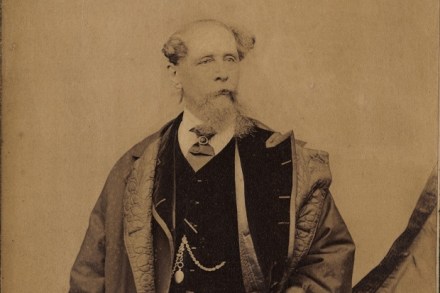
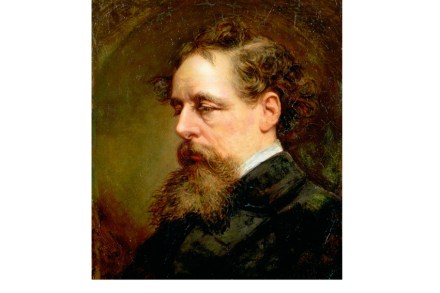
Charles dickens

This thriller is as good as anything by Hilary Mantel

From our UK edition

A few years ago, after a lifetime of wearing white shirts through which the straps of my white bra were plainly visible, I discovered a remarkable fact: if you wear a pink or even a crimson bra underneath a pale shirt, it doesn’t show. For several weeks I passed on this gem of truth to all my women friends. Was my enthusiasm met with relish, gratitude? It was not. They all said the same thing in response: ‘Oh, didn’t you know? I’ve always known that.’ I expected it would be the same in the case of Andrew Taylor. While reading The Silent Boy I was so overexcited by its brilliance that I asked numbers of friends if they’d ever come across Taylor’s work. Surely I was alone in the world in not having heard of this paragon?

The fairytale life of Hans Christian Andersen

From our UK edition

It has long been my habit, when approaching a new biography, to read the account of the subject’s childhood first, then jump to the deathbed, before settling down to the main narrative between. It was rather disconcerting, therefore, to find that Paul Binding’s life of Hans Christian Andersen eschews the deathbed and ends with the author’s last, not very cheering, written words rather than his last breath: The brewer is dead, Auntie is dead, the student is dead, him whose sparks of ideas ended up in the rubbish bin. Everything ends up in the rubbish bin. It is only in the chronology that we learn that Andersen’s 70th birthday was internationally acclaimed and that his funeral a few weeks later was attended by the King of Denmark and a multitude of admirers.

Courtroom drama in 1828 – courtesy of The Spectator

From our UK edition

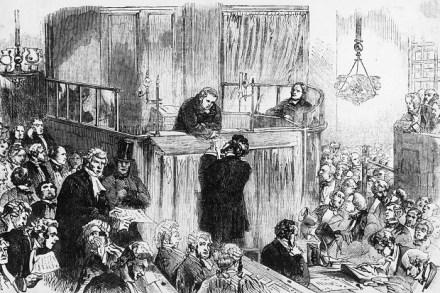
It’s a real pleasure looking through the first few editions of the Spectator from 1828, where the police reports and brief news items conjure up the England of Dickens and Trollope. There’s a man who comes before the court for throwing his wooden leg at people and is reprimanded by the judge. In a riotous atmosphere in court, the pauper explains that he can’t very well work with a leg that’s a foot and a half too short. Eventually, the Lord Mayor intercedes: ‘Defendant, I have prevailed upon the parish to put you once more upon your legs properly; and let me entreat you never to throw away an old leg until you get a new one."— (Loud laughing.

Get tickets for Emil and the Detectives, and opera glasses — some of the child actors are tiny

From our UK edition

It starts with a brilliant joke. We’re in the Weimar Republic in 1929. Little Emil Tischbein is listening to his mother and a moaning neighbour, Mrs Wirth, lamenting Germany’s loss of moral fibre. Mrs Wirth cites a recent gangster film whose depravity shocked her to the core. ‘We saw it three times,’ she adds.  Forewarned about thieves and hoodlums, Emil travels to Berlin carrying a precious cargo of 140 marks. A sinister stranger robs him on the train and he befriends a gang of Berlin school-kids who set off to retrieve his cash. Erich Kästner’s classic is directed with great style by Bijan Sheibani, who captures much of the book’s verve and atmosphere.

Melvyn Bragg’s notebook: I found hell on Regent Street

From our UK edition

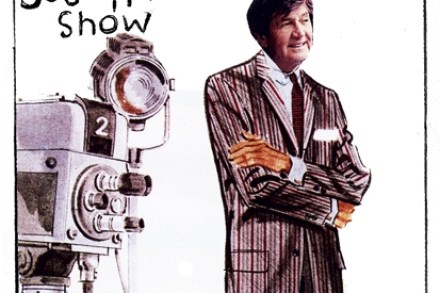
John Lloyd, producer of Blackadder, Spitting Image, QI etc, has boldly picked up where he left off at Cambridge more than 40 years ago. He has gone back to his youthful passion for stand-up. I’m making a South Bank Show about him and last week I went to Ealing Town Hall. He was on the 9.30 slot in ‘Chortle’ week. It was unlike any stand-up I’d ever seen. But then Not the Nine O’Clock News, his first big hit, was like no comedy show I’d ever seen and his originality continues on Radio 4 in The Museum of Curiosities. What makes his act so fresh is the mixture of funny broad jokes, bullet points of esoteric scholarship and entertaining recollections from a career seriously dedicated to making people laugh through other people.

Look! Shakespeare! Wow! George Eliot! Criminy! Jane Austen!

From our UK edition

Among the precursors to this breezy little book are, in form, the likes of The Story of Art, Our Island Story and A Brief History of Time and, in content, Drabble’s Oxford Companion to English Literature and Johnson’s Lives of the Poets. Other notable precursors are How to Read a Novel by John Sutherland, How to be Well Read by John Sutherland, 50 Literature Ideas You Need To Know by John Sutherland, Lives of the Novelists by John Sutherland and more in that vein. The tireless and compendious Dr Johnson — ‘the first great critic of English literature’ — deserves and receives a chapter to himself here, and it’s no great surprise that the tireless and compendious Professor Sutherland entirely sees the point of him.

What a coincidence

From our UK edition

If you are going to read a novel that plays with literary conventions you want it written with aplomb. In Three Brothers we are not disappointed, as Peter Ackroyd shows a deftness of touch that comes from being a real master. Here his theme is families. Or rather, it is London. Or rather, it is the use of coincidence as a plot device. In fact it is all three, but perhaps the most important is coincidence. As a literary device, coincidence is the presence of the author in the novel acting like an ancient Greek god directing events. This is apparent from the start when, in almost fairytale fashion, Ackroyd tells us that the brothers of the title, Harry, Daniel and Sam, were all born on 8 May, but each a year apart, in the 1950s.

Wilkie Collins by Andrew Lycett – review

From our UK edition

In the outrageous 2010 press hounding of the innocent schoolteacher Christopher Jefferies over the murder of his young female tenant (of which a neighbour, Vincent Tabak, was later convicted and over which the guilty newspapers later shelled out punitive sums), the Sun produced, as suspicious facts, that Jefferies was ‘obsessed by death’, and ‘scared the kids’ in his classroom. He had, for example, exposed his pupils to the ‘Victorian murder novel’ The Moonstone. As an English teacher at a high-ranked school, Jefferies would surely have prescribed my edition of Wilkie Collins’s novel— the only one, if I may toot my trumpet, to make comprehensive use of the manuscript. Pulp the edition, I thought with a shudder, before it kills again.

‘A banishment’ – Gloria Deak describes the visits of celebrated Victorians to America

From our UK edition

No, they decidedly did not like us — this is true at least for the majority of the nineteenth-century British travelers to the New World. They came out of a sense of wonder, somewhat akin to the reaction of Thomas More who declared in his sixteenth-century Utopia that ‘nowadays countries are always being discovered that were never in the old geography books.’ Over the next few centuries, perhaps no emerging country west of the Atlantic would excite as much curiosity as the vast expanse of territory that would become known as the United States. It soon became manifest that, in expanding her geographical borders, the United States had staked out a new social order.

Wreaking, by James Scudamore – review

From our UK edition

An abandoned lunatic asylum, a nasty pornographer in a wheelchair, a bizarre glass-ceilinged viewing dome beneath a scummy lake, a vast henchman, a mother who hears angels telling her she must harm her child: these are some of the places and people to be found in James Scudamore’s new novel. Dickensian excess is the name of the game here. It is as if Mr Murdstone and Steerforth and Magwich (and even the foggy salt-flats which herald his startling arrival in fiction) appeared in the same story as Fagin, together with a couple of lost boys, ripe for criminal exploitation. Scudamore’s relish for names, too, is Dickensian.

The greatest novel in English – and how to drink it

From our UK edition

Which is the greatest novel in the English language? Let us review the candidates: Clarissa, Pride and Prejudice, Middlemarch, The Bostonians. The other night, someone tried to make a case for Moby-Dick. Along with Tristam Shandy and Daniel Deronda, it is one of my great unreadables. I have tried, but always jumped ship before leaving Nantucket. Clarissa: immense power — if not as much fun as Pamela — yet I have no enthusiasm for rereading it. The Bostonians: again, great power — but what about more matter with less art, and was James really writing in English? Pride and Prejudice: with Portia and Rosalind, Lizzie Bennet is one of the Three Graces, the most delicious girls in fiction (poor Portia, to think of the long slow tragedy of marriage to Bassanio).

‘The Shakespeare of the lunatic asylum’ – review of The Dostoevsky Archive by Peter Sekirin

From our UK edition

After you decapitate someone, might their severed head continue thinking? Prince Myshkin holds his audience spellbound with this macabre inquiry in The Idiot, a great novel whose author, Fyodor Dostoevsky, was once called the Shakespeare of the lunatic asylum. Each of his great novels concerns a murder (one a parricide); most also touch upon the sickening theme of the rape of a child. The writer Lafcadio Hearn warned that reading him might actually drive you mad: it can certainly invoke pity and terror, embarrassment and laughter. Dostoevsky’s life was even weirder than his fiction. He was born in 1821, the son of a surgeon whom he believed to have been killed by his own serfs.

A.D. Harvey in The Spectator – a little tribute to Eric Naiman’s ‘When Dickens met Dostoevsky’

From our UK edition

Beginning with what he finds to be a rather implausible account of a meeting between Dickens and Dostoevsky, Eric Naiman's recent essay for the Times Literary Supplement spins out an astonishing story of suspect scholarship. I very much recommend reading it if you haven't already. At the centre of the mystery is an independent historian named A.D. Harvey, and a bewildering variety of other names from letters pages and scholarly journals - Stephanie Harvey, John Schellenberger, Trevor McGovern, Leo Bellingham - that may or may not belong to him. The piece raises all sorts of questions. If you work for a magazine, however, it raises one question with particular urgency: did any of these people write to us?

Mr Micawber Goes to the Treasury

From our UK edition

John Rentoul draws attention to a new ComRes poll that goes some way towards explaining George Osborne's predicament when it comes to managing government finances. Put simply, the public is not interested in public spending cuts. On the contrary, British voters want to see public spending increase. Sure, they might agree that, all things being equal and in the broader scheme of matters, it might be a good idea if the government balanced the books but all things are rarely equal and as soon as you get into the narrow, particular view of these matters it becomes clear that, actually, the only departmental budget voters want to decimate is that small portion of government spending devoted to foreign aid.

Abraham Lincoln, the ‘specious humbug’

From our UK edition

This post by M.E. Synon is the first in a series about Stephen Spielberg's Lincoln. A counter-argument will be published tomorrow, followed by a comparison of screen and literary adaptations of the last months of Abraham Lincoln's life. Last week in Dublin there was the European premiere of Spielberg’s film on Lincoln. Why Dublin? Because the star Daniel Day-Lewis lives in Ireland and he wanted the premiere as a fundraiser for an Irish charity.

Mike Newell’s Great Expectations will leave you with great questions

From our UK edition

You cannot have failed to learn that a new film adaptation of Great Expectations has been released today. Publicity for the film is ubiquitous: posters of Ralph Fiennes as Magwitch and Helena Bonham Carter as Miss Havisham adorn the billboards of train stations and the hoardings that overlook thoroughfares. The stars have been interviewed on television and the radio. Even the press has found time to divert its manic attention from Sir Brian Leveson’s clever, clever musings to review the film. The coverage asks the question, do we need another adaptation of Dickens’ well-studied classic? There are plenty of views but few of them bother to consider the novelty of this adaptation (perhaps because the book has not been as closely studied as we assume).

Bookends: Dickensian byways

From our UK edition

Is there room for yet another book on Dickens? Probably not, but we’ll have it anyway. The Dickens Dictionary (Icon, £9.99) is John Sutherland’s contribution to the great birthday festival — and possibly not his last, for since his retirement from academe, Sutherland has been nearly as industrious as the great man himself. This brief and lively ‘A-Z of England’s Greatest Novelist’ avoids all the obvious thoroughfares, and wanders instead along the byways and backstreets of Dickens’ s vast, sprawling achievement. This will be of no use to anyone who enjoyed the recent TV version of Great Expectations because it cut out all the subplots and extraneous detail, but for the rest of us, it’s a delight.

Making sense of a cruel world

From our UK edition

The actor-biographer Simon Callow has played Dickens, and has created Dickensian characters, in monologues and in a solo bravura rendition of A Christmas Carol. Now he suggests that the theatricality of Dickens’s own life is a subject worthy of exploration in book form. So it is, and if Callow had done so, it might have made a useful addition to what he rightly identifies as the ‘tsuanami’ of books that are appearing for Dickens’ bicentennial. But in this cursory biography, he merely makes token gestures in that direction: we learn rather a lot about Charles Mathews’ one-man shows; and Callow describes the theatrical impulses behind some of the novels.

From the archives: Mr Dickens’ ghost story

From our UK edition

It is the bicentenary of Charles Dickens' birth in February, and Christmas Day today; so a sterling occasion to reproduce The Spectator's original review of A Christmas Carol from the archives. It was written for our issue dated 23 December 1843, and differs from most modern reviews in quoting extremely liberally from the text, to the extent that there is more Dickens than Spectator in what follows. But, on this morning of all mornings, I thought few would complain about that: ‘The object of this seasonable and well-intentioned little book is to promote the social festivities and charities of Christmas, by showing the beneficial influence of these celebrations of the season on the bestowers as well as the recipients of this sort of hospitality.

The Myth of the Golden Age of Bipartisan Comity

From our UK edition

Via Hendrik Hertzberg, here's Charles Dickens reflecting upon the spirit of American politics: If a lady take a fancy to any male passenger’s seat, the gentleman who accompanies her gives him notice of the fact, and he immediately vacates it with great politeness. Politics are much discussed, so are banks, so is cotton.