Chairman mao

Chinese puzzle or matryoshka doll – the complexity of Sino-Russia relations

From our UK edition

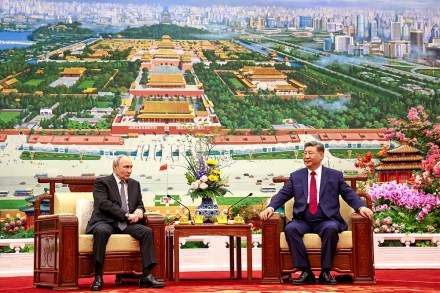
China and Russia are twins. Both are great Asian land empires; both are continental, multi-ethnic powers that expanded by pushing forward their borders rather than by crossing oceans; both have a deep tradition of autocracy that survives to this day; and both (more plausibly in China’s case) believe that their social contract, ideology and system of government is a universal one superior to all others. In Entangled Empires, the German historians Sören Urbansky and Martin Wagner explore the convoluted story of Russo-Chinese relations from the moment in the mid-17th century that roving Cossack bands bumped up against Siberian tribes who owed fealty to Beijing up to the latest performative amity between Vladimir Putin and Xi Jinping.
Bad air days: Savage Theories, by Pola Oloixarac, reviewed

From our UK edition

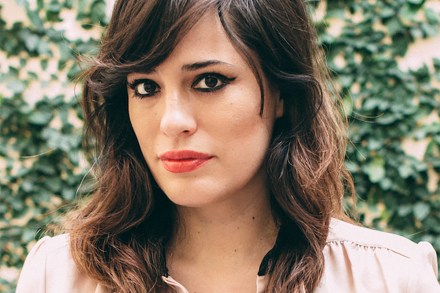
According to a 2016 report published by the World Health Organisation, Argentina is the ‘therapy capital of the world’, boasting 222 psychologists per 100,000 people. Reading the Argentine writer Pola Oloixarac’s Savage Theories, I can understand why. The novel is quick to mock the posturing of the academic world, especially in Buenos Aires The novel follows three characters, each more bizarre and beguiling than the last. First we have our narrator, Rosa. She is a philosophy student at the University of Buenos Aires who becomes obsessed with, and attempts to seduce, her elderly professor Augusto Garcia Roxler, whose ‘Theory of Egoic Transmissions’ charts man’s evolution from prey to predator.

The thoughts of Chairman Xi – in digestible form

From our UK edition

While giving a talk on China I was asked an unusual question: ‘What is the one word you would use to describe China?’ By China we mean of course the Chinese Communist party (CCP) and, more specifically, Xi Jinping. My reply was: ‘Solipsistic.’ Xi wants China to lead the world, but to take very limited responsibility for solving the world’s problems Steve Tsang and Olivia Cheung, from the School of Oriental and African Studies, have produced a study in solipsism, and a mighty fine one. Xi and the CCP are solipsistic in the vulgar rather than true philosophical sense. They are supremely self-centred in their belief that the external world should exist or conduct itself only in so far as it reflects the CCP’s reality. Understanding Xi’s political thought is vital.

What Beidaihe reveals about the changing nature of Communist leadership

From our UK edition

26 min listen

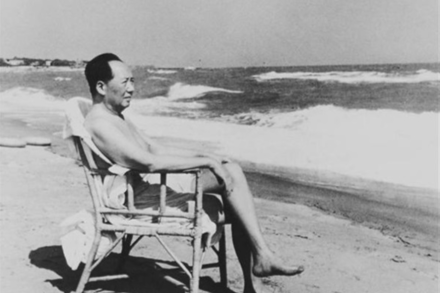
178 miles to the east of Beijing, there’s a beach resort called Beidaihe. The water is shallow and the sand is yellow and fine. Luxurious holiday villas dot the coastline. Starting from the 1950s, leaders of the Chinese Communist Party have moved their families and work to Beidaihe in the summer, making the beach resort something of a summer capital. Secrecy clouds the gatherings, and though this tradition continues, today the resort seems to serve a much more leisurely purpose when the CCP visits. On this episode, I’m joined by the historian James Carter and Bill Bishop, editor of the very popular Sinocism newsletter, to discuss where Communist leaders go, when they go on summer holiday.

Xi Jinping is acting like Stalin

From our UK edition

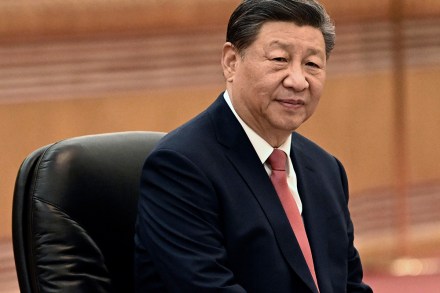
The General Secretary of China’s Communist Party is a different kind of leader. Now in his third five-year term, Xi Jinping believes that time is running out for him to secure his legacy as Mao Zedong’s true successor. He spent a decade dismantling the technocracy and politburo consensus government ushered in by Deng Xiaoping after Mao’s death, rolled back the authority of local party nomenklatura in favour of more centralised control from Beijing, and worked to subordinate China’s economy to the Communist Party’s (meaning Xi’s) political priorities. In abandoning the ‘to get rich is glorious’ social contract of the post-Tiananmen Square era, Xi has come to bury Deng and not to praise him.

Wang Huning: the man behind Xi Jinping

From our UK edition

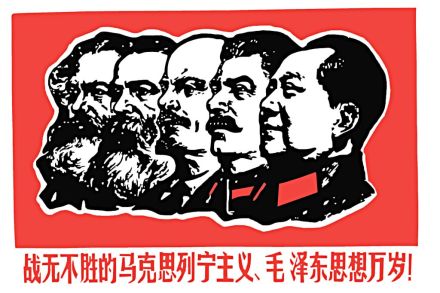
At the height of the Cultural Revolution, over a billion copies of Mao’s Little Red Book were distributed across the People’s Republic. This small pocket-sized collection of quotations provided the scaffolding for an era of communist purges. Utopians need theory. And while the Maoist orthodoxies of the last century have faded, China's need for a solid intellectual foundation is as strong as ever. Xi Jinping Thought on Socialism with Chinese Characteristics for a New Era is that new theory. But it is written not by the General Secretary himself but by an unassuming 65-year-old: his supreme theoretician. Wang Huning has quietly shaped China over the last three decades, despite the fact that few of his countrymen could pick him out of a line-up.

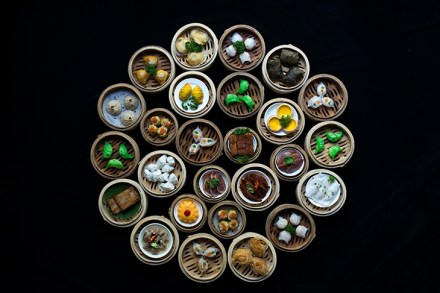
One great Chinese puzzle remains its cuisine

From our UK edition

A truth that ought to be universally acknowledged is that Chinese food, while much loved, is underappreciated. China certainly has one of the world’s most sophisticated cuisines, yet while there’s a Chinese restaurant in almost every town, there’s little dependable information about it in English aimed at the general reader. Jonathan Clements addresses this in The Emperor’s Feast, a galloping journey through thousands of years of Chinese culinary history, from origin myths through numerous dynasties, the Opium Wars and the Cultural Revolution, right up to the present day.

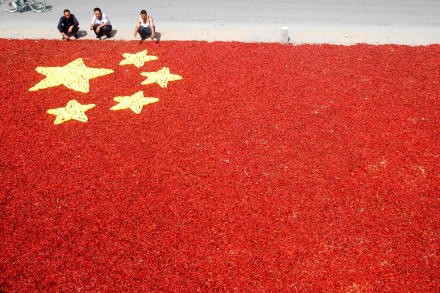
Chilli con carnage: the red hot pepper and communism

From our UK edition

These days it is as hard to imagine Sichuanese food without chillies as it is to imagine Italian food without tomatoes. Both ingredients were among the New World crops that transformed culinary cultures across the globe after Christopher Columbus’s ‘discovery’ of the Americas in 1492. The chilli first appeared in China sometime in the late 16th century. Within 50 years it was rapidly gaining popularity and by the late 19th century it was ubiquitous in many parts of the country. Brian R. Dott has scoured Chinese and other sources to find out how and why this foreign spice conquered Chinese palates. He examines the chilli’s progress in China from multiple perspectives: culinary, medical, literary, aesthetic, economic and cultural.

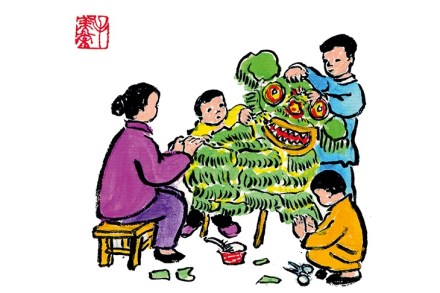
Enduring life under Chairman Mao

Rao Pingru is 94, and a born storyteller. His gripping graphic narrative weaves in and out of the violent, disruptive upheavals that marked China’s transition in the 20th century from an immemorial, apparently immutable imperial past to its current uneasy truce with the technology, morals and politics of the Western world. He was born in Nancheng, a city virtually unchanged in seven centuries since the end of the great Song dynasty. The first painting in this book shows Pingru himself as a small boy kneeling to knock his head on the floor in a traditional kowtow, performed at the foot of the man who had come to teach him to write. In ancient China, calligraphy embodied continuity, discipline, the accumulated wisdom of civilisation itself.