Cgi

SAG strike resolution: what happens next?

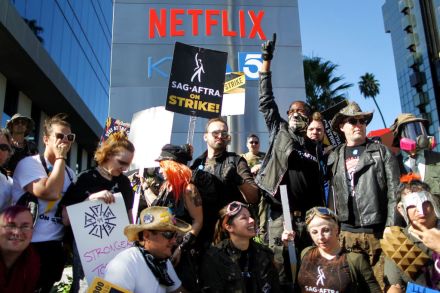
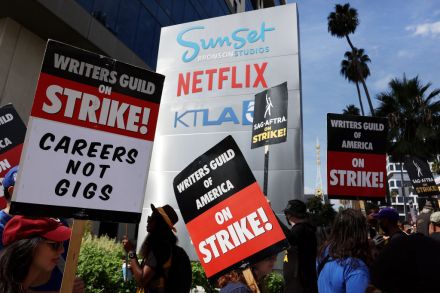
After a paralyzing 118 days, the actors’ strike is now, finally, looking like it’s over, following hard in the footsteps of the similarly resolved WGA strike a couple of weeks ago. The SAG are claiming victory over the studios, who took an exceptionally long time to ratify demands that included everything from increased fees for work appearing on streaming services, to protections regarding the use of AI, to reproduce actors’ images on screen. There were many times during the strike when it looked as if both sides were simply too far apart to achieve a resolution. In the end, money talks: the major Hollywood studios and streaming services realized that without the swift agreement they needed, there would be a drought of product in the marketplace next year, and beyond.
sag-aftra

What does the end of the WGA strike really mean?

At last, there is the Hollywood equivalent of white smoke in the Vatican. After nearly five months, the writers’ strike has at last — tentatively — been resolved, as the Writers’ Guild of America have agreed to terms with the studios, as represented by the Alliance of Motion Picture and Television Producers (AMPTP). The terms have not yet been publicly disclosed, but are said to be surprisingly generous, and favor the writers. It has been suggested that their major demands have all been met, including improved residual payments on streaming services, an increased number of writers employed on shows and, most importantly for many both financially and artistically, a curb on the way in which AI might be used to generate scripts and screenplays.

wga

The lamentable rise of VFX in horror films

The Thing is not a monster movie. Sure, John Carpenter was remaking the 1951 The Thing from Another World, itself an adaptation of the 1938 pulp-sci-fi novella Who Goes There? — but it’s not a shlocky B-movie horror. It’s too vicious, cynical and psychological for that. Rather, it’s the ultimate paranoia thriller. For the unfamiliar, the 1982 flick is about a group of researchers, stuck in an Antarctic base, who discover a strange shape-shifting alien, which consumes its victims and then mirrors their look, smell, speech and manner. They’re all marooned together, being hunted down by an unearthly terror, and any of them — friend, stranger, dog — could be it, waiting to strike.

vfx horror films

Ant-Man and the Wasp: Quantumania is Marvel losing the plot

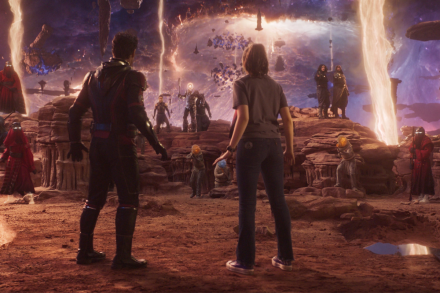
For over a decade now, every new Marvel Cinematic Universe film has promised a visual extravaganza, and Quantumania is no exception. Alas, in a franchise that has produced some genuinely emotional moments, a grand spectacle may be all it is. Following the events of 2019’s Avengers: Endgame, our eponymous shrinking hero, played by Paul Rudd, has settled into comfortable domesticity with main squeeze Hope van Dyne and teenage daughter Cassie. With the world mostly safe, his biggest problem now is keeping the idealistic Cassie out of trouble. At least, so he thinks.

ant-man quantumania marvel

Avatar 2: a three-hour-plus video game cutscene

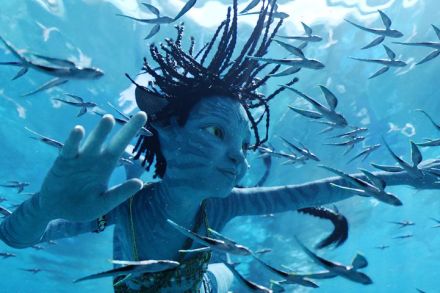
A few years ago, someone on Twitter brought up the fact that Avatar, despite being a massive hit, left little to no cultural imprint on American pop culture. I can’t speak for the rest of the world, but after December 2009, all I ever heard about the movie was that the precious material on alien planet Pandora was called “unobtanium,” and that the script was a lazy ripoff of Pocahontas. Those reviews must have been the first time I read the phrase “white savior narrative,” relatively late for a junior in high school. But beyond that, none of Avatar’s characters, story, themes, concepts or images have broken through into general consciousness. It’s the most obscure success of all time. How did a movie make so much money and leave so little behind?

Could Avatar 2 flop at the box office?

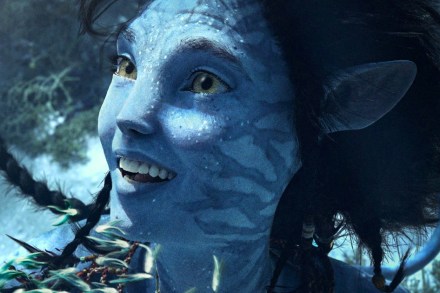
“Who asked for this?” asked the New York Times in November of the coming Avatar sequel, The Way of Water. Not me. I’m not the audience for this film. I did not contribute to Avatar's $2.92 billion global box office. I don’t, for example, post in the "Tree of Souls" forum, which has 2,093 members (a tiny number). Does Avatar have an army of fanatics waiting to be unleashed at the box office? I don't know anyone obsessed with Avatar, do you? Is it as meme-friendly as Minions: The Rise of Gru? No. Will it draw as many teens as an MCU movie? Probably not. Avatar does not have the built-in fanbase you need to carry a franchise. It requires a global audience — it needs mainstream buzz. It needs the press raving that it's a "visual masterpiece." But is that enough?

Cynical, one-dimensional and oddly colourless: Jurassic World – Fallen Kingdom reviewed

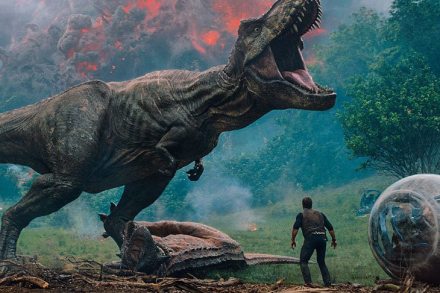
Back in the mists of prehistory, when I was eight, dinosaur films followed a set pattern. The dinosaurs themselves would be cheerfully unpalaeontological; women would wear improbable outfits; volcanoes would explode. Then, in 1993, courtesy of Steven Spielberg, came a sea-change. Jurassic Park was that cinematic rarity: a science fiction film that succeeded in influencing the science it was fictionalising. The story of a theme park populated by resurrected dinosaurs, it offered a portrayal of Mesozoic fauna that was as close to authentic as could then plausibly be achieved. For the first time, computer-generated imagery was used to portray dinosaurs as scientists had come to envisage them: agile, bird-like, smart. The impact was profound.