Catholicism

How Madonna turned pop culture Catholic

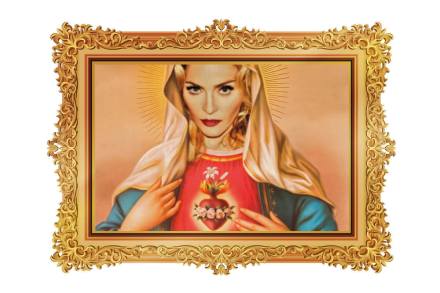
Madonna Louise Veronica Ciccone is embarking on her first greatest-hits tour, but she has forgotten why she was great. In her announcement video for the Celebration Tour, celebrating the fortieth anniversary of Madonna’s self-titled debut, the queen of pop and a random assortment of B-list celebrities — Jack Black, Amy Schumer, Diplo and Meg Stalter, to name a few — reminisced about the queen of pop fellating an Evian bottle in her documentary Truth or Dare. A few days later, Madonna introduced Sam Smith’s and Kim Petras’s striptease at the Grammys. “Are you ready for a little controversy?” Madonna screamed at the crowd, holding a dominatrix cane in the air. The audience was too bored to respond.

madonna

Umbria: Italy’s underrated gem

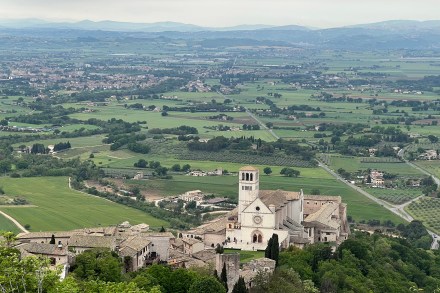
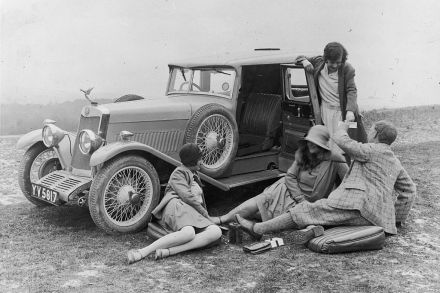
Nestled in the Apennine Mountains due east of Rome is the region of Umbria, a hidden gem at the heart of Italy. It's characterized by lush green countryside, rolling hills carpeted in olive groves and picturesque medieval hilltop towns. The region has the beauty of Tuscany but without the mobs of tourists. Its food is the best Italy has to offer — fresh, traditional, high-quality and spectacularly tasty. The senses, then, are satisfied — but Umbria also harbors a rich religious legacy. Home to some of Catholicism’s most titanic saints — Francis and Clare of Assisi and Benedict of Nursia — and dotted with ancient and medieval churches of great beauty, it's as much a pilgrim’s paradise as it is a tourist’s Italian dream.

umbria

Biden targets Catholics — again

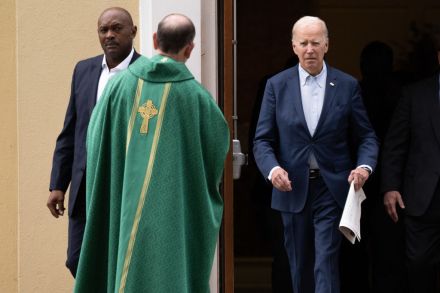
It’s been a pattern under Joe Biden’s time in executive office. As much as he has prefaced his political career in the media on his deeply held faith as a Catholic, time and again it is his administrations, as vice president and now as president, that have targeted American Catholic organizations with burdensome and often ridiculous regulatory challenges. The Little Sisters of the Poor met the ire of the Obama administration. Now Biden's Department of Health and Human Services is demanding that the largest hospital system in Oklahoma, Saint Francis Health System, literally snuff out the flame of their belief to keep their doors open. St. Francis, a nonprofit hospital system which opened in 1960 and now serves 400,000 Oklahomans every year, has chapels, you see.

The Pope’s Exorcist isn’t scary enough

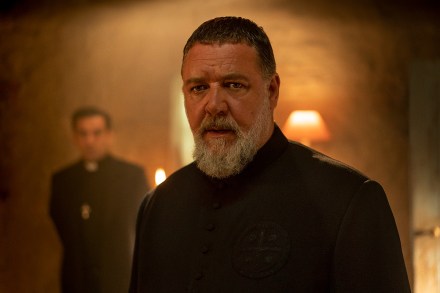
All worthwhile horror films are products of their culture. They distill its neuroses and fears, forcing protagonists to make value judgments with life-or-death stakes. And that’s why the genre continues to compel: beyond the adrenaline rush of jump scares, watching old chillers is like opening a metaphysical time capsule. They show how past generations understood their world. The exorcism subgenre tracks that pattern — only its questions tend to be explicitly religious. William Friedkin’s 1973 classic, arriving at the height of modernist theology, directly foregrounded the question of faith within a liberal world order.

Pope’s Exorcist

Ford Madox Ford and the decline of the American WASP

“I don’t know how many times in nearly forty years I have come back to this novel,” Graham Greene said of Ford Madox Ford’s The Good Soldier, published shortly after the outbreak of the First World War. The fiction of both English authors — both converts to Catholicism — share a deep cynicism towards modernity and a depiction of the English establishment as decadent and in decline. The Good Soldier, whose original title The Saddest Story was canned by the publisher because it would render the book “unsaleable” during World War I, tells the tale of two married couples, one British (British Army Captain Edward Ashburnham and his wife Leonora) and the other American (John and Florence Dowell). Both pairs are, on the face of it, young, prosperous, and happy.

Pope Benedict helped me know and love Christ

From our UK edition

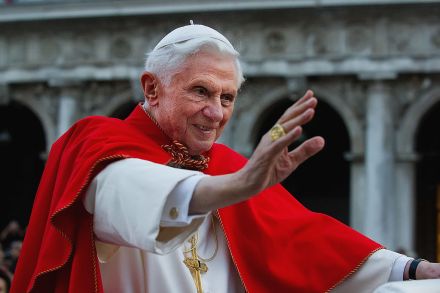
It was Benedict XVI’s election as Pope, his speeches and his writings that prompted my conversion, and it was his words at Bellahouston Park during his 2010 visit to the United Kingdom that first made me seriously consider my vocation. Without Pope Benedict XVI I would not have become a priest. His passing is for me incredibly personal, but it’s not just because of that, that I find him so incredibly difficult to sum up, it’s because whatever his detractors and admirers insist, he didn’t follow an ideology so much as a person.  ‘Being Christian is not the result of an ethical choice or a lofty idea, but the encounter with an event, a person, which gives life a new horizon and a decisive direction.

Saintly succor

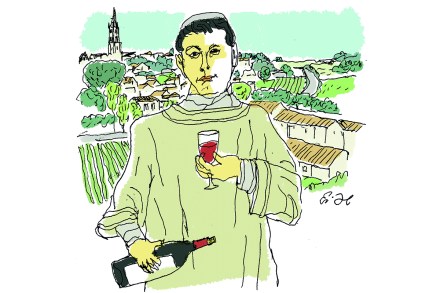
Since you’ll likely be reading this with what Wallace Stevens called “a mind of winter” (needful “to regard the frost and the boughs of the pine trees crusted with snow;... to behold the junipers shagged with ice, the spruces rough in the distant glitter of the January sun”), I thought I would provide something warming to conjure with. I am eventually going to get to one of the world’s most spectacular wines, Château Cheval Blanc, a premier grand crus classé from St. Emilion, but first let’s indulge in a bit of lore. A friend introduced me to Michael Foley’s Drinking with the Saints: The Sinner’s Guide to a Holy Happy Hour (Regnery), a Catholic-heavy but light-hearted topper’s fasti.

Émilion

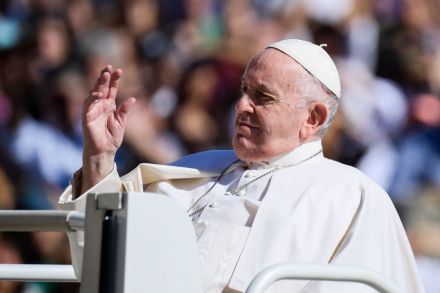
It’s time for Pope Francis to speak out against China

There is a lot to dig into amid Pope Francis’s recent interview with America magazine, but the most interesting tidbits might be his commentary on foreign affairs. Whereas the traditional head of state represents the interests of a nation, the Holy Father’s most important duty is the shepherding of the Catholic faithful. His message thus carries much weight, not because of the raw power at his disposal, but because it is backed by the moral authority of the Catholic Church. The pope has been in some hot water recently over both the war in Ukraine and the Vatican’s relations with China. Though he has long condemned the violence in Ukraine, he has not been as clear in condemning Russia and Putin specifically.

If Sister Nijole can be happy, so can you

From our UK edition

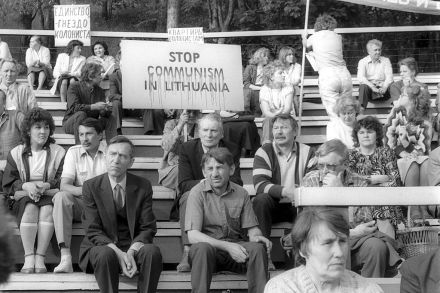
In the past five years I’ve met many people who’ve had direct, sometimes horrific, experience of communist rule. But I was more excited about doing a recent interview than I had been about any of the previous ones. It was going to be with a nun in a convent in Lithuania. I had imagined the scene: we would enter a large, gloomy, medieval stone convent. We would be cautiously admitted into a cavernous hallway and then ushered by a silent nun into a small, bare room for visitors. Then, dressed in black nun’s garb, Sister Nijolė Sadūnaitė would enter the room, head bowed, and sit in a plain wooden chair, her face lit only by a candle.

What I saw at the Restoring a Nation conference

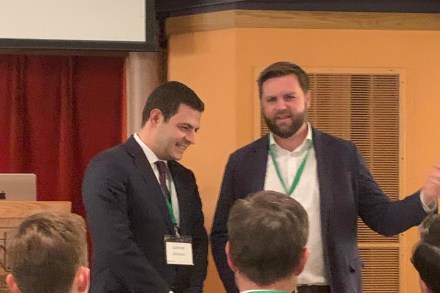
Take a drive through Steubenville, Ohio, Patrick Deneen urged the crowd at the recent Restoring a Nation conference. In downtown Steubenville, he assured us, the “blessings of liberty” are on full display. I didn’t bother making the trip. I know what those blessings are. We have the same ones where I grew up, in Beaver Falls, Pennsylvania, less than an hour away: a population that’s dropped 50 percent since 1940, record fentanyl overdoses, crippling brain drain, hulking husks of abandoned steel mills, empty storefronts on main street, the steady decay of once-beautiful public spaces and everywhere the poisonous fallout of family breakdown. The people I grew up with are dying — and the best the libertarians can offer them is a U-Haul.

LGBT activists gather outside the Stonewall Inn (Photo by Spencer Platt/Getty Images)

Investigation: Catholic medical school pushes hormone therapy for minors

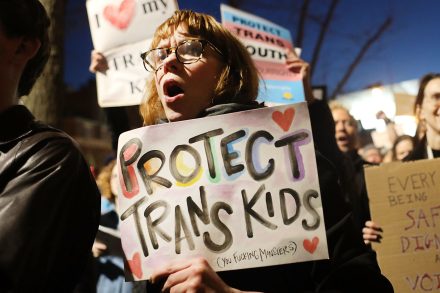
Georgetown University's School of Medicine is teaching its students to administer puberty blockers and hormone therapy to minors, an investigation by The Spectator reveals. Medical students were told in a 2021 pre-clinical course that the "only way to help" many transgender people is to "'fix' their bodies" through medical intervention. The course also falsely claimed that puberty blockers are "fully reversible." Georgetown University did not return a request for comment. First year medical students at Georgetown are required to take a course on Human Sexuality, which is part of a foundational block on the reproductive system. In an iteration of this course last year, students were greeted with a guest lecture on "Transgender Health Care" by Dr. David S. Reitman.

Why has Oxford killed off a much-loved Catholic college?

From our UK edition

Few institutions can match the global prestige of Oxford University. Just look at the gifts lavished on it, like offerings brought to some mighty emperor of the ancient world. There’s the Saïd Business School, controversially funded with £50 million from Wafic Saïd, who helped to broker the British-Saudi arms deal. There’s the carbuncular Blavatnik School of Government, criticised by Russian dissidents for how the funder made his millions. There’s the new student housing at St Peter’s College, partly paid for with a donation whose original source was the mid-20th-century fascist demagogue Oswald Mosley. Yes, people do sometimes ask whether there’s any cash the university won’t accept. And now they have an answer.

What is Pope Francis up to?

From our UK edition

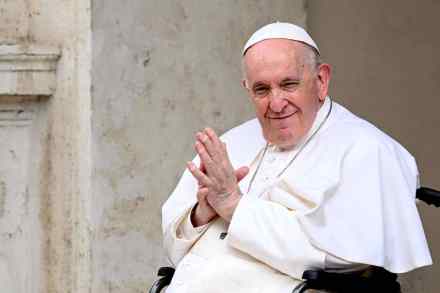
If you think your diary looks busy over the next few days, spare a thought for Pope Francis. The 85-year-old, who was confined to a wheelchair for several months this year, is preparing for a big weekend. He will be spending it in the company of the world’s cardinals – the red-clad figures who are supposed to be his closest advisers but seldom meet en masse in Rome these days. Now the pope has finally decided to gather them together – in the Eternal City’s unforgiving August heat. The pope will be adding to the cardinals’ number today. Tomorrow, he will be dashing off to L’Aquila, the Italian city that boasts the tomb of Pope Celestine V, who resigned in 1294.

Rocked by rebellion: the short, unhappy reign of Edward VI

From our UK edition

As Tory writers reflected on the safe passage of the Stuart dynasty through the Exclusion Crisis of 1679-81, an anonymous author urged contemporaries to learn the lessons of English history. The Rebels Doom (1684) offered some thumbnail sketches of various unsuccessful rebellions and attempted revolutions that had threatened the monarchy since the reign of Edward the Confessor, in order to show ‘the Fatal Consequences that have always attended ... Disloyal Violations of Allegiance’. The writer paused especially over one Tudor insurrection from 1549, in which 10,000 rebels from Devon and Cornwall took up arms against the administration of Edward VI and besieged the city of Exeter, but were ultimately crushed by forces led by Lord John Russell.

Why was Henrietta Maria, Charles I’s beautiful wife, so reviled?

From our UK edition

On 15 June 1645, as Thomas Fairfax’s soldiers picked over the scattered debris on the Naseby battlefield, they made a sensational discovery. Amid the corpses and musket balls, dismembered limbs and severed swords there nestled a carrying case of personal letters and papers. It was nothing less than the king’s private correspondence. The cache included letters between Charles I and his queen, Henrietta Maria – his always opened ‘My deare harte’ – which discussed in detail the tactics and strategies of the war. Never ones to miss a PR opportunity, the Parliamentary high command ordered that a selection should be published with a guiding commentary.

Three men on a pilgrimage: Haven, by Emma Donoghue, reviewed

From our UK edition

I used to envy Catholic novelists – Graham Greene, Muriel Spark, François Mauriac – as having that extra point of view, namely eternity. The Irish-Canadian novelist Emma Donoghue doesn’t entirely qualify as a Catholic writer, even though she’s on record as saying she’s currently obsessed with Catholic theology, specifically Purgatory, but there’s a thread of Catholicism (particularly the Irish variety) in many of her books. Also, it has to be said that she’s frightfully good at suffering and endurance. I thought this when reading her 2020 novel The Pull of the Stars, set in the 1918 flu epidemic, and Haven is no exception. This must surely be her most Catholic novel.

An intimate, lucid and unforgettable new James MacMillan work

From our UK edition

On Tuesday night I was at the world première of a motet by Sir James MacMillan and I don’t think I’ve ever heard a more haunting piece of music. It begins in half-light, with pinpricks from the organ so widely spaced that you could be listening to a forbidding tone row from the Second Viennese School. A four-part choir enters in close harmony and you realise that those apparently unrelated notes hint at austerely beautiful chords encircling the melody. In Carmel’s Shade is one of the smallest but brightest jewels in the MacMillan collection There are moments when we could be listening to Palestrina, to César Franck, to Benjamin Britten – a reminder that MacMillan is fluent in more musical languages than most living composers.

Why does Nancy Pelosi want communion anyway?

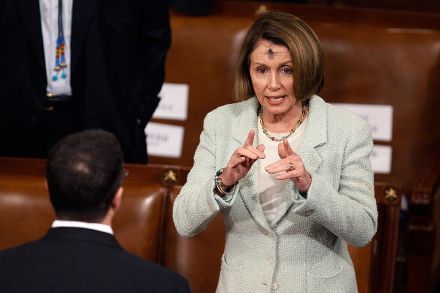
San Francisco Archbishop Salvatore Cordileone’s recent announcement that Nancy Pelosi has been barred from receiving communion brought fresh to Cockburn’s mind a memory he has of once having accidentally attended church with the Speaker of the House (and lived to tell about it). Sometimes alcohol can stir in one a devotional feeling, and so it was that Cockburn found himself at Mass one day at Holy Trinity Catholic Church in Georgetown, seated a few rows behind Pelosi. When the time came, Cockburn refrained from receiving communion, but wondered as he watched Pelosi head toward the altar whether anyone should tackle her to the ground to prevent the sacrilege.

Fresh air and fascism in the Bavarian Alps

From our UK edition

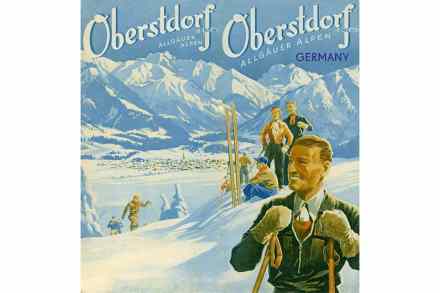
The village of Oberstdorf lies in the Bavarian Alps, geographically remote but, as this gripping book demonstrates, deeply etched by the politics and violence of the Third Reich. Julia Boyd and Angelika Patel have used diaries, letters, newspaper reports and the official papers of Oberstdorfers as a lens through which to look at the rise of Nazism in Germany. The result is a fascinating and often surprisingly discordant cacophony of experiences. Oberstdorf was a small village but it had a wide range. By the early 1920s it was a favoured tourist spot: its population of 4,000 was swelled to 9,000 by visitors who came for health cures and winter sports. There were several hotels, a cable car, a cinema and a sanatorium.

Friend of Elizabethan exiles: the colourful life of Jane Dormer

From our UK edition

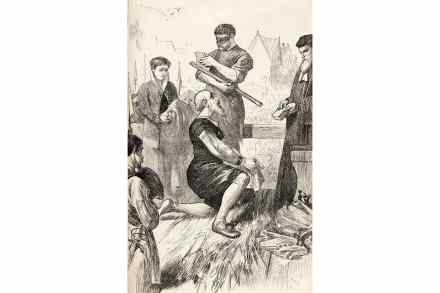
Thomas Cromwell’s biographer Diarmaid MacCulloch once told me that my father’s family, the Dormers, had been servants of the great enforcer of Henry VIII’s Reformation. This may have been a tease. It is a matter of family pride that Jane Dormer’s great- uncle, the Carthusian monk Sebastian Newdigate, was executed for refusing to accept the Royal Supremacy. Jane, Duchess of Feria (1538-1612), was named after his pious sister, her grandmother. Most of Jane Newdigate’s Dormer descendants remained stubbornly Catholic over the centuries of persecution that followed, but they were never aggressive about it.