Cars

In a fearful world, the Volvo makes me feel safe

From our UK edition

There is a World of Volvo museum in Sweden which I long to see. It was made by the architect Henning Larsen, which makes me laugh because I have been pretending to be a Scandinavian architect driving an XC90 all week long. This columnist does not know who she is, which is a good thing because the car can show me. There is an urban myth that you cannot actually die in a Volvo, even of old age or hemlock World of Volvo’s interior is that of a whale but wooden, as if made for some red-headed Jonah who is into automobile safety. Still, the world can always surprise you. I did not know until I studied World of Volvo that there was once a genuinely hot Volvo: the P1800, which looks like it was made by Alfa Romeo in 1965, though it was initially built in West Bromwich.

Does a dog-friendly car exist?

From our UK edition

The valet parking man at Gatwick climbed out of my car with an expression that suggested he’d just driven a Panzer at the Russian border as opposed to bringing a very underpowered VW Polo around from the car park. ‘Madam,’ he began, unsteadily. ‘I need to have a word with you about the state of your car.’ I apologised. My Polo is an abysmal state. Empty coffee cups, paper napkins, crinkled bags that once contained sandwiches or doughnuts, plastic water bottles, 58 hair ties, decaying dog biscuits and poo bags (albeit unused) all litter the floor. It’s also disgracefully muddy because Dennis doesn’t go in the boot. He either sits beside me in the front, or lies along the back seat as if I am his chauffeur and he is a debutante who’s overdone it at The 400.

Driverless cars must learn to drive like Brits

From our UK edition

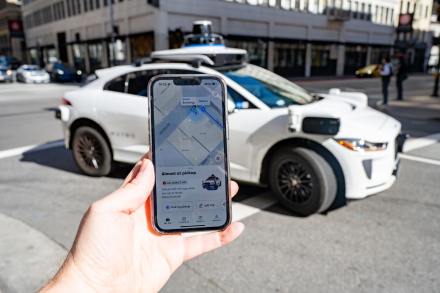
I’ve ridden in Waymo driverless taxis in both Miami and Austin and it is, as you would expect, a slightly surreal experience. When an empty vehicle turns up, displays your glowing initials on the roof, then invites you to unlock the doors via your phone, you feel as if you’re in a science-fiction film. Once you drive off, it feels doubly weird. Yet what’s most surprising is how quickly it ceases to feel strange. After three minutes, you pay scarcely more attention to the progress of the vehicle than you would when riding in a car driven by any competent human driver. A colleague of mine who has used Waymo on faster roads tells me you experience another burst of unease when the car first hits 50mph, but this, too, rapidly dissipates.

The Grand Tour is the perfect TV to pass out to

From our UK edition

The Grand Tour – aka Amazon does Top Gear – is back with a new trio of presenters. Whether you care will largely depend on your general attitude to television. If you think its purpose is to push boundaries, entertain, inform and edify, you may as well stop reading now. If, on the other hand, you treat TV like soma, then the lightly revamped show is probably worth your consideration. I’m in the soma category. The only job of TV, as far as I’m concerned, is to relieve me of having to make conversation with the Fawn while I’m having my supper, and then to distract me long enough for me to be able to half-digest my food so that I’m ready to have my bath and go to bed.

‘An Essex boy at heart’: VW Golf GTI reviewed

From our UK edition

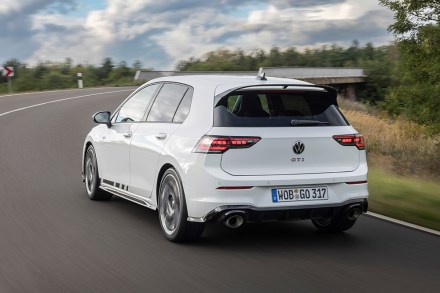
I have been waiting for the VW Golf GTI, because the boy – it would be a stretch to call him a man – I liked in 1991 had one. He used to drive me round Regent’s Park in his Golf GTI, and although he went to St Paul’s Boys School and was a religious Jew, I thought this made him seem dangerous. I knew nothing. Behind the ambivalent smile his secret was this: he really cared about maths. My sister has a Golf now. The Golf is the bestselling European car of all time. Globally, only the Toyota Corolla (compact) and the Ford F-Series (truck) beat it: 37 million Golfs have been sold since 1974, which is the equivalent of every single person in Poland owning one, including the babies. It’s 52, as I am: the defining car of Generation X’s good fortune and hope.

I want to be a good father – like Machiavelli

Dante’s Beach, Ravenna When Machiavelli was tortured, then banished from Florence in 1513 to his modest farm in the Tuscan countryside, in the afternoons he used to “sink into vulgarity,” as he put it, and play cards and backgammon with the local men in the tavern next to his small house.

A BMW has no soul – but does that matter?

From our UK edition

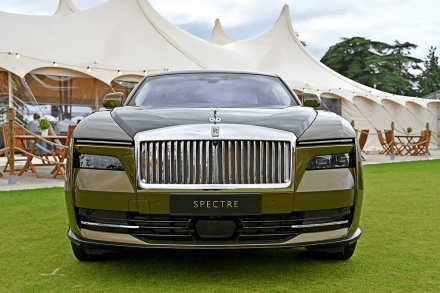
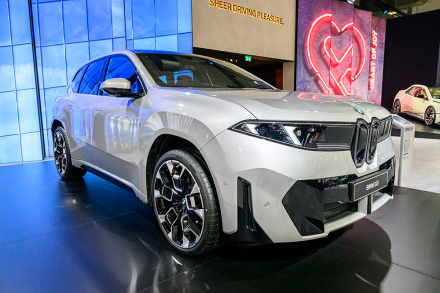
It’s the way of good cars that, on driving one, you begin to embody it: to become it. In a hot hatch I am young and lovely and never was a nerd. (I will get to the platonic ideal of the nerd’s car. I fear it is a Honda Jazz.) In a Rolls-Royce I am laconic unless I am driving, in which case I am a wreck. In an electric BMW (Bayerische Motoren Werke) iX3 I am functional, the woman I never was. I own my own company, though I don’t know what it does. I am not fat, I am not weird and I am ‘good at men’, whatever that means. You might laugh at BMW for its solemnity and self-possession – for its very Germanness – but your laughter is hollow. Britain, increasingly a country of cracked and self-destructive romantics, has no such functional marque and has never sought one.

Has the Ford Capri gone woke?

From our UK edition

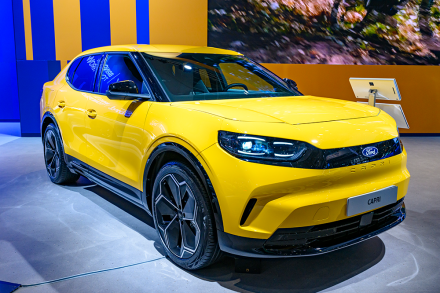
The Ford Capri is a paradigm of self-deception, but cars are men’s mirrors, and they want to be deceived by them. Thanks to The Professionals (1977-83), in which Bodie and Doyle of Criminal Intelligence drove a silver Capri and a gold Capri, almost two million were sold. Even the police used them, which is absurd. They only had two doors. Even so, I’d like to see a villain stuffed into a fastback coupé, ideally through the window. I like the old Capri because there was something jaded and stubborn about it: a weary postwar British sex appeal. It was our version of the Ford Mustang, produced from 1969 to 1986.

AI’s come for our carmakers

From our UK edition

During the first half of this year, Chinese carmakers achieved a feat of hyper-production that sounds less like industrial manufacturing and more like a plague of locusts. In just six months, they unveiled 650 new models – an average of four brand-new cars every day. At the same time, on the other side of the Pacific, Elon Musk abandoned Tesla’s car assembly lines. He retooled the entire factory to mass-produce the Optimus humanoid robot. What on earth is happening to the world’s car industry? These two bizarre developments seem to signal the end of the global automotive industry as we know it. The age of spanner-wielding, oily-fingered car worker emerging from under a jacked-up rolling chassis appears to have been vaporised.

There is no car more beautiful than an Aston Martin

From our UK edition

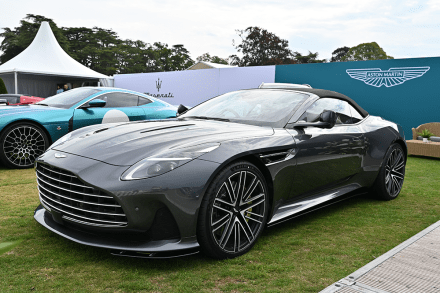
The oddities at the Penzance Rotary Club Classic Car & Bike Show included a golden thing that looked like the affair baby of an Alfa Romeo roadster and a Silver Ghost; a three-wheel Messerschmitt Cabin Scooter with the nerve to call itself a cabriolet and a picnic basket on the back, presumably for your body parts after it kills you. But the most beautiful car was the Aston Martin: a Vantage sports car. It is always an Aston Martin unless an understated Ferrari is lurking. Then it is still, probably, an Aston Martin. The time when a 1960 Alfa Romeo Giulietta was normal has gone, along with the optimism that made it The Vantage is as gorgeous as the new Aston Martin DB12 S, which I drove in France in May.

Meet the man road-tripping across America in a giant pear

Inflation drives us to think ahead: plan out grocery trips, buy in bulk, carpool. One young man had an unorthodox way of funding his summer road-trip across America as gas got more expensive: he constructed a life-size pear on his moped.  Twenty-four-year-old Andrew Glubbey has 19,000 followers on his Instagram account, @glubbey. His profile has grown since the start of the road trip as he adventures in his self-built pear car from Florida to Washington State.  “I've talked to a lot of people that are like, ‘I could never do that or I would never do that with that kind of thing’,” Glubbey tells me.

pear

Britain is broken but the parking tickets keep coming

From our UK edition

I live on a road where parking is forbidden. This has not stopped any of us from needing cars. Instead, we crowd each evening into the small cul-de-sac opposite, where ten vehicles can park legally, and 15 can park optimistically. The sign is unambiguous: ‘Three hours. No return within two.’  Most days I manage to comply. Some days I even set an alarm. The cruelty is that nothing happens for ages. Weeks pass. Months. You begin to suspect you have cracked the system or even that the sign is entirely ornamental, the sort of bluff recognisable to anyone familiar with the steady arrival of ‘Final’ notices.  Then, without warning, that little yellow envelope appears on your windscreen. The wardens have descended like a pack of seagulls on an unattended tray of chips.

Blame the EU for your increasingly bossy car

From our UK edition

When Eileen, a 75-year-old British grandmother, bought a brand-new car she found its advanced driver-assistance repeatedly told her the speed limit in a 30mph zone was 80mph and then kept jerking the steering wheel to ‘correct’ her, even when she was trying to park. She told Which? that driving had gone ‘from a lifeline to a nightmare’. ‘I’ve seriously considered getting some old, beat-up car from five years ago that doesn’t have this technology,’ she said. Car safety features are boring and intrusive, like having a man with a clipboard and lanyard permanently in your backseat. Indeed, the Which? survey of more than 1,500 motorists found we are increasingly switching off all that ‘safety’ tech because it’s actually dangerous, distracting or useless.

How I drove away the Range Rover bullies

From our UK edition

A few weeks ago, I was driving four of my children to school in my tinny, battered Toyota. We were running late – as per usual – and were speeding – or, rather, chuntering – down a particularly treacherous road. Of all the questionable surfaces in my area of rural Essex, this one is notorious: marked by a huge pothole the size of Snoopy the dog’s head, which bleeds into a smaller, gloopier crater. As I was trying to navigate it, however, a large shadow zoomed into sight in my rear-view mirror. With a jolt and a tremendous bang, it pushed me, my family and my poor, beaten-up Toyota into the crater. Who would be so sadistic as to do such a thing, you may wonder? Was it a vengeful ex? A drunk driver? Another parent running late and pushed from road rage to road insanity?

All hail the driverless taxi

From our UK edition

No one is quite sure who invented the phrase ‘the shock of the new’. It may have been the American writer Harold Rosenberg back in the 1960s. Alternatively, it may have been the late, great Australian intellectual Robert Hughes, who used it as a title for a TV series. Whatever the answer, the phrase aptly captures a very human moment: when you encounter something so strangely and profoundly innovative you experience a visceral, emotional jolt. Those two thinkers applied the phrase to modern art, to the first jarring encounter with impressionism, Cubism, abstract expressionism. But it can also be applied, perhaps more appositely, to the first encounter with remarkable technology. Technology, in the famous vision of Arthur C.

Driving an automatic car is cheating

From our UK edition

Most of the time cheating is frowned upon, but a quarter of all driving tests in Britain are now taken in automatic cars and apparently that’s fine. The trend is only set to continue, too, as more and more people pretend to care about the environment to take advantage of this loophole and obtain a driving licence without the slightest concept of clutch control. It’s absolutely outrageous, not to mention completely unfair. I spent hundreds of pounds being taught to drive properly, in a manual, only passing on my second attempt, because mastering a gearstick is hard. Copping out and taking your test in a glorified fairground dodgem isn’t just shameful, it’s basically fraud. No matter what it says on your certificate, you can’t drive, you can just steer and brake.

Britain is hooked on car finance

From our UK edition

It’s unnerving to think how close Britain came to financial disaster last Friday, ahead of a Supreme Court ruling on – of all things – car financing. In October, the Court of Appeal found that motor finance firms could be liable for hidden commission payments to car dealers. If the Supreme Court had agreed, the biggest lenders, including Lloyds Banking Group, Santander, Barclays and Close Brothers, would have been on the hook for some £44 billion, with Lloyds already putting aside £1.15 billion for compensation payments and Close Brothers selling off its asset management arm this year.

Why driving at 80mph won’t save you time

From our UK edition

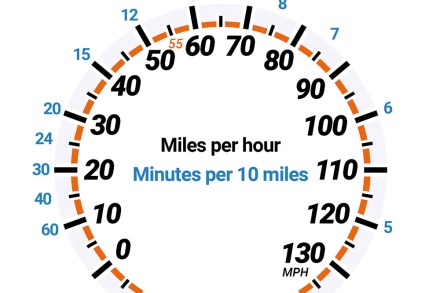
The device you see on this page is called a ‘paceometer’ and was devised by behavioural scientists Eyal Peer and Eyal Gamliel. It features in their scientific paper ‘Pace yourself: Improving time-saving judgments when increasing activity speed’. Study it carefully, because as many people have confirmed to me, it will ‘change the way you drive forever’. Nassim Taleb described it as ‘mathematically trivial, but completely counterintuitive’. The inner digits show speed in the conventional way: in this case miles per hour. In other words, how far you travel at some velocity in a given time. The small digits around the outside are the paceometer: they show the same information but expressed the other way around.

Hell is a speed awareness course

From our UK edition

The builder boyfriend sat nervously in front of my laptop as I logged him in to do his speed awareness course. I sat him at the kitchen table, I clicked the link the speed course people sent him and then, as we waited for them to admit him, I began my pep talk: ‘Do not say anything political. Do not joke. Joking is the worst thing you could possibly do.’ I had already decided this was going to end badly. How could the builder boyfriend button his lip long enough to get through a three-hour online speed awareness course – the result of a trip to the UK to do a roofing job – without being reported to the police for coming out with something you are not allowed to say any more?

The lost art of getting lost

From our UK edition

One of the quietly profound pleasures of travel is renting cars in ‘unusual’ locations. I’ve done it in Azerbaijan, Colombia, Syria and Peru (of which more later). I’ve done it in Yerevan airport, Armenia, where the car-rental guy was so amazed that someone wanted to hire a car to ‘drive around Armenia’ that he apparently thought I was insane. Later, having endured the roads of Armenia, I saw his point – though the road trip itself was a blast. Recently I rented a motor in Almaty, Kazakhstan, where they were slightly less surprised than the Armenian had been, but nonetheless gave me lots of warnings and instructions, chief of which was: ‘Don’t rely on Google Maps, it doesn’t work out here.