Cannabis

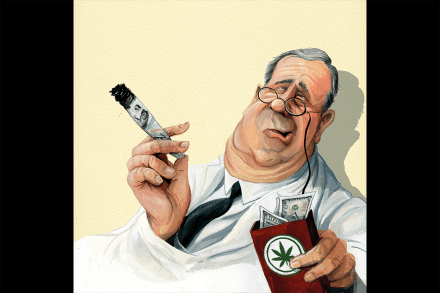
Marijuana legalization has been a disaster

On the day the Marihuana Regulation & Taxation Act (MRTA) was signed into law in 2021, the man who was to become mayor of New York City, Zohran Mamdani, made the following statement: “I’m proud to be here today to debate the adult use of marijuana – also known as loud, Sour D, herb, Mary Jane, kush, green, pot, weed, zaza, a jazz cigarette and marijuana. In the course of this debate I’ve heard many of our colleagues from across the aisle discuss that smoking or ingesting marijuana is an indication of lawlessness and a deteriorating quality of life, makes one lazy and a burden to society, serves as a gateway drug.
marijuana

Letters: The case for decriminalising cannabis

From our UK edition

Back to reality Sir: The harms caused by cannabis are not a result of a failure to police it properly (‘Stench of failure’, 8 November). They are primarily because the distribution of it is controlled by criminals rather than corporations. Criminal gangs maximise their profits by pushing more addictive forms of drugs, and their activity wreaks misery on their families and communities. Psychosis is only associated with skunk, which is a more addictive form of cannabis, high in THC relative to CBD. Smokers of this are estimated to be 2.6 times more likely to have psychotic-like experiences than non-smokers. Herbal cannabis is not associated with psychosis; in fact, the high levels of CBD in it have some therapeutic and even antipsychotic benefits.

Stench of failure: Britain’s shameful surrender in the war on drugs

From our UK edition

The New York senator Daniel Patrick Moynihan was that rare figure in politics – a progressive who followed the facts. The contrast between his grown-up moral clarity and the adolescent ideological posturing of New York City’s latest Democrat darling, Zohran Mamdani, could not be starker. Moynihan was a welfare reformer who knew that incentivising work, not subsidising idleness, was the route out of poverty. He was a resolute supporter of Israel, the Middle East’s only democracy, backing the victims of two millennia of prejudice against terrorists and tyrants. By way of contrast, Mamdani demonises that state as a proxy for what he considers the wider western sins of colonialism and exploitation. It was on crime, above all, that Moynihan showed courage.

The inconvenient truth about cannabis and mental illness

From our UK edition

Mash’s older brother was the same age as Anthony Williams when he slaughtered a stranger in a brutal and random attack. He was in the grip of a psychotic disorder caused by cannabis. We do not yet know what drove Williams, a 32-year-old African Caribbean man, to allegedly try to murder ten people during a 14-minute knife rampage on a train. But Mash is in no doubt cannabis often plays a part in attacks like these. ‘In my community smoking weed is normalised,’ he says. ‘We laugh and joke about hearing voices or having a “para” [a paranoid fit].’ He counts on his fingers: ‘Two brothers, two cousins and multiple friends’ who have experienced hallucinations and delusions. He shakes his head sadly. ‘Weed is killing my people.

Why weed is the most dangerous drug in America

Weed is the most dangerous drug in America. The main reason for this is the fact that most people don’t think it is. In fact, they typically think just the opposite. They believe not only that pot is safe, but also that it has true medicinal qualities. Little do they know that those benefits are barely worth the paper you wrap your joint in. Marijuana is most commonly touted as a balm for anxiety. But it may actually increase anxiety to the point of psychosis – especially for those with underlying psychiatric conditions. Combine it with a diet of daily intake of violent video games and social media – as did Joshua Jahn, the man who shot three victims at a Dallas ICE facility – and you’ve got all the makings of an unstable American.

weed

Should cannabis be decriminalised?

From our UK edition

21 min listen

London Mayor Sir Sadiq Khan has called for possession of small amounts of cannabis to be decriminalised following a report by the London Drugs Commission. The report has made 42 recommendations, which include removing natural cannabis from the Misuse of Drugs Act. Former cabinet minister, now Labour peer, Charlie Falconer and Tory MP Dr Neil Shastri-Hurst join Lucy Dunn to discuss whether now is the time to decriminalise cannabis. For Lord Falconer, who chaired the Commission, the present law doesn’t work and he explains the principles behind the review; Neil, however, believes that the proposals send the wrong message that cannabis is harmless.

Place your bets: what drugs is Biden on?

Who has a better chance of passing a drug test, Joe Biden or Hunter? At this point, Cockburn thinks it's probably a coin toss. What he’d rather know is what the president is doped up on in his more energetic moments. Thanks to an online betting platform, voters can now gamble on which drug they think Biden is using.   “BetOnline.ag, which infamously set odds on who the White House cocaine belonged to, has created a wagering market for which drug Biden will test positive for,” Josh Barton, a BetOnline rep, told Cockburn. So far, the odds favor amphetamine followed by methamphetamine. Bettors think Biden is poppin' more Adderall than a college student during finals week.

drugs joe biden

It took moving to Ireland to escape from the EU’s rules

From our UK edition

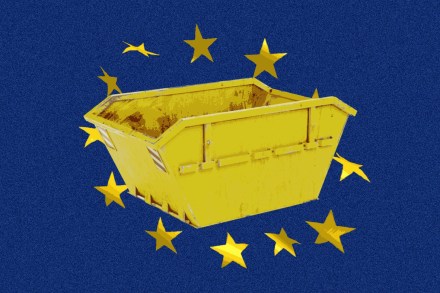
The skip man laughed as he took pity on me, the daft English blow-in who was taking the EU rules on rubbish disposal literally. ‘You put so much concrete in that skip that if I weighed it in properly it would cost you a thousand euros,’ he said. I told him I really didn’t mind paying the going rate. He said he wouldn’t hear of it. ‘If you’ve got land you can always get rid of concrete blocks by filling holes with them,’ he said. ‘Don’t be putting concrete into skips.’ We ordered a skip and the company boss was appalled that we put lots of stuff in it we could have fly-tipped The builder boyfriend, hard at work clearing the farmyard and barns, was aghast as I trotted outside to tell him his rookie mistake. ‘I don’t want to fly-tip on my own land!

Snoop Dogg really quitting weed would be a huge public service

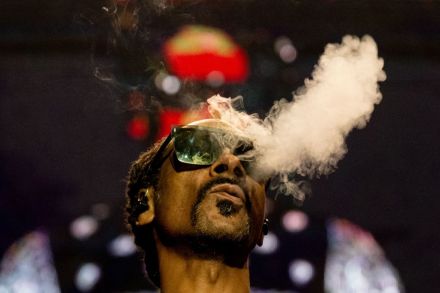
My phone screamed on the bedside table at 4:30 a.m. I’d been playing poker at a home game in Culver City until late in the night, so I didn’t answer, and I also didn’t answer the other six times it rang in the next two hours. When I finally woke up, I had a text from the “BBC OS” asking if I could talk. “What is the BBC OS?” I wondered. Then I realized it was the actual BBC’s Overnight Service. Still, why were they calling me at dawn? And then when I went online, I realized they wanted to know my thoughts about the fact that Snoop Dogg had announced, on his Instagram, that he, “after much consideration and conversation with my family ... decided to give up smoke.” He accompanied this announcement with a photo of himself, hands in prayer, looking quite plaintive.

Letters: The case for legalising cannabis

From our UK edition

Paying the price Sir: Lionel Shriver’s piece about university standards rang true to me (‘University is supposed to be hard’, 15 October). When I, then working for a distinctly moth-eaten British university, visited a very famous private college in Massachusetts in 1985, I expressed my envy of his luxurious surroundings to a professor of English. His reply was: ‘Don’t envy us. You have something we don’t have. It’s called standards.

Tragedy strikes: Americans are smoking more weed than tobacco

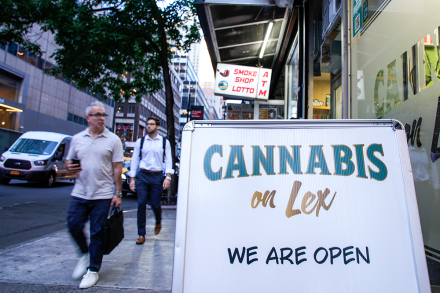
An unfortunate milestone has been passed in the United States as it is reported that for the first time ever there are more marijuana smokers than cigarette smokers in our once great nation. To put it bluntly, so to speak, this societal transformation has taken iconic American glamor, the Marlboro Man, Humphrey Bogart, Lauren Bacall, and replaced it with Cheech, Chong and Otto the school bus driver from The Simpsons. Here in New York City, where once men in suits and hats and square dames in heels hustled, cigarette betwixt fingers, plowing ahead to the future, it now just smells like weed. Everywhere. Rockefeller Center? Smells like weed. Subway stations? Smell like weed. Washington Square Park? Well, OK, Washington Square Park always smelled like weed. But you get the point.

My brief career as a marijuana farmer

From our UK edition

The latest heatwave reminded me of my brief career as a marijuana farmer. This wasn’t in the summer of 1976, when I was 13, but three years later, by which time my family had moved to Devon. My father had been commissioned to write the biography of Leonard and Dorothy Elmhirst, the founders of Dartington Hall, a utopian community in South Devon, and wanted to be nearer the archives and the couples’ friends and colleagues whom he was planning to interview. Having been brought up in London, I was terrifically snobbish about how behind the times the local teenagers were – still wearing flares and listening to Status Quo, gawd help them! But at least the house we’d bought came with a tiny bit of land. That meant I could cultivate my own cannabis plantation.

Don’t blame America for Brittney Griner’s fate

I sympathize with Brittney Griner. The WNBA star currently detained in Russia is arguably the face of her sport. This week Griner pleaded guilty in court to possession of hash oil upon her entry to Russia. She has been detained for several weeks now; her and her family have made several pleas to the Biden administration to step in and free her, which they should — without giving up notorious Russian arms dealers or criminals. (President Biden, meanwhile, has been remarkably lenient towards the Russian nationals who use illicit substances with his son — but that's a tale for another time.) The conflict in Ukraine and the Biden administration’s proxy war against Russia complicates this matter further — once again, Biden and his State Department find themselves in a jam.

brittney griner

Too close to home: Nonfiction, by Julie Myerson, reviewed

From our UK edition

Julie Myerson has, somewhat confusingly, written a novel called Nonfiction. The confusion of course is the point, because this is her squarest attempt so far at auto-biographical fiction. The French author Serge Doubrovsky is widely credited with writing the first ‘autofiction’ when he published Fils in 1977. Autobiographical novels have proliferated ever since, notably by Karl Ove Knausgaard, Rachel Cusk and Edward St Aubyn. Hari Kunzru, when asked to discuss similarities between himself and his protagonist in Red Pill (2020), said: ‘It was just the simplest solution to a set of problems to give him the furniture of my biography.’ Myerson’s narrator is a novelist whose father dies by suicide and who has a child with a drugs problem.

The debt I owe to cannabis

From our UK edition

Boris Johnson, Dominic Raab and Jeremy Hunt have all admitted that they tried cannabis as young adults. Neither the admission nor the THC psychoactive component of the drug, which makes you high, seem to have done them much harm in their pathways to successful careers in parliament. But a new governmental war on drugs is afoot which some fear may lead to unexpected consequences, and not just for those who ply their trade on street corners or draw up on Deliveroo-type scooters to supply cannabis as if it were a takeaway curry. I wouldn’t bet on everyone getting caught up in judicial dragnets, though; I imagine that middle-class consumers will still largely avoid censure and that the police and the Crown Prosecution Services will continue to target working-class suppliers.

Our mental health is going up in smoke

From our UK edition

As we creep back into the open, as the Covid wards empty and the mental health clinics fill up, how are we going to tell what’s driven people crazy: lockdown, or what seems to have been a favourite lockdown hobby — smoking weed? Last week Sadiq Khan, London’s goblin mayor, announced that if re-elected he’ll set up a commission to look into the case for decriminalising cannabis. It’s not in Khan’s gift to decriminalise anything — Downing Street has already issued a response which amounted to: ‘Decriminalise dope? You must be high.’ But Khan doesn’t care. This isn’t about the policy, it’s about the posturing.

Sadiq Khan’s cannabis stunt is typical of his empty gesture politics

From our UK edition

Sadiq Khan's decision to launch a commission looking into decriminalising cannabis is a perfect advert for his time as London mayor. It shows all too clearly that Khan values empty gesture politics over getting on with his day job. Don't get me wrong: legalising cannabis seems a smart idea. It is, after all, a waste of police time and effort stopping the trade of drugs which are widely used and cause comparatively limited harm. But is it any of Khan's business to focus on this issue? 'It’s time for fresh ideas to reduce the harms drugs and drug-related crimes cause to individuals, families and communities,' said Khan this week.

More drugs!

In rural upstate New York, where I grew up, pot-smoking was disproportionately a sport of farmers’ kids. That’s because inequitable ownership of land meant that some people could grow weed more discreetly than others. Among those with acres to till, private oases of marijuana were easily created by their offspring out of sight — especially, I recall, in between tall rows of feed corn. And with easier access to the drug, the sons and daughters of farmers also seemed to smoke more of it than the kids who were forced to rely on retail. This brings us to a paradox that, while not exactly one of Zeno’s, amounted to my earliest intuition of a chicken-and-egg problem.

drugs

Big Dope

Young people are now more likely to consume marijuana than to smoke tobacco. The social acceptance of tobacco is falling, just as the popularity of weed is getting higher. A 2019 Gallup poll found that 12 percent of US adults (and 22 percent of those aged 18 to 29) said they smoke marijuana. It won’t be too long, I predict, before we look back in horror at the widespread acceptance of cannabis use. It’s easy to forget that anti-tobacco researchers had to plod on at tortoise pace for years before they were able to prove what they had long suspected to be true (and what we all now take for granted): the causal link between smoking and lung cancer. Big Tobacco was so rich and powerful that its lobbying suppressed the true dangers.

cannabis weed

Gone to pot: drugs in the Pacific Northwest

It is two o’clock on an unusually mild December afternoon here in suburban Seattle, and I’m sitting on my back porch smoking marijuana.Passively smoking, I should add, lest I shock any reader by this lapse, but smoking nonetheless. Since 2012, when the voters of Washington State chose to decriminalize it, my part of town has been especially fragrant with the acrid smell of pot. A thick haze of the stuff lingers long in the air these quiet lockdown days.

drugs