Bush administration

Why do neoliberals get let off the Iraq War hook?

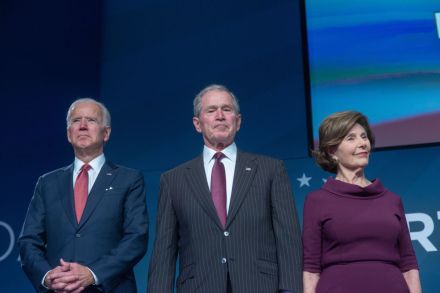
Given the worldwide climate of political intolerance, I often try to deflect hostility by prefacing my comments with the old saw that “reasonable people can disagree.” As a strong believer in intellectual freedom and Socratic dialogue, I do in fact feel duty-bound to listen to the other side, or sides, of an argument. Yet there’s one subject about which I’m as close-minded as the wokest opponent of liberal debate — a topic about which I won’t brook any disagreement because there simply isn’t any reasonable form it can take: that is, George W. Bush’s and British prime minister Tony Blair’s disastrous decision to invade Iraq in 2003 and its deadly, still hugely malignant consequences in the Middle East.

invasion

On the anniversary of the Iraq invasion, spare us the sermons

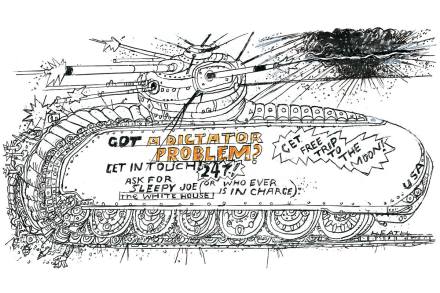
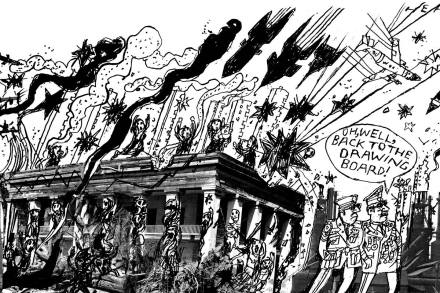
Twenty-one years ago today, the United States committed its worst foreign-policy mistake in generations: invading Iraq to overthrow Saddam Hussein, the despot who ruled the Arab country with an iron fist for nearly a quarter-century. The entire operation was supposed to be a “cakewalk,” in which the mighty US military, stocked with the best technology and weapons the world had to offer, would pummel a decrepit Iraqi army that was hobbled by international sanctions for the better part of a decade. The mood at the time was serious but stoic. Donald Rumsfeld, the US defense secretary, argued that the entire war wouldn’t last more than five months.

iraq war

An impressive examination of the conjoined fates of Iraq and the United States

In July 4, 1821, secretary of state John Quincy Adams gave a speech to Congress on American foreign policy. He said of the United States that “wherever the standard of freedom and independence has been or shall be unfurled, there will her heart, her benedictions and her prayers be. But she goes not abroad, in search of monsters to destroy.” For the first 150 years of the republic, its leaders dutifully observed Adams’s counsel. But after Woodrow Wilson’s intervention in World War One, American policy has tacked in the opposite direction. For over a century America has indeed been going abroad, searching for monsters to destroy.

Iraq

Donald Trump and the clash of realities

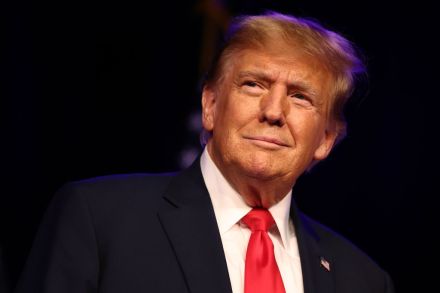
As Donald Trump marches to the Republican nomination a third time, Americans are divided into two radically opposed camps. On one side are Trump supporters who believe Democrats stole the 2020 election. On the other are Trump detractors — Democrats and homeless NeverTrumpers — who say that denying the legitimacy of the 2020 election amounts to a desire to overthrow democracy itself. The country is not on the brink of a civil war, and deep partisan divisions are nothing new. But reality itself is contested today in a way that goes beyond anything in earlier US history. The split over the 2020 election is one intensely political manifestation of a wider rift.

trump

As with Iraq, so with Russia

Against the backdrop of the Ukraine crisis, we have been bombarded with many historical analogies. Leading the list are the 1961 Berlin standoff and the 1962 Cuban Missile crisis. And then there is that all-time favorite, the 1938 Munich Agreement. Those crises should certainly not be regarded as ancient history. But then why go back 60 or 80 years when you can walk down memory lane? Like, say, when an American president was trying to rally the public and mobilize international support in the name of using military force against an alleged bloodthirsty dictator who was supposedly threatening Western geostrategic interests and challenging its liberal democratic values?