Bucha

The rape of Ukraine continues while the world’s sympathies move on

From our UK edition

‘Write and record’ was the dying instruction of the historian Simon Dubnow – shot by Nazis in the Riga ghetto – and two books recently emerging from Ukraine embody this spirit in spades. Now that the world’s anger and sympathies have largely moved on to the Middle East, they may do something to rekindle that earlier sense of outrage and remind the ‘caring’ classes of atrocities closer to home. ‘My hatred flows from thesmall things to the big things. Every fibre is filled with it’ The first, Our Daily War, comes from Andrey Kurkov, the celebrated Russo-Ukrainian novelist and author of 2022’s Invasion Diary, a detailed on-the-ground account of Putin’s attack on his country.
Putin is copying the propaganda playbook of Serbian war criminals

From our UK edition

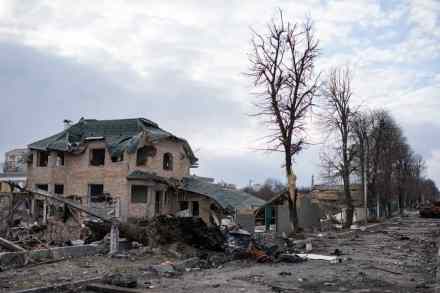
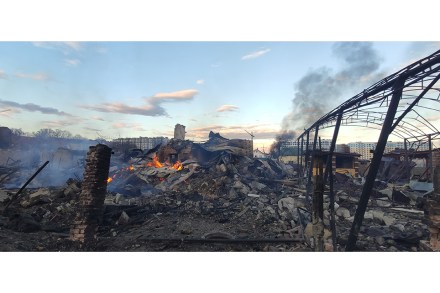
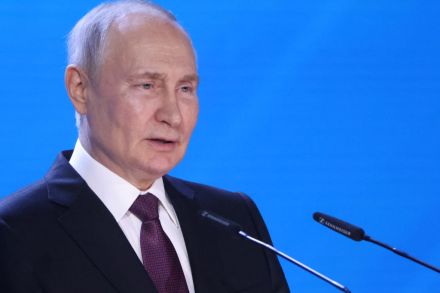
A year ago, Ukrainian soldiers discovered evidence of the Bucha massacre in which Russian forces slaughtered hundreds of Ukrainians in cold blood. Far from owning up to its crimes, Russia has spent the past 12 months trying to spin the massacre as a Western-inspired conspiracy.  The Kremlin said the allegations are a ‘monstrous forgery’ aimed at denigrating the Russian army. This attempt to whitewash the truth has disturbing parallels with the cover up of atrocities that occurred in my home country, Bosnia, during the 1990s.

Drinking with soldiers in Ukraine

Getting into Ukraine can be tricky, especially if you don’t speak Ukrainian or have a national television network paying your way. I recommend the latter: it seems slightly easier and they have hair and wardrobe budgets. I cross into Chop on a short train carrying a mix of old couples and young kids. When I get off I’m directed to a booth manned by soldiers, who ask my business. Journalist, I say. The guard asks for press credentials. The best I can do is a copy of the magazine, but reading The Spectator is apparently something he’s unwilling to do and I’m waved through immediately. Russian spies, take note. I have two hours to kill before my train to Lviv, so I do what anyone would do — wander the blacked-out streets in search of a drink.

ukraine

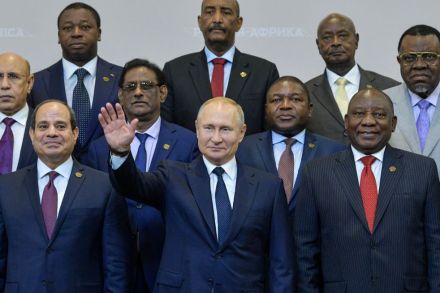
Putin’s imperialism in Africa

Last week, at roughly the time that photographs and stories began to filter out of liberated Bucha in Ukraine, the NGO Human Rights Watch published a report of similar massacres which took place contemporaneously in rural Mali. What linked the two was the identity of the perpetrators. In Ukraine and across Africa, these atrocities are committed by Russians. In combination with the Malian military junta, foreign soldiers "summarily executed an estimated 300 civilian men," in the town of Moura in late March. These soldiers did not speak French.

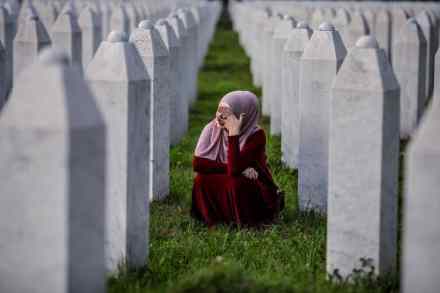
Bucha and the dark echoes of Srebrenica

From our UK edition

High on a hillside not far from the eastern Bosnian town of Srebrenica the remains of dozens of young Muslim men had been left to rot. By the time I found them most of the flesh had been eaten away by forest scavengers – bears, wolves, foxes and even stray dogs – but the skeletons and skulls remained, some with rags of clothing and scraps of hair still attached. Personal possessions lay among the remains: tobacco tins – one inscribed with the name Suljo, a pair of broken glasses, family photographs. Most of these photos were taken with Polaroid cameras – a status symbol in the old Yugoslavia. The black backings had peeled away but the faces were still visible, if faded.

Russia’s ‘denazification’ project is only just beginning

From our UK edition

Truth, infamously, is the first casualty of war. But the truth, in modern Russia, was critically wounded before it got anywhere close to the staging grounds, let alone the battlefield. And still the disinformation project limps on. The most recent and blatant example of the Kremlin’s communications modus operandi is its instant write-off as ‘fake’ of photographs and video from Bucha, a quiet town outside Kyiv, now littered with civilian corpses and the broken machinery of war. Perhaps the invading troops left in a hurry, or perhaps Bucha was meant as some kind of warning, but the perpetrators didn’t care to clear up their handiwork.