Brooklyn

Nicolas Sarkozy’s inside story from Parisian prison

Nicolas Sarkozy’s prison memoir is a slender book about a short sentence that nonetheless makes for compulsive reading. It is unintentionally comic, occasionally moving and almost always politically calculating. This, despite the weight of its author’s self-importance, moral evasions and intermittent self-awareness. Sarkozy, 71, was sentenced to five years for criminal conspiracy linked to Libyan money in his 2007 presidential campaign. He served less than three weeks in Paris’s La Santé prison before being released under judicial supervision to finish his punishment at home, pending an appeal to be heard in March. He used the time efficiently, producing more than ten pages of writing a day. The result is a compact 200-plus-page chronicle of noise, bad showers and damaged pride.

sarkozy

Monet’s Venetian moment

If you crave art that will envelop you, book a ticket, pronto, to Monet and Venice at the Brooklyn Museum. Enveloppe was the term the French impressionist artist Claude Monet (1840-1926) used to describe the “beauty of the air around” the objects and landscapes he painted. “Other painters paint a bridge, a house, a boat… I want to paint the air in which the bridge, the house, and the boat are to be found – the beauty of the air around them, and that is nothing less than the impossible,” he said.

Monet

Remembering the postmodern Paul Auster

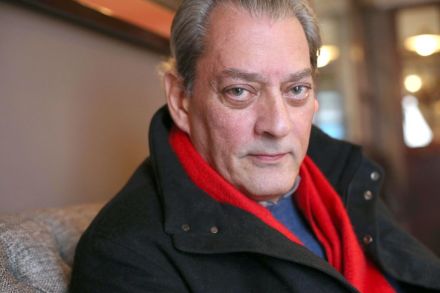
In Salman Rushdie’s new memoir Knife, there is a powerful and moving moment — amid the many other powerful and moving moments — in which Rushdie visits his ailing friend Paul Auster at the latter’s house in Brooklyn and describes his sorrow at seeing him so reduced by illness. It may have been that the extent of the cancer that killed Auster had not been made public knowledge, although a statement was released about his condition, until Rushdie’s description of his encounter — and some might accuse him of indiscretion or indelicacy. Yet the news of Auster’s death, anticipated though it undoubtedly was, has meant that such questions recede almost immediately — and instead a consideration of his legacy as a writer, rather than an invalid, can begin.

paul auster

Catholic priest demoted over Sabrina Carpenter music video

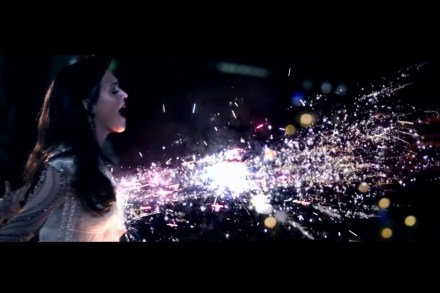
The Catholic Diocese of Brooklyn announced that a parish priest has been demoted for allowing pop singer Sabrina Carpenter to film her new music video in the sanctuary of the church. Money provided to the church from Carpenter's production team will also be re-donated to a crisis pregnancy center. Carpenter's music video for her single “Feather”, which was partially filmed at the Church of the Annunciation of the Blessed Virgin Mary in Brooklyn, New York, dropped on Halloween last week. In the video, Carpenter is seen dancing provocatively in black underwear in the church sanctuary and in front of the altar, which were decorated with pastel and neon props that featured obscene language.

Sabrina Carpenter in "Feather" Music Video (Screenshot: YouTube)

The understated perfection of Long Island Bar

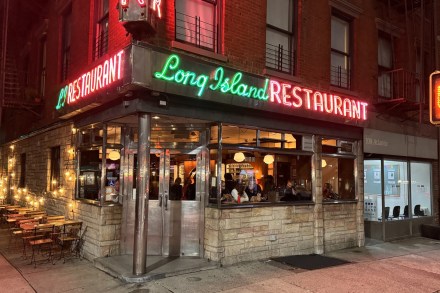
I had never given Brooklyn much thought beyond the odd walk over the bridge and down into Dumbo, outmaneuvering the hordes of Instagrammers trying to get that perfect shot of themselves on the cobblestone streets with Manhattan Bridge in the background, perfectly framing the Empire State Building between its nervous legs. What with the tourists and the hipsters it never quite felt like my sort of place, so I happily stayed on the wrong side of the bridge, ignorant of the treasures that were hiding from me.  That all changed on a chilly November evening a couple of years ago when my friend Zack invited me to meet up for drinks at his local, The Long Island Bar, nestled neatly between Brooklyn Heights and Cobble Hill.

Long Island

Mocking murdered leftists is not based

At 1:30 a.m. on Monday, Philadelphia freelance journalist Josh Kruger was shot seven times at the base of his stairs by an intruder. He stumbled, bleeding, into the street and collapsed on the sidewalk before being transported to the hospital, where he soon died. Come 10:00 a.m., news of his death was reported by local outlets, and Philadelphia’s media ecosystem was in a full-fledged state of lamentation. Friends, professional acquaintances and public leaders poured their hearts out for Kruger. But the moving display of mourning didn’t last long.  Before Kruger’s body went cold, prominent figures on the dissident right caught wind of the murder and discovered to their delight that he was a vocal defender of Philly’s progressive District Attorney Larry Krasner.

josh kruger murdered

A sunshine state of mind

“I thank God for this place.” It might seem a weird thing to say, unapologetically earnest and deeply uncool, but, in Florida, it’s very common to overhear someone saying exactly this. On the beach. By a pool. In a restaurant. At the checkout line at Publix. Some other phrases you hear a lot: “I wish we had made the move sooner.” “I feel like I’ve added years to my life.” “Living the dream.” “Another day in paradise.” It is a unique moment in Florida’s history. The feeling of gratitude is very real. Millions of people seem to have woken up one day and decided they had to become Floridians right away. I am among them. How many exactly is unclear. The US Census estimates 221,000 people moved to Florida between July 2020 and July 2021.

big sort

Maya Wiley’s ‘Defund the Police’ folly

Defund the police! The clarion cry of protesters and middle-class warriors everywhere never fails to stir Cockburn’s passions. Slashing police budgets, cutting resources and further increasing crime rates is the most logical step to improving our societies and neighborhoods. Isn’t it? But it transpires that calling for the police to be fleeced of their budgets comes easier if you are Maya Wiley, Democratic candidate for New York City mayor, who lives in a $2.7 million brownstone in a Brooklyn precinct where the crime rate has plummeted in the past year. And Wiley’s partner Harlan Mandel, CEO of the non-profit Media Development Investment Fund, has been paying for a guard to patrol their tiny neighborhood.

maya wiley
cuomo de blasio

Cuomo and de Blasio’s unearned lap of honor

After weeks of state-mandated lockdown, thousands of preventable nursing home deaths and days of angry protests and looting, New York officially reopened today, all thanks to the so-called leadership of its Mayor and Governor. With the economy in tatters, store-fronts boarded up or broken and citizens in the street demanding justice, Bill de Blasio and Andrew Cuomo speak with one voice as they say to New Yorkers: you're welcome. 'New York City’s restart begins today,' tweeted Mayor de Blasio. 'It’s been a long road to get here. New Yorkers have earned it day by day.' 'New Yorkers bent the curve by being smart,' said Gov. Cuomo at his daily press briefing. 'We’re celebrating. We’re back. We’re reopening. We’re excited. Our mojo’s back.

Time for Tudorbethan

You’ll find them all over the boroughs of New York City. Multiple-dwelling buildings, usually large apartment blocks, slapped with a faux-Tudor façade defined by fake gables hiding a flat roof. They aren’t particularly attractive buildings. Even 100 years after most were built, they come off as self-conscious, a bit tacky, imparting to the viewer a dreaded feeling of secret working-class shame — a befuddling reproduction of a reproduction. They say New Yorkers never look up. But even during short journeys through Queens or parts of Brooklyn, New Yorkers are bound to have noticed examples, even if they don’t give it much thought.

tudorbethan

Rich people are struggling during COVID, too

The New York Times reports on the struggles faced by families who, in the midst of the COVID-19 pandemic, have been forced to convert their second homes into their primary homes. The Gray Lady observes: ‘These homeowners share many of the same difficulties as anyone dealing with the coronavirus lockdown — working in communal spaces where their children are now present 24/7, discovering items in their home that need updating, and then renovating a home while they are living in it. In addition, these homeowners must adjust to living in relatively unfamiliar towns, often far from friends, family, or creature comforts like a favorite bagel shop or longtime barber.’ Don't I know it. I consider myself a solidly middle-class American, making about $500,000 a year.

rich

What’s Bill de Blasio’s problem with Brooklyn’s Orthodox Jews?

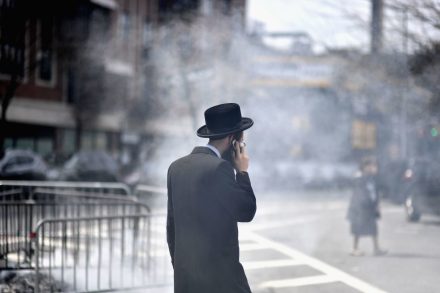
New York City was the center of the most severe coronavirus outbreak in the United States, with equally severe lockdown policies to match it. However, New York City Mayor Bill de Blasio drew international attention for what seemed to be exceptionally strict enforcement of social distancing measures upon Orthodox Jewish communities.As the Mayor walked shoulder-to-shoulder with Black Lives Matter protesters and turned a blind eye to unfettered looting, his police officers patrolled Brooklyn, threatening Hasidic communities with arrest for attending evening prayers.De Blasio’s uneven enforcement of lockdown policies earned him a rebuke from Eric Dreiband, the US Assistant Attorney General for the Civil Rights Division.

orthodox

The truth about the fireworks

At least it’s not the Russians this time. If you’ve heard a lot of fireworks in your neighborhood recently, you’re not alone. People in all five boroughs of New York City report hearing and seeing them more this year than ever before. I grew up in Brooklyn. Somewhere around early June, a kid on your block would tell you he had access to M-80s or some bottle rockets. Someone always had an uncle in Pennsylvania who was going to hook them up. As a kid I always pictured Pennsylvania as a wonderland of explosions and lights. The older kids had the better stuff, the kind that exploded high in the air. If you watched them long enough, you could always see a minor injury which was usually more entertaining than the firecrackers.

fireworks

Bill de Blasio unites cops and protesters — in disgust

New York City is crumbling into shambolic lawlessness and its citizens are growing more afraid and frustrated by the day.Why?Because Gov. Andrew Cuomo and Mayor Bill de Blasio have once again proven to be categorically incompetent leaders incapable of working effectively together in a time of crisis.On Tuesday, the Governor was forced to confront the glaring issue that the state’s top concern had shifted from COVID prevention to the demolition of its biggest metropolis by unruly riots. During his daily press conference, Cuomo took the opportunity to chastise the Mayor and the NYPD for the turmoil, calling Mayor de Blasio’s handling of it a ‘disgrace’.

bill de blasio

Don’t let Karen kill your community

I knew I was dealing with a Karen when the police showed up. We had only recently moved in and we had a serious leak in one of our bathrooms. We called a plumber for emergency repairs. A woman on our block confronted my husband about it and, despite his explanation that the work was essential, she called the cops. Along with all the other problems coronavirus had wrought on our society, we are witnessing the rise of the ‘Karen’. Pre-corona, the term ‘Karen’ was used to describe the neighborhood busybody, the woman in front of you at Target who gets into an argument at the check-out and demands to see the manager. But coronavirus has given Karen a new role in life and more power than she’s ever had before.

karen

Society needed this reset

BrooklynI live on a grim block. Each year another glass-and-steel human filing cabinet, billed by developers as ‘luxury living’ and so sterile you could perform surgery inside, sprouts up to accommodate the millennial hordes charging into neoliberalism’s hippest zip code. These residences have names like The Edge, or The Brooklyn, or The Douchebag. They’re crumbling before anyone has even moved in. The sun-bleached, warped particleboard facades must be constantly replaced. A strong wind hurls Styrofoam paneling, used to resemble concrete or stucco, onto the streets, and rain streaks the aluminum paneling with brown sludge that bakes into a stain.

society

Life and death in New York City

No matter where in the apartment I am, if I sit very still, I hear a siren. Over the 18 days I’ve spent in quarantine here, they’ve grown more frequent. I worked late yesterday and finished up at about 1:30 this morning. I pulled my headphones out and listened. There was the briefest moment of calm, before I heard the familiar squall. From what I could make out, it sounded like a convoy of ambulances, careering towards the hospital about a mile from me. Woodhull Medical Center is a block of brutalist concrete planted imposingly at the junction of Broadway and Marcus Garvey Boulevard. A tent outside is my closest COVID-19 testing site.

elmhurst new york

Vintage Brooklyn: the wines of Red Hook

Close your eyes and think about the word ‘winery’. What image comes to mind? I’m guessing you will say, ‘A large stone pile from the 17th century or before surrounded by lovingly tended gardens and row after row of neatly staked vines.’ That is not wrong, but it is incomplete. There are plenty of wineries in France and elsewhere that feature modernist architecture. And there is one in Brooklyn, New York at 175 Van Dyke Street, towards the end of Pier 41 at the old Navy Yard. With a spectacular view of the Statue of Liberty and the New Jersey waterfront, Red Hook Winery — a retail tasting room in front, barrels and vats in the back — occupies a fetching but improbable spot. Red Hook was started in 2008 by Mark Snyder.

red hook winery

American anti-Semitism is everyone’s problem

If there is one positive thing to come out of the attacks on Jews in Jersey City last weekend, it’s that the pretense that anti-Semitism has a home in one part of American society but not in others is over. That doesn’t, of course, mean that some won’t try to keep the delusion alive but four dead in a kosher market at the hands of Black Hebrew Israelites will have to complicate their argument. For a long time, the left was able to provide cover for the frequent attacks on Jews in America by saying it was only white supremacists engaging in these attacks.

anti-semitism

The ‘Russians’ of Brighton Beach

This article is in The Spectator’s November 2019 US edition. Subscribe here. At the very southern tip of Brooklyn, far from the hip avocado cafés and right before you hit the sea, there sits the neighborhood of Brighton Beach. Nicknamed ‘Little Odessa’ after the waterfront city in Ukraine, the area is home to primarily Russian-speaking immigrants from the former Soviet Union. It’s a jumble of identity. The immigrants are mostly Jews from Ukraine, hence the nickname, but also Russia, Belarus and the other Soviet republics. So what to call these people in America? In Russia, in Ukraine, in Belarus, our identity cards never described us as Russian, Ukrainian, Belarusian. We were just Evrei, Jews.

brighton beach russians