Broadway

The Sign in Sidney Brunstein’s Window is never comfortable

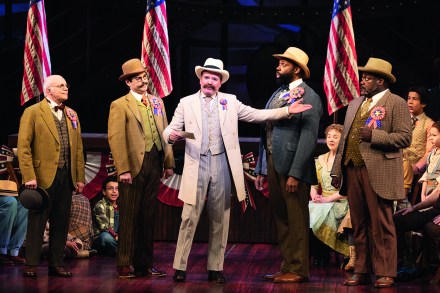
The Sign in Sidney Brunstein’s Window — set in the blustering world of 1960s New York bohemia — deals with so many hot-button issues it is hard to keep up. Patriarchy, anti-Semitism, gay rights, slavery, sex work, suicide, drugs, adultery, racism. It’s all there.  But as I watched Anne Kauffman’s superb, and at times transcendent, Broadway revival, it dawned on me that one theme unites them all: corruption.  The play’s moment of truth hangs on the revelation that a local Manhattan politician who preaches progress is actually a crook. But on a smaller, equally devastating level, it is also about the corruption of marriage, of bodies, of values, of morals and of hope.

Aaron Sorkin’s new Camelot has nothing to say

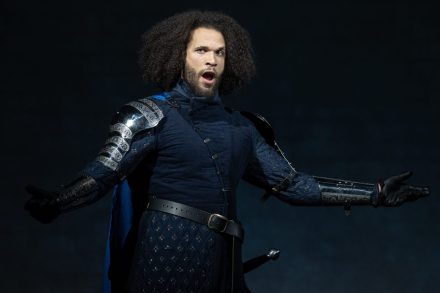
The opening scene of Camelot is stark. White snow covers the floor, drifting past a gray sky; on stage, beneath curvaceous stone arches, stands a bench and a tree, shorn of leaves. It is a mood that is prescient of what is to come: an experience that is beautiful but empty.  Camelot first premiered in 1960, adapted from T. H White’s novel The Once and Future King. For this lavish revival, Aaron Sorkin has created a new book, departing from Alan Jay Lerner’s original, and teamed up with director Bartlett Sher. But, despite the retention of many of Frederick Loewe’s easy-to-the-ear songs, Camelot doesn’t know what it wants to be. Is it a frivolous comedy? A lovelorn tragedy? A study in good governance?

camelot

Bringing back Stephen Sondheim and enduring a new Andrew Lloyd Webber

On Sunday April 16, the curtain went down on Andrew Lloyd Webber’s Phantom of the Opera for the last of 13,981 performances on Broadway, a titanic thirty-five-year run grossing north of $1.3 billion. The end of an era? Not quite — dating back to the 1979 opening of Evita, Lloyd Webber musicals have run continuously on the Great White Way for forty-four years. That streak is now hitched to the fortunes of Bad Cinderella, which opened just weeks before Phantom closed. The show gets a lift from a lush score and some winning numbers, as well as sumptuous set design. The whole premise, however, turns out to be a pumpkin, and it may spell midnight for the composer’s magical run within the year.

Lloyd webber

Broadway brings back Bob Fosse’s Dancin’

To kick off the new revival of Bob Fosse’s Dancin’, a lone performer comes onstage to inform us that, per the recommendation of the WHO, the CDC, the US Surgeon General and sundry others, the evening’s proceedings will not include any plot, message, or moral. I pinched myself. Wearing Fosse’s signature bowler hat, the speaker, played by Manuel Herrera, promises nothing but “dancing, some singing... and more dancing” — and for the most part, this dazzling two-and-a-half-hour musical revue lives up to that promise. Directed and staged by Wayne Cilento, who danced in the original production, the first revival of Dancin’ on Broadway is a treasure trove for Fosse fanatics, a smart introduction for the unfamiliar and a delight for everyone between.

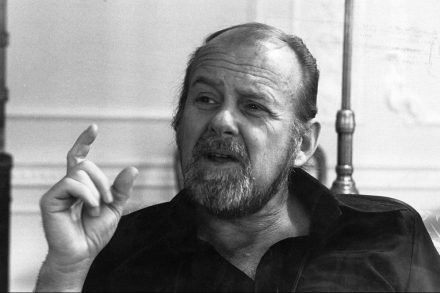
bob fosse
coward

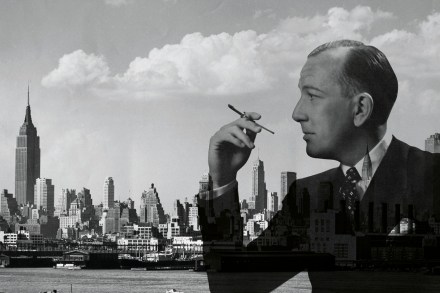
Noël Coward, the English playwright who loved all things American

Half a century after his death, the playwright, songwriter, actor, director and general Renaissance man Noël Coward is regarded, with some justification, as the quintessential English polymath. His best-known plays and songs, from Private Lives and Present Laughter to “Mad Dogs and Englishmen” and “London Pride,” seem so steeped in their Britishness — even if Coward was catering to a country that loved seeing a distorted, exaggerated version of itself — they could be placed in a time capsule as perfectly executed microcosms of the national identity. Any man who could write “Wouldn’t it be dreadful to live in a country where they didn’t have tea?

& Juliet and Titanique: two newly minted cult classics

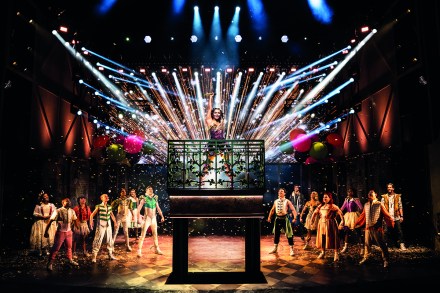
Fears that the new pop-parody musical & Juliet would be a vehicle for steamrolling Shakespeare are understandable but unfounded. It’s true that, on Broadway as in the rest of the arts, holding dead white males up for flagellation is now almost a cherished ritual — a recent example being last season’s Six, a glitzy feminist paean danced on the grave of Henry VIII. There’s a healthy dose of girl power in & Juliet, too, and I don’t doubt that a few heedless theatergoers came with tomatoes in hand, hoping to find the Bard pilloried. Let me tell you a secret: the theater world still adores Shakespeare, even in 2023. To renounce him is to swear off your mother’s milk.

Juliet

The Some Like It Hot revival is cream-puff theater

The new Some Like It Hot on Broadway has bass player Jerry (J. Harrison Ghee), disguised among Big Sue’s Society Syncopators as “Daphne” to hide from the Chicago mob, decide to embrace the drag lifestyle and elope with his elderly suitor Osgood (Kevin Del Aguila) by the show’s end. (The 1959 film closes with Jerry straining to extract himself from Osgood’s clutches.) Many theatergoers will not expect this update, setting up a bit of dramatic irony too delicious to be unintentional. What’s a drag show, after all, without a few surprises? To my knowledge, this irony has gone entirely uncapitalized by headline-writers across the nation. Some Like a Hot Dog! Speakeasy, Don’t Tell! Billy, but Wilder! Jack’s Lemon!

some like it hot

An unapologetically Jewish Fiddler on the Roof returns to New York

Fiddler on the Roof is a study of Eastern European Jewry: it is based on Yiddish writer Sholem Aleichem’s short stories and is set in a Yiddish-speaking village in early twentieth-century Imperial Russia. Yet, in the hit musical, which premiered on Broadway in 1964, Sheldon Harnick’s lyrics only feature a handful of Yiddish words. Harnick later confessed that the creators downplayed the Jewishness of the story — something they thought might be too sticky; too specific — in order not to put off American audiences. As scriptwriter Joseph Stein said: “These were stories about characters who just happened to be Jewish.

The cast of Fiddler on the Roof (New World Stages)

Baldwin and Buckley clash on the New York stage

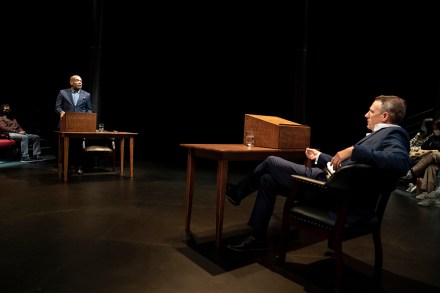
It’s fair to ask what James Baldwin would have made of Baldwin and Buckley at Cambridge, the Public Theater’s recent presentation of his famous 1965 debate against William F. Buckley Jr. It’s not that the show doesn’t strain mightily to champion Baldwin in the contest — it does — but the novelist viewed what he called “problem” or “protest” art with particular scorn. This was a writer who torched fellow travelers Harriet Beecher Stowe and Richard Wright in the same breath for perpetuating, in his view, the same “monstrous legend” of racial inferiority. To call Baldwin an activist or a champion of civil rights doesn’t quite cover it: the man operated on a theological plane, aiming at spiritual transformation. His standards for art were notoriously exacting.

baldwin buckley

Macbeth on Broadway: a Very Modern Scottish play

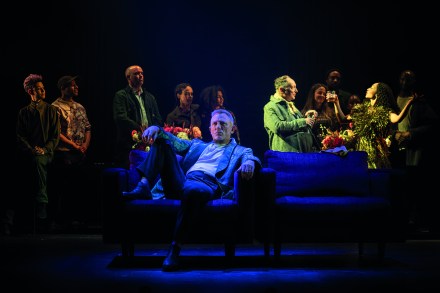
The new Macbeth on Broadway starring Daniel Craig ends up about where you’d expect: a Macbond unhinged and raving about Birnam Wood come to Dunsinane, splattering the castle walls with the gore of his enemies and pummeling Macduff mercilessly until the showstopping reveal that the latter was “of no woman born” but, in fact, “from his mother’s womb/ untimely ripped.” Omit the full-cast kumbaya circle at the end (a too-sweet cherry atop a bloody sundae), and the denouement essentially gives you Shakespearean drama at its most unimaginative — as a Hollywood action blockbuster. This isn’t to say that Shakespeare cries out for bold reimagining. Nor is there anything wrong with giving people what they came to see. It is Daniel Craig, after all.

Macbeth

Throwing curveballs

"This mob is not the people,” declared Henry J. Raymond in his paper, the New York Times, about the Draft Riots in July 1863. Blue-collar workers in New York, mostly Irish, had begun by protesting a new conscription law, but anti-war sentiment quickly became a pretext for widespread destruction, looting and racial violence. Blacks were hunted, their homes and businesses trashed, and scores of them lynched. Raymond wanted no quarter for the rioters: “Give them grape[shot] and plenty of it.” The new musical Paradise Square imagines a “little bit of Eden” in the Five Points slum of downtown Manhattan, July 1863, where, we are told, blacks and Irish did not just coexist peacefully for a time but flourished.

paradise

Midcult madness

On the same Broadway block as MJ: The Musical is the tale of another song-and-dance man hailing from Gary, Indiana: Harold Hill, doctor of music, huckster of band equipment and Meredith Willson’s titular Music Man (1957). Well, that’s not quite the case: Professor Hill is a lying crook, and his Hoosier backstory is a fabricated ruse. He claims to be a graduate of the Gary Conservatory of Music, class of ’05, but the town of Gary was only incorporated in 1906. Played by Hugh Jackman, this smooth criminal sails into River City, Iowa, promising the Ewarts and Eulalies of the town he’ll make disciplined bandspeople out of their darling Winthrops and Amarylisses.

music

Michael Jackson on Broadway

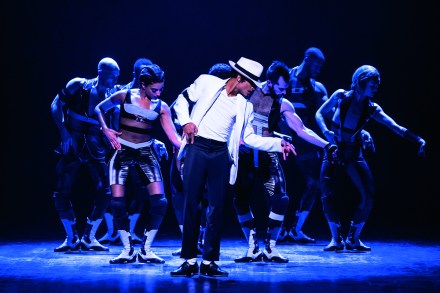
Michael Jackson has a claim to being the most famous man in history. He is certainly the most widely seen and heard. His career straddled five decades and the heydays of radio and television. His Thriller is the best-selling album of all time. He went from playing nightclubs and The Ed Sullivan Show with the Jackson 5 to solo tours that each attracted more than four million fans. For musical celebrity, there is no comparison. The Beatles? MJ owned them, literally: he bought their entire catalogue in 1985. Elvis Presley? Lisa Marie was the King of Rock and Roll’s only daughter, but it took marrying the King of Pop to make her a star.

Jackson

Broadway’s back(side)

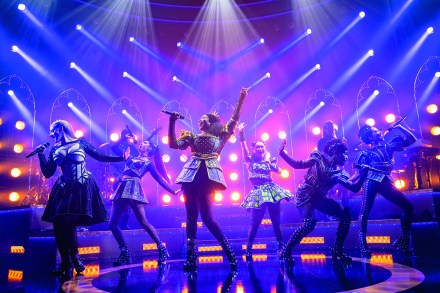
Six, a British musical about the wives of Henry VIII, is a scrupulously specious masterclass in frivolity. These onetime queens, blinged and bedazzled as fabulous pop-diva Kweens, undertake a six-way singing competition to decide who had “the biggest, the firmest, the fullest... load of B.S. to deal with” from their kingly husband. Backed by a live band, the sextet’s set amounts to the love child of RuPaul’s Drag Race and the Super Bowl halftime show. Those hoping for revisionist revenge fantasy will leave disappointed. Those seeking dramatic tension, character development, tragedy — anything having to do with the second half of the phrase “musical theater” — won’t find it here.

six

Meet the real-life gangsters who inspired Guys and Dolls

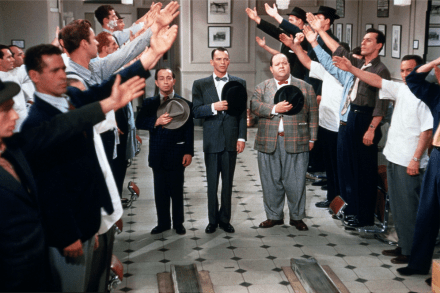
Guys and Dolls, the musical loosely based on the Broadway stories of Damon Runyon, premiered on Broadway 70 years ago on November 24, 1950. It ran for 1,200 performances and has been frequently revived ever since. The film version, starring Frank Sinatra as Nathan Detroit and Marlon Brando as Sky Masterson, appeared in 1955. Last year, entertainment-industry bible Variety reported that a remake is in the works from TriStar. Runyon’s world, and his characters, live on. Even on the page, never mind in 1950s Technicolor, Runyon’s characters can sometimes seem larger than life. But many of them are, in fact, based on real people that Runyon knew on the Broadway of the 1920s and 1930s.

guys and dolls