British

There will be blood – the vital work of field transfusion units

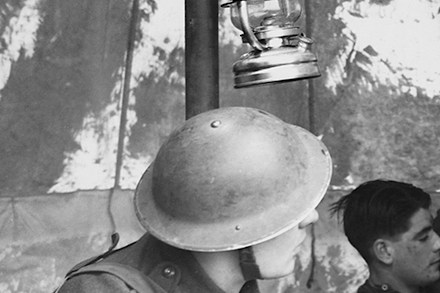
Most conventional World War Two military histories focus on weapons, materiel and even the manpower needed for a decisive victory over Hitler and the Axis powers. Little has been written about blood as a strategic resource. However, a pioneering service of specially trained medics who worked dangerously close to the front lines, pumping blood into the veins of battle casualties, not only saved lives but contributed significantly to winning the war. They did this by returning men to the front line and boosting morale by persuading them that, if wounded, they had the maximum chance of life.
blood

The National Garden Scheme is the perfect antidote to Chelsea’s vanity

Shortly before the New Gardens Organiser at the National Garden Scheme (NGS) is due to arrive at our farmhouse in north Norfolk, my youngest child – in the throes of a screaming meltdown – eyeballs me as she rips the heads off a row of giant ‘Mount Everest’ alliums. By the time Fiona Black arrives, I’m spiralling into an existential crisis myself. Why did I bother asking if we’d be suitable, I wonder, contemplating the futility of gardening alongside children and dogs. Sliding tackles have taken out most of the alliums that survived the dogs’ digging. I retrieve a football from a bed of irises and chuck a bottle of Roundup weedkiller out of sight (soon-to-be illegal in the UK, but so effective, it’s the chemical compound I just can’t kick).

Evie Wyld’s latest novel is unsettling yet hopeful

From our US edition

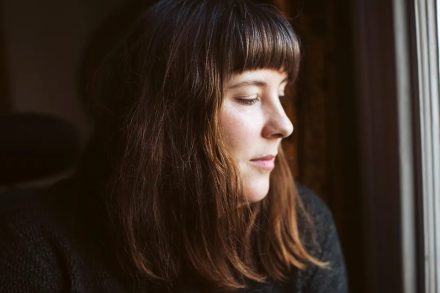
Evie Wyld’s powerful fourth novel opens from the perspective of Max, a ghost who haunts the south London apartment where he lived with his girlfriend Hannah. A ghost story is new ground for Wyld, the multi-award-winning Anglo-Australian writer, but her signature traits are immediately evident — poetic observations of unusual details; a pervasive sense of grief and palpable trauma, leavened with a wry sense of humor (Max notes his "strong urge to file a complaint" about being a ghost); and an intricate plot that compels readers to delve into complex past events.

Wyld

The Crimean War spelt the end of hymns to heroism and glory

Leo Tolstoy served as a young artillery officer in the defence of the great Russian naval base of Sevastopol against British and French invaders in the middle of the 19th century. The first of his three short stories, collected as Sevastopol Sketches, came out as the siege was still in progress. In it he spelled out as no writer had done before the way people died in shattered trenches, their bodies shredded by shell fire and left to rot in the mud; or in filthy, overcrowded hospitals, where overwhelmed doctors hacked off limbs without anaesthetic. He wrote not about the generals but about the ordinary soldiers, the men and women caught up in the fighting, the Russian people themselves.

The chameleonic life of Claire Clairmont

From our US edition

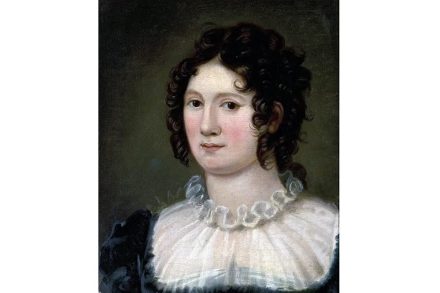
Commentary on the young Romantics can be curiously puritanical. Not on saintly John Keats, who died too young to cause any trouble. But Byron and Shelley? Beastly to women, negligent as parents, destructive as friends, oblivious to their own privilege. Feminist observers tend to resemble the English visitors to Geneva in 1816 who borrowed telescopes to spy on the renegade inhabitants of the Villa Diodati across the lake, hoping to be scandalized. A central character in the summer that saw the birth of Frankenstein was the only non-writer of the villa’s gathering, Byron’s young lover and Mary Shelley’s stepsister, Claire Clairmont.

Clairmont

Have you ever heard of the St. Brice’s Day Massacre?

From our US edition

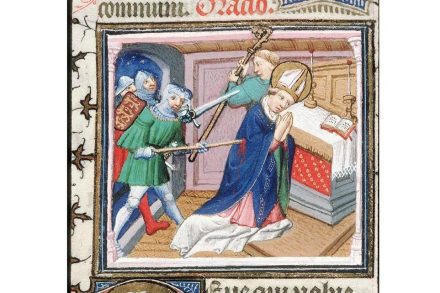
The St. Brice’s Day Massacre? I must admit I hadn’t heard of this “most just extermination” of Danes in Oxford at the instigation of King Aethelred the Unready in 1002, perhaps because the teaching of history in Britain tends to kick off in 1066. You certainly don’t think of Oxford as a place that pioneered techniques of ethnic cleansing. Crypt is a collection of seven essays that unearth details about how certain people lived and died in the past. If you didn’t already know Alice Roberts’s background as an anatomist and biological anthropologist, you’d have a good chance of deducing it from this book.

Roberts