British empire

A Labour MP defends the Empire – and only quotes Lenin twice

From our UK edition

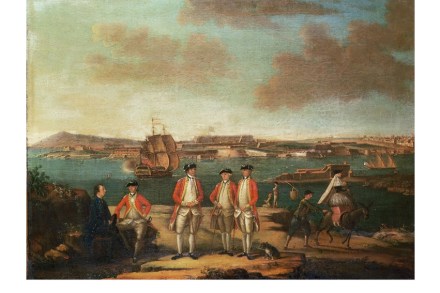
In a grand history of the British empire — because that is what this book really is —  you might expect more hand-wringing from a historian and Labour MP who has previously written a life of Engels. But despite quoting Marx half a dozen times (and Lenin, twice!) there is something about the idea of empire that excites Tristram Hunt. And this is a book about ideas, for all that it is rich in architectural description, economic fact and colourful anecdote. It describes how — and indeed when and where — the imperial ideology shaped and reshaped itself.

When Britain Burned the White House, by Peter Snow – review

From our UK edition

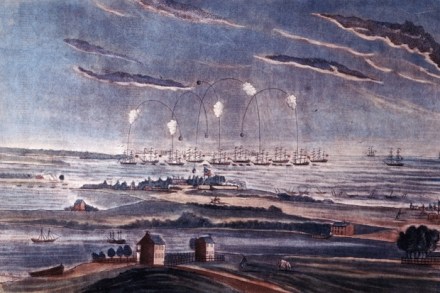
Peter Snow explains that he decided to look into this extraordinary story when he realised how few people knew about it, and was inspired to write a book by the wealth and quality of eyewitness accounts from both sides. The result is superb. When Britain Burned the White House is an exemplary work of history — lucid, witty and humane, with terrific pace, and so even-handed that it will surely be received as well in America as here. Annoyed by what he regarded as the excesses of the British empire — its fight with Napoleon interfered with America’s trade, it was in the habit of pressing American citizens into the Royal Navy, and it supported the Indian tribes who stood in the way of American settlers — President James Madison had declared war in June 1812.

Beyond the Malachite Hills, by Jonathan Lawley; Last Man In, by John Hare – review

From our UK edition

In post when the curtain came down on Britain’s African empire, there survives today a generation of colonial officers whose numbers are dwindling fast. Many were fired by an idealism already out of fashion when they chose their career. Most came to love their adopted continent. Some can write. Two of these are Jonathan Lawley and John Hare. Each has an incredible tale to tell. Here is a pair of books that, placed with a decanter of whisky on the bedside table of any Spectator reader’s guest bedroom, will have the reading-light burning late into the night. Yet they are very different stories, quite differently written.

Hasty exit strategy

From our UK edition

For years after the rug was pulled from under it, the British Empire — with a quarter of the globe, the largest the world has known — seemed an unfashionable subject for historians. Did they fear political incorrectness, or was it simply that they had to wait for sufficient archival material to emerge? Whichever, there is now some very welcome sprouting in this part of the historical garden, already well-watered by the Cambridge historian Ronald Hyam, and few shoots could be more welcome than Calder Walton’s important contribution. Walton draws on recently released MI5 files to reveal the role of intelligence in the transitions from colony to independent state.

Gunboat diplomacy

From our UK edition

Britain’s links with the Continent were once  deeper and more extensive than those of any other European country. Paris, Rome and German universities played as vital a role in British culture as many native cities. Mediterranean connections were especially strong. Most cities on its shores contain an English church and cemetery. From Minorca to Cyprus, there are few Mediterranean islands that have not been occupied by British troops: the oldest company in Beirut is Heald and Co., the shipping agents (est.1837). Blue-Water Empire aims to tell the story of ‘the British in the Mediterranean since 1800’: 1800 is the year that Malta, soon to be the headquarters of the British Mediterranean fleet, was conquered from France, with Maltese help.

Voyages of discovery

From our UK edition

Roger Louis is an American professor from the University of Texas at Austin who knows more about the history of the British Empire than any other two academics put together. When the Oxford University Press embarked on its mammoth history of the Empire the general editor they chose —to the chagrin of certain professors from the Commonwealth — was Roger Louis. Among his other responsibilities is the British Studies seminar, which was founded at Austin 36 years ago. But Professor Louis is not the university’s only attraction. The Harry Ransom Center houses one of the most, if not the most, important collection of modern literary manuscripts in the English-speaking world.

The empire strikes back

From our UK edition

Something strange happened in New York on a cold November afternoon in 1783: the city effectively turned itself inside out. Mounted on a grey horse, George Washington marched down Manhattan at the head of the victorious US army. At the same time, British troops headed frantically in the opposite direction. When they reached the southernmost tip of the island, they clambered into longboats and rowed out to the Royal Navy ships waiting in the harbour. All this, of course, left the thousands of loyalists who had supported the British during the War of Independence in a very tricky position.