Britain

The death throes of free speech in Britain – and its opponents

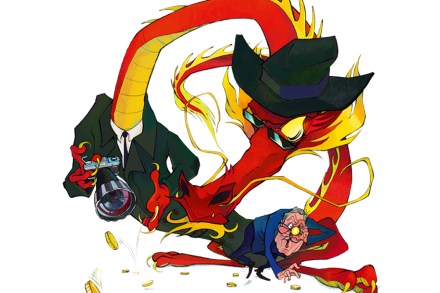
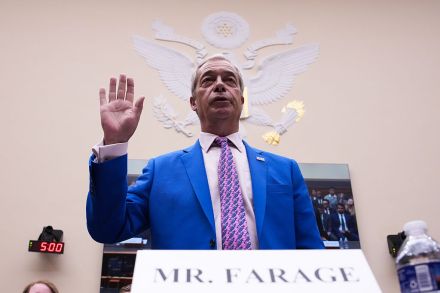
Free speech, the very bedrock of constitutional democracy, is writhing on its deathbed in England. It will take a mass movement to restore its vitality. Fortunately, one can see that movement emerging among a once-free people, tired of government suppression. The dire state of British liberties was outlined Wednesday in Congressional testimony by British MP, Nigel Farage, who testified before the US House Judiciary Committee. He was backed by the committee’s Republican members and attacked, alas, by Democrats.

Britain free speech

America’s obsession with British decline

From our UK edition

As Sigmund Freud pointed out way back in 1905, everyone feels a bit schizo about Mum. On the one hand, she carried you in the womb, she probably nursed you at the nipple. She made the greatest of sacrifices so that you exist. Heck, maybe you really love her cooking. On the other hand, you have to escape her. The Italians have a brilliantly pejorative word for the man-child who stays in the maternal home far too late in life: mammone. No one wants to be that guy. And to avoid it, sometimes you have to scorn your mother, to break the psychological apron strings. So it is with American attitudes to the Mother Country. The USA had many midwives, but the mother of America was unquestionably Britain/England.

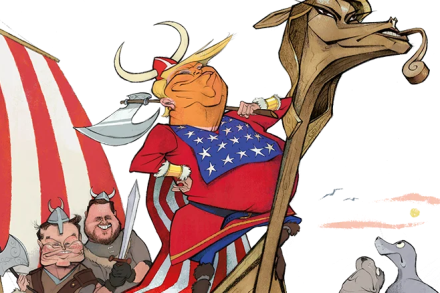
J.D. Vance: proconsul to Britain?

Vice President J.D. Vance’s family vacation in Britain was disrupted by protesters who insisted that he was not welcome in the country. In the Cotswolds, an area northwest of Oxford and the British equivalent of Martha’s Vineyard, ultraliberal white protesters huddled together on August 12 to make their meager numbers look large for the cameras, wielding signs bearing such slogans as “End Genocide!” and “Stop Fascists!” One participant quoted by the Guardian explained: “I’m most worried about his environmental policies. They risk eliminating the whole of humanity, all the creatures on the Earth.

Vance Britain

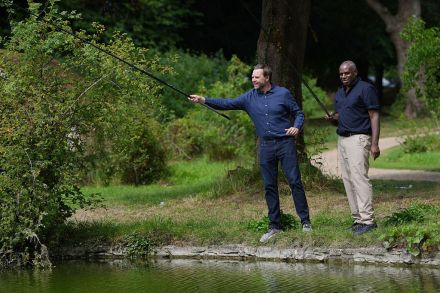
Britain’s foreign secretary faces fine for fishing without a license

What people on the other side of the pond call "Brand Britain" has taken something of a knock in recent years – especially in the United States, which the British often still view as an errant son. With unnerving speed Britain's reputation has collapsed stateside, especially among the political right, from the country of Brideshead Revisited to a grotty Airstrip One. The symbol of the new Britain in the eyes of many Americans are the ubiquitous licenses (or, in the argot of a London copper, "loicenses") that citizens seem to need for everything – including, most notoriously, owning a TV. Now even the Foreign Secretary has been caught without a loicense. On Friday David Lammy went fishing with the now-Vice President J.D.

Lammy Vance
Thomas Skinner JD Vance

Essex-boy Elegy: J.D. Vance meets the Bosh man

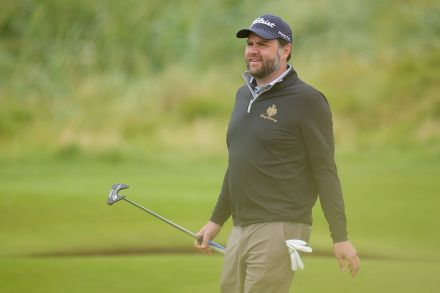
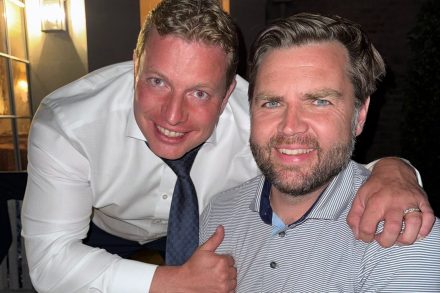
Vice President Vance is currently receiving visitors at an 18th-century Georgian manor in the Cotswolds, an implausibly quaint patch of the English countryside. Petitioners so far have included James Orr, the Cambridge academic and right-wing activist, Robert Jenrick, likely the next leader of Britain's Tories, and Nigel Farage, likely the next UK Prime Minister. Also on the list was one Thomas Skinner, a gregarious wide boy from East London turned e-celebrity turned patriotic influencer. After a stint as a pillow and mattress merchant Skinner, 34, found fame as a contestant on the 15th series of the British version of The Apprentice.

A global MAGA crusade against web regulation?

“Censorship is not how we do things in Western civilization”. So said Congressman Scott Fitzgerald (R-WI) of the United Kingdom’s new Online Safety Act (OSA). Its effects on free expression are “dangerous and needs to be addressed,” possibly by means of an international “united front”. The Congressman was fresh from meetings with British and Irish lawmakers and US tech firms, held as part of a House Judiciary Committee fact-finding mission to investigate the impact of the OSA and the European Union’s new Digital Marketing Act on American businesses. The main event was a one-on-one between Committee chair Jim Jordan (R-OH) and Peter Kyle, the United Kingdom’s Secretary of State for Science, Innovation and Technology.

Online Safety Act

The UK censorship files: Jim Jordan’s crusade against Britain

The British Empire may be gone, but there is one area where the UK has not lost its global ambitions: online censorship. The latest vehicle is the Online Safety Act (OSA), a behemoth internet regulation law whose vast provisions are steadily coming into force – and increasingly drawing the ire of the Trump administration as it starts to impact US tech firms.  Under the OSA, “Britain has the power to shut down any platform” that breaks its content regulation rules, boasts secretary of state for technology Peter Kyle. The latest stage of its implementation began last week with new mandatory age-verification measures for social media platforms.  The Act is already curtailing what can be read online in the UK.

Free speech

Trumpism rules the world

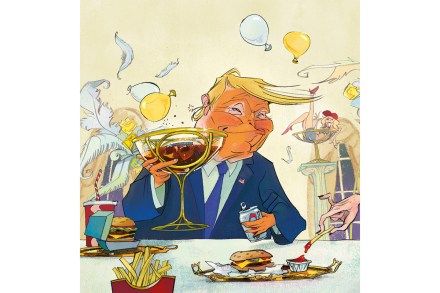
Whatever loopiness there is in Donald Trump’s personality is a loopiness born of isolation. For ten years the history of the world has revolved around him, not he around it. The events of last November have left Trump as, for all intents and purposes, the only remaining historical actor – especially after Xi Jinping’s retreat into obscurantism since the pandemic.

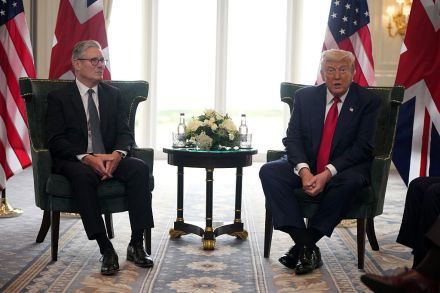
Trump Starmer

Church teaching on homosexuality can be revised

From our UK edition

Studies of Christianity’s problems and prospects often entail a distinction between the singer and the song. At an institutional level, the world’s largest faith is in deep trouble throughout much of western Europe – and increasingly in North America, too. Widely rehearsed elsewhere, the reasons for this steep decline include the spread of individualism along with an allied flouting of deference, mistrust of agencies said to lie beyond the tangible, and self-inflicted wounds such as the abuse crisis. Yet many who mourn the spread of secularisation remind us that for all its flaws, the Church has a good story to tell overall. How so? Two answers stand out. First, Christian outreach still forms the largest single source of social capital on Earth.

The Europe of American imaginations no longer exists

Since the United Kingdom left the European Union five years ago, the pair have been in battle to prove who has performed better. But the real story of the past five years is not a stagnant UK falling behind a buoyant EU, but of Britain and Europe being trapped in the same cycle of relative decline. It’s America that has quietly raced ahead of Europe this century. Following the pandemic it has become impossible to ignore the gulf in economic vitality between the US and Europe, the former growing by 16.3 percent per capita since 2008. There are very good reasons for America’s success, or rather, Europe’s decline. The EU and the UK increasingly treat their industries as pieces of heritage which must be preserved against disruptors and foreign competition.

Europe

An American’s love letter to Britain

From our UK edition

My wife and I relocated to the UK a few months ago after spending the past 37 years in the United States, and I cannot stop comparing the two countries. I oscillate wildly between my irrational exuberance at America’s superior market efficiencies and my sheer amazement at how orderly and polite you all are. These reactions surprise me, as I am hardly new to these shores. I attended graduate school at Oxford, worked for a while in London, married a beautiful and talented Essex girl (TOWIE indeed), and have consulted for the UK government in Northern Ireland for the past eight years. But now I actually live here, there are so many things that I am seeing with new eyes and deeply appreciate about the UK. Let’s start with the major ones. No guns.

Matt Ridley, William Cook, Owen Matthews and Agnes Poirier

From our UK edition

28 min listen

On this week’s Spectator Out Loud: Matt Ridley argues that whoever you vote for, the blob wins (1:02); William Cook reads his Euros notebook from Germany (12:35); Owen Matthews reports on President Zelensky’s peace summit (16:21); and, reviewing Michael Peel’s new book ‘What everyone knows about Britain’, Agnes Poirier ponders if only Britain knew how it was viewed abroad (22:28).  Presented by Patrick Gibbons.

Have you ever heard of the St. Brice’s Day Massacre?

The St. Brice’s Day Massacre? I must admit I hadn’t heard of this “most just extermination” of Danes in Oxford at the instigation of King Aethelred the Unready in 1002, perhaps because the teaching of history in Britain tends to kick off in 1066. You certainly don’t think of Oxford as a place that pioneered techniques of ethnic cleansing. Crypt is a collection of seven essays that unearth details about how certain people lived and died in the past. If you didn’t already know Alice Roberts’s background as an anatomist and biological anthropologist, you’d have a good chance of deducing it from this book.

Roberts

How Britain smashed the slave trade

From our UK edition

It was bound to happen sooner or later: a guest on the BBC’s Antiques Roadshow presented an artefact which derived from the slave trade – an ivory bangle. One of the programme’s experts, Ronnie Archer-Morgan, himself a descendant of slaves, said that it was a striking historical artefact but not one that he was willing to value. ‘I do not want to put a price on something that signifies such an awful business,’ he said. It’s easy to understand how he feels. The idea of people profiting from the artefacts left over from slavery is distasteful. Yet, as Archer-Morgan said, it is not that the bangle has no value: it has great educational value.

Who’s afraid of population growth?

From our UK edition

In ten years’ time, there’s a good chance that the main concern in the western world will be the threat of population collapse. Fertility rates are falling everywhere and no government has found a way of reversing the trend. Plenty have tried. South Korea has so far spent $200 billion on tax breaks and lowering childcare costs and has succeeded only in beating its own record for the world’s lowest birth rate, year after year. In Italy, the situation is close to a crisis, and in France it’s not much better. If this continues, the welfare state model, which depends on a decent worker-to-pensioner ratio, will collapse. There will not be enough tax revenue to finance pensions.

In search of a second epiphany

From our UK edition

When I go home to America next week for Christmas, I’ll go to church – the one my family and I used to attend every Sunday, a few towns over. I visit intermittently throughout the year when I’m back home, but I always go on Christmas Eve. The routine is the same: I sit quietly in the pews, sing along to the carols, and hope to have a second epiphany.   I had my first epiphany – that God exists – when I was a child. This, I’m sure, is the result of having two religious parents who raised me in the church. When I tell my British friends that I was brought up a Methodist, they tend to flash me a nervous look. I must assume that going to a Methodist church in the UK means something different than it does in liberal Connecticut.

How Wilfred Owen became a poet

Here is the opening of a sonnet written by Wilfred Owen in the spring of 1911: “Three colors have I known the Deep to wear;/ ’Tis well today that Purple grandeurs gloom.” Owen was eighteen and had just been on a pilgrimage to Teignmouth in England, where his hero John Keats had once stayed. The kindest thing to say about this poem is that it is heavy with the influence of Keats. Six years later, in a seaside hotel requisitioned by the army and waiting to be sent back to the Western Front, he begins a poem like this: “Sit on the bed. I’m blind, and three parts shell.” This looks so simple. The monosyllables carry the meter without fuss; “shell” here means both munitions and protection.

Owen

Rishi’s smoking ban inspired me to light a cigarette

From our UK edition

What has Rishi Sunak’s government achieved in its first year? The highlights include a renegotiated Brexit policy and setting more practical net-zero deadlines. But Sunak asked the country to judge him on his ability to deliver his pledges set out at the start of the year. If polls are to be believed, voters are preparing to do just that. Inflation is falling, but that’s largely due to interest rate hikes announced by the Bank of England. The economy is growing, but barely. The NHS waiting list keeps rising – 7.6 million now in England alone. On this last point, no doubt the six-figure salaried consultants who keep striking deserve part of the blame. But to say the Sunak government is struggling to make good on its promises would be putting it rather gently.

The full English: how to fall in love with this country

From our UK edition

My nine-year-old half-Russian daughter has arrived in England for the first time since she was a baby. As she knows almost nothing about British culture apart from Peppa Pig and Willy Wonka, my job is to put together a week-long programme before she goes back to Italy, where she currently lives with her mother, my ex-partner. They were living in Russia but left following Vladimir Putin’s invasion of Ukraine. Ideally, my daughter will go home enthused about all things English and wanting a lifetime more. But where do I start? Peppermint Aeros and Crunchie bars are the things I want to pass on, far more than the music of Elgar First, there’s the question of food.

How do I know I’m an adult? I’m given unsolicited feedback

From our UK edition

Adulthood was once determined by age, but now we’ve extended childhood far beyond the teenage years. If the government gets its way, the next generation will never grow up: there are reportedly plans to ban cigarette sales to anyone born after 2009. This would mean that, come 2060, 50-year-olds could be begging their elders to pop into the local corner shop to buy them a pack of 20. We need a new metric of adulthood, and I have a proposal. The real mark is not an age or any particular milestone, it’s really when you receive your first piece of unsolicited feedback. It’s a grim but unavoidable rite of passage: having personal and outlandish comments directed your way, often in such a breezy or casual manner you’d think they were talking about the weather.