Brideshead revisited

The literary appeal of the English upper classes

“However British you are, I am more British still,” said the American expatriate novelist Henry James, explaining his fascination with all things aristocratic and Anglo. It’s a type of fascination that’s only gathered steam over the years. A grand representative of the establishment, Lady Anne Glenconner, sold thousands of copies of her first book, Lady in Waiting, in the US, and recently discovered that her (admittedly predominantly homosexual) American fanbase has taken to throwing Lady Glenconner-themed costume parties. Meanwhile, Carla Kaplan, whose biography of Jessica “Decca” Mitford, Troublemaker, went on sale at the end of last year, discovered that Decca, known as “the Queen of the Muckrakers,” has a manic following among cowboys and long-haul truckers.

Is it better to be posh or cool?

What in twenty-first-century Britain is it better to be: posh or cool? Of course the correct answer is: it’s best to be posh and cool. But posh people, on the whole, tend not to be cool and really cool people aren’t usually posh. But the tribes have a lot in common. They share a certain insouciance, which is a posh word for total indifference to the feelings and thoughts of other people. They are both anti-democratic and anti-meritocratic in spirit and practice. No matter how hard you try and how much money you have, you can’t join the posh or be cool. Like sex appeal, you’ve either got or you ain’t. Defining either group is not easy, but you know when you see it — or in the case of the posh, hear it.

posh

A Very Royal Scandal — a very controversial series?

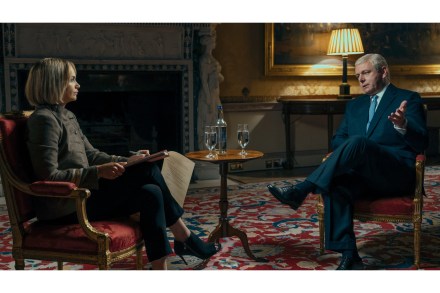
Now that The Crown has finished (for the time being, at least), production companies are scrabbling about for replacements. Perhaps inevitably, the biggest royal story of the past few years — Prince Andrew’s disastrous 2019 interview with Emily Maitlis on the BBC’s Newsnight program — has now been made into two separate shows this year. The Netflix offering, Scoop, focused on Sam McAlister — and was, far from coincidentally, based on McAlister’s memoir. Now Amazon Prime has entered the fray with a three-part series that follows in the wake of the peerless A Very English Scandal and the lesser A Very British Scandal. Whatever next?

royal scandal

Et in Arcadia ego

"Oxford I do not enjoy,” wrote T.S. Eliot to Conrad Aiken in February 1915. “The food and the climate are execrable, I suffer indigestion, constipation, and colds constantly.” The poet was clearly having one of his bad days. Since arriving at the university the previous October, he had found himself in and out of love with the place, which was hardly surprising, given the timing. Most of the undergraduates at Oxford had either left or were on the verge of leaving to fight for their country, meaning that the lecture and tutorial rooms were almost empty, the sports fields green through lack of use, and the centuries-old traditions stalling like motor cars on the long stretch of the High.

Oxford

Waugh in Hollywood

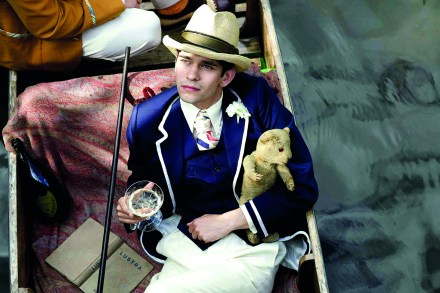
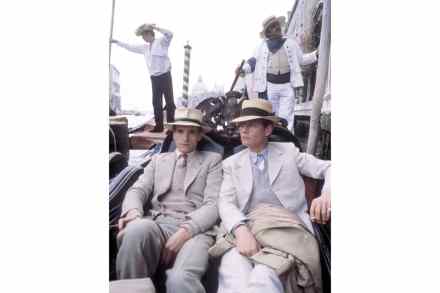
The English author and curmudgeon Evelyn Waugh (1903-66) is today best known for his 1945 novel Brideshead Revisited. A luxuriant evocation of the beauties of pre-World War Two Oxford, coupled with a cautionary narrative about the destructive power of Catholic guilt, it has remained a constant favorite with everyone from college students to literature scholars. It was memorably filmed for British television in 1981, and it launched the careers of Jeremy Irons and Anthony Andrews as, respectively, the novel’s narrator Charles Ryder and the flamboyant aesthete Sebastian Flyte.

waugh

Why we should venerate Evelyn Waugh

Evelyn Waugh is popularly known today as a comic author, despite the fact that Brideshead Revisited, made famous by the eponymous 1981 television series, is certainly not a comedy. Not everyone agrees. Years ago, a well-read friend of mine remarked to me that he was not fond of Waugh’s work. When I asked why, he replied, ‘Because I don’t think he’s that funny.’ I answered that the way to appreciate the exquisite wit of Evelyn Waugh is to approach him in the expectation of something other than humor, in which case the absurd incongruities, outrageous juxtapositions and ludicrous extremes that occur throughout the novels are in fact supremely funny. Waugh never set out to write comedic stories in the manner of P.G.

waugh