Brexit

Why a Brexit deal would make it through Parliament

It might not feel like it after Monday’s press conference theatrics and the briefings coming out of Brussels, but there is still a chance of a Brexit deal. It should be stressed that it is still odds against an agreement being reached. There has, though, been some shifting in positions in the last few weeks. The EU is now open to reworking the withdrawal agreement in a way that it simply wasn’t a month or so ago. The British government, the DUP and Dublin have all—to varying degrees—moved; meaning that there is now some hope of finding a way to replace the backstop. As one senior British government source puts

Only the judiciary can save the Tories from themselves

Boris Johnson is using the conventions of British public life to destroy the British constitution. He is relying on the old understanding that good chaps don’t ‘go too far’ while ‘going all the way’ himself. He is counting on the judges being frightened of challenging him, while showing no fear as he tramps over and tramps down the lines that once marked the separation of powers. Johnson breaks the rules while insisting that everyone else must obey them. He’s like a criminal who cries with outrage when the police do not follow their procedure to the letter, and the judges should find the courage to treat him as such. In

Revealed: The Brexit deal Boris Johnson wants

The shape of the Brexit fix that Boris Johnson wants from the EU’s 27 leaders is now clear. Here it is: In place of the dreaded backstop – that insurance policy for keeping open the border on the island of Ireland hated by most Tory Brexiters and Northern Ireland’s DUP – Johnson is suggesting: a) A unified single market for agriculture between Northern Ireland and the Republic (a single set of what are known are sanitary and phytosanitary rules), so that cross border flows of livestock and food is not hindered; b) Customs and limited unintrusive goods standards checks on the island but away from the border itself; c) No customs union with the EU for either the whole

What Jean-Claude Juncker learned from Boris Johnson

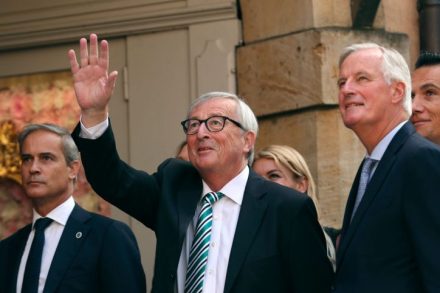
I am told Jean-Claude Juncker learned just one thing from Boris Johnson on Monday in Luxembourg. In the words of one of his colleagues there was “confirmation that the UK (under Johnson) wants more of a border on the island of Ireland than the previous government”. Which is the nutshell of the whole of what the PM seeks qua new deal and what the EU’s 27 leaders need to evaluate either as deft compromise or as brutal betrayal of Dublin and the Good Friday Agreement. This dispute harks back to the December 2017 joint agreement between the UK and EU which pledges to prevent the creation of “a hard border including any physical infrastructure

Boris Johnson’s frosty reception in Luxembourg

Is Boris Johnson approaching a Brexit breakthrough? That’s the question being asked among Conservative MPs after there appeared to be movement last week from the government and DUP that could help to secure a deal with the EU. Today the Prime Minister met with EU commission president Jean-Claude Juncker in Luxembourg to discuss the prospect, over a lunch of pollock and risotto. On the conclusion of the meeting, a No. 10 spokesman said the pair had agreed to step up discussions and for Michel Barnier and Brexit Secretary Stephen Barclay to hold talks on a political level: ‘The leaders agreed that the discussions needed to intensify and that meetings would

The Lib Dems’ Brexit unicorn

Lib Dem conference in Bournemouth is proving to be a jolly affair so far. I’m writing this in the garden of the Highcliff hotel, looking out over the Channel that divides the UK from France and, perhaps one day, the European Union. It’s Brexit that’s making the Lib Dems happy as they bustle by. Parties are generally happy when they feel they have a clear line on big issues, and the Lib Dem line on Brexit is now crystal-clear: cancel it. Partly because they expect a big Labour shift towards a clear Remain position, the Lib Dems are now, in headline terms, committed to revoking the Article 50 notification and

Watch: Jo Swinson’s Brexit referendum muddle

Jo Swinson has said she will never forgive David Cameron for calling the EU referendum in 2016. ‘I think so many of the problems that we are facing right now stem from David Cameron’s shocking misjudgement in putting the interests of the Conservative party ahead of the national interest,’ the Lib Dem leader told her party’s conference in Bournemouth. But Mr S. notes that Swinson hasn’t always thought that way about a referendum. Back in 2008, Swinson told the Commons that she backed “a referendum on the major issue of in or out. It’s on the issue of in or out of Europe”. Swinson also took Brussels to task, saying that ‘the

Lib Dems are the real Brexit extremists

The Lib Dems are now the most extremist party in the UK. They might not look like extremists, being made up of mostly nice, middle-class people from the leafier bits of the nation. But they have just adopted a policy that is arguably more extreme, more corrosive of British values, more counter to the great traditions of this nation, than any other party policy of recent decades.  Yes, this is the new Lib Dem policy to cancel Brexit. At their party conference in Bournemouth the Lib Dems voted overwhelmingly in favour of a policy of ‘stopping Brexit altogether’, in Jo Swinson’s words. New member Chuka Umunna spelt it out: ‘This

Is Jeremy Corbyn preparing to purge moderate Labour MPs?

Ahead of the looming general election, moderate Labour MPs are understandably upset by an instruction they say the party has given to suspend the selection of new candidates in seats where the serving MP is retiring or has defected. They’ve been told the reason is to ‘concentrate on the trigger ballot processes’ – or the deselection of usually moderate MPs who have alienated activists. See the below email by a Labour official for detail. What moderate MPs fear is that there is tacit support from Labour’s leadership for a purge of MPs from the right of the party. They are worried that the suspension of the selection process in seats where there

We are facing the biggest test of British democracy since 1939

It is almost 11 years to the minute since we reached the eye of the banking-crisis storm. And even though I was right in the middle of it, reporting on it day and night, I feel much more anxious today as I chronicle our political and constitutional crisis. The reason is simple. However egregious the harm to our living standards of the financial shock, markets and economies always bounce, always recover, eventually. Part of the widespread collapse in trust in our leaders stems from how much our living standards suffered and the slowness of the recovery. But a kind of Newtonian law applies: what falls must bounce back. What is

Sunday shows round-up: A Lib Dem government would revoke Article 50, says Jo Swinson

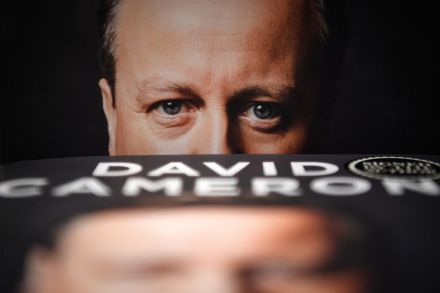
Steve Barclay – Boris Johnson ‘believes in Brexit’ David Cameron’s memoirs are due to be released this Thursday, with some of the more explosive highlights already seeing serialisation. The Sunday Times has published an extract today that argues that Boris Johnson did not believe in Brexit, and only backed the Leave campaign to win over the Conservative rank and file. The Brexit Secretary Steve Barclay joined Sophy Ridge and immediately refuted the former Prime Minister’s claims: "The prime minister was committed to leave" – Brexit secretary @SteveBarclay tells Sky News that Boris Johnson does believe in #Brexit, following the criticism from former PM David Cameron.#Ridge For more, head here: https://t.co/wp1ylDj7vu

Why the UK hasn’t presented any specific backstop proposal to the EU

The EU side regularly points out that the UK government hasn’t presented any detailed proposals on what it wants to replace the backstop with. At a Cabinet committee meeting this week, the Brexit Secretary Steve Barclay set about explaining to ministerial colleagues why this was. As I report in The Sun this morning, He told the Committee that the EU had set three tests for any new proposal. First, it must avoid any infrastructure on the border that would be incompatible with the Good Friday Agreement. Second, it must protect the integrity of the EU’s single market. Third, it mustn’t involve any checks on the island of Ireland. Barclay said

Britain’s jobs miracle proves there is no reason to fear technology

Another week, another set of economic figures that suggest the country is showing remarkable resilience while politics implodes. Rather than fall into recession, as so many predicted, the economy leapt forward in July. We now have the lowest unemployment for 45 years, an extraordinary figure. Income inequality is near a 30-year low. The confidence crisis that politicians are experiencing is not reflected outside of Westminster. There is little evidence to suggest that machines are taking people’s jobs. Instead, they are being used to do low-end tasks, freeing up humans to work in more complex, better-paid roles. We now have machines taking restaurant orders, checking people in at airports and fulfilling

The Yellowhammer report is nothing like a real contingency plan

The latest Operation Yellowhammer disclosures put me in mind of a book I read a few years ago describing an unsettlingly plausible zombie outbreak in Britain. When the streets were too full of undead shamblers for the government to ignore, the Home Secretary asked officials who were barricaded in his office for the contingency plan to deal with this apocalypse. He was handed one sheet of A4 on which was simply written, ‘run away screaming.’ I wonder whether Michael Gove had anything much more coherent to rely on when he took up the reins at the Cabinet Office at the back end of July and asked for the latest no-deal

Will turning the Tories into the pro-Leave party pay off for Boris?

An election might still be months away, but the parties have already made their big strategic choices. The Tories and the Liberal Democrats are betting that Brexit is the defining issue of our times and that its pull is strong enough to dissolve longstanding party allegiances. Jeremy Corbyn, meanwhile, is planning on fighting a much more traditional left vs right campaign. His second-referendum policy is almost an attempt to quarantine the issue of Brexit. Since becoming leader, Boris Johnson has reshaped the Tory party in an attempt to make it fit for purpose in an era when politics is defined by Brexit. He has abandoned Theresa May’s tolerance of dissent

Blow for Boris as parliament may return early

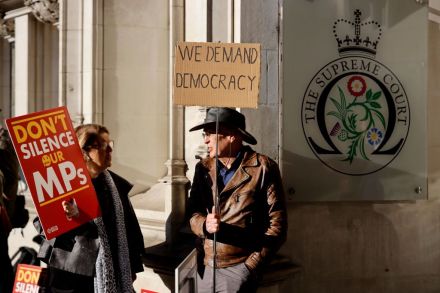
The Court of Session’s verdict that prorogation is unlawful is a major headache for Boris Johnson. It makes the Supreme Court’s decision on the matter, and the court will hear the case on Tuesday, much more unpredictable. There is now a significant chance that parliament will have to be recalled. The Supreme Court will hear all the various cases on prorogation at the same time on Tuesday, remember the government won in the High Court in London. But it will adjudicate these cases in line with the law of the court from which they came. So, it will decide the case from the Court of Session according to Scottish Law

Brexit is already changing the British economy – for the better

The government has lost its majority. The constitution has fallen apart. The country no longer has any idea whether it is leaving the European Union or not. Historians and political commentators are queuing up to tell us this is the lowest point in the country’s history since the Suez Crisis/Civil War/Dissolution of the Monasteries (delete as applicable). And yet, amid all this chaos and confusion, something else is happening. The economy, slightly surprisingly, is purring along quite smoothly. The explanation? In truth, the EU doesn’t make much difference to the economy anymore. And insofar as it does, leaving is a marginal improvement. The City expected the economic data released this

Labour will not endorse Remain in a general election

Very important breaking news. Which is that trade unions, in their TULO meeting with Jeremy Corbyn, have tonight endorsed the Labour leader’s position that in a general election Labour should campaign for a referendum that would have a “credible leave option and remain” on the ballot paper. The reason this matters is that those senior members of the shadow cabinet, such as Keir Starmer, Emily Thornberry, John McDonnell and Tom Watson, who want Labour to adopt an unambiguous remain position have been defeated. “It is important that voters who want to leave as well as those who want to remain can vote Labour. What we’ve rejected is the Trumpian no-deal

The three numbers that measure Britain’s constitutional crisis

Here in a few numbers is the measure of the catastrophic mess we are in; caused by failing to resolve how, when and whether we are leaving the EU some 1,174 days after British people voted for Brexit. MPs are being locked out of the Commons chamber for 34 days and nights, because the prime minister does not trust them not to thwart his plans to extract the UK from the EU ‘do or die’ on October 31. That is an insult to our parliamentary democracy, some would say. Former Prime Minister Theresa May has rewarded 31 of her officials, fellow ministers and MPs. Gongs rank from MBEs to peerages.