Brexit

Nigel Farage’s Brexit party u-turn still isn’t enough

From our UK edition

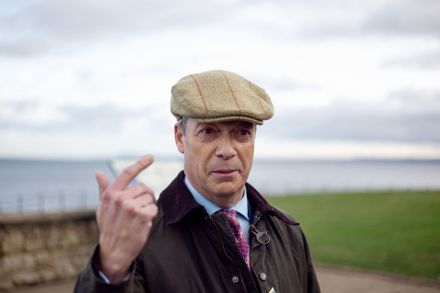
Nigel Farage says his party will stand aside in all 317 seats the Tories won in 2017. This drastic u-turn in the Brexit party election strategy had been expected. But it still strikes me as a poorly thought through plan, given that it means the Brexit party will give a free pass to Brexit rebels like Greg Clark (in Tunbridge Wells) and also make life difficult for Tories in top Labour-held target seats. Farage can point to an explicit, on-camera promise from Boris Johnson about not extending the post-EU departure transitional phase beyond the end of next year as yet another shift he has forced in the Tory position. And he can use that as a rationale for abandoning his unconvincing threat to stand everywhere.

Labour thinks that its trump card is Trump

From our UK edition

On Wednesday morning, I was hoisted into the air of Whitehall on a cherry-picker. A century ago the proto-Cenotaph appeared in time for the London Peace Parade in July 1919, which followed the signing of the Treaty of Versailles. In that first year, the Cenotaph was only a timber and canvas structure, built to last a week; but Edwin Lutyens’s design seemed so right that the present structure, more precisely designed, was built in Portland stone for Remembrance Day 1920. English Heritage, now a charity rather than a government body, cares for the monument — as it does for 400 monuments in England, including 46 in London. The chairman, Vice-Admiral Sir Tim Laurence, husband of the Princess Royal, wanted me to see its annual clean before this Sunday’s Remembrance Day parade.

Portrait of the week: Bercow steps down, Hoyle steps up and an election begins

From our UK edition

Home Sir Lindsay Hoyle, the Labour MP for Chorley and deputy Speaker since 2010, was elected Speaker by the Commons. His first words were: ‘No clapping.’ Nigel Farage, the leader of the Brexit party, proposed an electoral pact with the Conservatives, but only if Boris Johnson, the Prime Minister, repudiated the agreement on Brexit that he had made with the European Union. When this was not forthcoming, he said: ‘We will contest every single seat in England, Scotland and Wales.’ But he declined to stand for parliament himself (which he had done seven times before, without success). Philip Hammond, the former chancellor of the Exchequer, decided against standing as an independent in the election after all.

Dear Nigel: Don’t become the man who reversed the referendum result

From our UK edition

  Dear Nigel Believe it or not, I’ve been your defender. I’ve often told Americans,  ‘Sure, he comes across as a fop. But listen to what he actually says. He’s smarter than you think.’ OK, you have an affect problem. I’ve seen through the clowning. I bet you’ve never been that camp off-camera, and lately you’ve cut the buffoonery well back. It’s thanks to you that the 2016 referendum ever happened. Those who style themselves as your betters dismiss David Cameron’s electoral stunt as a cynical bid to end Tory infighting over Europe. Yet the vote revealed a profound division in the country itself far more deserving of resolution than internecine squabbles among MPs.

Hysteria about Russian interference is becoming a joke

From our UK edition

The murder of Russian defector and fierce Putin critic Alexander Litvinenko was a radioactive wake-up call to many in the West about the nature of the Russian regime. Eight years later, the annexation of Crimea and subsequent invasion of eastern Ukraine in 2014 were also rightly condemned around the world. It's safe to say these events – and the ongoing allegations of Russian meddling in western democracies – have made it an interesting time to be a Russian in this country. Yet while this topic has been a rich vein of material for a comedian, the extent of hysteria about Russia’s involvement in every aspect of our daily lives is now getting beyond satire. We’re told the Russians were responsible for Brexit.

John Bercow blasts Brexit

From our UK edition

When John Bercow was House of Commons Speaker, there was a sense on both sides that he was a politician who did not think much of Brexit. Despite the role of Speaker being a supposedly neutral job, Bercow's decisions regarding Commons procedure led many to suspect that he held strong views on the issue. Now Bercow has confirmed this. Just six days after Bercow left his 'high chair' (as Boris Johnson called it), the former Speaker has said Brexit is 'the biggest foreign policy mistake in the post-war period'. So did Bercow's views on Brexit make it hard for him to be impartial when he was speaker? Not so, Bercow told journalists at the Foreign Press Association earlier today.

Boris Johnson’s election has got off to a dreadful start

From our UK edition

The cliche, from my memory already creaking under the political strain, is that oppositions never win elections, governments lose them. Well this election is only a few hours old and Boris Johnson and his team – who let's not forget – have been gagging for this election for months are doing a spectacular job of mucking it up. There's been Jacob Rees-Mogg and Andrew Bridgen engaging in a humiliating double act of insensitivity towards the victims of the Grenfell tragedy. There's been the Tory candidate in the Gower revealed to have said benefit claimants should be put down.

Philip Hammond’s departure shows how Brexit has changed the Tories

From our UK edition

Until a year or two ago, if you’d asked me to describe the archetypal Conservative, I’d have sketched out someone who looked a lot like Philip Hammond. Hammond is a self-made man who made a small fortune in several areas of business. He represents a seat in Surrey. He drives a Jag. Politically, he’s small-c conservative: sceptical of radical change and of government intervention, a committed fiscal hawk who instinctively resists the sort of spending spree his party is currently engaged in. Socially, he is no liberal: though he accepted it in the end, he was a Cabinet sceptic of the push for gay marriage, fearing the change would upset many Tory-inclined voters. And as of midnight tonight, Hammond will leave the Commons never to return.

The Lib Dems’ £50bn ‘Remain bonus’ is nonsense

From our UK edition

The schools will all get new books. The hospitals will all be rebuilt. Long-suffering public sector workers will finally get a pay rise and there will be a ton of money to fight climate change. Liberal Democrat leader Jo Swinson is promising there will be a £50 billion ‘Remain Bonus’ to spend on public services after she has won the general election and cancelled our departure from the European Union. If she weren’t quite so humourless she might even be tempted to put that figure on the side of a bus. But hold on. From die-hard Remainers, who accuse the other side of peddling dodgy figures and who pride themselves on ‘evidence-based’ policy-making, that claim is more than little outrageous.

Jean-Claude Juncker’s staggering hypocrisy

From our UK edition

Jean-Claude Juncker has got some front. Today, to the glee of Boris-bashers and hardcore Remainers, he has accused Boris of having told lies during the EU referendum campaign. Is he serious? This is a man who has publicly defended and even advocated lying. This is a man who has insisted that untruths are an essential part of political life. Sometimes ‘you have to lie’, Juncker once said. For him now to accuse Boris of being a liar is an act of staggering hypocrisy and technocratic cant. As part of his slow-motion vacation of the role of president of the European Commission, Juncker has given an interview to Der Spiegel. In it, he takes some swipes at Boris.

Brexiteers shouldn’t vote for the Brexit party

From our UK edition

The only person ever elected for the Brexit party’s predecessor, Ukip, at a General Election, I really can’t see the point in voting for them now. Why? If you want Brexit done, Boris needs to be returned as Prime Minister on 12 December with a working majority. Backing him is the only way to beat the Brexit blockers, who’ve done everything they can to try to stop us leaving. A vote for the Brexit party won’t just add to the uncertainty. When Nigel Farage announced he’d be fielding candidates in every seat across the country, unless Boris ditched his deal, he also suggested that the Brexit party now wanted us to remain in the EU for an extra six months. You read that right.

Why the left wants a political advertising ban

An easy, crowd-pleasing opinion column would maintain that banning political adverts from social media platforms is wrong because it implies that voters are anything less than impeccably rational in their decision. We like to think our votes are based on our pure objective reason. Simultaneously, we like to think the votes of people that we disagree with are based on the outrageous propaganda of our opponents and the sheeplike and emotional qualities of their supporters.Balderdash. None of us have a Spock-like devotion to logic or an assiduous grasp of evidence when we vote. We are all prey to biases that bubble out of our stew of grievances, tribal loyalties and tribal hatreds, sensitivity to rhetoric and keen desire for social status.

advertising

Could ‘catastrophe Christine’ crash the euro?

From our UK edition

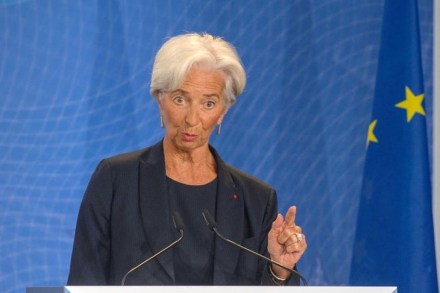
As president Sarkozy’s finance minister, Christine Lagarde ran up one of France’s largest ever budget deficits and moved so slowly on reforms it cost him re-election. As managing director of the International Monetary Fund, she collaborated in a ruthless deflation that created the worst recession in recorded history in Greece. She then led the IMF into potentially its worst ever losses with a failed bail-out of Argentina. Wherever Christine Lagarde goes she leaves an economic train wreck behind her. And now, extraordinarily, she has been put in charge of the most fragile currency in the world. Today, Lagarde moves from the IMF to the presidency of the European Central Bank. On the surface, that might appear nothing more than switching one technocrat for another.

Donald Trump, Brexit voice of reason

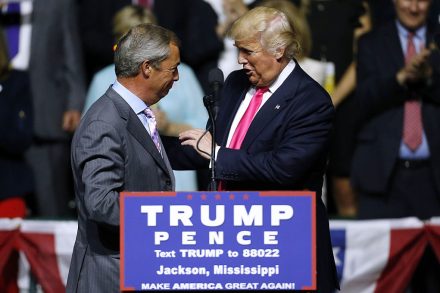
For a president about to face ‘The Greatest Witch Hunt In American History’, Donald Trump sounded thoroughly unperturbed when, as presidents often do when the House votes to impeach, he turned his attention to that essential part of the top job: a long, relaxed and amiable phone interview with Nigel Farage, addressing such matters of central import to the American public as the electoral chances of Jeremy Corbyn. Trump was on comedic top form, bantering about ‘Boris’ and ‘Sleepy Joe’ and ‘Pocahontas’, and explaining to his out-of-town audience that impeachment proceedings weren’t going to proceed anywhere because the Republicans control the Senate.

farage voice

‘The only place I can’t get my plays on is Britain’: Peter Brook interviewed

From our UK edition

‘Everyone of us knows we deserve to be punished,’ says the frail old man before me in a hotel café. ‘You and I for instance. What have we done this morning that is good? What have we done to resist the ruination of our planet? Nothing. It is terrifying!’ Peter Brook fixes me with blue eyes which, while diminished by macular degeneration that means he can make me out only dimly, shine fiercely. But for the genteel surroundings and quilted gilet, he could be Gloucester or Lear on the heath, wildly ardent with insight. ‘Think of Prospero. He’s a bad character, hell-bent on revenge for his brother’s wrong, a colonialist who dominates Caliban and the rest of the island.

Letters: What would be the point of a second referendum?

From our UK edition

Another referendum? Sir: Matthew Parris’s article ‘What question should a second referendum ask?’ (26 October) occasioned a wry smile from me this morning. His first question — whether Britain should remain in or leave the European Union — has already been asked and answered, at great expense and trouble, in 2016. The only logical reason why it should be re-asked is if the first time it was asked was illegitimate in some way. But it was only after the result was known that questions were raised about its legitimacy. At the time, not a breath was raised. However, I do like Mr Parris’s second question. We shouldn’t have a second referendum, but if we do let’s make the choice ‘deal or no deal’.

Why a Tory-Brexit party pact isn’t likely

From our UK edition

Nigel Farage’s European election-winning machine is the guest that has not yet turned up to the 2019 general election party. This can only be because it has certain fundamental questions still to settle about the nature of its campaign. Such as how many seats to fight. And whether to adopt a strategy of being slightly cuddly towards the Tories or one of strict “equi-hostility” towards all parties that do not back its “clean break” version of Brexit. Which, in effect, would mean all other parties.

Halloween and the horror of ableism

From our UK edition

All Hallows' Eve is almost upon us and busy-bodies everywhere are sharpening their knives ahead of the inevitable annual costume scandal. For ordinary party-goers, there is reason to be fearful. Pick the wrong outfit and the consequences – getting fired, kicked out of university, ending up on the front page of a national newspaper – might be with you for the rest of your life.  Thankfully, the National Union of Students has stepped in to help. Urging every reveller to 'check and double-check their costume', the NUS has published an updated set of guidelines on how to be woke-macabre. 'Halloween should be fun and most of us love it', says the NUS. 'But sometimes, there can be detrimental stereotypes hidden behind a costume'.

Boris Johnson’s Brexit deal won’t cost Britain £70bn by 2029

From our UK edition

Yet again, listeners to the Today programme awoke this morning to hear a dire forecast for the economic consequences of leaving the EU – with no critical analysis nor even explanation of how the forecast was arrived at. This morning’s horror story came courtesy of the National Institute for Economic and Social Research (NIESR), a think tank which claims the economy will be 3.5 per cent – or £70bn – smaller in 10 years’ time than if we had never voted to leave the EU. The NIESR claims the economy is already 2.5 per cent smaller than it would have been had we voted to remain in 2016 and that this loss will last ‘in perpetuity’. Well, there it is.

Boris Johnson rallies Tory MPs as Commons backs snap election

From our UK edition

The House of Commons has just voted by 438 to 20 for a 12 December election. Given that amendments on extending the franchise were not selected as they were out of scope, the Commons has also backed an election with the existing general election franchise. Even in these unpredictable times, it would be jaw dropping if the House of Lords tried to amend this bill tomorrow. So, it looks pretty much nailed on that we are heading for a 12 December election. We can see in the parties who have been most enthusiastic about this poll—the Tories, the SNP and the Lib Dems—who thinks they will benefit from it. In truth, they all could unless Labour has a campaign bounce.