Brexit

Our Easter lamb reveals the miracle of free trade

From our UK edition

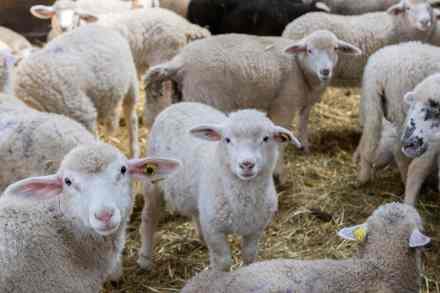
Easter is heavily associated with lamb in Britain. The paschal lamb's sacrifice is a gift to all but that is not the only link, the last few weeks of lent also mark the beginning of the spring lambing season in agricultural communities. This has fed through in recent decades to the consumer. This Sunday, while the churches stand empty and a great many of us are separated from our family, millions of us nonetheless will sit down to a meal of lamb. If you live in Britain though, this is actually quite an odd phenomenon when you think about it. Lamb is not really in season. New season lamb has only just been born.

Who is Dominic Raab?

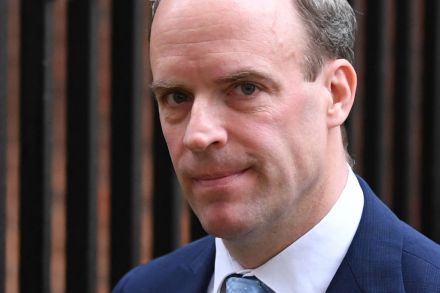
On Monday evening, Britain’s Prime Minister Boris Johnson, diagnosed 11 days’ earlier with COVID-19 and taken to hospital for ‘tests’ on Sunday afternoon after showing ‘persistent’ symptoms, was moved into an Intensive Care Unit at St Thomas’s Hospital in London. A brief statement from 10, Downing Street described Johnson’s ‘worsened’ condition and confirmed that Johnson, who had continued working in isolation throughout his illness, had asked foreign secretary Dominic Raab to ‘deputize for him where necessary’.Forty-six-year-old Raab is also the first secretary of state, the most senior member of Johnson’s cabinet.

dominic raab

The man who defined Labour’s forgotten past

From our UK edition

To read this long-overdue and welcome biography of Peter Shore is to undergo a journey from Labour’s eurosceptic heights in the 1960s to its demise as a party of the nation state in the 1990s. Titled Labour’s Forgotten Patriot, patriotism is a theme which constantly recurs and, to a considerable extent, defined Shore’s political life. Peter Shore has been a rather neglected figure. This is odd since he had considerable influence over Labour politics for two decades and was probably the staunchest defender of Britain’s independence.

A Brexit delay could last longer than you think

From our UK edition

Here’s something Brexiteers might want to keep an eye on. While the country’s attention is welded to the Tesco delivery website, there are moves afoot to delay the Brexit negotiations. Fabian Zuleeg, chief executive of the European Policy Centre, has called an extension of the transition period ‘an absolute must’ given the Covid-19 outbreak. He contends: ‘There will simply not be any bandwidth to focus on the negotiations, which require a delicate balance of give and take. In a situation with major healthcare challenges in the short- and long-term and economic challenges already requiring urgent action, there will not be enough political time and attention to successfully conclude this EU-UK agreement.

After liberalism

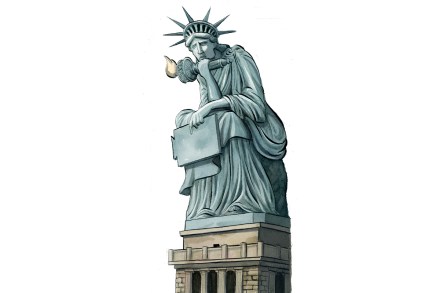
We’re entering the post-liberal moment. From Trump to Brexit, Ireland to Brazil, we’ve seen a number of revolts at the ballot box that point to a mass vote of no-confidence in the economic and cultural status quo — in other words, in 21st-century liberalism. The liberals aren’t taking it lying down. They’re doing their best to define post-liberalism in language they are most comfortable with, calling it ‘fascist’ or ‘communist’ — and sometimes the criticism is spot-on. But other times it is wholly inaccurate. One of the glaring paradoxes of the post-liberal moment is that many of the people involved in it want to rescue liberalism from itself.

liberalism post-liberal

Coronavirus will be a test of trust

From our UK edition

We are in a make-or-break moment for trust, not just in this government but in the British state itself. The measures that were announced by Boris Johnson and Rishi Sunak this week are extraordinary in economic, social and legal terms. When the Covid-19 crisis is finally over, the state will be judged against how effective they were. None of us will have lived through anything like what we are about to experience. If this country gets it broadly right, then trust in our politicians and the state will rise. But if it gets it wrong, then the nature of the relationship between the citizen and the state will be changed for at least a generation. People will be far more reluctant to follow official advice in future. Johnson now talks about this being a ‘wartime government’.

Michel Barnier tests positive for coronavirus

From our UK edition

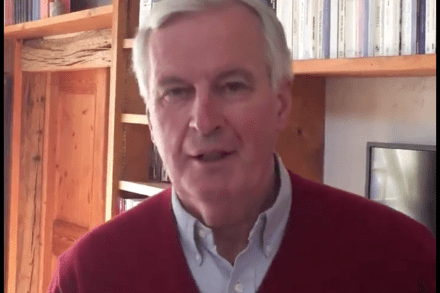
For those wondering how coronavirus will affect the Brexit negotiations, one immediate issue has arisen today: Michel Barnier has contracted the disease. The EU's chief negotiator revealed the diagnosis on social media this morning, and said that ‘I am doing well and in good spirits. I am following all the necessary instructions, as is my team.’ https://twitter.com/MichelBarnier/status/1240583782643773440?ref_src=twsrc%5Etfw So far, the UK and EU have continued with the Brexit negotiations, even as the virus spreads across the continent. But now that the EU’s chief negotiator and team are presumably in quarantine, the chances of a deal being reached by the end of the year are looking increasingly slim.

Brexit won’t stop a coronavirus vaccine reaching the UK

From our UK edition

The Brexit culture wars are back. On Saturday, the Guardian published an article entitled: 'Brexit means coronavirus vaccine will be slower to reach the UK.' As usual with such pieces, the words 'if' and 'could' do more heavy lifting than Atlas. The gist of the article's argument is that leaving the European Medicines Agency (EMA) means the UK will no longer be able to benefit from processes that expedite the authorisation of pharmaceuticals for use. This is because manufacturers may decide to meet the approval process for the much larger EU market first before applying to the UK regulator for approval here. That might be true, but only if the UK sets its own regulations in this way.

The madness of #ToryGenocide

From our UK edition

The hashtag #torygenocide was trending on Twitter all day Sunday. This is because seemingly rational people have got it into their heads that Boris Johnson is using the Covid-19 outbreak to orchestrate a social cull in the UK. There is a debate over the wisdom of the strategy the government has been advised to take by the chief scientific adviser. Robert Peston asks a question about testing that, if I’m honest, makes me wonder about the wisdom of how we’re going about this. Still, I am not a scientist. I don’t know whether Downing Street has taken the right or the wrong approach. I’m happy for others to have that debate. This is not that. This is not a scholarly exchange on the merits of ‘herd immunity’ or social distancing.

Revealed: Michel Barnier and France’s Brexit stitch-up

From our UK edition

The glaring difference between the EU and British negotiating goals has been brought into plain sight. In readiness for the upcoming Barnier-Frost negotiations, the French senate produced for the French government a set of requirements that Michel Barnier should work to in the negotiations. Those recommendations, which it published on 6 March, are extremely hardline. If Britain were to accept even a few of the key objectives, it could undermine Brexit. Given president Macron’s power in the European Council it is safe to say that most, if not all, of the recommendations will figure prominently in Barnier’s negotiating file. Frost will have to be on his guard to resist them when talks get underway.

How British science can flourish after Brexit

From our UK edition

I’m a Texan as well as a physicist so I hope it doesn’t sound boosterish if I say that no nation has contributed more to basic science than Britain. No other country has such an uncanny aptitude for it. I’m not sure what combination of poetry and pragmatism makes this possible, but I don’t need to go far to find evidence. A few streets from where I work in Mayfair lies the Royal Institution, which earned more Nobel prizes in science than all of Russia. Or consider Newton, Darwin, Faraday, Maxwell, Rutherford, Hardy, Dirac, Fleming, Crick, Higgs, Hawking and Wiles. All are bywords for British originality. They have something else in common: none was concerned about the utility of their work.

Michael Gove misses the mark

From our UK edition

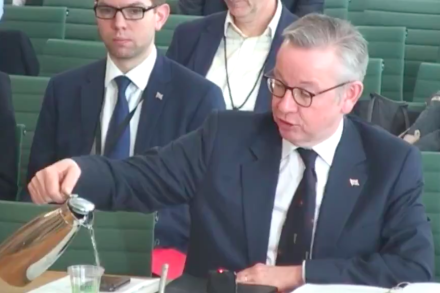
Oh dear. Michael Gove, the minister entrusted to head up the British civil service, seems to have developed a problem with multitasking. The key government minister was giving evidence this morning to the Committee on the Future Relationship with the EU when he made an unfortunate mistake.  So engrossed was Gove in the point that he was making that he managed to pour the contents of his water jug all over his phone and papers - just as Hillary Benn was pouring cold water all over his evidence. Let's hope that Gove is more effective at juggling his various briefs... https://twitter.com/Alain_Tolhurst/status/1237700971553263619?

Sunak’s leaked tax plan sends precisely the wrong message

From our UK edition

It is too expensive. It mostly goes to Southerners who already have plenty of money. And it doesn’t even work very well, while the money would be better spent elsewhere. As the Chancellor puts the finishing touches to his Budget, the leaks suggest that the most generous tax relief for entrepreneurs will either be curbed, reduced or potentially even scrapped completely. But hold on. That's crazy. It's just about possible that there might be a worse message to send out about post-Brexit Britain – nationalising the banks, perhaps, or a three-day working week – but it is hard to think of one. In fact, entrepreneur’s relief has been a huge success. Instead of scrapping it, we should think about extending it.

Marina Lewycka’s The Good, the Bad and the Little Bit Stupid is completely bonkers

From our UK edition

Faced with Marina Lewycka’s new novel, it’s tempting to say that The Good, the Bad and the Little Bit Stupid is also a pretty serviceable description of its contents. Yet, in the end, that feels far too neat a formulation for a book that goes well beyond the uneven into the realms of the completely unhinged. For one thing, its elements — among them suburban social comedy, the horrors of Brexit, money laundering, geriatric sex and the international trade in human organs — seem not so much disparate as random. For another, they’re never remotely blended, but simply allowed to co-exist.

Le crunch: are the Brexit talks doomed before they begin?

From our UK edition

When Boris Johnson and the new European Commission President Ursula von der Leyen met in Downing Street last month, they agreed on one thing immediately: that it was time to stop the sniping, animosity and backbiting that had characterised the first round of the Brexit talks. The Prime Minister emphasised that Britain wanted to be the EU’s close friend and ally. Only a few weeks later, and already the Brexit wars are back. The two sides are so far apart that many diplomats think there is a better-than-even chance that the talks will fail. One member state is already planning around the central assumption that there will be no deal by the December deadline. For its part, No. 10 is braced for the talks to collapse sooner rather than later.

How big business failed in its plot to stop Brexit

From our UK edition

A little over a year ago, at the nadir of the May administration’s excruciating bungling of Brexit, the Daily Telegraph landed a dynamite exclusive. The Chancellor, Philip Hammond, and Business Secretary Greg Clark had hosted a confidential conference call for corporate bosses in which they said the threat of a no-deal Brexit was effectively off the table. And the Telegraph had obtained a tape recording of the whole thing. Behind the backs of the British people, the well-upholstered felines of big business were being told that a huge Commons defeat for May’s withdrawal agreement (it had just lost by 230 votes) did not mean that Brexit would go ahead on WTO terms at the end of March.

Frost vs Barnier: who will triumph in the Brexit trade talks?

From our UK edition

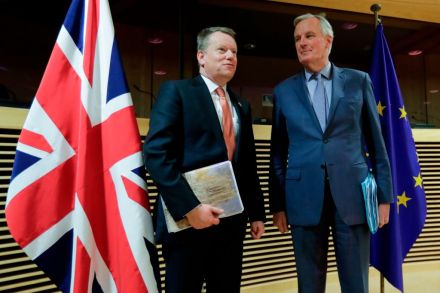
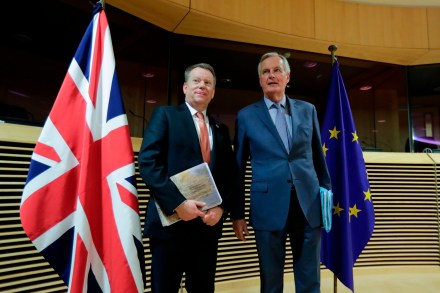
What would Disraeli make of Brexit? His advice to ‘read no history; nothing but biography, for that is life without theory’ is a useful starting point. Brexit has been – and continues to be – a hotch-potch of biographies where human weaknesses, strengths and foibles chafe and collide. The upcoming clash between the EU’s chief negotiator Michel Barnier and his British counterpart David Frost is no exception. On 2 March, Barnier, who is responsible for leading the ‘Task Force for relations with the United Kingdom’ will face Frost, the British head of ‘Taskforce Europe’, across the negotiating table for the first time.

Are we heading for a no-deal Brexit in January 2021?

From our UK edition

There is a recurring and important phrase in the 36-page document published this morning setting out “the UK’s approach to negotiations with the European Union”. It is: “these provisions should not be subject to the Agreement’s dispute resolution mechanism outlined in Chapter 32”. What this represents is an unambiguous and seemingly non-negotiable rejection by Boris Johnson’s Government of a demand from the EU that any free-trade deal with the UK should include what it calls “level playing field” provisions.

Gina Miller should leave the Bank of England’s new boss alone

From our UK edition

She’s back. With Brexit ‘done’ and with most of the country just grateful to have moved on from the whole saga, we might have thought we had heard the last of Gina Miller. Miller, who became something of a figurehead in the anti-Brexit movement, could quietly return to doing whatever it was she used to get up to. Not so. Now she is back on the attack, demanding a ‘review’ of the appointment of Andrew Bailey as Governor of the Bank of England. What’s her complaint this time? Apparently as head of the Financial Conduct Authority, Bailey presided over “a toxic cocktail of negligence, incompetence and indifference to the needs of ordinary depositors, investors and pensioners”.

Trade talks between the UK and the EU are heading for a blow-up

From our UK edition

‘The reality is the talks will blow up shortly’. As I say in the Sun this morning, this is the verdict of one Downing Street figure on the UK / EU negotiations. The EU might still be finalising its negotiating mandate. But if you read the draft of it and David Frost’s speech this week, it is clear just how far apart the two sides are. This is going to come to a head quickly as the EU line is that there must be agreement on ‘level playing field’ and governance before the talks proper can commence. If the EU side insists on these preconditions in the opening round of the negotiations, scheduled for the first week of March, then the government will dismiss the talks as pointless.