Brexit

Chris Bryant brings Blair into the Brexit debate. What will Corbyn say?

From our UK edition

Under Jeremy Corbyn, the Labour party has been rather quiet when it comes to fighting for Britain to remain in the EU. Happily, Chris Bryant got the chance to put the pro-EU argument forward at last night's Great Brexit debate, organised by the University of London Brexit Society. Sitting on a panel alongside SNP MP Stephen Gethins, Bryant did his best to convince the pro-Brexit speakers -- who included Jacob Rees Mogg and Peter Lilley -- and audience members why they ought to reconsider their position. To highlight the 'confusion' surrounding the referendum, Bryant kicked things off with an anecdote about a former Labour leader who has gone out of fashion of late.

British expats in the EU fear a stronger euro far more than they fear Brexit

From our UK edition

Whenever I return to England from my home in France I am struck at once by the number of grossly fat people of beached-whale proportions, by the almost militant vulgarity of much of the population, and by the shabbiness of the infrastructure. This suggests to me that our deeper problems are unrelated to our membership of the EU, and that we have neither the will nor the ability to solve them. This is not to say, however, that our membership serves our national interest. Brexit is possible, though I confess that I’ll believe it when I see it, given the integrity of our political class. Would Brexit affect my position in France and that of scores of thousands of other Britons living in the EU?

Brexit won’t mean more expensive flights for Brits. Here’s why.

From our UK edition

We’ve been warned that Brexit could spell the end of cheap travel. But is it really true that Britain voting out of Europe would hit holidaymakers in the pocket? Easyjet’s boss Dame Carolyn McCall said before that Brexit ‘wouldn’t be good for Britain’. And in a company prospectus, the airline warned this year that if Britain votes out in the EU referendum in June, then it could have a ‘material adverse effect’ on the budget airline. But does this hold up to scrutiny? Easyjet says that: ‘The outcome of this decision (in the referendum) could have a material adverse effect on easyJet’s financial condition and results of operations.’ Obviously for passengers, bad financial conditions for a company mean rising ticket prices.

Watch: Tom Watson jokes about Labour’s misery

From our UK edition

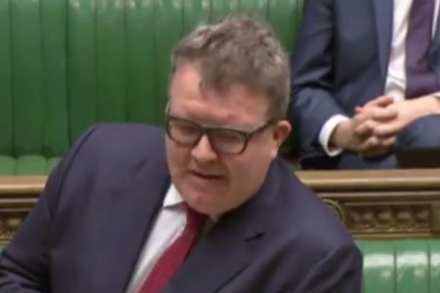
Although the Tories currently find their party divided over Europe, they can at least take heart that the opposition face greater internal conflict. In fact, rather than attack Matthew Hancock in the Commons today over the Cabinet's Brexit issues, Labour's deputy leader Tom Watson opted to make a joke about his own party's misery: 'Mr Speaker sadly I am not in the strongest of positions to lecture the poor minister on handling splits in his own party.' Watson did at least manage to find time to take a small jab at the Conservatives.

Michael Howard: why it’s time to leave the EU

From our UK edition

Michael Howard has said he believes Britain should leave the EU. The former Conservative leader said David Cameron's attempts to renegotiate had 'met with failure'. Here, in an extract from his article published in the Daily Telegraph, he says Britain is better off out of Europe: Europe’s leaders may spurn the possibility of a new round of negotiations. They – and others – will certainly deny any possibility of this kind between now and our vote. They want us to vote to remain. The Prime Minister says that the possibility of further negotiation is “for the birds”. We shall see. But if he’s right it will just mean that Europe’s leaders will have finally set their faces against the fundamental and far-reaching reform that he said he wanted.

Vote ‘leave’ and stop the blurring of Britain

From our UK edition

I don’t remember the last European referendum being nearly as dramatic as the current one. In 1975, we were being asked about our membership of the Common Market, not the -European Union, so there was less at stake — at any rate, that’s what the inners -wanted us to believe. The battle was also much more one-sided. Then as now, the pro-European side included the Prime Minister and the leaders of the other two main parties, but there were fewer cabinet ministers on the other side and it was easier to -caricature the antis (Tony Benn, Enoch Powell) as extremists. In 1975, the national press was overwhelmingly in favour of staying in and the ‘yes’ campaign was able to outspend the ‘no’ campaign several times over, neither of which are true today.

Are there any useful parallels between the EU referendum and religious history?

From our UK edition

Niall Ferguson got me thinking about this in his Sunday Times piece, in which he rejected the allure of Brexit and declared himself an 'Anglosceptic'. He concluded: ‘In the days before empire, Henry VIII’s version of Brexit was to renounce Roman Catholicism and divorce Catherine of Aragon. A true sceptic in those days would have advised him to Bremain — and unite against the Turk.’ It’s an odd choice of illustration, because in that case Brexit did work, it paved the way for a stronger braver England, then Britain. It was the making of us. Tudor history is surely a precedent in the Brexiters’ favour. So can Boris dress up as Henry VIII, so to speak, and paint Brussels as Rome? In a sense he is doing exactly this, when he talks of sovereignty.

Lord Owen: ‘Now is the time to vote to leave the EU’

From our UK edition

The vision of a European Common Market was a good one when in 1962 membership was first envisaged for the UK. Nevertheless, we were rightly warned even then by the leader of the Labour Party, Hugh Gaitskell, that a federal Europe lurked in the background. As far back as 1971 Edward Heath’s White Paper on entry misleadingly promised ‘no erosion of essential sovereignty’. That was untrue then and is much more so today. European law does override British law and David Cameron has failed to achieve any Treaty amendment to change this. What we have contrived in the EU is the pretension that you can be partly a country and partly not a country.

The Tory dogfight

From our UK edition

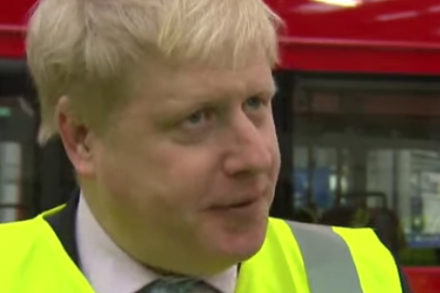
  [audioplayer src="http://rss.acast.com/viewfrom22/insidethetorieseudogfight/media.mp3" title="James Forsyth, Fraser Nelson and Isabel Hardman discuss the Tory dogfight over Europe"] Listen [/audioplayer] Many Tories had doubts about David Cameron’s EU renegotiation, but only Boris Johnson was promised a piece of legislation to assuage his particular concerns. It was quite a compliment. The so-called Sovereignty Bill was, in effect, the Get Boris Onside Act. It was designed to deal with the Mayor of London’s fears about the relationship between the British parliament and courts and the EU. It was also mooted that Boris would be offered a top cabinet job — perhaps Foreign Secretary.

Out on the farm

From our UK edition

If the Church of England was once the Tory party at prayer, then the nation’s shotgun-owning farmers were the party’s armed wing. I grew up on a farm in the Yorkshire Dales and must have been about 18 before I met someone who didn’t identify as TBC (True Blue Conservative). Ours was one of the safest Tory seats in the country, with the local MP being Leon Brittan and then William Hague. And Margaret Thatcher was considered a hero in our ‘community’ not because of the Falklands war or her defeat of Arthur Scargill but because she liked to greet the dawn by listening to Farming Today on Radio 4 (true). But the Brexit debate is leaving our True Blue farmers deeply conflicted. On the one hand, without EU subsidies, many of them would go out of business.

Eurosceptic ministers’ SpAds on a sticky wicket over Brexit

From our UK edition

Although David Cameron insists that he wishes to remain on good terms with his Brexit-supporting Cabinet members, he's not planning to make life easy for them. Today Sir Jeremy Heywood, the Cabinet Secretary, has issued new guidance relating to the referendum that means SpAds and civil servants are banned from assisting Eurosceptic ministers with any material that could be used to back Brexit during office hours.

Today in audio: Philip Davies and David Cameron’s ‘loving hug’

From our UK edition

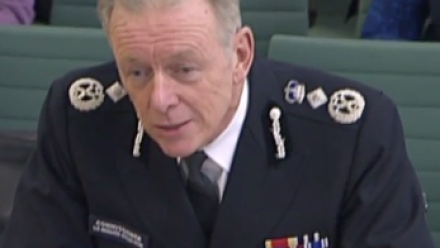
Bernard Hogan-Howe was up in front of the Commons Home Affairs Select Committee today where Keith Vaz did his best to soften up the Met Police commissioner at the start of the hearing by asking him for his views on the EU referendum. But Hogan-Howe said he wasn't getting involved: Whilst on the subject of Lord Bramall and Lord Brittan, Hogan-Howe resolutely maintained his position.

From Trumpmania to Euroscepticism: Revenge of the Plebs

From our UK edition

The Third Wayists are quaking in their boots. The middle-class, middle-of-the-road technocrats who have dominated politics for the best part of three decades are freaking out. These people who bristle at anything ideological, are disdainful of heated debate, and have bizarrely turned the word 'moderate' into a compliment feel under siege. And no wonder they do, for on both sides of the Atlantic their very worst nightmare — a revenge of the plebs — is becoming flesh. You can see this sometimes clumsy but nonetheless forceful reassertion of pleb power in everything from Trumpmania to the staggering back to life of Euroscepticism — or what snooty moderates call 'Europhobia', because every point of view that runs counter to their own must be a mental illness, right?

The BBC isn’t much help for navigating through the Tory EU wars

From our UK edition

Trying to navigate your way through the internecine wars in the Conservative Party over the referendum? Please allow the BBC’s Political Editor Laura Kuenssberg to help. This was her intro on the BBC website yesterday: Silence abhors a vacuum, and forgive me if you are not a fan of political conspiracy, and on a day like today you don't have to look very far for huge ideological disputes, even if they're not quite yet punch-ups. Good, glad that’s clear, then. A sentence which is a string of non-sequiturs kicked off with a remarkable image. Does silence abhor a vacuum? I suppose it might abhor a vacuum cleaner, because they can be terribly noisy. This fabulous piece of illiteracy was spotted by Jim, a friend of mine. Credit where due etc.

Breaking: David Icke backs Brexit

From our UK edition

Although the Out campaign has gained momentum since Michael Gove and Boris Johnson backed Brexit, there are still concerns that the campaign is yet to find a leader. However, could their prayers be about to be answered? Step forward David Icke. Yes, the Corbyn-loving purple-tracksuit-wearing-lizard-conspiracist has plumped for Out, with a series of eye-catching pieces of clip art: https://twitter.com/davidicke/status/701347887452585985 https://twitter.com/davidicke/status/701361728567664640 https://twitter.com/davidicke/status/701462141044260864 https://twitter.com/davidicke/status/701471206742970368 Mr S suspects that the support of the new age conspiracist will only add to worries that the Out campaign is proving to be too divisive.

Why are so few big business leaders for remain?

From our UK edition

How come so few big business leaders signed up to David Cameron’s letter in favour of remain? [caption id="attachment_9394142" align="aligncenter" width="520"] (Credit: Nick Sutton)[/caption] As the Daily Mail reported this morning: High street shops including Sainsbury’s, Tesco and Next and banks such as Lloyds and Royal Bank of Scotland did not put their names to the letter published today. It had been suggested that bosses of 80 of the FTSE 100 firms would sign the pro-Brussels letter, but in fact only 36 have done so.

Bromley has spoken: South London council backs Brexit – but why?

From our UK edition

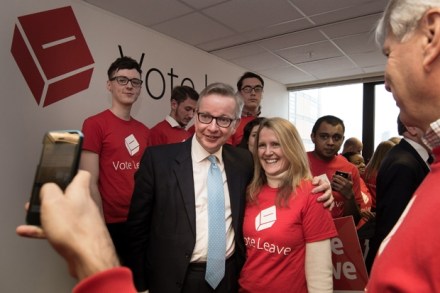
First, it was Michael Gove. Next, it was Boris Johnson. Now, a slightly smaller political beast in the form of Bromley council has come out and backed Brexit. The South London council voted last night to say it believed Britain was better off out of Europe. It passed a motion saying: This council agrees that the negative impacts that the European Union has upon the efficiency and costs of Bromley Council activities mean Bromley Council would be better off if Britain was out of the European Union Bromley isn't the first council to back Brexit, with Havering having done the same at the end of January. But what's different about Bromley is that it's the first Conservative council in the country to do so. In practice, the decision carries little weight.