Brexit

Expect the unexpected in Theresa May’s pointless poll

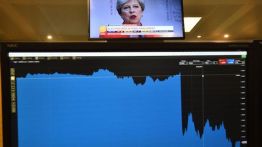
A general election is called and in a matter of hours a neutral and unbiased BBC presenter has likened our Prime Minister to Recep Tayyip Erdogan. Governments rise and governments fall, but some things stay just as they always were. It was Eddie Mair on Radio 4’s PM programme who made the comparison, while interviewing the Home Secretary, Amber Rudd. In fairness to Mair, he had been alluding to Theresa May’s apparent wish to create ‘unity’ within Westminster, a truly stupid statement within an address which sometimes made no semantic sense and sounded, to my ears, petulant and arrogant. Then along came the opinion pollsters to tell us exactly what

The Tories don’t need silly pledges to scare off Labour in this election

We are coming to the end of the first week of an election campaign that few were expecting when this week began. The parties are drawing their battle lines: the Tories are warning of a happy Vladimir Putin and a ‘coalition of chaos’ involving the SNP, Labour and the Lib Dems, while Labour is making this an anti-establishment election (though what precisely the Establishment is up to and which naughty coffee chains it involves remains vague, even for the party’s MPs promoting that message on the airwaves). The Lib Dems, meanwhile, had long worked out their pitch as the anti-Brexit party. Of course, not all Labour MPs are talking about

Theresa May doesn’t trust enough people for a power ‘circle’. A triangle, maybe

The fact that nothing leaked about Mrs May’s snap election tells you much of what you need to know about her. It shows how iron is her discipline and how close her inner circle (so close, in fact, that it is a triangle rather than a circle). It suggests that she takes neither her cabinet nor her party into her confidence. It shows that if she wins the general election, her control of her administration will be much tighter than that of Margaret Thatcher (which was surprisingly loose) and even than that of David Cameron (which was surprisingly tight). Finally, it shows that if she loses, or gets a result

What the papers say: Jeremy Corbyn does pose a threat to the Tories

Theresa May is riding high in the polls and there’s much talk of a Tory landslide – but that doesn’t mean the Government should rest on its laurels, says the Daily Telegraph. It’s vital, the paper says, that the PM does her best to ‘create a sense of urgency among the voters’; ‘They have to understand the dangers of not coming out to support her,’ the paper adds. Of course, some might laugh at the prospect of Corbyn making it to Number 10 – yet it’s just that sense of ‘impossibility’ that the Labour leader ‘hopes to exploit’. After all, a Corbyn government ‘would make the country poorer’ – something

Letters | 20 April 2017

Benedictine engagement Sir: Matthew Parris has missed the point (‘Give me the Anglican option’, 15 April). He compares Rod Dreher’s suggestion that modern Christians emulate the Benedictines with the retreat into self-imposed exile of groups like ultra-Orthodox Jews and the Beni Isguen community. The Benedictines did not withdraw from the world. They engaged with the fractured society of the Dark Ages, showing a better way through their schools, almsgiving and prayer. A number of recent books, including Tom Holland’s Millennium, have charted the astonishing role the monasteries played in dragging Europe out of barbarism. In Britain, the Church and its monastic orders set up many of the institutions on which

Diary – 20 April 2017

We are all drama queens, really, we political hacks; and so we were all thoroughly delighted by Theresa May’s Tuesday coup. I have long been arguing that we would have an election this year, and I had been beginning to feel lonely. But one big thing I got wrong: it had seemed to me in January that a Brexit election would shatter much party discipline, since the voters would be principally interested in where candidates stood on the Great Issue and both Tories and Labour were deeply divided about it. However, by framing the current contest in the way she has, May has deftly but brutally carved away the long

The Spectator’s notes | 20 April 2017

The fact that nothing leaked about Mrs May’s snap election tells you much of what you need to know about her. It shows how iron is her discipline and how close her inner circle (so close, in fact, that it is a triangle rather than a circle). It suggests that she takes neither her cabinet nor her party into her confidence. It shows that if she wins the general election, her control of her administration will be much tighter than that of Margaret Thatcher (which was surprisingly loose) and even than that of David Cameron (which was surprisingly tight). Finally, it shows that if she loses, or gets a result

High life | 20 April 2017

If any more proof were needed that Brexit is the best thing to happen to Britain since 1066 and all that, here it is: geologists have at last assembled a picture of the forces that tore a ten-million-year-old land bridge away and turned Britain into an island rather than a peninsula of Europe such as Denmark and Scandinavia. Yippee! It was God himself who ordered it. The bridge ran from Dover to Calais and deep into Cheeseland, until the Almighty decreed Brexit. All this may have taken place a very long time ago, 450,000 years or so, but it’s proof that God never wanted Britain to be part of Europe.

What the papers say: The manifesto pledges Theresa May must make

The General Election campaign is officially underway – and the newspapers have wasted no time in compiling their wish lists. Here are the policies the papers want to see put into practise: Theresa May’s plan for Brexit – leaving the single market and being ‘free from EU courts’ – gets the wholehearted backing from the Sun. But this election is not only about Brexit, argues the paper. For one, the PM must give ‘proper help — not just lip service — for the ‘just about managings’’. Tax cuts would be a big boost, suggests the paper, which says these could be paid for by taking away ‘state-funded perks for richer OAPs’. After

There is something grubby about Theresa May’s snap election

Since I suggested last July that Theresa May, newly anointed as leader of the Conservative and Unionist party and Prime Minister of the United Kingdom of Great Britain and Northern Ireland, should call an election to both establish her own legitimacy and allow the country an argument over the kind of Brexit it preferred, it would be unseemly to now deplore her belated decision to go to the country.  Happily, there remain many other things that may be deplored. Far from the least of these is the manner in which the Prime Minister has made her case for an election. It’s not her fault, you see, that she has (correctly, in

What can May say to the Tory Remainers?

I don’t see it. I do not see the anatomy of how it all pans out. Theresa May will be the next Prime Minister because, jeez, who else is going to be? What I cannot see, though, is what she says, and to whom, along the way. Most of all, I cannot see what she says to Remainers. ‘Who cares?’ you may be thinking, and ‘get over it’ and ‘you lost’ and so on. Yet these arguments, while powerful, only get us so far. The fact is, quite a lot of people who formerly voted Conservative also voted Remain. In Mrs May’s own constituency, indeed, she may have a majority

Is Trump’s revolution already over?

There were three reasons why I so badly wanted Donald Trump to win the US presidential election. One was that the alternative was Hillary; another that I knew it would annoy all the worst people in the world; but the third was a positive one: I genuinely believed that as an independently wealthy, outsider candidate with no loyalties to the DC establishment, Trump was going to be the revolutionary hero who would finally free the people from the shackles of a corrupt, sclerotic and self-serving ruling elite. Some may scoff at my naivety. But there was evidence to support my view. Brexit had just happened and what seemed clear from

The Tory party should not forget George Osborne’s role in its revival

George Osborne’s decision to stand down as an MP is a sign of how impregnable Theresa May’s position is perceived to be. Osborne is the most politically formidable of the Tory sceptics of May’s Brexit plan, and his decision to quit the Commons suggests that he doesn’t think she’ll come unstuck in the next parliament. Of course, Osborne has others things to occupy himself with: the editorship of the Evening Standard and his lucrative work for Black Rock. But one suspects that he’d have been prepared to brazen out the criticism over his multiple jobs if he thought there would be a political sea change in his wing of the

Theresa May’s Today interview, full transcript

Nick Robinson: You have often presented yourself – you did when you ran for the leadership and to be Prime Minister – as the daughter of a vicar, committed to public service. ‘I just get on with the job in front of me,’ you said. So do you now regret giving your word and so flagrantly breaking it? Theresa May: I do get on with the job that is in front of me. When I became Prime Minister last July, I felt that the most important thing was stability for the country. We’d had the referendum, which had come out with a result in terms of voting to leave the

Watch: Paul Mason has doubts about voting Labour

With Labour firmly on the back foot over Theresa May’s call for a snap election, many MPs tonight used a meeting of the PLP to raise concerns over their prospects in an early election. So, surely the Corbynites are doing everything they can to help their comrades cling on? Well, perhaps not. Tonight Paul Mason — the journalist-turned-left-wing-revolutionary — appeared on Newsnight to discuss Labour’s prospects in a snap election. Although Mason said he was confident that Labour would win an early election, he came across rather coy when it came to whether his own vote would go towards helping the party achieve victory. Speaking of the need for tactical voting, Mason said

Could a big Tory victory make a soft Brexit more likely?

Whatever happens in the forthcoming general election, no day of social media can ever compete with the dizzying heights of May 2015. I think I laughed more on the day of the result than I had in the previous decade; sure, it was the twisted and cruel laughter of someone whose dreams are slowly fading, but aren’t those the most genuine and heartfelt? This time it won’t be quite as funny because everyone expects Labour to be slaughtered, aside from one or two Comical Ali-like figures who continue to maintain steadfast confidence despite all evidence to the contrary. Political predictions are very hard – the quality is poor because journalism

What the papers say: How Project Fear failed to materialise

Exactly a year ago today, George Osborne was busy unveiling the Treasury’s famously doom-laden analysis about Brexit. Now with his six jobs and bulging bank balance the former chancellor is busier than ever. But the worries he spoke of about economic uncertainty have failed to materialise, and the prophecies of misery foretold by Project Fear are nowhere to be seen. The Daily Mail says the Treasury document ‘formed the centrepiece of Project Fear and deployed a barrage of apocalyptic forecasts’ about what would happen if Britain voted Leave. In reality, the paper says, only one in ten of Osborne’s predictions have come true – and the ‘the worst ones have

How will the EU cope without Britain?

Many EU officials would like to present the Brexit negotiations as a case of one nervous member, weak at the knees, appearing before a menacing and united panel of 27. But that ignores the political and ideological rifts which are already apparent in the EU. Britain’s departure not only necessitates the creation of a new relationship between us and them; it fundamentally shifts the balance in EU politics. As Angela Merkel has been worrying aloud in recent weeks, the northern European countries which have always tended to take a liberal position on economics and trade are going to have a harder job fighting off the protectionist instincts of the south.

Bias and the BBC: A discussion

Last week, Nick Robinson wrote an article in the Radio Times saying Radio 4’s Today programme no longer has an obligation to balance its coverage of Brexit. This led to criticism from Charles Moore that he was, in effect, admitting to BBC bias. The two met for a discussion in The Spectator offices. Nick Robinson: As you’re so fond of pointing out, Charles, most economists, business organisations, trade unions and FTSE 100 chief executives were Remainers. The BBC’s difficulty is that news tends to be about interviewing people in power: scrutinising them, asking tough questions. It’s right that we should go and look for other voices, look for critics. But