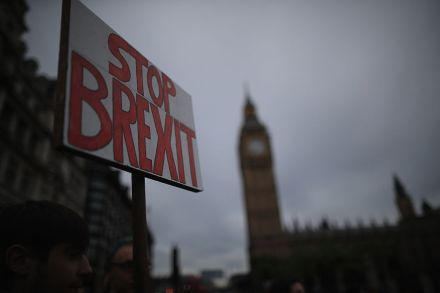
Brexit

Dear Leavebugs, it’s time to admit your mistake

From our UK edition

‘Brexit,’ says my friend David Aaronovitch, ‘is dying.’ We Remainer irreconcilables certainly hope so. But there’s a slim chance the grisly Brexit project could yet pull through, and it’s right to acknowledge this. So in a spirit of candid friendship I write this letter to die-hard Leavers, of whom a small — but vigorous — colony survives on these Spectator pages… Dear Leavebugs, You know I am not of your number, but I understand you. I even feel for you. The Leave/Remain split is not a divide between two halves of the British population, but a war within the breast of each person. Every feeling you’ve had, I’ve experienced too. Civil wars are always bitter; wars within ourselves the most bitter of all.

The new age of the refugee

From our UK edition

After years of estrangement in a foreign land, what can immigrants expect to find on their return home? The remembered warmth and blazing beauty of Jamaica have remained with some British West Indians for over half a century of exile. Yet 100 changes will have occurred since they left. Long brooding over the loss of one’s homeland can exaggerate its charm and sweetness. The first mass immigration to British shores occurred in the late 19th century, when Ashkenazim arrived by the thousand after escaping the pogroms in Tsarist Russia. Many changed their names and even their accents. The trappings of orthodoxy — beards, sidelocks — left them vulnerable to anti-Semitic abuse as they settled in cramped London streets north of Whitechapel Road.

Must we politicise the Proms? Or life expectancy? Or advertising?

From our UK edition

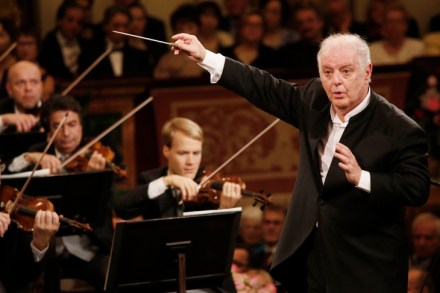
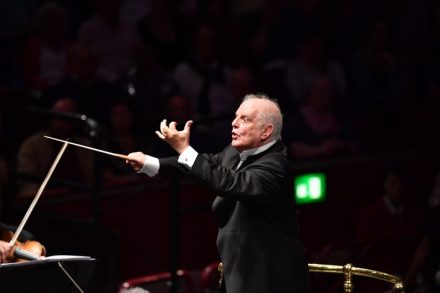
We went to the first night of the Proms last week. Thinking it was all over, we left the auditorium just before Igor Levit came back on for a delayed encore in which he played Beethoven’s Ode to Joy (transcribed by Liszt) as an anti-Brexit gesture. We loved Levit’s earlier rendering of a Beethoven piano concerto, but were spared his political views, so it was a perfect evening. Two nights later, Daniel Barenboim took advantage of the Proms conductor’s podium to make an unscheduled speech in which he deplored ‘isolation tendencies’. All good Brexiteers deplore isolation tendencies, which is one of the reasons we don’t like a European Union with a tariff wall, but of course Brexit was the great conductor’s target.

Barenboim’s Brexit speech was out of order – the Proms are, and must be, politically neutral

From our UK edition

This post was first published on Slipped Disc On the first night of the BBC Proms, the German-based pianist Igor Levit played Beethoven’s Ode to Joy in Liszt’s solo-piano reduction as a token of his opposition to Britain leaving the EU. His was a reasoned and reasonable gesture by an artist who has strong views and wished to express them in music alone. Not so Daniel Barenboim who, before his Prom last night, announced that ‘Elgar makes the best case against Brexit … because he was a pan-European composer' and then, from the podium, after a performance of Elgar's Second Symphony, added 'isolationist tendencies and nationalism in its very narrow sense is something that is very dangerous'. This was out of order.

Brexit: A view from Germany

From our UK edition

 Frankfurt ‘This is not about punishing Great Britain,’ declared Sigmar Gabriel, Germany’s interim foreign secretary, on his recent visit to London. I fell about laughing, because this is precisely what’s going on. It is as obvious to us Germans as it is to the Brits: the EU cannot tolerate the thought of a successful United Kingdom outside the Brussels sphere of influence because, if that were allowed to happen, others might dare to start thinking about leaving the club too. Everything we hear from Brussels flows from this.

Tory leadership tensions mustn’t undermine the Brexit talks

From our UK edition

The May-Davis partnership used to be one of the strongest aspects of the government. She had brought him back from the political wilderness to be Brexit Secretary, and he was loyally working on the strategy for the negotiations. Even after the election went so wrong, Davis raced down to London to see her. But, as I say in the Sun today, Cabinet Minister reports that there are now tensions in this relationship. ‘The chemistry is not good now’, one tells me. Another says ‘that relationship has cooled’. The cause of the problem is Davis’ allies touting him for the leadership, and sooner rather than later. Those close to May don’t know if Davis is actively encouraging this.

Our Brexit-backing politicians are making fools of us

From our UK edition

The great physicist Richard Feynman warned of the perpetual torment that lies in wait for people who try to understand quantum mechanics. Modern physics cannot be understood. It can only be observed. ‘I am going to tell you what nature behaves like,’ Feynman said. ‘Do not keep saying to yourself, "but how can it be like that?" because you will get down the drain, into a blind alley from which nobody has yet escaped. Nobody knows how it can be like that.’ Equally, nobody knows how the Conservative Party can be like that. It just is. Theresa May, to pick an example. Every morning I wake up and check if she is still prime minister. Every morning the answer comes back, ‘apparently so’.

Jeremy Corbyn is Britain’s first truly post-modern politician

From our UK edition

Does Labour want to leave the Single Market? Maybes aye, maybes naw, as we used to say in North Britain. Corbyn isn't saying. It might be one of the biggest questions of public policy of this decade, but the man who now has at least a non-trivial chance of being PM one day isn't saying where he stands on it. This matters. Of course, we think we know what he intends on the single market. We think he is hostile to it and regards it as a wicked capitalist plot. We think he also inclines towards leaving because he wants to keep inside the remaining chunk of the old Labour working-class vote that is persuaded by the Ukip argument that the single market means free movement which means immigrants.   But we don't know because Corbyn isn't saying.

The government is destined for trouble with its repeal bill

From our UK edition

You’d think a government wouldn’t launch its flagship bill that takes Britain out of European Union legislation without first being clear what taking Britain out of the EU would actually look like. Apparently not: the once Great Repeal Bill - now just plain old European Union (Withdrawal) Bill for less triumphant times - was published today, and no-one is clear on Brexit at all.

We should welcome Nicky Morgan’s election as Treasury Select Committee chair

From our UK edition

Nicky Morgan's election as chair of the Treasury Select Committee will doubtless be written into a narrative of Remainers taking key parliamentary positions overseeing Brexit. There's also a story to be told about the power of the Tory moderates: as well as Morgan, Rob Halfon took the education chair, and Tom Tugendhat got foreign affairs.   But what interests me here is another aspect of Morgan's arrival at the TSC. Perhaps the most important parliamentary committee is now run by someone who takes a gloriously sensible view of immigration.

‘Everyone’s out for Boris’

From our UK edition

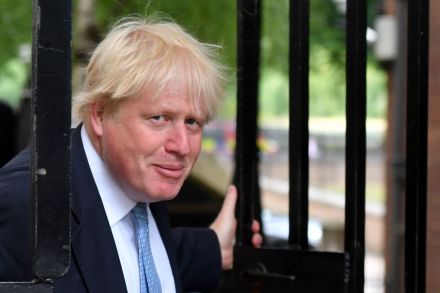
There is nowhere better to plot than the Palace of Westminster. There are alcoves to conspire in, little-used corridors and discreet watering holes. And no group enjoys plotting more than Tory MPs. Add a general election result that made the Tory leader a lame duck and you have the perfect ingredients for political mischief. But the Tories aren’t just plotting against Theresa May — that would be too simple, since her departure is a question of when not if. Nor is the principal conversation about who the leader should be. No, for a Tory the first stages of any leader-ship battle is to identify who they don’t want and then to set about destroying them. No one is more plotted against than Boris Johnson.

A view from Germany

From our UK edition

 Frankfurt ‘This is not about punishing Great Britain,’ declared Sigmar Gabriel, Germany’s interim foreign secretary, on his recent visit to London. I fell about laughing, because this is precisely what’s going on. It is as obvious to us Germans as it is to the Brits: the EU cannot tolerate the thought of a successful United Kingdom outside the Brussels sphere of influence because, if that were allowed to happen, others might dare to start thinking about leaving the club too. Everything we hear from Brussels flows from this.

Are our pizzas really under threat from Brexit?

From our UK edition

Last week it was Vince Cable trying to tell us that Brexit was depriving Wimbledon spectators of their strawberries – swiftly denied by the All England Club. This week it is the turn of pizza chain Franco Manca to try to scare us of the consequences of Brexit. Announcing the company’s results, chairman David Page said, in comments prominently reported in the pro-EU Financial Times: “The long-term Brexit impact is unknown. It is, however, already affecting the availability of skilled European restaurant staff”. In other words: your pizza is under threat from your silly vote to leave the EU. Brexit hasn’t appeared to hit the company’s bottom line, however. Revenue of the chain’s parent company was up 41 per cent to £41.2 million.

Boris Johnson tells the EU to ‘go whistle’ on Brexit divorce bill

From our UK edition

The Brexit divorce bill isn’t on the table yet but it’s already provoking plenty of debate - and quite a bit of anger. Figures bandied about have ranged from the tens of billions upwards, with some speculation the final demand could be as much as 100bn euros. Ministers have done their best to avoid being drawn on a figure which wouldn't be acceptable, with David Davis coming closest by saying Britain will not pay 100bn. Now, Boris Johnson has waded in. The Foreign Secretary told the House of Commons that: "I think that the sums that I have seen ... seem to me to be extortionate and I think go whistle is an entirely appropriate expression." What seems clear from Boris’s remarks is that there is no chance of the government agreeing to a 12-figure bill (i.e.

If Brexit doesn’t happen, then Britain isn’t a democracy

From our UK edition

It’s the casualness with which they’re saying it that is truly disturbing. ‘I’m beginning to think that Brexit may never happen’, said Vince Cable on Sunday morning TV, with expert nonchalance, as if he were predicting rain. He echoed Newsnight’s Nicholas Watt, who a few days earlier informed viewers that there is talk in ‘some quarters’ that ‘Brexit may not actually happen’. Leaving the EU? ‘I think that is very much open to question now’, said Lord Heseltine last month, with imperious indifference. He could have been asking a minion to pass the butter. They say it matter-of-factly, sometimes a little gleefully.

Fishing could be the scales on which Brexit success is measured

From our UK edition

I voted Remain last year for two reasons. First, however irritating I found some aspects of the EU, I could not vote for the chaos I believed would follow a Leave victory. From the accession of Theresa May to the night of the general election, that looked like an excess of pessimism; now it looks like wise foresight. The second prong was an analysis of my own and my neighbours’ economic circumstances: in what sense was EU membership actually making us worse off? In my own case, not at all; local shops, hospitality outlets and tourist attractions, likewise. Subsidised hill farmers and fatter farming cats on the flatlands? Not really, even though broader frustration with Brussels made many of them vocal Brexiteers.

The turf | 6 July 2017

From our UK edition

Having spent three quarters of my life covering politics and the other quarter following racing, I am often asked what the two have in common. One answer is that politicians are often gamblers. David Cameron tried to solve his party’s divisions over Europe by launching the Brexit referendum and failed spectacularly when an irritated electorate overturned the odds. Despite having a workable majority, Theresa May bet the Tory farm on a snap election seeking to increase it and she, too, lost on an apparent certainty. Playing party political games with the nation’s future, neither deserved any better. Certainly, I find few in racing who believe that Brexit, especially May’s beloved ‘hard Brexit’, is going to help them.

The beginning is nigh

From our UK edition

Just a few weeks ago, the Conservatives triumphed in the local government elections and Theresa May was hailed as an all-conquering Brexit Boudicca who could do no wrong. Now, after her general election humiliation, an opposite view has taken hold: that the government is a disaster, the country is in an irredeemable mess, Brexit has been derailed and nothing can go right. This is a sign that parliamentary recess is overdue; a great many people are -exhausted and a little emotional. But the facts, for those with an eye to see them, do not give grounds for such pessimism. The Tories have lost their majority and deserved to do so after an awful campaign.

The Spectator Podcast: The myth of British decline

From our UK edition

On this week’s episode, we talk about the myth of the British decline, theTwelfth of July parades in Northern Ireland, and the regrettable rise of the man hug. First, Britain seems to be relapsing into another bout of ‘declinism’, writes Professor Robert Tombs in his Spectator cover piece this week. From terror attacks to the Grenfell tower disaster, election upsets to our looming Brexit, the news is being seen by some as a sign of Britain’s downward trajectory in the world. It’s time to snap out of it, says Robert, who joins the podcast along with Fraser Nelson. As Robert writes: "Britain is more secure from major external threat than for half a millennium.