Bread

MAHA must harness the power of Gwyneth Paltrow

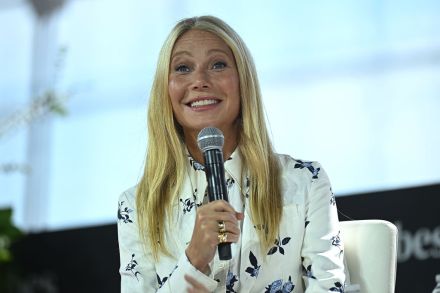
Gwyneth Paltrow may be set to pass her celebrity-everyone-loves-to-hate crown to another out-of-touch elitist. The Goop founder and queen of outrageous “wellness” hacks has announced – gasp! – that she’s begun eating like the rest of us. Paltrow has followed a Paleo diet for years – meaning she cut out virtually all culinary joy for the sake of eating like a cavewoman, though I assume she did more gathering than hunting. Yet on her Goop podcast last week, Paltrow announced, “I’m a little sick of it if I’m honest. I’m getting back into eating some sourdough bread and some cheese. There, I said it. A little pasta. After being strict with it for so long.” Paltrow’s foray into normal-people food is serendipitous; or perhaps it’s ingenious timing.

gwyneth paltrow

The joy of baking your own bread

Flour furnishes most everyone’s kitchen. If you’re a baker or breadmaker, you will probably have several five-pound bags of it in the pantry alongside the yeast. If you don’t bake or don’t bake much, you will probably have at least a cup or two of it in the canister on the kitchen counter for thickening the gravy, frying the chicken or making the roux. Most likely, most of it will have come from wheat. Wheat has been with mankind for 10,000 years or so and was first domesticated somewhere in the Fertile Crescent, or, as our old geographies used to say, Mesopotamia, which also, it was hinted, was the neighborhood of the Garden of Eden. Wheat’s genetic diversity made it adaptable to a variety of climes and continents.

bread

Bitter harvest – how Ukraine’s wheat has always been coveted

From our UK edition

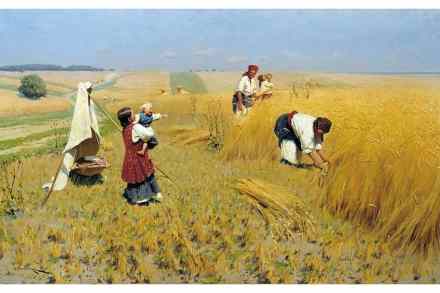
Publishers love books with ambitious subtitles such as ‘How Bubblegum Made the Modern World’, and this one’s, about American wheat remaking the world, was no doubt devised to appeal to readers in the United States. It is not really appropriate: for ‘American’, read ‘Ukrainian’. The focal point of Oceans of Grain lies very far from the vast wheat fields of North America. This is mainly a book about Ukraine and the Black Sea, and the importance of Ukrainian grain in world history. Its appearance during the current war is extraordinarily timely. Scott Reynolds Nelson insists that grain supplies have lain at the heart of millennia of conflict.

How Israel’s Prime Minister got burnt by bread

From our UK edition

Jerusalem For nearly ten months now, ever since his surprising elevation to the Israeli prime minister’s office, Naftali Bennett has been focused mainly on one thing. He has been trying to prove to Israelis that he can be every bit the master statesman his predecessor, the eternal Benjamin Netanyahu was. And by all accounts that has worked well. He’s had two successful meetings with Joe Biden and met twice with Vladimir Putin as well, the second of those meetings, a surprising flight to Moscow after the invasion of Ukraine began, was made in the hope of brokering a ceasefire between the two countries.

Bread is the staff of life

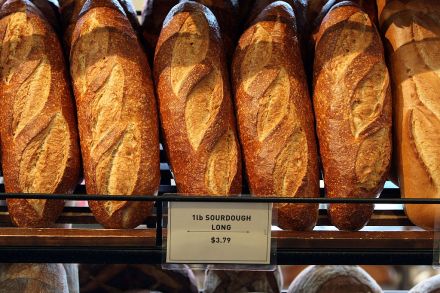
I cannot claim the gift of prophecy, but early in 2020 — before lockdown panic-buying and the warnings of a dire wheat harvest causing bread-price rises — I became a bread-maker. I dug around on the internet for a good recipe for sourdough, and found one padded out with the usual bloggery and waffle. Absent the philosophy and the pious musings, it gives a clear, sensible route to bread self-sufficiency. Sourdough doesn’t need bought-in yeast, only a ‘starter’ of flour and water. This is often called a ‘mother’, and attracts wild yeasts as it develops; after five days in the jar it is a gently bubbling ferment of living yeasts, and you keep it going by adding flour and water to it day by day.

bread

The need to knead

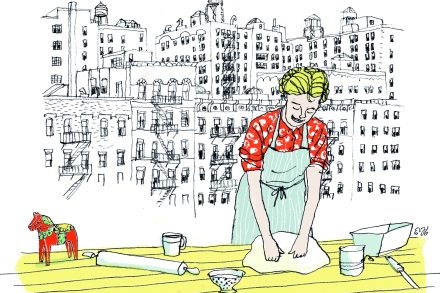
I don’t remember my grandmother, Anna Olson Nelson (Nelsie to her grandchildren), ever measuring out anything for her divine Swedish bread. The recipes must have been kept under the thick, blonde braid that she piled expertly on top of her head. What I do recall, as if it were yesterday, is helping Nelsie bake fläta and limpa every other Sunday in her small kitchen. The heavenly smells of cardamom and fennel wafted throughout her apartment while she tried to improve my Swedish. My mother, Mimi, often spoke Swedish to me and my sister, Chris, when we were babies and my father was with the Office of War Information as a correspondent in China, Burma and India during World War Two. Nelsie was our ‘Swedish nanny’.

bread

How to make the perfect toastie

From our UK edition

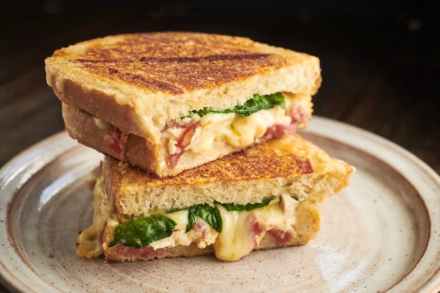
Are toasties the ultimate comfort food? For me, they have to be in the top three at the very least. Toasties mean late nights or early suppers; they mean eating in the kitchen, standing up, or sitting on the sofa, probably in your pyjamas; they mean picking the little bits of escaped melted cheese from the pan before you plate them. They mean waning hangovers and catch-ups with close friends; they mean solitude and they mean company; they mean ease and speed, a direct route to something crisp and hot and oozing. But crucially, toasties are completely delicious. They don’t rely on nostalgia (although I have plenty of nostalgia for them) to deliver their comfort, they aren’t bland nursery food, or esoteric family favourites. Toasties hold their own.

Upper crust: a sweeter approach to sourdough

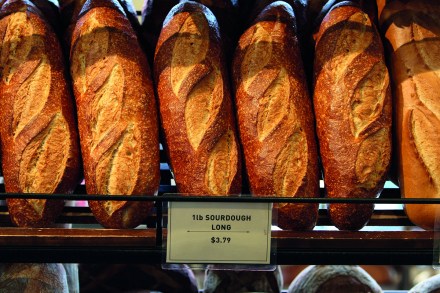
Hoping to win an election in 2020? If you’re not above buying votes, take a tip from the poet Juvenal, who described — disapprovingly, it is true — how Roman politicians in the second century used to bribe the lower classes with free sourdough bread and cutting-edge entertainment. (Yes, the Romans knew how to make sourdough — there are a few burnt loaves still around in the ruins of Pompeii). Nowadays it’s the millions of workers in the tech industry that you’ll have at your feet if you mention sourdough, but they want to bake it themselves, so you’ll do better handing out free workshops, countertop flour mills and Emile Henry bakeware.

sourdough

Simple flat bread recipe

From our UK edition

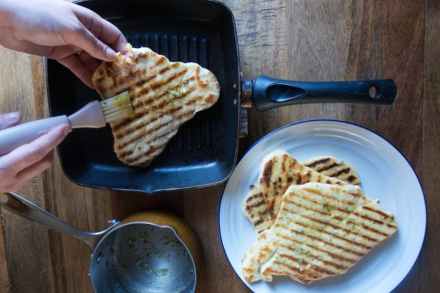
Continuing in the vein of the last couple of weeks of Vintage Chef columns, this week’s recipe is designed to make the most of common ingredients, and give maximum reward for minimum effort with these incredibly simple flatbreads. Last week, I wrote about the joy that baking can bring even in adverse circumstances, how it remained a source of solace to me in this brave new world. These flatbreads are joyful (warm, pliable, smoky from the griddle), but when I make them, I tend not to be seeking joy as much as stability. These flatbreads require so little: no yeast, no proving time, no kneading – they don’t even need an oven. And it takes – from bag of flour to stuffing it in your mouth – about ten minutes.