Brancusi

Was Marcel Duchamp’s notorious ‘Fountain’ even his own work?

This slim volume has only one fault. It has no illustrations. So you’ll have to do some Googling or visit the current Duchamp exhibition at MoMA (until 22 August) if you want to know what ‘The Bride Stripped Bare by Her Bachelors, Even’ looks like. Otherwise it’s perfect – wittily written and packed with many fascinating characters besides the ever intriguing Marcel Duchamp. He didn’t actually arrive in New York until 1915, but when he did he found himself already famous. His ‘Nude Descending a Staircase, No. 2’ had been included in the 1913 International Exhibition of Modern Art, alongside works by Picasso, Van Gogh, Gauguin, Matisse and Braque, and completely stole the show. Duchamp didn’t even know the painting was being exhibited.
Jim Ede and the glories of Kettle’s Yard

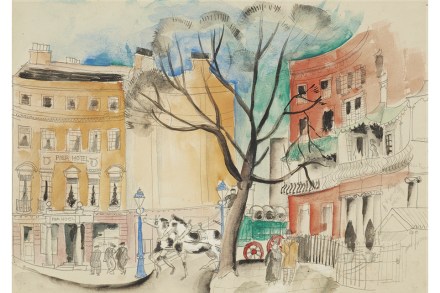
Jim Ede started early. At the age of 12 he used £8 of his hard-won savings to buy a Queen Anne desk. No bicycle, air pistol or football for him: this solid piece of old furniture was the thing, the first step in a long life of acquiring objects that lived, breathed and spoke to him. To call him a compulsive collector is to understate the passion that over the years saw the desk followed by an avalanche of stuff, from porcelain and glasses to pebbles and feathers, textiles and above all paintings, drawings and sculpture. Each acquisition admired, loved, cherished and shared for its uniqueness – what Gerard Manley Hopkins would have called its ‘instress’.

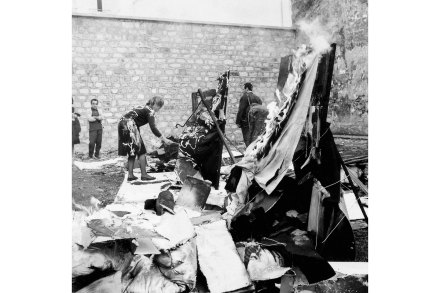
Welcome to the Impasse Ronsin – the artists’ colony to beat them all

Of all creatives, visual artists are perhaps the least likely to work in isolation; the atomised life of garret-installed solitude is not for them. Artists have always bounced off one another, whether in colonies, studios, collectives or co-operatives. The YBAs would not have been a thing, let alone a now-unfashionable acronym, had a significant group of them not chosen to hang out together. There are outliers, of course, but for the most part artists seem to like rubbing along together, perhaps in the belief that the fumes of oil from one studio can inspire brushwork in the one next door. The Impasse Ronsin, a tiny cul de sac in the 15th arrondissement of Paris, was the artists’ colony to beat them all. It had everything: fame, obscurity, money, poverty, radicalism, outrage.