Boxing

The dying art of sports journalism

Late in January, while the Washington Post was gearing up for the Olympics, staffers got an email from managing editor Kimi Yoshino. “As we assess our priorities for 2026,” she wrote, “we have decided not to send a contingent to the Winter Olympics.” A few days later the Post announced that it would send four journalists to Italy after all – down from more than a dozen. That’s four people to cover a two-week event with more than 116 medal competitions. Then at the start of this month, all 45 members of the sports team were told the section was being shut down. “We will be closing the Sports department in its current form,” the Post’s executive editor, Matt Murray, said in a statement afterwards.

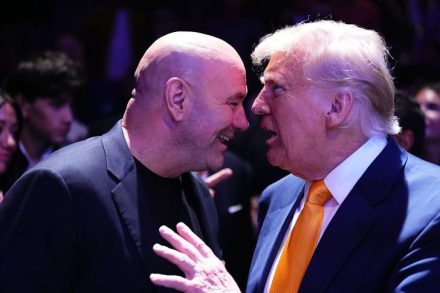
Donald Trump saved the UFC 

A new bombshell has fallen on the sports-media villa: Dana White cloaked in the glory of a whopping seven-year, $7.7 billion media-rights deal with Paramount to stream all UFC fights on Paramount+ in the United States and select simulcast events on CBS. For the love of everyone’s wallets, goodbye Pay Per View and hello to a new right-wing cultural shift in mainstream sports coverage.  Why is this new deal so relevant? Since the UFC’s inception in 1993, mixed martial arts existed as its own niche category. Critics openly said it wasn’t a real sport. They lampooned the more brutal style of MMA as less skilled and artistic than boxing, once a more revered American pastime.

Does boxing still matter?

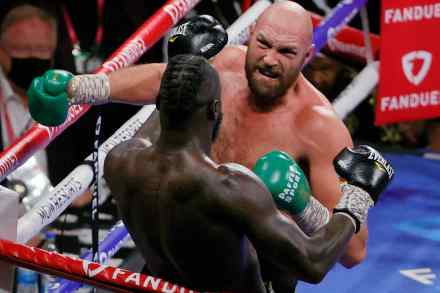
Quick — can you name boxing’s heavy-weight champion? If you’re like most readers, you drew a blank. If you’re a sports fan you may at least have heard of Ukraine’s Oleksandr Usyk, who holds three of the world’s four heavyweight title belts. Usyk has a good story: an Olympic gold medalist in 2012, now unbeaten and untied in twenty-one pro bouts, he took time out from training to serve as a soldier in his country’s war with Russia. The fourth title belt, symbolizing the WBC’s heavyweight crown, belongs to England’s Tyson Fury (yes, he’s named after Mike Tyson). The 6’9”, 278-pound Fury is also undefeated, with a record of 24-0-1. His parents are Irish Travellers; Fury proudly calls himself the “Gypsy King.

boxing

Did Ernest Hemingway have CTE?

It was July 2, 1961. Ernest Hemingway was three weeks shy of his sixty-second birthday. He had been living comfortably in a cabin in Ketchum, Idaho, with his fourth wife, Mary. He liked it there. He liked the hunting and fishing and the clean air. Still he had a plan. That morning he padded to the basement in his pajamas and bathrobe. He unlocked the gun closet. He selected a favorite shotgun, a double-barreled twelve-gauge. He put a shell in each barrel. He put the muzzle of the gun in his mouth. Why pull the trigger now, after so many years of defying death? Eight months earlier he had checked into the Mayo Clinic as “George Saviers,” the name of his elderly doctor in Ketchum.

hemingway

Jake Paul, the Great White Nope

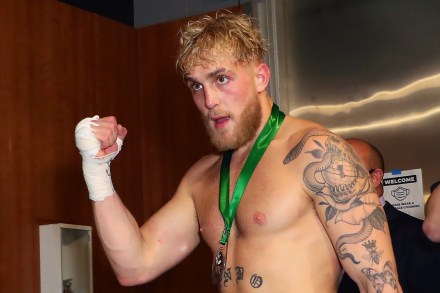
It’s easy to hate Jake Paul. No, really, it is easy. It is easier than fixing a bowl of instant soup or making your way home from your next door neighbor’s house. It is easier than beating a three-year-old at golf or the US triumphing in a war with Liechtenstein.The well-known YouTuber is immensely unlikable. His face conveys gormlessness and smugness simultaneously. His voice is off-puttingly nasal yet serenely self-assured. He is so insanely, shamelessly money-hungry that he put out a Christmas song with the refrain ‘buy that merch’.  His videos appeal to an audience largely consisting of young teenagers with thumbnails of women’s backsides and titles like ‘SURPRISING Best Friend with EMILY WILLIS STRIPTEASE.

jake paul

Boxing not so clever

For Horace Hopper, the half-breed protagonist of Willy Vlautin’s bleak new novel, essential truths come slowly, and usually too late to do him any good. Abandoned by his Native American mother and Irish American father, he has exiled himself from the only people who love him, an elderly couple on a sheep ranch in deepest Nevada. His one idea for becoming ‘somebody’ is to transform himself into a world-champion lightweight boxer with a wholly fabricated Mexican identity. ‘Mexican boxers are the toughest... true warriors who never quit,’ he believes. Only well into the novel does it dawn on him that his self-inflicted loneliness is ‘a sort of disease’, not a manly test of character that will redeem his young life.