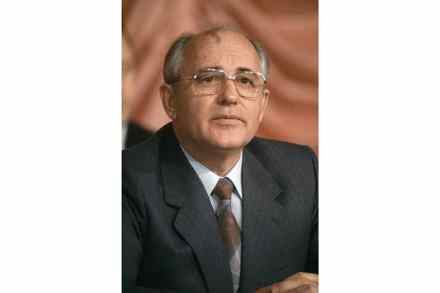
Boris yeltsin

The botched coup that presaged the end of the Soviet Union

The best thing about the Soviet Union – arguably the only good thing – was the manner of its going. Though it lost its European empire when the Berlin Wall came down in 1989, almost nobody predicted that the USSR itself would fall apart so quickly. Most historians, Moscow-based journalists and the world’s espionage agencies thought it would limp on for decades, like the Ottoman empire. Yet the world’s second most powerful state withered away, and not in the classical Marxist sense: it just ceased to exist. As Robert Service shows, the Soviet people destroyed the Soviet Union, not outsiders, and without any significant violence.
Was Nato expansion worth the risk?

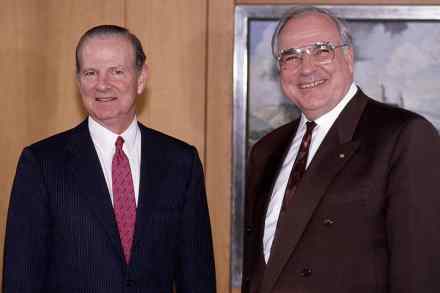
This is an important and topical book. Mary Sarotte traces the difficult course of Russia’s relations with Europe and the United States during the decade which followed the fall of the Berlin wall in 1989, a period which saw Russia’s brief dalliance with democracy and Nato’s advance to the frontiers of the old Soviet Union. The story has been told before, but never so fully or so well. In a remarkable historical coup, Sarotte has persuaded the German foreign ministry to open its archives to her, and the Americans to declassify thousands of documents previously closed to researchers. When Vladimir Putin’s spokesman Dmitry Peskov was moved to denounce so much disclosure of confidential diplomatic material, it became obvious that Sarotte was on to something.

Glasnost merely confirmed Russia’s deep-seated suspicion of democracy

Thirty years ago the Soviet Union was guttering to its close. Those of us who were there remember the exhilarating hope, the apprehension, the illusion. For everyone else it is a distant echo. Russia was always likely to lose the Cold War competition with America. It was unmanageably large, too poor and too reliant on too few products. Stalin’s bloody grip had enabled the Soviet Union to defeat the Germans at a terrible cost to his people. When he died in 1953 his system entered a protracted agony. Over the next decade Nikita Khrushchev tinkered with half-baked solutions. They misfired, and he was overthrown by the hard men in the party, the KGB, and the army. His more cautious successors managed to equal America’s military might.