Book

Joe Biden’s memoir will humiliate him

Just before writing this piece, I saw Gary Oldman in a London production of Samuel Beckett’s Krapp’s Last Tape. For those unfamiliar, the play revolves around an old man listening to a series of tapes recorded by himself when he was younger, musing pompously on his hopes and dreams for the future. In his present, desiccated state, he can only scoff at his middle-aged self, before being overcome by the pathetic realization that it is all up for him and that he is doomed to a miserable, unhappy future. It is hard to think of ten people who will want to read the book, let alone ten million I suspect that much the same has been going on in Joe Biden’s household of late. If, of course he still knows what day of the week it is, or what his name is.

Biden

Could the French Revolution have been avoided?

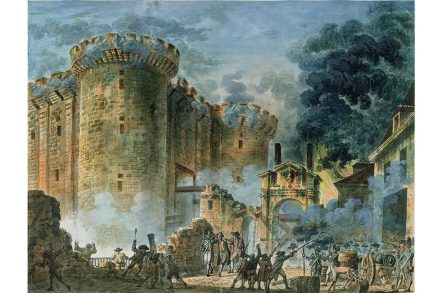
In the middle of the 18th century, on the north side of the Palais Royal gardens in Paris, there stood a magnificent chestnut tree called the Tree of Cracow. In his presidential address to the American Historical Association in 2000, Robert Darnton explained that the name Cracow probably derived from the heated debates that took place in Paris during the War of the Polish Succession, but also from the French verb craquer: to tell dubious stories. News-mongers or nouvellistes de bouche, agents for foreign diplomats and curious members of the public gathered round the tree, which was at the heart of Paris’s news network, a nerve center for transmitting information, gossip and rumors.

Darnton
Roberts

Have you ever heard of the St. Brice’s Day Massacre?

The St. Brice’s Day Massacre? I must admit I hadn’t heard of this “most just extermination” of Danes in Oxford at the instigation of King Aethelred the Unready in 1002, perhaps because the teaching of history in Britain tends to kick off in 1066. You certainly don’t think of Oxford as a place that pioneered techniques of ethnic cleansing. Crypt is a collection of seven essays that unearth details about how certain people lived and died in the past. If you didn’t already know Alice Roberts’s background as an anatomist and biological anthropologist, you’d have a good chance of deducing it from this book.

Evie Wyld’s latest novel is unsettling yet hopeful

Evie Wyld’s powerful fourth novel opens from the perspective of Max, a ghost who haunts the south London apartment where he lived with his girlfriend Hannah. A ghost story is new ground for Wyld, the multi-award-winning Anglo-Australian writer, but her signature traits are immediately evident — poetic observations of unusual details; a pervasive sense of grief and palpable trauma, leavened with a wry sense of humor (Max notes his "strong urge to file a complaint" about being a ghost); and an intricate plot that compels readers to delve into complex past events.

Wyld

Masa Son: the world’s most reckless investor

For a few days in February 2000, Masayoshi Son was the richest person in the world. A risk-taker and showman, universally known as Masa, he had long been disdainful of Japan’s staid "salaryman" business culture and was riding the wave of dot-com mania. His company SoftBank, founded in 1981, had bet big on the growth of online shopping. The bullish mood didn’t last, and Masa slunk away from the limelight — but only for a while. A techno-optimist, the now sixty-seven-year-old has repeatedly reinvented himself, urging doubters to see beyond the immediate: "You’re limiting your field of vision to thirty years… Start bold and think 300 years ahead.

Masa

Ali Smith’s latest novel falls flat

"Gliff" is a word which can mean "a short moment," "a wallop," and "a post-ejaculatory sex act;" to "dispel snow," "to frighten," and to "escape something quickly." It’s "really excitingly polysemous," says one of Ali Smith’s characters. It’s certainly an apt title for a book which can’t seem to define itself. At its center are two children, Briar and Rose, who have been abandoned. Their mother is absent, caring for a sick sister, and their other responsible adult leaves to find her. The children exist in a stock dystopian world (people are surveilled by CCTV cameras and zombified by screens) with a twist: they repeatedly wake up to find that a red line has been painted around their house or camper van. They are on a list of "Unverifiables.

Gliff

An insightful account of America’s decline

I wouldn’t have thought a book about America’s decline would cause me to laugh out loud, but having enjoyed its author Matt Purple’s work for years now (full disclosure: he’s a personal friend and former Spectator colleague), I should not have been the least bit surprised that his debut book is as funny as it is insightful. Decline from the Top: Snapshots from America’s Crisis and Glimmers of Hope is a veritable joy to read. Though he declares himself to be a “cranky conservative,” Purple’s humor and wit offer a diagnostic examination of the American condition that exudes warmth and obvious heartfelt concern for our nation’s wellbeing.

Purple

Imperfections in wood lead to perfection in carvings

I am married to a wood snob. When we bought our house in 1999, my husband insisted that all the shelves (he is an antiquarian book dealer, so there are miles of them) should be made of “real” wood, with not an inch of Medium Density Fibreboard. The price made me squeal. But a quarter of a century on, while friends’ MDF shelving droops like cables between telegraph poles, ours remains beautifully strong and straight. Callum Robinson would understand why this matters, and he demonstrates it in his new book, Ingrained.

wood

Nick Lloyd takes you through the horrors of the Eastern Front

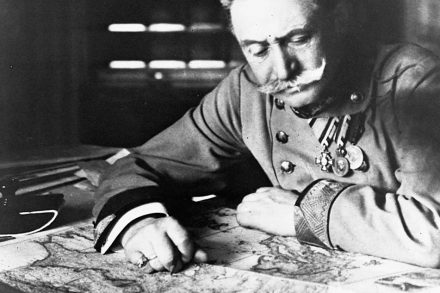
Ten years ago David Cameron, as the British prime minister, pledged $65 million for the centenary of World War One. The focus was on “capturing our national spirit in every corner of the country, something that says something about who we are as a people.” Beyond a celebration of the Tommy on the Western Front and a belated acknowledgement of colonial Britain’s sacrifice, it was a missed opportunity. There was little attempt to better understand the region where the war began — and where, according to Nick Lloyd’s exhaustive The Eastern Front, it never really ended.

Lloyd

The problem with westerners seeking enlightenment in Asia

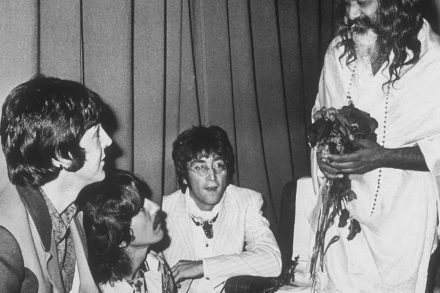
Call it a prejudice if you like. Living in Japan in the 1970s, I had a slight aversion to a particular type of westerner. He — for it was mostly a he — usually lived in Kyoto, sometimes wore a kimono and liked to sit in ancient temples chasing after that presumably blissful moment of enlightenment, awakening, satori, or whatever one wishes to call it. These seekers were less interested in Japan as a society of human beings. They wanted to float in higher spheres. As Christopher Harding explains in The Light of Asia, the Zen adepts, the Buddhist chanters, the rock-garden worshippers, the kimonoed fools (in my no doubt blinkered eyes) were part of a long western tradition.

Asia

Pat Yale follows her hero across Turkey

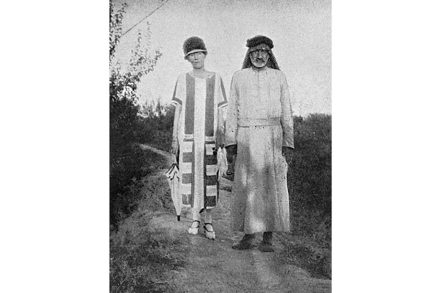
Green-eyed Gertrude Bell belongs in Charles Doughty’s Travels in Arabia Deserta, that slab of velvety antique that enthralled the English (they were not yet British) in the love-affair phase of their relationship with the Arabs. County Durham-born to a wealthy industrialist father, Bell (1868-1926) was a key player when the Powers tried ineptly to mould the Middle East, as the Ottoman Empire crumbled. She is well covered in the literature and appears in a large hat alongside Churchill in conference photographs. But as Pat Yale announces in this new book: “Her time in Turkey has been largely overlooked.” Bell traveled extensively in that country before the first world war (starting in 1899) and in its aftermath.

Yale

The life of the revolutionary Albrecht Dürer

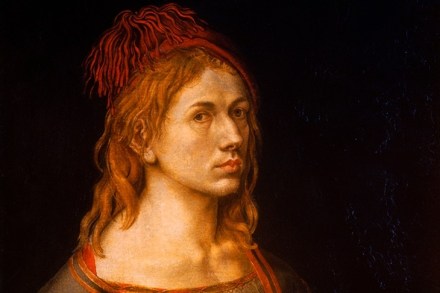
Great books make genres jump. It happened with W.G. Sebald’s The Rings of Saturn, which looked like a travelogue, claimed to be a novel and felt like neither. Albert and the Whale by Philip Hoare, which recalls and converses with Sebald, is such a work. An antic and original creation, it is not exactly a biography of the revolutionary Renaissance printmaker, painter and theorist of geometry and perspective. For the fuller story of Albrecht Dürer, turn to Erwin Panofsky’s mighty monograph, as Hoare does frequently. Instead, Hoare has made a book as much for Dürer as it is about him. Dürer’s life and art are thrillingly encountered.

Dürer

A brief history of flat earthers

In 2020, an American pilot and daredevil named “Mad Mike” Hughes launched himself in a homemade steam-powered rocket, hoping to achieve enough altitude to prove to himself that the Earth was flat. Unfortunately, the rocket crashed and Mad Mike was no more. “I’m not going to take anyone else’s word for it, or NASA, or especially Elon Musk with SpaceX,” he had once explained in an interview. “I’m going to build my own rocket right here and I’m going to see it with my own eyes what shape this world we live on is.” In this way he became a martyr to the modern conspiracy theorist’s mantra: “Do your own research!

Flat earthers

Dave Rubin’s lazy new book

I didn’t want to review Dave Rubin’s Don’t Burn This Country. One Dave Rubin book seemed like enough — arguably too many — for a lifetime. Yet like a burglar who retires from his life of crime only to pass a mansion with its doors wide open and the glint of jewels beyond the hallway, I was pulled in again. Just one more job. In case anyone has never heard of Mr. Rubin, he is an interviewer and commentator who began as a mildly left-wing contributor to the Young Turks and then drifted towards the “anti-woke” realms of the “Intellectual Dark Web,” where his talk show became a hub of the phenomenon as he interviewed anyone and everyone who didn’t like “safe spaces” and blue-haired transsexuals.