Book reviews

Heroes of the Ice Age

From our UK edition

In the early 20th century, explorers were goaded and galvanised by the blanks on the maps — the North and South Poles, and the mist-draped floes and glaciers around them. Ernest Shackleton, Robert Scott, Robert Peary and Roald Amundsen set off with one prevailing purpose: to reach the extremities of the earth. Hardy, maniacal, even at times suicidal, they scattered ‘firsts’ and ‘furthests’ across the ice: the furthest south of Scott’s expedition of 1901-04, Shackleton’s furthest south of 1909, Amundsen’s arrival at the South Pole in 1911.

The scandal that inspired La Dolce Vita

From our UK edition

At about 5.15 p.m. on 9 April 1953, Wilma Montesi, a 21-year-old woman of no account, leaves the three-room apartment in a northern suburb of Rome that she shares with her father, a carpenter, and five other members of the family and never returns. Thirty-six hours later her body is found by the edge of the sea at Torvaianica, a fishing village close to the capital. She is lying face down in the sand, wearing all her clothes apart from her shoes, her skirt, her stockings and her suspender belt, all of which are missing. She appears to have drowned. But why? Was it an accident? Was it suicide? Or could she have been murdered? There are no signs of violence to the body, so murder is not suspected. It is also difficult to conceive of a motive.

A well-told lie

From our UK edition

Autobiography provides a sound foundation for a work mainly of fiction. A voyage in an ocean liner provides a sound framework of time and place. Michael Ondaatje was born in Ceylon in 1943 and migrated to Canada at the age of 19. The Cat’s Table is an entirely believable, warmly empathetic novel about an 11-year-old boy’s journey, alone among 600 passengers in an Orient Line ship, from Colombo to London in 1954 by way of Aden, Port Said and Gibraltar. The boy’s first name is the same as the author’s, and the circumstances are depicted so realistically one feels as though the two Michaels’ points of view are identical.

The country of criticism

From our UK edition

Karl Miller wrote a book called Doubles, exploring the duality of human nature, Jekyll and Hyde, and such like. Duality fascinates him. Another book was Cockburn’s Millennium, a study of the Scottish judge and autobiographer, an Edinburgh Reviewer, a figure so prominent in Edinburgh’s Golden Age that the society which sets out, not always successfully, to defend the urban heritage, takes its name from him. Cockburn, intensely sociable, was however never happier than when able to retire to his rural retreat on the slopes of the Pentland Hills. Miller himself, academic and journalist, founder of the London Review of Books, is a hard man to pin down.

Deeper into Mervyn Peake

From our UK edition

The first two volumes of Mervyn Peake’s Gormenghast trilogy were published in 1946 and 1950, but by 1954, when I was first alerted to them by a school-friend, Peake had entered what his first biographer John Watney called ‘a doldrum period’. Overtaken by a wave of younger writers — Kingsley Amis, John Osborne et al — with more obvious contemporary relevance, Peake was beginning to suffer the first symptoms of the Parkinson’s disease that killed him in 1968 at the age of 47.

Delightfully not cricket

From our UK edition

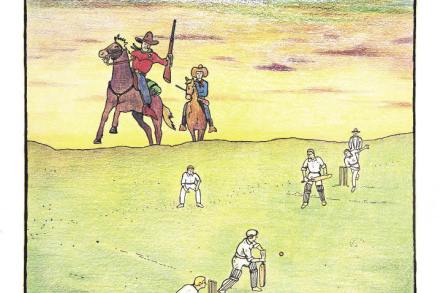
Even brilliantly accurate satirists can become boring unless they have something to say. That is the triumph of CrickiLeaks. Purporting to be a series of spoof Ashes diaries that reveal the innermost thoughts of famous English and Australian cricketers, CrickiLeaks doesn’t just superbly capture the players’ voices and vocabularies, it also makes them say surprising, hilarious things. Like a champion batsman, CrickiLeaks raises its game when the challenge is greatest. Consider the difficulty of taking on Geoff Boycott. Every cricket fan has heard dozens of decent imitations of Boycott’s thick Yorkshire accent and self-confident manner. How could a satirist put anything new into Boycott’s mouth?

What is it about Stieg Larsson?

From our UK edition

Stieg Larsson was a rather unsuccessful left-wing Swedish journalist who lived off coffee, cigarettes, junk food and booze, and died aged 50 after climbing seven flights of stairs, having recently sold to a publisher the series of crime novels now called The Millennium Trilogy. It was originally called The Men Who Hate Women, and in Sweden the first of the series was published under that prize-winningly awful title. The Millennium Trilogy is an improvement, but hardly has the ring of a hit. Nonetheless, it has sold millions of copies and inspired a global cult.

Recent crime fiction | 23 July 2011

From our UK edition

John Lawton’s Inspector Troy series constantly surprises. John Lawton’s Inspector Troy series constantly surprises. A Lily of the Field (Grove Press, £16.99), the seventh novel, has a plot stretching from Austria in 1934 to Wormwood Scrubs in 1949, via Los Alamos and Paris. Fiction rubs shoulders with fact. There are big themes — including the Holocaust, the atomic bomb and Cold War espionage — but they are linked to individual lives, beautifully and economically described. Meret is a cellist whom we meet as a schoolgirl in prewar Vienna, and her career provides the thread that binds together the various strands of the novel. Like all the characters, she is caught up in a world changing beyond recognition; and, as their world changes, so do they.

Bookends | 16 July 2011

From our UK edition

I like books with weather and there’s plenty in this one, all bad, which is even better. Set in London during a cold winter, Blue Monday (Penguin, £12.99) is the first of a new series for Nicci French, the successful husband and wife author team. I like books with weather and there’s plenty in this one, all bad, which is even better. Set in London during a cold winter, Blue Monday (Penguin, £12.99) is the first of a new series for Nicci French, the successful husband and wife author team. The central character is a consultant psychoanalyst called Frieda Klein, and the plot revolves around identity and identity transfer.

City of miracles

From our UK edition

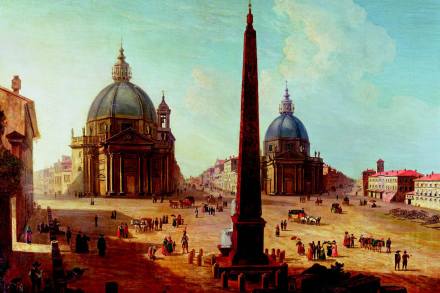
In the autumn of 1984, after an unexplained fall, I found myself in a hospital in Rome acutely head-injured and disorientated. I had been found sprawled on the floor of my flat on Via Salaria; the police suspected an intruder, yet nothing apparently was stolen. Bloody handprints covered the walls where I had tried to steady myself. I was 23 and newly arrived in Rome to work as a journalist and teach. Later, I regained consciousness outside a latrine on the sixth floor of San Giovanni hospital. A group of nuns with elaborate bird-like coifs swished past, each bearing a carafe of white wine. So I was in paradise — or perhaps a Fellini movie. (The carafes turned out to contain urine samples.) The nuns acted as paramedics, owing to a shortage of trained nurses.

Coolness under fire

From our UK edition

The early 19th century was the age of the dandy, and the essence of dandyism was cool self-control. The dandy shunned displays of feeling. There is feeling a-plenty in both these books; yet they may fairly be described as novels which bear the characteristics of dandyism. Though not short of action — something the dandies deprecated — they are cool, elegant and laconic. Stella Tillyard is known as a historian of 18th- and early 19th-century aristocratic and royal life. Tides of War is her first novel, and a very accomplished one. It moves easily between domestic and political scenes in London and Norfolk, and the Peninsula, where Wellington’s army, with the help of Spanish guerrillas, whom Wellington valued little, is gradually winning the war against the French.

Patience v. panache

From our UK edition

The square jaw and steely gaze are deceptive. In reality, next to a prima donna on the slide, no one is more vain and temperamental than a general on the climb. So much at least is clear from Peter Caddick-Adams’s intriguing study of generals Bernard Montgomery and Erwin Rommel. Each was assiduous in the celebrity skills of image-making and audience massage, and none more adept at stabbing rivals in the ribs and ascribing good luck to talent. Yet for all the froth, both succeeded in a trade whose yardstick of success, crushing an opponent to death or submission, cannot be faked.

The great game

From our UK edition

Some of the best writing about sport in recent years has been done by journalists who tend their soil, so to speak, in another parish. Peter Oborne’s biography of the Cape Town-born England cricketer Basil D’Oliveira was a deserved prize-winner, and another political scribe, Leo McKinstry, has done justice to Geoffrey Boycott, the Charlton brothers and Sir Alf Ramsey. Now he has turned his attention to a batsman whose career, measured in statistics, goes a long way to justifying the subtitle of this latest book, ‘England’s Greatest Cricketer’. Born in a modest Cambridge home, admired by all who played with him for his decency as well as his skill at the crease, Hobbs was the first professional cricketer to be knighted.

Recent crime fiction | 4 June 2011

From our UK edition

Mo Hayder has a considerable and well-deserved reputation as a writer of horrific crime novels that often revolve around the physical violence men do to women. Her latest, Hanging Hill (Bantam, £18.99), is no exception. Set in Bath, it’s the story of two estranged sisters — Zoe, a detective inspector equipped with a motorbike and a welter of scars, both physical and emotional; and Sally, the divorced mother of a teenage girl, who is struggling to cope with her vertiginous plunge from the agreeable plateau inhabited by Bath’s affluent middle classes. The narrative moves alternately between the sisters’ lives and the impact that the murder of a beautiful teenage girl has upon them.

Deep, dark mysteries

From our UK edition

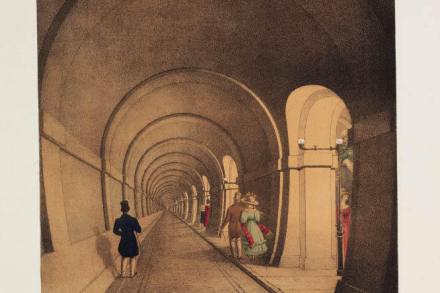
For Peter Ackroyd, the subterranean world holds a potent allure. London Under, his brief account of the capital’s catacombs and other murky zones, manages to radiate a dark mystery and sulphur reek. ‘There is no darkness like the darkness under the ground’, Ackroyd announces, like a Victorian raree-show merchant. This is an entertaining if slightly daft book, that reveals what a weird world lies beneath our feet. Whether Ackroyd has actually been to all the places he describes is uncertain. Journalists have contorted themselves through narrow, stinking cave-galleries and risked leptospirosis from rat urine in their quest for London subterranea. But the stately Ackroyd? The London sewers are vividly described here.

Vastly entertaining

From our UK edition

It may not be quite true that the next best thing to eating good food is reading about it, but undeniably food writing has its considerable pleasures. You’ve got it all there: sex and sensuality (the link between the appetites hardly needs spelling out), social history, the loving acquaintance with ingredients . . . and recipes. The Penguin Great Food series — a selection of 20 delightful, lightweight (we’re talking wrist-strain, not subject), prettily jacketed works by the finest food writers — is a feat. Just selecting 20 authors from the 17th century to now is difficult in itself. Do you go for good prose (Alice B.

A conflict of loyalty

From our UK edition

What was life like in Hitler’s Germany? This question has long fascinated authors and readers alike, as books like Alone in Berlin, The Boy with the Striped Pyjamas and The Book Thief bear witness. What was life like in Hitler’s Germany? This question has long fascinated authors and readers alike, as books like Alone in Berlin, The Boy with the Striped Pyjamas and The Book Thief bear witness. Nazi Germany, it has often been argued, was a totalitarian dictatorship. Through force, indoctrination and even common consent, such an interpretation contends, Hitler wielded total power and had complete control of the German population. But were the tentacles of the Nazi state as strong as this understanding suggests?

Wheels of fortune

From our UK edition

There are among us a churlish few who consider the term ‘sports personality’ to be an oxymoron. There are among us a churlish few who consider the term ‘sports personality’ to be an oxymoron. John Foot’s sparkling study of Italian cycling is a welcome corrective, alive with terrific characters: Toti, a heroic one-legged cyclist who was killed in the trenches; Coppi, a barrel-chested adulterer who became the nation’s darling; a blind coach who could divine victory or defeat in the feel of a cyclist’s muscles; and, more recently, a champion who died of a cocaine overdose in a seaside hotel. Many of the greats follow a satisfying rags-to-riches trajectory, starting off as impoverished delivery boys from peasant families.

Doomed to disillusion

From our UK edition

The Forgotten Waltz is one of those densely recapitulative novels that seek to interpret emotional crack-up from the angle of its ground-down aftermath. At the same time, it is not really a book about hindsight. Sometimes extending information to the reader and sometimes deliberately covering its tracks, sometimes inviting sympathy for its characters and sometimes implying that sympathy only gets in the way of knowledge, it offers the enticing spectacle of a heroine determined to decode the human acrostics that strew her path while darkly conscious that most of her judgments are either horribly provisional or downright inchoate.